

How to Clean a Deck Without a Power Washer
Cleaning a deck without a power washer is often the safer choice for Toronto homeowners with older, softer, or already weathered wood, because high pressure cleaning can damage exactly the kind of deck surfaces that most need careful restoration. Home Painters Toronto, the HomeStars Best of Award 2026 winner with over 1,200 positive reviews and 37 years serving the GTA, restores and stains weathered decks across homes in North York, Etobicoke, Leaside, and Riverdale every season. Cleaning a deck is an important part of maintaining its appearance and extending the life of the wood. Many homeowners use power washers, but high pressure cleaning can sometimes damage wood surfaces if not done carefully, and older decks, softer woods, and weathered surfaces are especially vulnerable to splintering or surface erosion. Decks can often be cleaned effectively without a power washer using gentler methods that are safer for the wood.
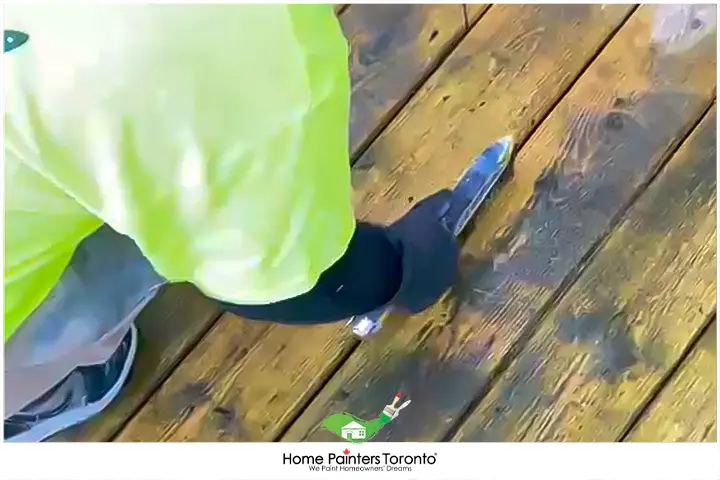
Gentle cleaning with an oxygen bleach solution and a medium bristle brush is particularly suited to older, softer, or already weathered Toronto decks where high pressure carries a real risk of surface damage.
Why Some Homeowners Avoid Power Washing Decks
Power washing can be effective when done correctly, but excessive pressure may damage the wood surface. Common risks include splintering wood fibres, uneven surface wear, forcing moisture into the wood, and damaging older deck boards. For decks that are ageing or already weathered, gentler cleaning methods are often the safer option.
What Happens When Decks Are Cleaned Incorrectly?
Improper deck cleaning can shorten the lifespan of the wood and affect future staining or painting projects. Common problems include raised wood grain, surface gouging, trapped moisture, and uneven stain absorption. Proper cleaning should remove dirt and buildup without damaging the wood itself.
Why Deck Cleaning Matters More in Toronto's Climate
Toronto's seasonal freeze and thaw cycling, combined with humid summers, accelerates the natural weathering process that softens wood fibres and makes them more vulnerable to damage from aggressive cleaning methods. According to Natural Resources Canada's guidance on treated wood, even pressure treated lumber, the most common material used for Toronto deck construction, depends on the integrity of its outer wood fibres for long term protection against decay; once those fibres are damaged or eroded, the preservative treatment becomes less effective at resisting fungal decay and insect activity. This is one of the key reasons gentle cleaning methods are particularly worth considering on Toronto decks that have already weathered through several winters.
Most Toronto decks are built from pressure treated spruce, pine, or fir, all softer wood species that are more prone to surface damage from high pressure water than denser hardwoods. A deck that has been through five or more Toronto winters has typically already lost some of its surface integrity to UV exposure and moisture cycling, making it a poor candidate for aggressive pressure washing regardless of how careful the operator is.
What Is Needed to Clean a Deck Without a Power Washer
Basic deck cleaning involves a few accessible tools: a broom or stiff brush, a mild deck cleaner, a bucket and water, a garden hose, and a soft or medium bristle scrub brush. Harsh chemicals and abrasive tools are best avoided, since both carry a meaningful risk of damaging the wood surface.
Oxygen Bleach vs Chlorine Bleach: Why the Cleaner Choice Matters
The choice of cleaning product matters as much as the cleaning technique itself. Chlorine bleach, the common household bleach many homeowners reach for instinctively, breaks down lignin, the organic substance that binds wood fibres together, weakening the cellular structure of the deck over time even when no immediate damage is visible. Oxygen bleach, also known as sodium percarbonate, achieves comparable cleaning and mildew removal results without that structural risk.
| Factor | Chlorine Bleach (Sodium Hypochlorite) | Oxygen Bleach (Sodium Percarbonate) |
|---|---|---|
| Effect on wood lignin | Breaks down lignin; weakens cellular structure over time | Does not damage lignin; safe for repeated use |
| Mildew and mould removal | Effective on surface growth | Equally effective; attacks deeper rooted organic growth on porous surfaces |
| Effect on wood colour | Lightens and bleaches wood colour permanently after repeated use | Brightens wood without permanently altering natural colour |
| Environmental impact | Can damage surrounding plants and corrode metal fasteners | Biodegradable; safer for surrounding landscaping |
| Best use case | Generally not recommended for routine deck cleaning | Preferred by most professional deck restoration contractors |
| Follow up treatment needed | Same as oxygen bleach: a deck brightener is needed to neutralize pH | A deck brightener (oxalic acid based) restores natural pH and prepares the surface for stain |
How a Deck Is Properly Cleaned Without a Power Washer

An oxalic acid based deck brightener applied after cleaning restores the wood's natural pH and evens out colour across new and existing boards before stain goes on.
Common Mistakes When Cleaning a Deck
Many deck maintenance problems come from avoidable mistakes: using excessive pressure, applying harsh chemicals, skipping drying time, and cleaning damaged or rotted wood without addressing the underlying repairs first. Deck cleaning should always consider the condition of the wood surface before any product or technique is chosen.
Deck Cleaning Mistakes and Their Consequences
| Mistake | Consequence | Correct Approach |
|---|---|---|
| Using excessive pressure (power washer too close or too high) | Splintered wood fibres, gouged surface, forced moisture into the boards | Use gentle methods or, if power washing, keep nozzle 40 to 50 cm away with low pressure |
| Applying chlorine bleach instead of oxygen bleach | Weakened wood lignin, permanent colour bleaching, damage to nearby plants | Use oxygen bleach (sodium percarbonate) based deck cleaner |
| Skipping the deck brightener step | Wood remains alkaline from the cleaner; uneven stain absorption follows | Apply an oxalic acid based deck brightener after cleaning to restore natural pH |
| Skipping drying time before staining | Trapped moisture causes poor coating adhesion and premature finish failure | Allow 24 to 48 hours of full drying depending on humidity |
| Cleaning rotted or damaged wood without repair | Cleaning solution penetrates damaged areas without addressing the underlying issue | Address structural repairs before any cleaning or refinishing begins |
Why Deck Cleaning Matters Before Staining or Painting
Proper cleaning is one of the most important steps before applying stain or paint. Without cleaning, coatings may not adhere properly, dirt can become trapped under finishes, and stain absorption may appear uneven. Preparation directly affects the appearance and lifespan of the final finish. For homeowners planning larger exterior upgrades, deck cleaning is often combined with professional wood deck repair and refinishing services.
When Deck Cleaning Should Be Combined With Repairs
Cleaning sometimes reveals underlying deck problems: soft or rotted boards, loose fasteners, cracked wood, or unstable railings. If structural or moisture damage is present, repairs should be completed before refinishing begins. In some cases, additional exterior wood repair and carpentry work may also be necessary.
When to Hire a Professional Exterior Contractor
Professional help may be the better option if the deck is heavily weathered, mildew or discolouration is severe, repairs are needed before staining, or the project includes full refinishing. Professionals understand how to clean wood safely while preparing the surface properly for long term protection.
Home Painters Toronto is WSIB compliant, fully insured to $5 million general liability, and all exterior staining work is backed by a written warranty. These credentials matter on any deck project where the wood condition and the cleaning method chosen directly determine how long the final finish lasts.
Cost of Professional Deck Cleaning, Repair, and Staining in Toronto in 2026
Costs vary based on the size of the deck, the condition of the wood, and whether repairs are part of the scope. All prices below are in CAD and exclude HST.
| Scope | Estimated Cost (CAD) | Notes |
|---|---|---|
| Deck cleaning only (standard size, gentle method) | $300 – $700 | Sweep, cleaner application, scrub, rinse, and full drying confirmation |
| Deck cleaning with deck brightener treatment | $400 – $900 | Includes oxalic acid based brightener to restore pH before staining |
| Deck cleaning plus staining (standard size deck) | $800 – $2,000 | Most cost effective when combined into one project |
| Deck repair (loose boards, fasteners, or railings) | $300 – $1,500 | Depends on extent of repair needed; addressed before cleaning and staining |
| Full deck restoration (clean, repair, stain) | $1,500 – $4,000 | Complete scope for a weathered or aged deck |
For a full breakdown of exterior costs, see our exterior painting cost guide. Same day free estimates are available seven days a week across the GTA.
Real Project: Gentle Deck Restoration in a North York Backyard
North York 15-Year-Old Pressure Treated Deck: Power Wash Damage on One Section, Oxygen Bleach Restoration, Brightener, and Semi-Transparent Stain
A homeowner in North York contacted Home Painters Toronto about a 15 year old pressure treated deck that had greyed significantly and developed mildew patches in shaded corners near the house. The homeowner had previously used a rented power washer on a section of the deck and noticed visible fuzzing and raised grain on the boards afterward, prompting the call for a gentler approach.
Our team's assessment confirmed the wood was structurally sound throughout, with the previous power washing damage limited to surface texture rather than structural integrity. Two deck boards near a planter showed early soft spots from trapped moisture and were flagged for replacement before refinishing.
The two affected boards were replaced with matching pressure treated stock. The full deck was swept clear of debris, then treated with an oxygen bleach based deck cleaner applied evenly and allowed to sit before gentle scrubbing with a medium bristle brush, working parallel to the grain throughout. The deck was rinsed thoroughly and allowed to dry for 48 hours given the humid late summer conditions at the time. An oxalic acid based deck brightener was applied to restore the wood's natural pH and even out the colour across both new and existing boards before two coats of semi transparent deck stain were applied.
Home Painters Toronto is WSIB compliant, fully insured to $5 million general liability, and all exterior work is backed by a written warranty. For completed projects, visit our Toronto painting projects page. Same day free estimates are available seven days a week across the GTA.
Conclusion: Protecting Your Deck Long-Term
Cleaning a deck without a power washer can be an effective and safer way to maintain exterior wood surfaces. The key is using gentle cleaning methods, proper tools, careful preparation, and sufficient drying time. Regular maintenance helps preserve the appearance and lifespan of the deck while preparing it for future staining or sealing. If your deck needs professional cleaning, repairs, or refinishing, Contact Home Painters Toronto for expert wood deck repair and exterior restoration services tailored to your home. With over 37 years of experience and 1,200 plus positive reviews on HomeStars and Google, our team is open seven days a week. Call 416.494.9095 or email [email protected].
Frequently Asked Questions
Yes, many decks can be cleaned successfully using gentle cleaners, brushes, and standard garden hoses. This approach is particularly suitable for older, weathered, or softer wood decks where high pressure carries a real risk of surface damage.
Excessive pressure can splinter wood fibres, gouge surfaces, and force moisture into the wood. Older decks, softer wood species, and previously weathered surfaces are especially vulnerable, since the protective outer layer of the wood has often already been compromised by years of sun and moisture exposure.
Yes, proper cleaning helps stain absorb evenly and improves finish durability. Dirt, mildew, and weathered grey wood fibres all interfere with stain penetration if left on the surface, producing a patchy or inconsistent finish once the stain is applied.
The deck should dry fully before applying stain or paint to avoid adhesion problems, which typically takes 24 to 48 hours depending on humidity and direct sun exposure. Toronto's humid summer conditions can extend this window, so checking the wood for residual dampness before staining is worthwhile rather than relying on a fixed timeline alone.
Avoid harsh chemicals like chlorine bleach, excessive pressure from a power washer held too close to the surface, and aggressive scrubbing that may damage the wood. Oxygen bleach based cleaners are the safer choice over chlorine bleach, since chlorine bleach breaks down the wood lignin that holds fibres together.
Oxygen bleach is safe and effective for natural wood decks, including pressure treated lumber, cedar, and similar species. Composite decking requires gentler care still: manufacturers often specifically warn against chlorine bleach, which can cause fading or surface damage and may void warranties on composite materials. For wood decks specifically, our team applies oxygen bleach based cleaning as standard practice. See our wood deck repair service for the full scope of deck restoration work we provide.
More Helpful Blogs Related to Cleaning a Deck Without a Power Washer
Need Your Toronto Deck Cleaned, Repaired, or Stained?
Home Painters Toronto is the HomeStars Best of Award 2026 winner with written warranty terms on all exterior work. Call 416-494-9095 or email [email protected] for a FREE same-day estimate.