

Can You Actually Paint Your Aluminium or Vinyl Trims?
Painting aluminium or vinyl trims is absolutely possible for Toronto homeowners, and it is one of the most cost effective ways to refresh a faded exterior without replacing the material entirely. Home Painters Toronto, the HomeStars Best of Award 2026 winner with over 1,200 positive reviews and 37 years serving the GTA, paints aluminum and vinyl trim surfaces across North York, Etobicoke, Scarborough, and Leaside every season. Success depends entirely on preparation, primer selection, and the correct exterior coating. Without those three elements in place, the paint peels within one Toronto winter. With them, a properly finished aluminum or vinyl trim surface lasts 5 to 10 years.
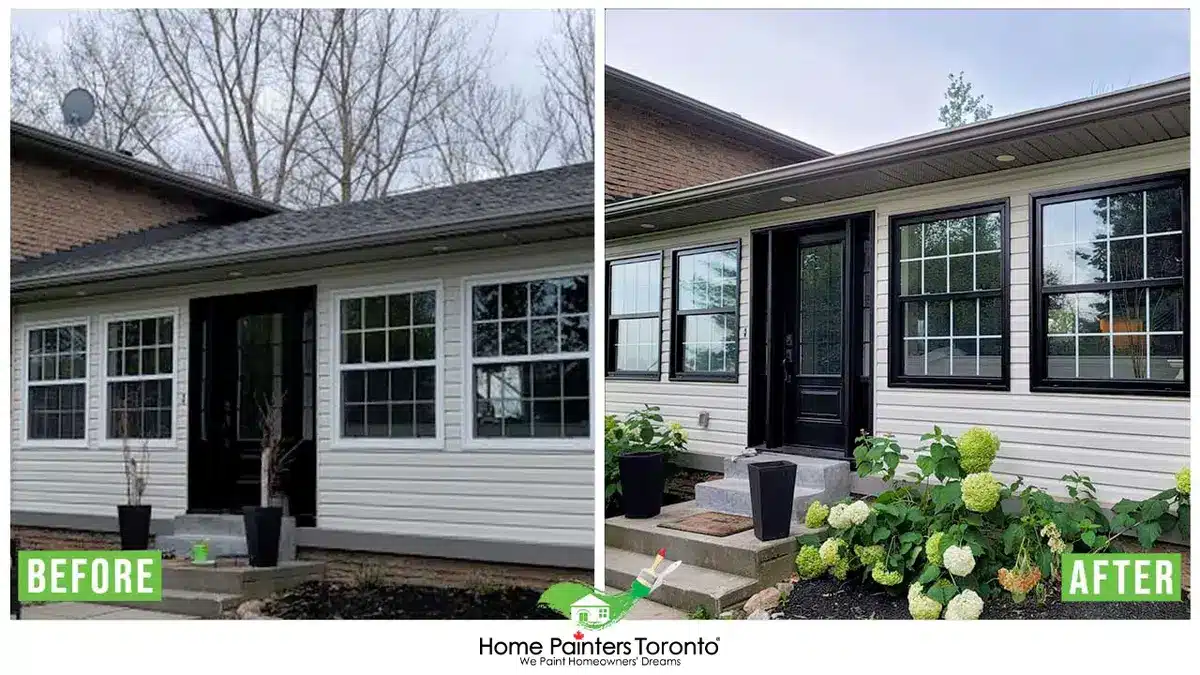
Aluminum trim prep starts with removing the chalky oxidation layer before any primer is applied — paint bonded to the oxidation rather than the metal will fail within months regardless of topcoat quality.
Can Aluminium and Vinyl Trim Be Painted in Toronto?
Both materials are paintable when the correct products and preparation methods are used. Many older Toronto homes have trim that has faded over time due to UV exposure, moisture, temperature changes, and decades of environmental wear. Our aluminum siding and window painting service and our vinyl windows and siding painting service address both material types with products and prep methods specific to each substrate.
Painting restores the appearance of these surfaces while improving the overall look of the home's exterior. Different materials require different preparation approaches, and confusing the two is one of the most common reasons aluminum and vinyl trim paint jobs fail in Toronto.
Aluminium vs Vinyl Trim: Key Differences That Affect Painting
Treating aluminium and vinyl as the same surface is the first mistake on most failed trim painting projects. Both are smooth, non porous substrates that resist paint adhesion, but they behave differently under Toronto's freeze and thaw cycling, and they require different primers.
| Property | Aluminium Trim | Vinyl Trim |
|---|---|---|
| Surface chemistry | Metal; oxidises over time producing a chalky residue | Plastic polymer; does not oxidise but becomes brittle with UV exposure |
| Thermal expansion | Moderate; expands and contracts with temperature changes | High; vinyl expands significantly in summer heat and contracts in winter |
| Paint adhesion challenge | Oxidation residue and smooth metal surface resist paint | Low porosity plastic surface; most paints do not bond without specific primer |
| Primer required | Etching primer or metal specific bonding primer | Vinyl safe primer or self priming vinyl safe 100% acrylic paint |
| Colour restriction | None; any exterior colour is acceptable | Dark colours absorb significantly more heat; can cause vinyl warping; lighter colours recommended |
| Toronto freeze and thaw risk | Medium; metal flexes but can develop micro cracks at joints over time | High; paint that cannot flex with vinyl expansion and contraction will crack and peel |
| Common failure mode | Chalking, peeling at edges, paint cracking at joints | Paint peeling from below when vinyl expands in heat; delamination |
Why Proper Preparation Matters for Painting Aluminium and Vinyl Trim
Preparation determines whether painted aluminum or vinyl trim lasts 5 to 10 years or peels before the first winter is over. Unlike wood, both surfaces have smooth profiles that resist paint adhesion when they are not correctly prepared.
Toronto's climate adds a specific challenge that warmer or more stable climates do not impose. Over 100 freeze and thaw cycles per year, combined with summer humidity above 60% and winter indoor heating that dries the exterior surface significantly, cause paint films that lack flexibility to crack and separate. According to Natural Resources Canada guidance on residential building envelopes, the temperature differential between summer exterior surfaces and winter surface temperatures in Toronto can exceed 50 degrees Celsius. A paint film that cannot flex across that range will fail.
Skipping a single prep step, such as priming an oxidised aluminum surface or applying paint to damp vinyl, produces a failure that cannot be corrected without stripping the surface and starting again. The time invested in proper preparation is recovered many times over in a paint job that lasts versus one that peels within months.
Cleaning the Surface Before Painting Aluminium or Vinyl Trim
Surface cleaning is the foundation of any aluminum or vinyl trim painting project. Dirt, chalky oxidation residue on aluminum, mildew, and environmental contaminants all create a barrier between the surface and the primer that prevents proper adhesion. Paint adheres to the substrate itself, not to the contamination layer on top of it.
Professional cleaning on aluminum trim involves removing the chalky oxidation layer that accumulates with UV exposure. A TSP substitute solution removes both the oxidation residue and surface contaminants in a single pass. Rinsing with clean water and allowing the surface to dry fully before priming is essential. Any remaining moisture under the primer produces blistering within weeks of application.
Vinyl trim cleaning follows the same principle. Mildew, which is common on shaded north facing trim in Toronto, is treated with a diluted bleach solution before the general cleaning wash. Any mildew left on the surface grows beneath the paint film and produces staining and adhesion failure within one growing season.
Sanding and Surface Conditioning for Aluminium and Vinyl Trim
Light sanding creates the microscopic surface texture that primer needs to grip on both aluminum and vinyl. A smooth, shiny aluminum trim surface has almost no mechanical tooth for primer to bond to. Light scuffing with 120 to 150 grit sandpaper or a grey scuff pad changes that, creating enough texture for an etching primer or bonding primer to establish a strong mechanical and chemical bond.
Vinyl trim requires a lighter touch during sanding. Aggressive sanding can remove the UV stabilising outer layer of the vinyl and expose more porous material beneath, which changes how the primer bonds and how the surface weathers over time. A grey scuff pad rather than sandpaper is the safer choice on vinyl to avoid breaking through the protective outer layer.
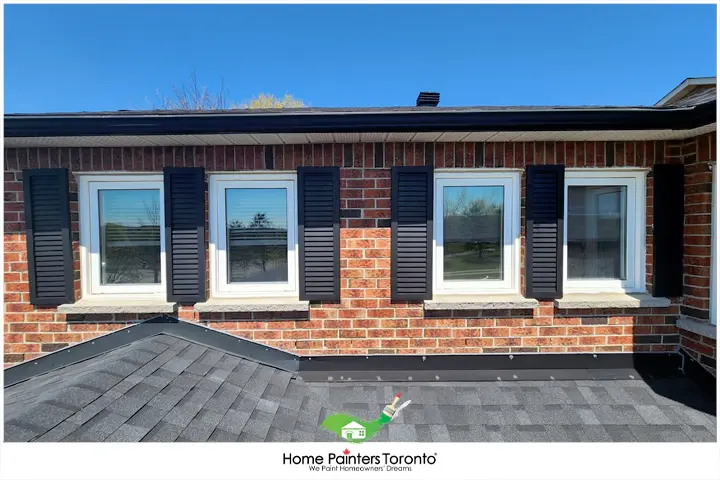
Vinyl trim painting requires VinylSafe colour confirmation before any primer is applied — dark colours on south and west facing vinyl elevations absorb excess heat and cause warping even with the correct primer.
Priming Aluminium and Vinyl Trim Before Painting
Primer selection is the single most consequential decision in any aluminum or vinyl trim painting project. The primer bridges the chemistry between the non porous metal or plastic surface and the topcoat. Without the correct primer, the topcoat has no meaningful bond to the substrate regardless of how well the surface was cleaned or sanded.
Painting Aluminium Trim: Which Primer to Use
Aluminum trim requires an etching primer or a metal specific bonding primer. Both products react chemically with the metal surface to create adhesion that mechanical preparation alone cannot produce. Rust Oleum Clean Metal Primer or Benjamin Moore's Alkyd Direct to-Metal Primer are commonly used on aluminum trim projects across Toronto. These primers also protect the metal surface from oxidation and corrosion that can continue beneath standard exterior paint.
Painting Vinyl Trim: Which Primer to Use
Vinyl trim requires either a vinyl safe bonding primer or a self priming 100% acrylic exterior paint rated for vinyl surfaces. Sherwin Williams Duration Exterior and Sherwin Williams VinylSafe colour technology are specifically formulated to address the heat absorption issue on vinyl by incorporating pigment formulations that limit LRV (Light Reflectance Value) drop. Standard exterior paints applied to vinyl without checking vinyl compatibility can cause the trim to warp, buckle, or crack as it absorbs more heat than the original material was designed to handle.
| Surface | Primer Type | Recommended Products | Why This Primer |
|---|---|---|---|
| Aluminum trim (clean, oxidised) | Etching primer or metal bonding primer | Rust Oleum Clean Metal Primer; Benjamin Moore Alkyd Direct to-Metal Primer | Chemically bonds to metal surface; prevents re oxidation under topcoat |
| Aluminum trim (previously painted, sound) | Bonding primer or 100% acrylic exterior primer | Sherwin Williams Adhesion Primer; Benjamin Moore Fresh Start High Hide | Creates adhesion over existing coat; allows colour change without stripping |
| Vinyl trim (any condition) | Vinyl safe bonding primer or self priming vinyl safe acrylic | Sherwin Williams Duration Exterior; Benjamin Moore Aura Exterior (check VinylSafe colour) | Flexes with vinyl expansion; heat absorption controlled by pigment formulation |
| Mixed trim (aluminum and vinyl adjacent) | Vinyl safe primer throughout | Sherwin Williams Duration Exterior | Simplifies product management; safe for both substrates; flexible film |
Choosing the Right Paint for Aluminium and Vinyl Exterior Trim
Not all exterior paints are suitable for vinyl or aluminum surfaces. The correct paint for both materials is a 100% acrylic exterior formulation with high flexibility, weather resistance, UV protection, and strong adhesion. Our exterior painting Toronto service specifies paint products based on the substrate being coated, not a single product applied across all exterior surfaces.
Colour selection on vinyl trim requires specific consideration that does not apply to wood or aluminum. Dark colours, particularly blacks, deep navies, and dark greys, absorb significantly more solar radiation than the lighter colours vinyl is originally manufactured in. The additional heat causes the vinyl to expand beyond its design tolerance, which leads to warping, buckling, or separation from the trim mounting. Most vinyl trim painting failures involving dark colours in Toronto occur on south and west facing elevations where afternoon sun exposure is highest.
Premium exterior acrylic formulations from Benjamin Moore and Sherwin Williams resolve most of these concerns through flexible film technology that expands and contracts with the substrate, UV blocking pigments that reduce heat absorption, and adhesion additives designed for low porosity surfaces. Budget exterior paints without these properties fail prematurely on both aluminum and vinyl regardless of how well the surface was prepared.
Paint Product Selection for Aluminium and Vinyl Trim: Toronto Recommendations
| Surface | Recommended Topcoat | Finish | Expected Lifespan in Toronto | Notes |
|---|---|---|---|---|
| Aluminum trim (painted over correct primer) | Benjamin Moore Aura Exterior; Sherwin Williams Emerald Exterior | Satin or semi gloss | 7 to 10 years | Premium flexibility and UV resistance essential for Toronto freeze and thaw cycling |
| Vinyl trim (light to medium colours) | Sherwin Williams Duration Exterior (VinylSafe colours); Benjamin Moore Aura Exterior | Satin | 5 to 8 years | Confirm colour is VinylSafe rated before specifying dark tones |
| Vinyl trim (dark colours, south or west facing) | Sherwin Williams Duration Exterior (VinylSafe only) | Satin | 4 to 6 years | Heat absorption on south and west elevations accelerates wear even with correct product |
| Mixed aluminum and vinyl trim on same elevation | Sherwin Williams Duration Exterior | Satin | 5 to 8 years | Single product simplifies application; adequate for both substrates |
Common Problems When Painting Vinyl or Aluminium Trim in Toronto
Most trim painting problems in Toronto share the same small set of root causes: poor cleaning, skipping primer, using incompatible paint, or applying paint in conditions outside the product's temperature window. Each failure mode produces a specific visible symptom that identifies where the process broke down.
| Problem | Root Cause | How It Shows | Prevention |
|---|---|---|---|
| Peeling within first winter | Primer skipped or wrong primer used; adhesion never established | Sheets or flakes separate from surface at edges and joints | Use substrate specific primer; confirm adhesion before topcoat |
| Paint cracking along joints | Topcoat lacks flexibility for Toronto freeze and thaw cycling | Hairline or map cracks appear along caulked joints and panel edges | Premium 100% acrylic flexible exterior topcoat; no budget products |
| Chalking on aluminum | Paint degraded by UV; pigment binder broken down | White residue rubs off on hands; surface appears dull and flat | UV blocking premium acrylic topcoat; correct primer sealing metal |
| Vinyl warping under paint | Dark colour applied absorbs excess solar heat beyond vinyl design tolerance | Trim bows outward or distorts near corners on south or west facing elevation | Confirm VinylSafe colour rating before applying any dark colour to vinyl |
| Blistering within weeks of application | Surface moisture was present during painting; water trapped under film | Bubbles appear on surface; film lifts when pressed | Allow surface to dry fully; check ambient humidity; avoid painting before rain |
| Paint applied in cold weather fails to bond | Below 10 degrees Celsius during application or cure | Soft, tacky, or poorly adhered surface revealed in spring | Confirm air and surface temperature above 10 degrees Celsius throughout application and cure |
When Painting Aluminium or Vinyl Trim Is Better Than Replacing It
Painting is the more practical choice than replacement when the trim is faded but structurally sound, when the homeowner wants to update exterior colours without a full renovation, or when replacement costs are disproportionate to the cosmetic improvement needed. Our exterior wood repair and carpentry service handles any underlying wood damage around trim areas before painting begins, which is a common requirement on Toronto heritage homes where wood framing behind the trim has deteriorated.
Replacement becomes necessary when the trim is cracked through its full thickness, when vinyl is severely warped or pulling away from the mounting structure, or when aluminum trim has deep corrosion that cannot be stabilised with primer and paint. Painting over structurally compromised trim produces a cosmetically improved surface that conceals an ongoing structural problem.
| Condition | Correct Decision | Reason |
|---|---|---|
| Faded colour, sound structure | Paint | Cost effective cosmetic refresh; painting lasts 5 to 10 years with correct products |
| Minor surface oxidation on aluminum | Clean, prime, and paint | Oxidation can be stabilised; no replacement needed if metal is sound beneath |
| Brittle but uncracked vinyl | Paint with flexible primer and topcoat | Brittleness from UV is cosmetic if no cracks are present; painting extends service life |
| Cracked or broken through the full thickness | Replace before painting | A crack through the full section allows water infiltration behind the trim; painting does not seal this |
| Vinyl warped or pulling away from structure | Repair or replace | Painting over warped trim does not correct the structural failure; warping will continue |
| Deep corrosion on aluminum (rust or pitting beyond surface) | Replace affected sections | Surface primer cannot stabilise deep corrosion; failure will continue beneath the paint |
When to Hire a Professional Exterior Painter for Aluminium and Vinyl Trim
Professional exterior painters bring three advantages to aluminum and vinyl trim projects that product selection alone cannot replace: knowledge of substrate specific primer and paint chemistry, experience applying coatings to smooth non porous surfaces without runs or sag, and an understanding of how Toronto's climate affects curing conditions throughout the project.
Projects involving multiple exterior materials, faded trim across a full elevation, or homes requiring extensive surface preparation benefit most from professional involvement. Home Painters Toronto is WSIB compliant, fully insured to $5 million general liability, and all exterior painting is backed by a 3 year warranty. Our aluminum siding and window painting service and vinyl windows and siding painting service are specifically designed for these materials with the correct products and prep for each.
Cost of Painting Aluminium and Vinyl Trim in Toronto in 2026
Trim painting costs in Toronto depend on the linear footage of trim, the condition of the existing surface, whether the project includes siding or is trim only, and whether any carpentry repair is required before painting. All prices below are in CAD and exclude HST.
| Scope | Estimated Cost (CAD) | Notes |
|---|---|---|
| Exterior small home full repaint including trim | $2,000 – $4,000 | Single storey; includes prep, prime, and topcoat on all exterior surfaces |
| Exterior medium home full repaint including trim | $4,000 – $8,000 | Two storey standard siding condition; trim included |
| Exterior large home full repaint | $8,000 – $10,000 | Larger or heritage homes with complex trim detail |
| Trim only painting (aluminum or vinyl, full home) | $800 – $2,500 | Depends on linear footage and number of windows; prep and prime included |
| Aluminum siding painting (full exterior) | Quoted by scope | Includes prep, etching prime, and two topcoats |
| Vinyl siding and trim painting (full exterior) | Quoted by scope | VinylSafe product confirmation included in scope assessment |
For a full breakdown of exterior painting costs, see our exterior painting cost guide.
Real Project: Aluminum Trim Painting on a 1970s North York Home
North York 1970s Two Storey Detached: Oxidised Aluminum Trim, Full Elevation Repaint, Colour Update
A homeowner in North York contacted Home Painters Toronto to address the heavily oxidised aluminum trim and window casings on their 1970s two storey detached home. The original trim had not been painted in over fifteen years. The aluminum had developed a thick chalky oxidation layer across all elevations, and the existing paint colour was significantly faded on the south and west facing faces. The homeowner wanted to update the trim to a darker tone to match a new front door colour.
Our team assessed all trim sections before confirming the scope. The aluminum itself was structurally sound with no deep corrosion or cracking. The chalky oxidation layer was removed using a TSP substitute solution wash followed by mechanical scuffing with a grey scuff pad on all trim profiles. All sections were allowed to dry fully for 24 hours before priming.
Rust Oleum Clean Metal Primer was applied to all aluminum trim surfaces in one coat and allowed to dry for 24 hours at 18 degrees Celsius. Two coats of Benjamin Moore Aura Exterior in Satin finish were applied, with the colour confirmed as compatible with metal surfaces at the point of specification. The darker colour requested by the homeowner was checked for heat absorption suitability on aluminum (acceptable; the heat absorption concern applies specifically to vinyl, not aluminum). The completed trim painting produced a uniform, clean finish across all elevations with a result that will last an estimated 7 to 10 years under normal Toronto exterior conditions.
Home Painters Toronto is WSIB compliant, fully insured to $5 million general liability, and all exterior painting is backed by a 3 year warranty. For completed projects, visit our Toronto painting projects page. Same day free estimates are available seven days a week across the GTA.
Conclusion: Getting Long-Lasting Results Painting Aluminium and Vinyl Trim
Painting aluminum or vinyl trim is an effective way to refresh a home's exterior without full replacement when the surface is correctly prepared, primed with a substrate specific product, and finished with a premium flexible exterior acrylic coating. Done correctly, painted trim improves curb appeal and extends the appearance of exterior surfaces for years in Toronto's demanding climate.
Frequently Asked Questions About Painting Aluminium and Vinyl Trim
Vinyl trim can be painted successfully when properly cleaned, prepared with a vinyl compatible primer or self priming vinyl safe acrylic, and coated with a premium 100% acrylic exterior paint. The critical restriction is colour: dark colours that absorb significantly more heat than the original vinyl colour can cause warping or buckling on south and west facing elevations in Toronto. Confirm VinylSafe colour rating before specifying any colour deeper than a medium tone on vinyl trim.
Aluminum trim requires an etching primer or metal specific bonding primer in most cases. The primer reacts chemically with the metal surface to create an adhesion bond that mechanical preparation alone cannot produce. Skipping primer on aluminum trim is the most common cause of premature paint failure on this surface. Previously painted aluminum in good condition can sometimes be topcoated with a premium acrylic bonding primer rather than a full metal etching product, but clean, bare, or heavily oxidised aluminum always requires the metal specific primer.
Paint peels off vinyl trim when the surface is not cleaned properly before painting, when an incompatible primer or topcoat is applied, or when a dark colour absorbs excess solar heat that causes the vinyl to expand and contract beyond what the paint film can flex with. Paint applied to vinyl with the correct vinyl safe primer and a premium flexible 100% acrylic topcoat in an appropriate colour will not peel under normal Toronto exterior conditions within the expected 5 to 8 year lifespan.
Darker colours on vinyl trim require confirmation that the colour carries a VinylSafe rating from the paint manufacturer. Sherwin Williams VinylSafe technology limits the solar heat absorption of darker pigments to a level that vinyl can expand with without warping. Standard dark colours outside the VinylSafe programme absorb significantly more heat on south and west facing vinyl surfaces in Toronto and cause warping, buckling, or paint delamination as the material expands beyond its design tolerance.
Painting aluminum or vinyl trim in good structural condition costs significantly less than replacement. A full home trim painting project in Toronto typically runs from $800 to $2,500 depending on linear footage, while full trim replacement involves material and installation costs that are several times higher. Painting is the correct choice when the trim is structurally sound and requires only cosmetic improvement. Replacement is required when the trim is cracked through, deeply corroded, or structurally compromised in ways that paint cannot address.
Aluminum trim finished with the correct etching primer and a premium flexible 100% acrylic exterior topcoat lasts 7 to 10 years in Toronto's climate. Vinyl trim painted with a vinyl safe primer and appropriate colour lasts 5 to 8 years. These ranges assume the surface was properly prepared and that the application was done at appropriate temperature and humidity conditions. Budget products or skipped prep steps reduce these ranges to 2 to 3 years or less.
More Helpful Blogs Related to Painting Aluminium and Vinyl Trim
Ready to Paint Your Aluminium or Vinyl Trim in Toronto?
Home Painters Toronto is the HomeStars Best of Award 2026 winner with a 3-year warranty on all exterior painting. Call 416-494-9095 or email [email protected] for a FREE same-day estimate.