

7 Signs Your Exterior Painting Needs Professional Attention
Across the GTA, from Mississauga bungalows to Oakville two storey colonials, exterior painting is the single most important line of defence your home has against Ontario's brutal climate. Most homeowners only notice paint problems when the damage is already severe. By that point, moisture has often penetrated the substrate and repair costs rise fast. Recognizing the early warning signs of exterior paint failure puts you back in control. This guide covers seven specific signals that tell you it is time to stop waiting and call a professional painting contractor.
Your exterior painting needs professional attention when you see peeling, chalking, cracking, blistering, mould growth, or exposed bare substrate. These signs indicate coating failure beyond surface touch ups. A professional crew will assess substrate condition, moisture levels, and coating compatibility before applying a durable, warranty backed finish that protects your home for years.
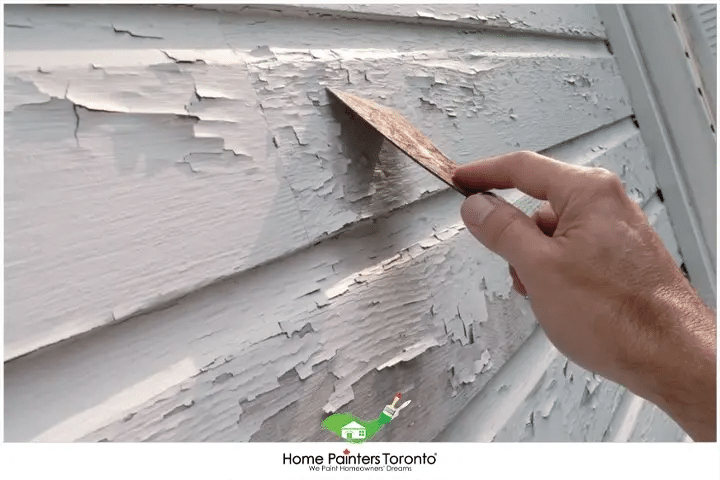
Most homeowners only notice paint problems when the damage is already severe — by that point, moisture has often penetrated the substrate and repair costs rise fast. Recognizing these seven signals early puts you back in control
Peeling Paint Is the First Signal Your Exterior Coating Has Failed
Peeling is the most visible indicator that your exterior coating has lost adhesion to the substrate beneath it. Paint does not peel randomly. It peels when moisture trapped inside the wall assembly pushes outward through the substrate and breaks the bond between the coating and the surface. On GTA homes, this process accelerates every single winter as freeze and thaw cycles force water to expand and contract inside wood fibres, brick mortar joints, and stucco. Once the bond breaks, no amount of patching over peeled areas will fix the underlying moisture problem.
Why Ontario's Freeze and Thaw Cycles Accelerate Exterior Paint Peeling
Ontario's climate produces more than 100 freeze and thaw cycles per year in an average winter. Each cycle expands water inside the substrate by approximately 9%, according to data published by the National Research Council of Canada on building envelope performance. That expansion puts enormous physical pressure on any coating sitting on top of the substrate. Latex based paints, the standard for most GTA exterior painting jobs, have limited elasticity. Once the substrate movement exceeds the coating's elongation capacity, delamination begins and peeling follows within one to two seasons. This is why exterior painting on homes near Lake Ontario in Toronto or Mississauga tends to show accelerated failure on north and east facing walls, where moisture retention is highest.
When you see peeling on your home, the correct professional response is not simply scraping and repainting. A proper repair requires identifying the moisture source, verifying the substrate is dry below 15% moisture content using a pin moisture meter, and selecting a vapour permeable coating system that allows the wall to breathe. Learn more about what goes into professional exterior house painting Toronto projects and why surface assessment always comes before product selection.
Chalking and Fading Mean Your Paint's Binder Has Broken Down
Run your hand across an exterior wall on a warm afternoon. If your palm comes away coated in a dusty, chalky residue, the resin binder in your existing paint has broken down from UV radiation. Chalking and fading are not cosmetic issues. They are chemical indicators that the coating can no longer protect the substrate from water ingress. The Paint Quality Institute identifies binder degradation as the primary cause of premature exterior coating failure in climates with strong UV exposure, which includes every GTA city from late April through September.
Fading follows the same mechanism. Pigment molecules in cheaper exterior paints lack the UV stabilisers needed to hold their colour under direct sunlight. South and west facing walls in Brampton, Vaughan, and Markham typically fade the fastest because they absorb the most intense afternoon sun. By the time fading is obvious to the naked eye, the paint film is already compromised at the molecular level. Applying a fresh coat directly over a chalky surface is one of the most common mistakes GTA homeowners make, and it guarantees premature failure of the new coat within two to three years because the chalk layer acts as a release agent.
A professional crew will power wash the surface at a minimum of 2,500 PSI to remove chalk residue, then mechanically abrade the surface to re open the pore structure before priming. Skipping mechanical surface preparation is the most common reason repaint jobs fail early. Review our cost of painting a house guide to understand how substrate condition affects your total project investment.
Cracking and Alligatoring Signal Substrate Stress Beneath the Film
Hairline cracking across exterior walls is a sign the paint film has lost its flexibility. Alligatoring, a pattern of deep, scaly cracks that resembles reptile skin, is a more advanced version of the same failure. Both conditions happen when the existing paint has built up excessive dry film thickness (DFT) over multiple repaint cycles without proper stripping between coats. The Painting and Decorating Contractors of America (PDCA) recommends a maximum DFT of 4 to 6 mils for most elastomeric exterior systems. When accumulated paint layers exceed 10 to 12 mils, the film becomes rigid and cracks under normal thermal expansion and contraction.
How Surface Preparation Failures Cause Cracking on GTA Homes
The majority of cracking failures on GTA homes trace back to a single decision made at the start of a previous repaint: skipping the primer on bare or weathered wood. Bare wood substrate exposed to rain absorbs water unevenly across the grain. When a painter applies a topcoat directly to bare wood without a penetrating primer, the paint seals only the surface. Moisture trapped below expands, the film stretches, and cracks appear within a single season. On cedar and pine siding, which are common on Richmond Hill and Aurora homes built between the 1970s and 1990s, this process is even faster because these species have pronounced open grain that requires deep primer penetration to seal properly.
Alligatoring on brick or stucco surfaces typically means an incompatible coating was applied over an existing coat, for example, an oil based topcoat applied directly over an existing latex system. The two systems have different flexibility properties, and the outer coat cracks as the two layers expand and contract at different rates. A professional contractor will test the existing coating system, calculate DFT, and recommend full stripping when accumulation exceeds safe limits. See our work on drywall repair and installation and wood frame repair for related substrate restoration services.
| Sign | Root Cause | Urgency Level |
|---|---|---|
| Hairline cracking | Film over thickness or UV brittleness | Medium — address within one season |
| Alligatoring | Incompatible coating systems or DFT over 10 mils | High — full strip required before recoat |
| Deep through cracks | Substrate movement or structural settlement | Critical — inspect framing immediately |
Bubbling and Blistering Warn of Trapped Moisture Behind the Coating
Bubbles and blisters on exterior painted surfaces are not the same as surface defects. They are physical evidence of vapour pressure building between the coating and the substrate. Moisture enters the wall assembly through gaps in caulking, failed window seals, or inadequate soffit ventilation. When the sun heats the exterior wall surface, that trapped moisture turns to vapour and pushes outward against the paint film. The film lifts and a blister forms. Once blisters burst or are punctured, the exposed substrate is left unprotected and will begin to absorb water directly.
Blistering on the areas directly above and below windows is a strong indicator of failed caulking at the window frame perimeter. This is one of the most common exterior painting problems we encounter on homes in North York and Etobicoke. Proper professional repair requires removing all blistered coating, treating any mould present, allowing the substrate to dry to below 15% moisture, re caulking all penetrations, priming, and then recoating. Our team handles caulking windows and doors as part of a complete exterior painting project, because sealing penetrations before painting is what makes the new coating last.
Mould and Mildew on Exterior Walls Is a Paint Failure, Not a Cleaning Problem
Most homeowners see black or green mould streaks on exterior siding and assume the solution is a pressure wash or a bleach spray. This is wrong. Mould growth on exterior painted surfaces is a direct symptom of a breached moisture barrier. The paint film that should be keeping water out has failed at the substrate level. Washing the surface removes visible mould temporarily, but the spores embedded in the substrate and in any remaining coating will regrow within three to six months if the underlying film failure is not corrected. According to Canada Mortgage and Housing Corporation (CMHC) guidelines on building envelope moisture control, surface cleaning without coating restoration leaves the building vulnerable to ongoing mould colonization and potential structural damage. You can review their moisture and mould guidance at CMHC.
On north facing walls and in areas shaded by trees, common in older Scarborough and Pickering neighbourhoods, mould growth can penetrate 3 to 4 mm into wood substrate within a single season. A professional exterior painting contractor will apply a biocide wash, allow the appropriate dwell time (typically 15 to 20 minutes for sodium hypochlorite solutions), neutralize the surface, and apply a mould resistant primer before recoating. Skipping the biocide step and painting directly over mould is one of the most damaging shortcuts that cheap contractors take on GTA homes.
If your home has brick cladding showing mould or efflorescence (white mineral deposits), the issue is often deeper than the paint. Our exterior brick staining service uses breathable mineral coatings that do not trap moisture inside the masonry, unlike standard latex paints, which are the leading cause of efflorescence and spalling on painted brick in Ontario.
Visible Wood Rot and Substrate Damage Are the Real Cost Multipliers
This is the sign that most homeowners discover too late. Once wood rot is visible on exterior trim, window sills, fascia boards, or siding planks, the rot has typically been progressing inside the substrate for two to four years. Paint failure is not the cause of rot. It is the condition that allows rot to begin. Fungal decay in wood requires only three things: moisture above 20%, oxygen, and temperatures between 5°C and 35°C. Every GTA spring and summer provides all three. A properly maintained exterior paint system eliminates moisture access and prevents rot from starting.
Soft, spongy, or discoloured wood under or around a peeling paint zone is a critical signal. Probing the area with a screwdriver is a quick field test — if the blade penetrates more than 6 mm without resistance, the fibre structure is compromised and the wood must be removed and replaced before any painting is done. Painting over rotten wood does not seal it. It traps moisture inside the decayed fibre and accelerates structural failure. Our soffit and fascia repair and painting services specifically address the rot prone areas above your roofline, where most homeowners never look until the damage is severe.
Decks and fences are especially prone to rot at post bases and board joints. If your deck surface shows greying, surface checking, or softness, the existing stain system has failed. The correct professional protocol is sanding to bare wood, oxalic acid brightening to restore pH, and applying a penetrating alkyd based stain, not a film forming latex product. See our deck and fence staining service for the full process.
| Warning Sign | What It Means | Typical Repair Cost Range (CAD + HST) |
|---|---|---|
| Peeling on one or two walls | Localized moisture entry point | $2,000 – $4,000 (small home) |
| Peeling on full exterior | Systemic coating failure | $4,000 – $10,000 (medium home) |
| Active rot on trim and fascia | Substrate replacement needed before paint | $8,000 – $15,000+ (includes carpentry) |
| Alligatoring plus rot | Full strip, substrate repair, and repaint | $12,000 – $30,000 (large or heritage home) |
Bare Substrate Exposure Means Your Home Has Zero Protection Right Now
When paint has completely worn away and bare wood, bare brick, or raw stucco is visible to the naked eye, your home's exterior is fully exposed to weather with no protection at all. This is the most urgent of the seven signs. Bare substrate absorbs water on contact. A single rainy season on unprotected wood siding can push moisture content above 30%, which is deep into the rot threshold. On stucco and brick homes in Hamilton and Burlington, bare patches allow freeze and thaw cycling to fracture the masonry surface directly, leading to structural repair costs that far exceed what a timely repaint would have cost.
Bare substrate exposure often happens in stages that homeowners miss because the changes are gradual. South facing trim on a Newmarket or Aurora home may go from full opacity to bare wood over three summers without triggering concern. The practical rule is this: if you can see the natural colour of the material beneath the paint anywhere on your exterior, schedule a professional assessment immediately. The cost of waiting is always higher than the cost of acting now. Review our client reviews from GTA homeowners who caught these problems early and avoided expensive structural repairs.
A Recent Exterior Painting Inspection in Etobicoke — What We Found
23% Moisture, 14 Mils DFT, 40% Mildew Colonization — Full Strip, Biocide Wash, and Silane Siloxane Primer System
At a recent exterior painting project in the Mimico neighbourhood of Etobicoke, our crew was called in after a homeowner noticed widespread peeling on the north and west elevations of a two storey brick and wood trim home. Before touching a brush, we conducted a full substrate assessment. A pin moisture meter reading on the wood trim came back at 23%, well above the 15% maximum threshold for safe coating application. The existing paint film measured 14 mils DFT using a calibrated gauge. That is more than double the maximum recommended by the coating manufacturer for an elastomeric system.
Behind the peeling latex coat, we found active mildew colonization covering approximately 40% of the north wall substrate. The previous contractor had painted directly over an earlier mould outbreak without biocide treatment. Our process started with a full strip to bare substrate, a biocide wash with a 20 minute dwell time, and complete drying verified over 48 hours at ambient temperatures of 18°C. We then applied a silane siloxane penetrating primer to seal the brick and wood before finishing with Benjamin Moore Aura Exterior in Low Lustre finish, applied at the manufacturer's specified wet film thickness of 6 mils per coat. Two coats were applied with a 24 hour cure window between applications at 65°F ambient temperature and 55% relative humidity.
The homeowner now has a coating system backed by our 3 year exterior painting warranty and 100% Satisfaction Guarantee. Home Painters Toronto is WSIB compliant, fully insured to $5M general liability, and has earned 1,200+ verified reviews on HomeStars, Google, and Houzz. We carry the HomeStars Best of Award 2026 and Three Best Rated 2025, recognitions built on over 38 years of family owned operation across the GTA. See our painting projects portfolio for before and after documentation of exterior restoration projects like this one.
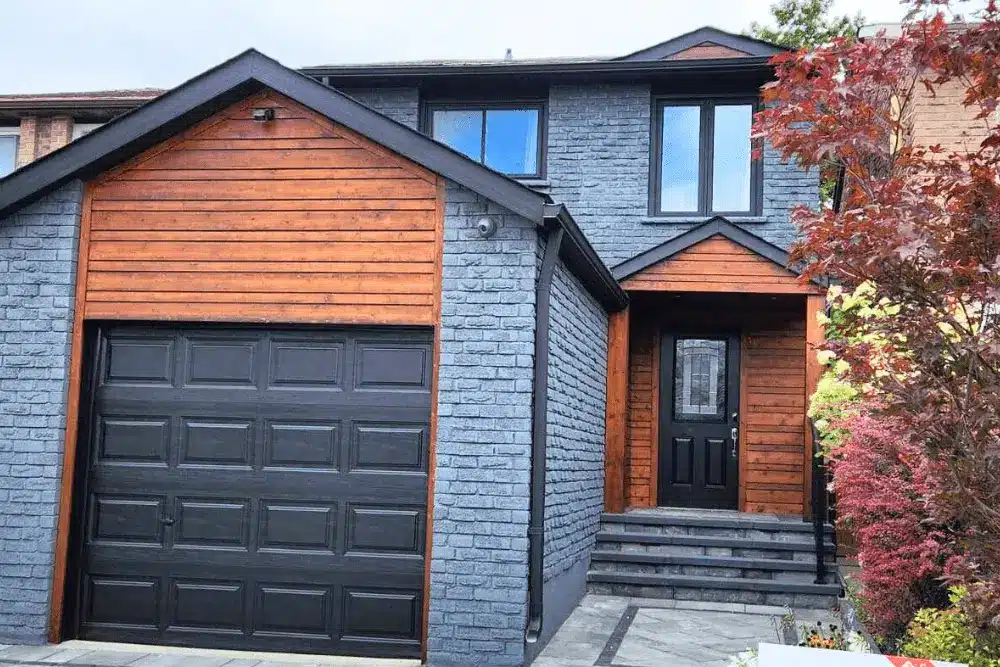
Mimico project: 23% moisture in wood trim, 14 mils existing DFT (more than double the elastomeric maximum), 40% mildew colonization on the north wall — full strip, biocide wash with 20-minute dwell time, 48-hour dry at 18°C, silane siloxane primer, Benjamin Moore Aura Exterior Low Lustre at 6 mil WFT in two coats with 24-hour cure between coats
Why GTA Homeowners Trust Home Painters Toronto for Exterior Painting
Home Painters Toronto has been serving GTA homeowners since 1987, with over 38 years of family owned operation in Toronto, North York, Scarborough, Etobicoke, Mississauga, Brampton, Markham, Richmond Hill, Vaughan, Oakville, Burlington, and surrounding communities. We have completed projects for more than 17,000 satisfied clients. Every crew member passes a criminal background check before stepping onto your property. We are WSIB compliant and carry $5M general liability insurance on every project.
Our warranty commitments are specific and in writing: a lifetime warranty on interior painting, a 3 year warranty on exterior painting, a 15 year warranty on brick staining, and a 5 year warranty on cabinet spraying. All work is backed by a 100% Satisfaction Guarantee. These are not marketing phrases, they are documented service commitments that protect you after the crew leaves. We are open seven days a week and offer same day estimates for homeowners dealing with urgent exterior painting failures.
For exterior painting, we work exclusively with high performance coatings from brands including Benjamin Moore and Sherwin Williams. We reference Sherwin Williams technical data sheets for every product we specify. You can review Sherwin Williams exterior coating specifications to understand the product standards we hold ourselves to on every GTA project.
Explore more about our painting contractor Toronto services and why our approach to substrate preparation, product selection, and warranty backed results sets us apart from lower cost competitors across the GTA.
Frequently Asked Questions
Cosmetic failures include surface fading, minor chalking, and small areas of peeling with intact substrate beneath. Structural failures involve wood rot, cracking that extends through to the substrate, active mould growth, or bubbling that reveals wet wood when punctured. A professional inspection using a pin moisture meter will tell you definitively which category your home falls into. If the substrate moisture reads above 15%, you are dealing with a structural moisture problem that needs professional remediation before repainting.
Professional exterior painting in the GTA typically ranges from $2,000 to $4,000 for a small home, $4,000 to $8,000 for a medium home, and $8,000 to $10,000 for a large home, with extra large or multi unit properties ranging from $12,000 to $30,000. All prices are in Canadian dollars and subject to HST. Substrate repair, wood rot replacement, and premium coating upgrades will affect the final number. Get a detailed project quote through our get a free quote form to receive a site specific estimate.
You can paint exterior brick, but the coating system must be vapour permeable. Standard latex paint traps moisture inside the masonry. As freeze and thaw cycles expand that trapped water, the brick face spalls and the paint fails catastrophically within three to five years. A breathable mineral silicate paint or a silane siloxane primer system is the correct approach for Ontario masonry. Our exterior brick staining service uses coatings specifically rated for Canadian climate conditions.
The optimal window for exterior painting in Toronto runs from late May through early October, when ambient temperatures consistently stay between 10°C and 32°C and relative humidity stays below 70%. Coating application below 7°C causes latex films to coalesce improperly and dramatically shortens service life. Our crews plan projects around Environment Canada forecasts to ensure application always happens under appropriate conditions.
A professional exterior painting job on a GTA home — using properly prepared substrate, a compatible primer, and a high performance topcoat — typically lasts 7 to 10 years on wood surfaces and longer on masonry. The biggest variable is substrate preparation quality. A cheap contractor who skips priming or painting over moisture will see failure in 2 to 4 years regardless of paint brand. Home Painters Toronto backs all exterior painting work with a 3 year warranty.

Ready to Protect Your Home? Get a Fast, Free Exterior Painting Quote
Peeling, chalking, cracking, blistering, mould, rot, and bare substrate exposure are not problems that resolve on their own. Each season you wait, the repair cost grows. The right time to act on any of these seven warning signs is now, before the next GTA winter cycle compounds the damage further.
Home Painters Toronto has served over 17,000 GTA homeowners with warranty backed exterior painting, substrate repair, and professional coating systems that are built for Ontario's climate. We offer fast free quotes and warranty backed work across Toronto, Mississauga, Brampton, Markham, Vaughan, Oakville, Richmond Hill, Scarborough, Etobicoke, North York, Hamilton, and every city in between.
Contact Home Painters Toronto today for fast free quotes and warranty backed work. Our team is available seven days a week and can arrange a same day estimate for urgent exterior painting failures.
Get a Fast, Free Exterior Painting Quote Today
Contact Home Painters Toronto today for fast free quotes and warranty backed work on your exterior painting project. Same day estimates available seven days a week across the GTA.
Contact Us for a Free Quote