

Are Cheap Pressure-Treated Wood Exterior Painting Quotes Risky?
A new deck or fence in Etobicoke can turn into an expensive redo when the wrong contractor takes the job. Homeowners across the GTA often collect three quotes for staining pressure treated wood and choose the lowest number without asking what it actually covers. That low number can mean skipped moisture testing, one thin coat, and stain applied before the wood is dry enough to absorb it. Within a year, the colour fades and the boards begin to peel. Local crews who understand Ontario winters know that rushing this job costs more later. This guide breaks down what separates a safe quote from a risky one.
Yes, cheap quotes for staining pressure treated wood are often risky because they skip moisture testing and proper surface preparation. A bid that lands far below the average market range usually means one coat instead of two, no moisture meter check, and stain applied while the wood is still too wet. The result is early peeling, blotchy colour, and a job that needs a full redo within a year or two.
What Makes a Pressure Treated Wood Staining Quote Cheap?
A cheap quote usually skips three steps: moisture testing, surface cleaning, and a second coat. Home Painters Toronto has built 17,000 plus client relationships across the GTA without skipping these steps, and the company holds the HomeStars Best of Award 2026 along with 1,200 plus verified reviews on HomeStars, Google, and Houzz. A painter who quotes well below the typical market range for a project is often planning to cut one of these steps to make the numbers work.
Pressure treated lumber holds chemical preservatives and water from the treatment process. Fresh boards straight from a supplier carry far more moisture than wood that has had time outdoors, and some suppliers sell kiln dried after treatment lumber that dries faster than standard treated stock. If a contractor does not test the wood before staining, the bid can look attractive on paper but fail within months. Most low bids also use a single thinner coat of stain instead of the two coats most manufacturers recommend for outdoor wood. A thinner application costs less in material and labour, but it leaves the wood with weaker protection against rain, snow, and UV exposure. Older fences and posts often need wood frame repair before any stain goes on, and a cheap quote rarely budgets time for that inspection.
Why Some Painters Skip Surface Preparation
Surface preparation takes time that a rushed quote does not budget for. Cleaning treated wood, checking for mildew, and removing mill glaze residue can add a full day to a small deck project. A painter working from a stripped down bid has little room in the schedule for this step. Skipping it means the stain sits on top of dirt, pollen, and treatment residue instead of bonding to the wood fibre. This is one of the most common reasons a fresh stain job looks patchy within the first season, and it is a key reason homeowners should compare deck and fence staining services carefully before signing a contract.
The Science Behind Staining Pressure Treated Wood in Ontario Winters
Wood is a hygroscopic material, which means it absorbs and releases moisture based on the surrounding air. Ontario winters push that moisture cycle to an extreme, with freezing and thawing cycles that swell and shrink the wood fibre again and again. Pressure treated lumber holds even more water than regular lumber because the treatment process forces preservative chemicals deep into the wood under pressure. This extra moisture has to leave the wood before any stain can bond properly.
A film of stain applied over high moisture content traps water inside the board. When that trapped water freezes during a Toronto winter, it expands and pushes the stain layer apart from the inside. At a microscopic level, wood fibre is made up of hollow cells that need open space to let stain pigment and binder soak in. High moisture content fills those cells with water, leaving no room for the stain to penetrate. Sun exposure adds another layer of stress, since ultraviolet light slowly breaks down lignin near the surface of the wood even before a coating is applied. Boards that already show grey, weathered patches often need attention from wood deck repair specialists before staining can succeed.
Staining Pressure Treated Wood: Moisture Content Targets Before Application
According to This Old House Magazine, treated lumber is ready for stain once a moisture meter reads 15 percent or lower. Below this level, the wood fibre has enough open space to absorb the stain instead of letting it sit on the surface. Fresh treated lumber straight from a supplier almost always reads well above this number. A simple field test involves sprinkling water on the board. If the water beads up instead of soaking in within about ten minutes, the wood still needs more drying time.
Step by Step: The Professional Process for Preparing and Staining Treated Wood
Professional preparation for treated wood follows four stages: drying, cleaning, brightening, and a test patch. Crews start by confirming the wood has had enough time outdoors to release moisture, which Bob Vila notes can take anywhere from several weeks to a few months depending on the season and climate. Next, the surface is washed with a deck cleaner formulated for treated lumber to remove dirt, pollen, and mill residue. A brightener restores the wood natural pH after cleaning, since most cleaners leave the surface slightly alkaline. Finally, crews apply a small test patch in a hidden area to confirm colour and absorption before committing to the full surface.
A pin style moisture meter gives the most accurate reading because it measures moisture inside the board and not only on the surface. Crews test several boards in different spots, since sun exposure and airflow can leave one section of a deck drier than another even on the same structure. Spacing boards apart during the drying period, where the structure allows it, lets air move on more than one side of each piece of lumber. Skipping any one of these stages is the single biggest reason a stain job underperforms.
The process typically follows this order on a job site:
- Confirm moisture content with a calibrated meter before starting
- Wash the surface with a treated wood deck cleaner
- Apply a wood brightener and rinse thoroughly
- Test a small hidden patch for colour and absorption
- Apply two coats of stain with adequate dry time between coats
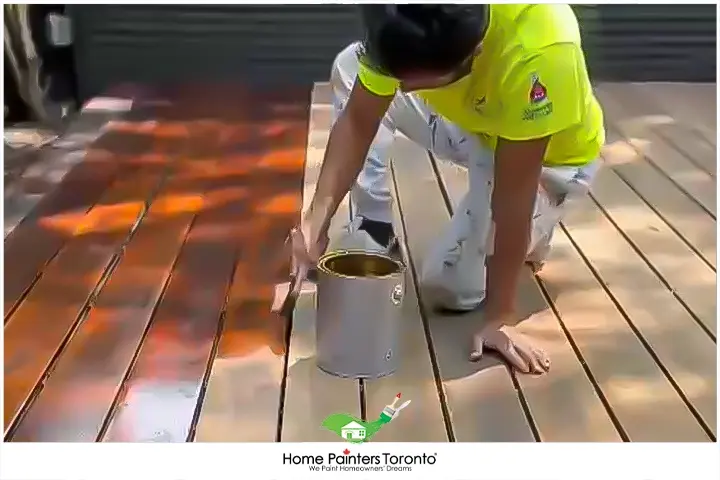
A pin style moisture meter gives the most accurate reading because it measures moisture inside the board and not only on the surface — crews test several boards in different spots, since sun exposure and airflow can leave one section of a deck drier than another
Why Cheap Quotes Skip the Moisture Test
Cheap quotes skip the moisture test because it adds a return visit that eats into the painter margin. Testing moisture content properly means checking several boards in different spots, sometimes on more than one day if the readings are inconsistent. A painter trying to win a job on price alone has little incentive to delay the start date for this step. Skipping the test does not show up on the invoice, but it shows up on the deck a year later when the stain begins to flake.
A proper moisture test also protects the homeowner if a dispute comes up later. A documented reading at the start of the job gives both sides a clear record of the wood condition before staining began. Without that record, a homeowner has little to point to if the finish fails early and the contractor blames the wood instead of the work. Homeowners who request a free quote should ask directly whether moisture testing is part of the process before any work is scheduled.
How to Spot a Quote That Skipped the Moisture Test
A thorough quote will mention how the contractor plans to confirm the wood is dry enough to stain. If a quote includes a start date within a week of a new deck or fence build, ask how moisture will be checked first. A contractor who cannot explain a moisture testing method is likely planning to skip it. Reputable companies also explain what happens if the wood is not ready, including a delayed start date instead of staining wood that is still too wet.
| Step | Cheap Quote Practice | Professional Standard |
|---|---|---|
| Moisture testing | Skipped or estimated by eye | Confirmed with a calibrated meter |
| Surface cleaning | Quick rinse only | Deck cleaner plus brightener |
| Coats applied | One thin coat | Two coats with proper dry time |
| Warranty | None offered | Multi year warranty backed coverage |
| Crew screening | Not disclosed | Criminal background checked crew |
Hidden Cost Comparison: Cheap Quote vs Professional Quote
A cheap quote for staining treated wood often costs more over five years than a properly staged project. Exterior projects across the GTA typically fall into a few size based ranges, and a deck or fence staining job usually lands near the smaller end of these ranges. The table below shows typical price ranges in Canadian dollars plus HST for exterior wood projects of different sizes, similar to ranges used across our exterior house painting services.
| Project Size | Typical Price Range (CAD + HST) |
|---|---|
| Small deck or fence section | $2,000 – $4,000 |
| Medium sized deck or larger fence run | $4,000 – $8,000 |
| Large exterior wood project | $8,000 – $10,000 |
A cheap quote may land below the low end of these ranges, which sounds appealing until the stain fails early. Redoing a failed staining job means paying for stripping, brightening, and a full reapplication, often within two to three years of the first attempt. A professional quote that falls inside these ranges usually includes moisture testing, two coats, and warranty backed work. Paying once inside the normal range tends to cost less over time than paying twice for a cheap job that has to be stripped and restained. Homeowners curious about pricing on a full exterior repaint alongside their deck can review our cost of painting a house guide for additional context.
Our Recent Pressure Treated Deck Staining Project in Port Credit, Mississauga
13% Moisture Confirmed, 48-Hour Dry, Benjamin Moore Arborcoat Semi Transparent at 19°C
At a recent project on a cedar toned deck in Port Credit, Mississauga, our crew arrived to a two year old pressure treated structure that had never been stained. A moisture meter reading on the joists and decking boards came back at 13 percent, which sits comfortably below the 15 percent threshold recommended for staining treated lumber. The crew cleaned the surface with a deck cleaner, applied a brightener, and let the wood dry for 48 hours before testing again.
We applied Benjamin Moore Arborcoat Exterior Stain in a Semi Transparent finish across two coats, back brushing each board to push the stain into the grain instead of letting it sit on the surface. Air temperature held at 19 degrees Celsius during application, well inside the range most stain manufacturers recommend for proper curing. The homeowner received warranty backed coverage on the finished work, and our crew operates fully insured and WSIB compliant on every job site across the GTA. Photos from this project, along with similar jobs, are available in our painting project portfolio.

Port Credit project: 13% moisture confirmed via meter on joists and decking boards (threshold 15%), deck cleaner plus brightener, 48-hour dry and retest, Benjamin Moore Arborcoat Exterior Stain Semi Transparent applied in two coats with back brushing at 19°C ambient — warranty backed coverage delivered
Expected Longevity of Properly Stained Pressure Treated Wood in Toronto
A properly stained deck or fence in the GTA typically holds its colour and protection for three to five years before it needs a fresh coat. Sun exposure on south facing structures wears down stain faster than shaded north facing areas. Heavy foot traffic on stair treads and walkways also shortens the lifespan of a stain job compared to railings and vertical fence boards.
Wood species also plays a role in how long a finish lasts. Cedar holds stain differently than standard SPF treated lumber, since cedar has a tighter grain and naturally lower moisture absorption once dry. Treated pine, the most common decking material in the GTA, tends to need slightly more frequent attention than cedar in the same yard. Pressure treated fascia boards and trim around a home face similar moisture concerns, which is why soffit and fascia work is often scheduled alongside deck staining for efficiency. Homeowners who keep gutters clear and trim back nearby plants reduce the amount of standing moisture the wood faces each season, which helps the finish last closer to the long end of that range.
Common factors that affect how long a stain job lasts include:
- South facing surfaces fade faster due to direct UV exposure
- High traffic areas such as stairs wear down sooner than railings
- Standing water from clogged gutters shortens the life of a finish
- Annual cleaning extends the life of a stain coat between full reapplications
Why Toronto Homeowners Trust Professional Contractors for This Job
Homeowners trust a contractor who can show proof of insurance, WSIB compliance, and a clear warranty before a single board gets cleaned. Home Painters Toronto carries five million dollars in general liability insurance and runs criminal background checks on every crew member sent to a property. The company has operated as a family owned business for 38 plus years across the GTA, with same day estimates available seven days a week.
The same standards that apply to deck and fence staining carry over to related carpentry work, including wood trim and trim carpentry and general wood siding repair and replacement. Recognition from Three Best Rated 2025 and Best of Houzz 2025 reflects the same attention to process described throughout this guide. Exterior work, including staining pressure treated wood, comes with a three year warranty, while interior work carries a lifetime warranty. Homeowners can read more about the company background on our why homeowners choose Home Painters Toronto page. These standards exist because a stain job that fails early costs the homeowner more than the original quote ever saved.
Frequently Asked Questions
Most pressure treated wood needs several weeks to a few months to dry enough for stain, depending on the season and local humidity. A moisture meter reading of 15 percent or lower is the benchmark most professionals use before starting. Wood installed in late fall often needs to wait until the following spring before staining begins, since cold temperatures slow the drying process significantly.
Staining wood before it has dried enough traps moisture under the new finish. That trapped moisture pushes against the stain layer, causing peeling, blotchy colour, and uneven absorption. In Toronto climate, trapped moisture that freezes during winter can make the damage worse and shorten the life of the stain significantly compared to a job that waited for proper drying.
Staining a deck or fence generally falls at the lower end of typical exterior pricing compared to a full paint job, since stain uses fewer coats and less surface prep on bare wood. Painting treated wood usually requires a dedicated primer step first, which adds both labour and material cost. Both options still need the wood properly dried before either coating goes on.
Most stained decks and fences in the GTA need a fresh coat every three to five years. Surfaces with heavy sun exposure or foot traffic may need attention closer to the three year mark. Shaded or low traffic areas can sometimes stretch toward the five year mark with regular cleaning and gutter maintenance.
A lower quote usually means fewer coats, no moisture testing, and a smaller crew working faster through the job. Some lower quotes also skip insurance and WSIB coverage, which shifts risk onto the homeowner if an accident happens on site. A quote that explains its process in detail, including how it checks our frequently asked questions page, is easier to trust than one that only lists a price.

Final Thoughts
A cheap quote for staining pressure treated wood can look attractive until the finish fails within a season or two. The safer path is a contractor who tests moisture content, preps the surface properly, and backs the work with a real warranty. Home Painters Toronto has supported homeowners across Etobicoke, Mississauga, Vaughan, and the wider GTA with this exact process for 38 plus years, the same standard our crews bring to related work like front door restaining and refinishing.
Contact Home Painters Toronto today for fast, free quotes and warranty backed work on your next exterior wood project.
Get a Fast, Free Quote for Pressure Treated Wood Staining
Contact Home Painters Toronto today for fast, free quotes and warranty backed work on your next exterior wood project. Same day estimates available seven days a week across the GTA.
Contact Us for a Free Quote