

Cracked & Damaged Siding Repair in Toronto: When to Act Before It Spreads
A cracked panel on a Toronto home rarely stays small. Cold snaps, wind, and freeze-thaw cycles push a hairline split into a wider gap within a single season. Cracked siding repair in Toronto works best while the damage is still limited to one or two panels, before water reaches the sheathing underneath. Homeowners often wait because a crack looks cosmetic from the ground, and that delay is where the real cost builds. Home Painters Toronto has repaired damaged siding on homes across the GTA for 38+ years, backed by 1,200+ reviews on HomeStars, Google, and Houzz. This guide breaks down what a crack actually signals, when it needs a professional look, and how our crew handles the repair from first inspection to final finish.
Act on cracked or damaged siding as soon as you spot a gap, not once it spreads. Small cracks let moisture behind the panel within weeks, especially through Toronto winters. A professional assessment within days of noticing the crack keeps the repair limited to one or two panels instead of a full wall section.
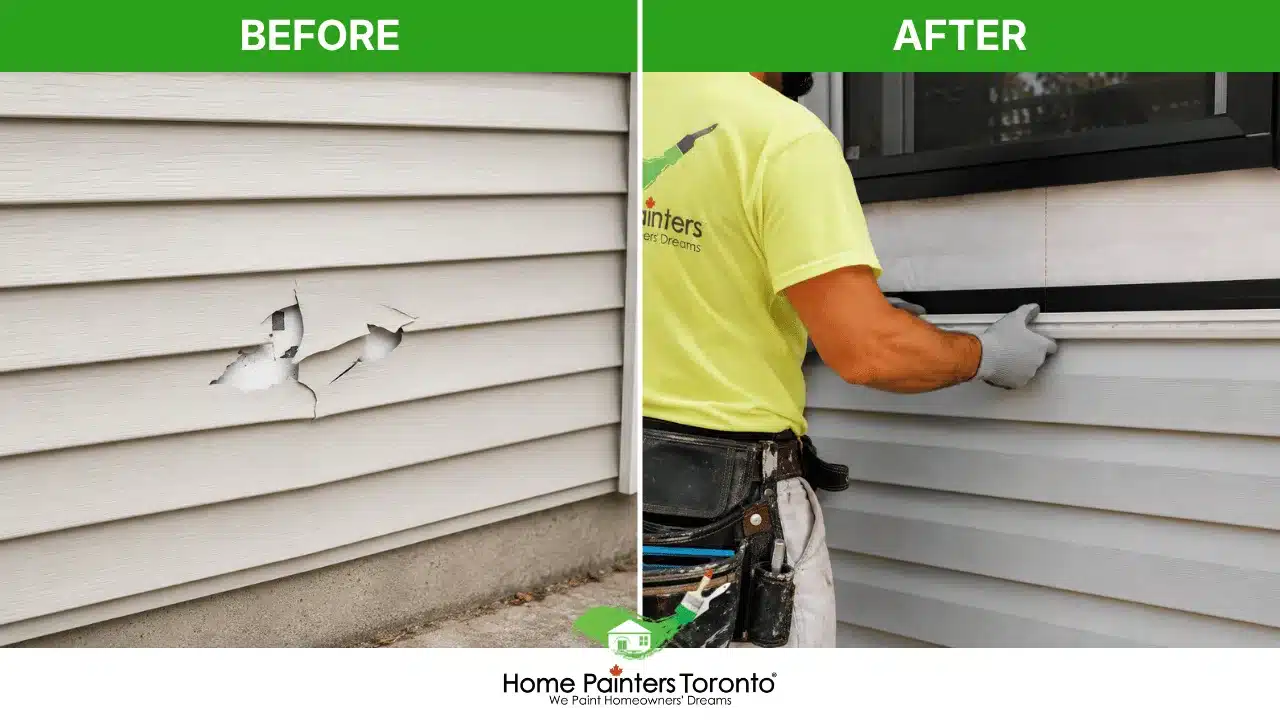
A cracked panel on a Toronto home rarely stays small once freeze-thaw cycles begin working on it
What a Cracked or Split Panel Is Actually Telling You
A crack in your siding means the outer surface has already failed, and the layer behind it may be exposed to weather for the first time since installation. Vinyl, aluminum, wood, and fibre cement all crack for different reasons, but the result is the same: an open path for wind, rain, and snowmelt to reach the wall assembly behind the cladding.
Vinyl panels crack when cold temperatures make the material brittle, then wind or impact finishes the job. Aluminum siding dents first and splits along that dent line under repeated stress. Wood siding cracks along the grain as it dries and swells with the seasons. Fibre cement chips and cracks at corners and fastener points when it takes a direct hit. Homes finished with stucco siding crack differently again, since the material behaves more like a rigid coating than a panel system.
None of these failures stay the same size. A crack changes the way the panel handles wind load and thermal movement, so the stress that caused the first crack tends to reopen it wider with every cycle.
The type of cladding also determines how urgent the crack is. Vinyl and aluminum panels overlap in a way that channels water sideways, so a crack near a seam moves water further than the same crack in the middle of a wood board. Fibre cement holds its shape better than vinyl in cold weather, but a crack at a fastener flange still opens a path straight to the fastener hole, which is one of the most common leak points on any wall assembly.
The Science Behind Why Cracks Spread Fast in Toronto Winters
Cracks in Toronto siding spread fast because the region cycles through freezing and thawing roughly 62 times a year, based on Toronto's freeze-thaw cycle data. Each cycle pushes water in a crack from liquid to ice and back to liquid again.
Ice takes up more space than liquid water, so water sitting inside a crack pushes the gap wider every time it freezes. The next thaw lets in more water, and the next freeze widens the crack again. This repeats dozens of times each winter across the GTA.
A crack that measures a few millimetres in November can be visibly wider by March, especially on panels facing north or shaded by trees where ice lingers longer. That is why a cracked siding repair booked in fall almost always costs less than the same repair delayed until spring.
Shoulder season months, especially late fall and early spring, see the highest concentration of freeze-thaw activity in the Toronto area. A crack that forms in October has an entire winter of cycling ahead of it before anyone gets around to a spring repair. Booking a professional look as soon as a crack appears, instead of waiting for warmer weather, keeps the damage contained to the original panel.

A crack that measures a few millimetres in November can be visibly wider by March
Hairline Crack or Structural Split? Reading the Difference Correctly
A hairline crack under an inch long is often surface only, but a split that runs across a full panel, through a seam, or along a fastener line usually means movement has already started behind the cladding. The length of a crack is not the only signal that matters.
Most homeowners assume a short crack is automatically minor. That assumption is often wrong. A short crack at a nail hem or seam concentrates stress at one fixed point, so it grows faster than a longer crack running across an open panel field where the material can flex.
Cracked Siding Repair Toronto: Signs the Damage Has Gone Structural
Look for these signs before assuming a crack is cosmetic:
- The panel flexes or feels soft when pressed near the crack
- Water stains or a musty smell show up on the interior wall nearby
- The crack runs through an overlap or corner trim, not just flat field
- A second crack appears near the first one within the same season
Any one of these signs means the repair needs a professional assessment, not a caulk gun.
What Happens Behind a Cracked Panel Before You Ever See It
Water that gets through a crack runs down the water-resistive barrier behind the siding, not straight through the wall, and that is exactly why the damage stays hidden for months. The siding is only the first line of defence; the drainage layer behind it is what actually keeps the sheathing dry.
That drainage layer is built for a narrow job. According to drainage plane requirements behind siding, effective drainage can occur in spaces as small as one sixteenth to one eighth of an inch behind most claddings, and larger cavities up to about an inch may be needed for full ventilation depending on the moisture load. A cracked panel funnelling extra water past the cladding can overwhelm that narrow space quickly, especially during a prolonged spring melt.
Once water saturates the sheathing, it does not dry fast in a cool, shaded wall assembly. Mould, soft sheathing, and stained drywall on the inside are often the first signs homeowners notice, weeks or months after the crack first appeared.
Sheathing that stays wet for weeks loses strength and can no longer hold fasteners securely, which is why a small crack left alone for a full season sometimes turns into a job that needs wood frame repair instead of a single panel swap. Oriented strand board and plywood sheathing both soften when moisture content climbs, and that softening does not reverse itself once the wall dries out again. Cracks near the roofline often overlap with soffit and fascia issues, so we check both areas on the same visit. Checking the caulking around windows and doors nearby during that same visit catches related leak points before they turn into a second repair call.
Our Professional Step-by-Step Process for Cracked Siding Repair
Our crew starts every cracked siding repair with a moisture check, not a patch. That single step decides whether the job stays small or turns into a larger repair.
The process runs in five stages:
- Moisture meter reading behind the cracked panel and the surrounding field
- Careful removal of the damaged panel or section without disturbing intact neighbours
- Inspection of the water-resistive barrier, flashing, and fasteners underneath
- Installation of a matched replacement panel or material-specific patch
- Sealing, finish check, and a final moisture reading before we close out the job
- At a recent cracked siding repair project in Leslieville, our crew found a moisture reading of 19 percent behind a vinyl panel that had cracked at the nail hem the previous winter.
- We installed a matched replacement panel, resealed the J channel with a paintable exterior sealant, and finished the surrounding trim in Benjamin Moore Aura Exterior in Low Lustre to keep the colour consistent across the wall.
You can see similar recent siding project photos from other GTA homes we have worked on.
We use a pin-type moisture meter for most inspections because it gives a direct reading from the sheathing itself, not just the surface of the siding. Colour matching for vinyl siding painting and repairs often means sourcing a discontinued panel from a regional supplier, since sun exposure fades panels unevenly across a wall over ten or more years.
Sealant, Patch, or Panel Swap: Matching the Fix to the Crack
The right fix depends on material and crack size. A short hairline crack in fibre cement can sometimes take a colour-matched patch compound. A cracked vinyl panel almost always needs a full panel swap, since vinyl does not patch cleanly. Wood siding with a dry, structural split usually needs a section replacement and epoxy consolidation at the surrounding grain, not surface filler alone.
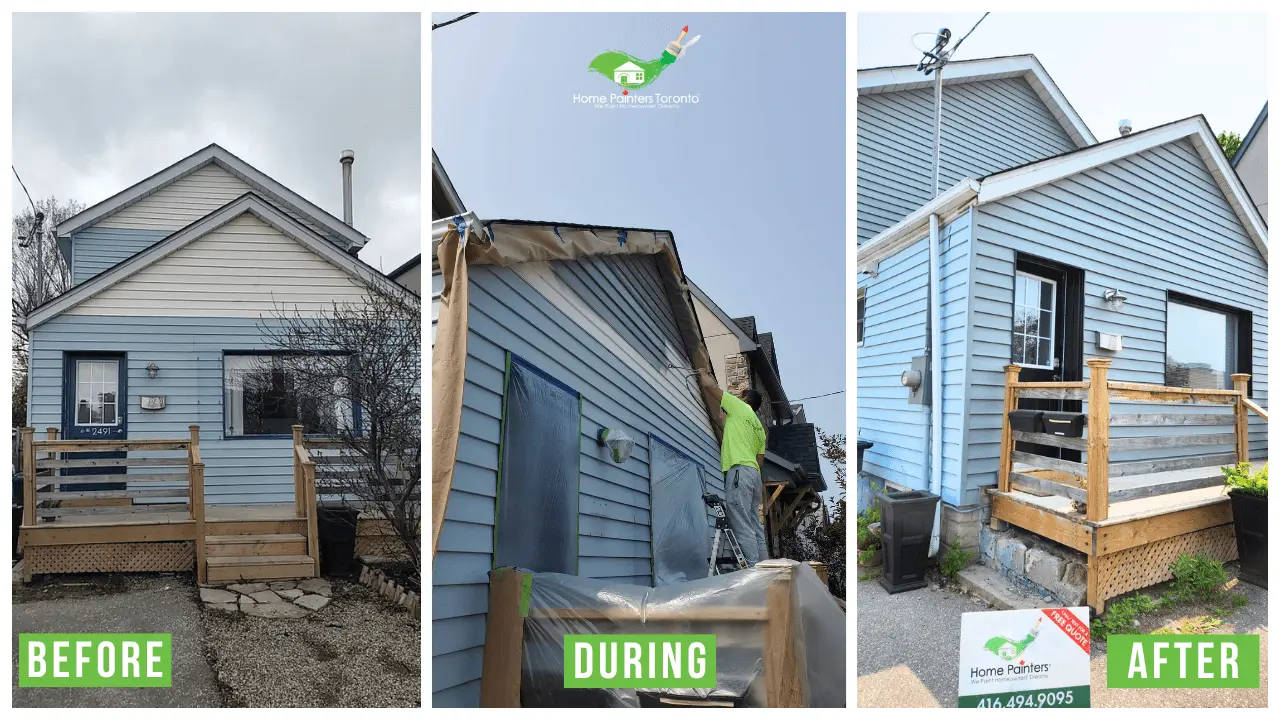
A matched replacement panel and resealed J channel keep this repair blending into the surrounding wall
Repair or Replace: How Our Crew Decides on a Damaged Panel
We repair a single panel when the crack is isolated, the substrate underneath is dry, and matching material is available. We recommend a wider replacement when the crack is one of several across the same wall, or when the moisture reading behind it is already elevated.
| Situation | Repair | Replace |
|---|---|---|
| Single isolated crack, dry substrate | Best fit | Not needed |
| Multiple cracks on same wall section | Possible short term | Recommended |
| Elevated moisture reading behind panel | Not recommended alone | Recommended |
| Discontinued colour or profile | Patch with blend | Full section for consistency |
| Crack through corner trim or seam | Case by case | Often needed |
Colour and profile matching also plays into this decision. If the original panel is still available from the same manufacturer, a single panel swap blends in well. If the profile has been discontinued, matching one panel can leave a visible seam, and replacing a full section becomes the better long-term outcome for the way the wall looks from the street. Our wood siding repair specialists walk through this decision with you before any work starts.
When a Handyman Patch Makes the Crack Worse
A generic caulk or spray foam patch can trap moisture that is already behind the panel instead of letting it drain. Sealing the outside without checking the inside of the wall assembly hides a growing problem instead of solving it. It can also void a siding manufacturer's product warranty, since most manufacturers require material-specific repair methods.
What to Look for When Hiring a Cracked Siding Repair Contractor
A contractor worth hiring inspects the crack in person before quoting a price, checks moisture behind at least one panel, and explains material-specific repair options in writing. Skip anyone who quotes a cracked siding repair over the phone without seeing the wall.
Ask about these five points before signing anything:
- WSIB coverage and general liability insurance
- Experience with your specific siding material, not just painting
- A written scope that names the panels or sections being repaired
- A stated warranty on the repair itself, not just the material
- Whether the estimate is free and how fast they can get on site
Every technician on our crew is WSIB compliant and fully insured, with a $5M general liability policy and criminal background checks completed before anyone works on your property. Repairs typically fall in the Exterior Small to Exterior Medium range, roughly $2,000 to $8,000 CAD plus HST, depending on how many panels are affected and how much of the wall assembly needs opening up. Every job comes with warranty-backed results, not just a verbal promise. You can request a free siding repair estimate before committing to any contractor, and compare the scope in writing.
A quote that skips an on-site visit is the biggest red flag in this trade. So is a verbal estimate with no written scope, since that leaves no record of which panels are included if a dispute comes up later. A contractor who cannot name the siding manufacturer or material grade they are matching probably has not done this repair enough times to do it well. Our client reviews and why homeowners choose our crew page cover how we handle exactly this kind of scope in writing.
Expected Longevity of a Properly Repaired Panel in Toronto's Climate
A properly repaired panel should perform for the remaining service life of the surrounding siding, provided the drainage plane behind it meets the same standard referenced earlier and fasteners are checked yearly. The repair is only as good as the layer you cannot see.
Exterior work completed by our crew carries a 3-year warranty, and every repair gets a final inspection before we close the file. Homeowners who catch a crack early and book a professional assessment within the same season typically see the repair blend into the wall within one paint or weathering cycle, instead of standing out as a visible patch for years. Pairing a siding repair with exterior house painting on the rest of the home is common when a wall needs a broader refresh after the repair is done.
Frequently Asked Questions
The questions below cover what homeowners ask most before booking a repair. Our full frequently asked questions page covers general painting and repair questions in more depth.
A crack needs a professional look if the panel flexes when pressed, if you notice a musty smell or stain on the inside wall near the crack, or if the crack runs through a seam, corner, or fastener point instead of a flat open field. Any of these signs points to movement or moisture behind the panel, which a caulk fix on the surface will not solve. Home Painters Toronto offers a free on-site assessment to check moisture levels before recommending a repair.
Waiting is rarely free. Toronto sees dozens of freeze-thaw cycles between fall and spring, and each one can widen an existing crack. A small crack repaired in fall usually costs less than the same crack repaired after a full winter of cycling, since the damage often spreads to the fastener line or an adjoining panel by then.
Coverage depends on the cause. Sudden damage from a storm, hail, or a falling branch is often covered under standard homeowners policies, while cracking from age, wear, or gradual material fatigue usually is not. A written professional estimate and photo documentation from the contractor strengthens a claim either way, since insurers want to see the cause and scope clearly stated.
Most cracked siding repairs in Toronto fall in the Exterior Small to Exterior Medium range, roughly $2,000 to $8,000 CAD plus HST, depending on the number of panels affected, the material, and how much of the wall assembly needs to be opened up to check for moisture. A single panel swap on an easily accessible wall sits at the lower end of that range.
Yes, in most cases. A single isolated crack on a dry substrate with matching material available can be repaired as one panel, without touching the rest of the wall. Replacement of a wider section becomes necessary only when several panels are cracked, when moisture readings behind the panel are already elevated, or when the original material is discontinued, and a blend is not possible.
Sometimes. A hairline crack in an open, flat panel field is often surface only and stays that way if it is sealed and monitored. A hairline crack right at a nail hem, seam, or corner trim concentrates stress at a single point and tends to grow faster, so it is worth a professional check even if the crack itself looks minor.

Book Your Cracked Siding Repair Assessment
A cracked panel is a small, fixable problem right up until the moment it isn't. Toronto's freeze-thaw winters do not take a season off, so the panels that get fixed early are almost always the cheaper, cleaner repair. Our crew has handled cracked and damaged siding across the GTA for 38+ years, and every repair comes with fast, free quotes and warranty-backed work.
Contact Home Painters Toronto to book a professional assessment before a small crack turns into a bigger repair.
Get a Free Estimate