

Loose and Rattling Aluminum Siding: What the Noise Is Really Telling You
If your aluminum siding creaks, bangs, or rattles every time the wind picks up in Toronto, the noise is a symptom, not the problem itself. Loose aluminum siding repair addresses the real cause: fasteners that have worked free, panels that were never given room to move, or hems that have bent away from the wall. Homeowners across the GTA often notice the sound first in late fall, when temperature swings tighten and loosen the metal several times a day. Left alone, a rattling panel wears its own fastener holes larger with every gust, which turns a quiet fix into a bigger repair. Home Painters Toronto has repaired loose and rattling siding for clients across the GTA, backed by 1,200+ positive reviews on HomeStars, Google, and Houzz.
Rattling aluminum siding almost always means fasteners have loosened, the panel lost its locking hem, or it was nailed too tight to expand and contract. The noise signals movement, not a cosmetic issue. Professional loose aluminum siding repair re-secures the panel with correct nailing hem clearance and checks the wall behind it for hidden damage.
What Causes Loose and Rattling Aluminum Siding Panels
Loose and rattling aluminum siding panels are caused by three things: fasteners backing out of the wall sheathing, panels installed with nails driven too tight, and locking hems that have bent or pulled apart at the seams. Each cause makes a slightly different sound, and a trained eye can usually tell which one is at play from the ground. Most Toronto homes show more than one cause at once, since a failed hem often drags a fastener loose with it.
Every aluminum panel locks onto the one below it with a folded edge called a nailing hem. When that hem stretches, cracks, or slips off the panel beneath it, the whole piece loses its grip and starts to move with the wind. You will usually hear this as a flapping or banging sound near the bottom edge of a panel run.
Fasteners cause a second common problem. Installers are supposed to leave the nail slightly loose, so the panel can slide side to side as the metal expands and contracts. A nail driven too tight pins the panel in place, so every swing in temperature forces the metal to bow or buckle instead of sliding freely along the fastener slot.
Wind uplift is the third driver. Corner posts, J channel, and starter strips all depend on a tight, square installation to hold the field panels in line. Once one section works loose, the panels around it lose support too, and the rattle spreads down the wall over a season or two.
Homeowners tend to notice the noise at two points in the year: early fall, when the first cold nights follow a warm day, and again in early spring, when the pattern reverses. Panels that stayed quiet all summer suddenly move because the daily swing between morning and afternoon temperatures grows wider. A panel with a healthy hem and correctly set fasteners rides out that swing silently, which is why a rattle is a useful early warning sign, not background noise to tune out.
| Cause | What It Looks and Sounds Like |
|---|---|
| Stretched or cracked nailing hem | Panel flaps at the bottom edge, loudest during gusty wind |
| Over-driven fasteners | Panel feels rigid, slight bowing or dimpling near each nail |
| Failed corner post or J channel | A whole section shifts, gaps open at the trim |
| Wind uplift on a weak starter strip | Bottom row lifts first, noise starts low on the wall |
The Science Behind Panel Movement in Toronto's Freeze-Thaw Climate
Aluminum siding panels move because the metal itself expands and contracts with every temperature swing, and Toronto's freeze-thaw climate creates that swing several times a week through fall, winter, and spring. A panel that sat still and quiet all summer can start rattling the moment overnight lows drop below freezing while afternoons stay mild.
Thermal Expansion and Contraction in Toronto Winters
Aluminum expands roughly 22 to 24 micrometres per metre of panel length for every 1°C rise in temperature, according to building science data on aluminum expansion compiled by home inspection researchers. Over a 6-metre wall run, a single hard cold snap followed by a sunny afternoon can move a panel by several millimetres, which is more than enough to work a tight fastener loose or pull a hem off its lock.
Toronto's winters are not just cold; they cross the freezing point often. Climate research on Toronto's freeze-thaw cycles from researchers at the University of Toronto Scarborough documents how frequently the region swings across the 0°C threshold in shoulder seasons, which is exactly when homeowners report the most siding noise. Every crossing is another small tug on a fastener that was never meant to hold the panel rigid.

Why Simply Re-Nailing Loose Panels Often Fails
Driving the same nail back into the same hole rarely fixes loose aluminum siding because the original hole is already oversized and the panel has nowhere new to grip. The fastener slides right back out the first time the panel expands, and the noise returns within a season. Homeowners who try a quick fix often end up paying for the same repair twice.
Nail Sickness and Oversized Fastener Holes
Contractors call this problem nail sickness. Repeated movement around one fastener point stretches the metal until the hole is visibly larger than the nail shank. A proper repair moves to a fresh section of the nailing hem, uses a wider head fastener rated for the panel gauge, and resets the correct fastener slot clearance so the panel can move without pulling loose again.
This is also where hidden damage tends to surface. Once a panel is off, a specialist can check the furring strips and moisture barrier behind it for rot or corrosion that a surface patch would have sealed in instead of solved.
Our Professional Process for Repairing Loose Aluminum Siding
Home Painters Toronto repairs loose aluminum siding in four stages: diagnosis, hem and fastener inspection, correct re-fastening, and a final wall check for hidden moisture. The full process is designed to fix the cause, not just quiet the sound for one season.
- Diagnosis: our crew walks the wall, flexes each loose section by hand, and maps which panels are affected by hem failure, fastener failure, or both.
- Hem and fastener inspection: panels are pulled back far enough to check the nailing hem, the furring strips, and the house wrap or moisture barrier underneath.
- Correct re-fastening: fresh fastener points are set with the proper expansion gap, using corrosion-resistant fasteners sized for the panel gauge.
- Final wall check: seams are sealed where needed, and the section is tested for movement before the crew leaves the site.
Most loose aluminum siding repair jobs in Toronto fall in the Exterior Small to Exterior Medium range, roughly $2,000 to $8,000 CAD plus HST, depending on how many panels need attention and whether hidden wall damage is found during the inspection stage.
Timing matters more than most homeowners expect. Aluminum panels are easiest to work with in moderate temperatures, since very cold metal is brittle and prone to cracking under a fastener, while very hot metal is already expanded and can bind against the tools. Our crews schedule loose siding repairs for mild weather windows whenever the calendar allows, which keeps the panel at a predictable length while it is reset.
What Happens If You Ignore Loose Panels
Ignoring loose aluminum siding lets wind work the panel back and forth until the fastener holes tear through the metal, and that gap becomes a direct path for water behind the wall. What starts as a noise complaint can turn into a moisture problem within a couple of seasons.
Water that gets behind aluminum siding does not dry quickly. It sits against the furring strips and sheathing, and Toronto's freeze-thaw pattern makes it worse by freezing and expanding inside the wall cavity. Corrosion can also start where bare aluminum edges stay damp for extended periods.
A panel that keeps flexing also stresses the panels beside it. What began as a single loose section often spreads into a multi-panel repair within a year or two, which raises both the labour and material scope of the job.
There is also a comfort cost. A gap behind a loose panel can let cold air move against the sheathing, which makes an exterior wall feel colder from the inside during a Toronto winter even before any moisture damage shows up. Homeowners sometimes blame a drafty room on windows or insulation when a loose section of siding is the actual entry point.
A Recent Loose Siding Repair in Etobicoke's Alderwood Neighbourhood
- At a recent loose aluminum siding repair in the Alderwood neighbourhood of Etobicoke, our crew found six panels rattling along the south wall where wind uplift had pulled the nailing hem away from the furring strips.
- Overnight temperatures had dropped to about 2°C, so we sequenced the work for the warmer part of the day to keep the metal at a stable length while resetting it.
- We re-secured the panels with corrosion-resistant fasteners set with a 3 millimetre expansion gap, sealed the seams with DAP Dynaflex 230 sealant, and blended and touched up a section with Benjamin Moore Aura Exterior in Low Lustre finish to match the existing colour.
The homeowner's project was handled under our WSIB-compliant, fully insured process, and the finished repair carries warranty-backed results.
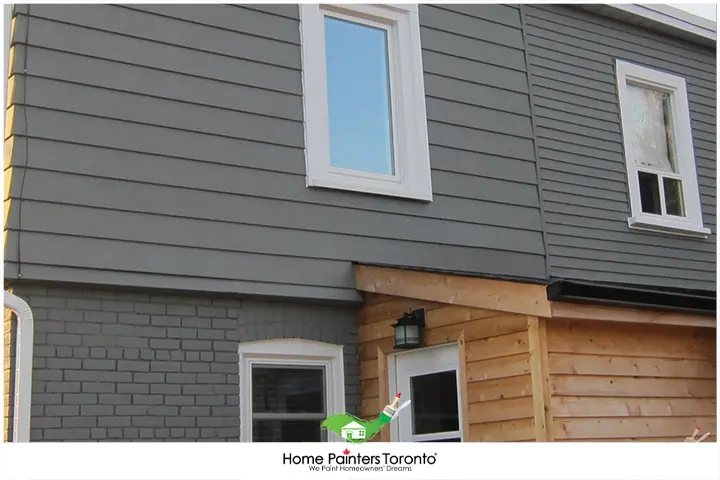
Corrosion-resistant fasteners set with a proper expansion gap keep the panels quiet through the next freeze-thaw cycle
Why This Repair Needs a Siding Specialist, Not a Handyman
This repair needs a siding specialist because correct fastening depends on reading how a specific panel gauge and profile expand, something a general handyman rarely has the training or the fastener stock to do correctly. A mismatched nail head or an over-tight seam can undo the repair within a single winter.
Loose Aluminum Siding Repair Requires Specific Fastening Technique
Loose aluminum siding repair depends on setting the fastener at the centre of the slot, not the end, so the panel keeps room to slide as it heats and cools. It also depends on matching the fastener head size to the panel gauge so the hem is not clamped tight against the wall. These are small details that make the difference between a repair that lasts and one that rattles again by spring.
| Task | Typical Handyman Approach | Siding Specialist Approach |
|---|---|---|
| Fastener placement | Nail driven back into the same worn hole | New fastener point set at slot centre with correct gauge |
| Hidden wall check | Panel left in place, no inspection | Panel pulled back to check furring strips and moisture barrier |
| Colour and finish match | Whatever panel or paint is on hand | Sourced or refinished to match the existing wall |
| Coverage | No formal warranty on the repair | Warranty-backed results with WSIB-compliant, insured crews |
What to Look For When Hiring for Aluminum Siding Repair
Look for four things when hiring for aluminum siding repair: proof of WSIB coverage, liability insurance, a written scope of work, and experience with your specific panel profile. Skipping any one of these raises the odds you will be paying for the same repair again in a year or two.
- WSIB-compliant crews, so you are not liable if someone is hurt on your property.
- Fully insured coverage, including general liability for accidental property damage.
- A written estimate that names the panel sections, fastener type, and any hidden damage found on inspection.
- A clear warranty on the repair itself, not just a verbal promise.
- Local project history with aluminum siding specifically, not just general exterior work.
Home Painters Toronto has served 17,000+ satisfied clients across the GTA over 38+ years in business, and every crew member passes a criminal background check before stepping onto a job site.
A short conversation before you book can save a callback later. Ask what fastener type the crew plans to use, whether they will inspect behind the panel or only the surface, and how the warranty applies if the same section comes loose again. A contractor who answers clearly and in specific terms, instead of with a vague general promise, is usually the one who has done this repair many times before.
If your repair uncovers wider issues, our team also handles aluminum siding painting, caulking windows and doors, and soffit and fascia repair on the same visit, so you are not scheduling separate crews for connected problems.
Frequently Asked Questions
Wind flexes any panel that has a loose fastener or a failed locking hem, and the flexing creates the banging or rattling sound. The stronger the gust, the more the panel moves, which is why the noise is often worse during storms.
Yes, in most cases. A specialist can reset the fastener at a fresh point on the hem and reseal the seam without removing the entire panel, as long as the metal itself is not torn or badly bent.
Not always. Rattling is often caused by normal thermal movement and aging fasteners, though a recent storm can accelerate the problem. A site visit is the only reliable way to tell the difference.
Most loose panel repairs fall in the Exterior Small to Exterior Medium range, roughly $2,000 to $8,000 CAD plus HST, depending on the number of panels affected and whether hidden wall damage is found.
A typical repair covering a handful of panels can often be completed within a single visit, though larger sections or hidden moisture damage can extend the timeline.
Usually not. The original hole is already worn larger than the fastener, so the nail works loose again quickly. A lasting repair moves to a fresh fastener point with the correct expansion clearance.

Get Your Siding Repaired the Right Way
A rattling wall is your siding telling you something has already come loose, and the fix holds far better when the fastening and the hidden wall behind it are both addressed at once. Home Painters Toronto brings 38+ years of GTA experience, WSIB-compliant crews, and warranty-backed results to every loose aluminum siding repair.
Contact Home Painters Toronto today for fast free quotes and warranty-backed work on your loose or rattling aluminum siding.
Get a Free Estimate