

Does Home Insurance Cover Siding Damage in Toronto?
Toronto homeowners often ask does insurance cover siding damage after a windstorm rips a panel loose or hail dents an aluminum wall. The answer depends on what caused the damage and how your policy defines a covered peril. Sudden events such as wind, hail, and falling tree limbs are usually covered under a standard Ontario homeowner policy. Damage from age, rot, or years of gradual wear almost never is. Home Painters Toronto has documented siding damage for insurance claims across the GTA for more than 38 years, and homeowners frequently misjudge which category their damage falls into before they call an adjuster. This guide explains what is typically covered, what usually gets denied, and how to build a claim file that holds up to scrutiny.
Home insurance in Toronto typically covers siding damage caused by sudden, accidental events such as wind, hail, or a falling branch, but it excludes damage from age, rot, or lack of maintenance. Confirm your policy's specific perils, document the damage with dated photos, and get a written repair estimate before you file.
Home Painters Toronto is a painting and exterior repair contractor, not an insurance broker or claims adjuster. The information below is general guidance only. Confirm coverage details, exclusions, and claim procedures directly with your insurance provider or broker.
Does Home Insurance Cover Siding Damage? The Short Answer for Toronto Homeowners
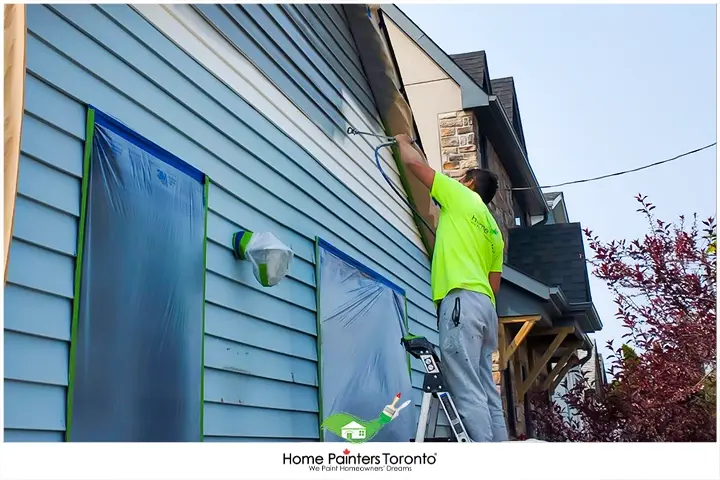
Home insurance in Toronto usually covers siding damage when a sudden, accidental peril causes it, including high winds, hail, a falling tree branch, or storm debris impact. Home Painters Toronto has completed exterior repair work backed by more than 1,200 positive reviews on HomeStars, Google, and Houzz, including many projects tied to our siding repair services across the GTA that began as storm-damage insurance claims. Most homeowner policies list these events as named perils, or fall under broader all-perils coverage, subject to your deductible. Gradual damage from rot, age-related cracking, or UV fade is treated as a maintenance issue, not an insurable loss. Insurers look closely at timing: damage that appears overnight during a storm is usually covered, while damage that develops over several seasons typically is not. Coverage also depends on your specific policy type; a basic named-perils policy only pays out for the exact events it lists, while a broader all-perils policy pays for anything not specifically excluded, which is why two neighbours with similar damage sometimes get very different claim outcomes.
What's Usually Covered vs. Excluded
Wind, hail, fire, and impact damage are usually covered on a standard Ontario homeowner policy, while rot, age, and poor maintenance are almost always excluded. The table below reflects how most Ontario insurers classify common siding damage scenarios, though exact wording varies by policy.
| Cause of Damage | Typically Covered? | Why |
|---|---|---|
| Wind gusts lifting or tearing panels | Yes | Sudden, accidental peril |
| Hail denting aluminum or vinyl siding | Yes | Sudden impact event |
| A falling tree branch or storm debris | Yes | Accidental external force |
| Fire or smoke damage | Yes | Named peril on most policies |
| Rot from long-term moisture exposure | No | Classified as a maintenance issue |
| Cracking or warping from age | No | Gradual wear, not a sudden loss |
| Colour fade from UV exposure | No | Cosmetic, not structural |
| Damage from a pre-existing installation defect | Usually No | Treated as a pre-existing condition |
Every policy wording is different, so confirm your specific exclusions with your broker before you assume either outcome. A quick call before filing can save weeks of back-and-forth. Stucco, aluminum, and vinyl each fail differently under storm stress; our guide to exterior stucco siding covers stucco-specific damage patterns in more depth, and our aluminum siding painting page covers repainting after a repair. If your wood siding shows both storm damage and years of prior weathering, expect the adjuster to separate the two and cover only the sudden portion.
Most Ontario homeowner policies also apply a deductible before any payout starts, typically a flat dollar amount chosen when the policy was written. Filing a small claim below your deductible rarely makes sense once you factor in the paperwork and any future premium impact. A broker can tell you within minutes whether a specific repair is likely to clear that threshold, which saves you from opening a claim file for a job that will end up entirely out of pocket anyway.
Sudden Damage vs. Gradual Damage: Why the Distinction Decides Your Claim
Ontario insurers draw a hard line between sudden, accidental loss and gradual deterioration, and that single distinction decides more siding claims than the material, the neighbourhood, or the size of the damaged area. A cracked board caused by a wind gust last Tuesday reads very differently to an adjuster than the same crack that widened slowly over three winters. Insurance Bureau of Canada figures show insured damage from severe weather nearly tripled, climbing from $14 billion between 2006 and 2015 to $37 billion between 2016 and 2025. That trend has pushed insurers toward stricter documentation standards, so a clear timeline matters more than it used to.
How Ontario Insurers Decide Whether Siding Damage Is Covered
Ontario insurers decide coverage by matching your reported damage date against real weather conditions and the physical evidence left behind. Adjusters may cross-reference the date you report against local storm records to confirm conditions were severe enough to cause sudden failure. They also look at break patterns: a clean, fresh snap in a board points to sudden force, while a soft, crumbling edge points to rot that built up over time. Photos taken the same day damage is discovered carry far more weight than photos taken weeks later, once weathering has blurred the evidence. Adjusters covering the Toronto region also see a seasonal pattern: claims spike after spring windstorms and after summer hail events, so filings during those windows tend to move through the process faster because insurers already expect a batch of similar reports and have staff ready to review them.

A clean, fresh snap in a board points to sudden force, while a soft, crumbling edge points to rot that built up over time
How to Document Siding Damage for a Claim
Documenting siding damage properly means photographing it before anything is moved, noting the date and weather conditions, and getting a written repair estimate within days of discovering the damage. Skipping any of these steps gives an adjuster room to question whether the damage is really storm-related.
- Photograph every damaged area from multiple angles before removing or repairing anything.
- Record the date, approximate time, and weather conditions when you first noticed the damage.
- Check for exposed sheathing or signs of water intrusion behind the damaged panels.
- Keep a piece of the damaged material in a dry spot if it is safe to remove.
- Request a written, itemized repair estimate from a licensed, insured contractor.
- Contact your insurer or broker promptly to open a claim file while the details are fresh.
Loose or missing exterior caulking around windows and doors often shows up alongside storm-damaged siding, so note that separately when you request your estimate. Keep every piece of paperwork together in one folder or a single email thread, including the estimate, the photos, and any correspondence with your insurer. Adjusters handling dozens of files after a regional storm move faster on claims where the documentation is organized and complete on the first submission, instead of arriving in scattered pieces over several weeks.
What an Insurance Adjuster Looks For
An insurance adjuster inspecting siding damage looks for physical evidence that matches a specific storm date, not just visible wear. They compare your photos and estimate against the damage pattern on-site, and they check whether the failure is consistent with the wind direction and intensity reported for that date.
- Fresh break points versus weathered, discoloured edges
- Consistency between wind direction and the side of the house that failed
- Moisture readings behind damaged panels
- Whether the property has a history of prior repairs in the same area
- Proof of insurance and licensing from the contractor providing the estimate
- At a recent storm-damage repair in Scarborough's Wexford neighbourhood, our crew documented wind-lifted vinyl siding panels for the homeowner's adjuster before replacing them.
- After pulling the damaged sections, we measured the exposed wall's moisture content at 14%, well under the 19% threshold that building-science guidance from CMHC identifies as a mould risk for wood-frame assemblies, and confirmed it was safe to close up.
- We finished the repair with Benjamin Moore Aura Exterior in Low Lustre to blend the new trim into the existing paint line.
The adjuster approved the claim within two weeks because the photo timeline, the moisture reading, and the wind data all lined up. Our crews are WSIB compliant and fully insured, and the paperwork an adjuster typically requests, proof of coverage and an itemized estimate, was already part of the job file. See more about why Toronto homeowners choose our crews for insurance-related repairs. On jobs where documentation is thin, adjusters sometimes request a supplementary inspection before approving payment, which can add one to two weeks to the process. Bringing a full photo timeline and a moisture reading to the first inspection is usually enough to avoid that second visit entirely.
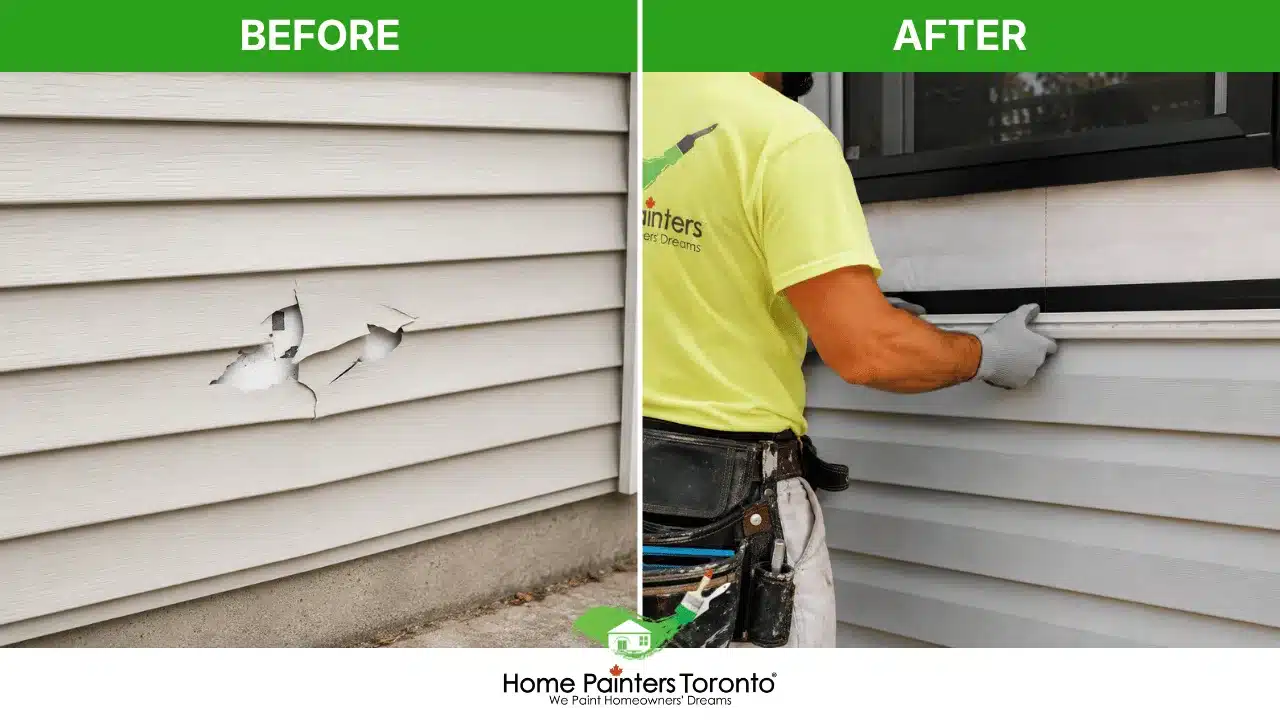
The adjuster approved the claim within two weeks because the photo timeline, the moisture reading, and the wind data all lined up
Getting a Repair Estimate for Your Claim
A repair estimate for an insurance claim needs to itemize labour, material, and scope separately instead of giving one lump-sum number. Insurers use the breakdown to confirm the quoted work actually matches the reported damage, and a vague estimate is one of the fastest ways to get a claim delayed.
What a Written Estimate Must Include for Your Insurer
A written estimate needs a clear scope of work, the specific material and finish being used, a per-tier price, and the contractor's insurance and WSIB information. Photos referenced in the estimate should match the photos already in your claim file, so the adjuster can trace each line item back to the damage. Ask the contractor to separate the storm-related scope from any pre-existing repair or maintenance work you want done at the same time, since bundling the two together is a common reason insurers push back on part of an estimate.
| Project Size | Estimated Cost Range (CAD + HST) |
|---|---|
| Small spot repair (a few panels or boards) | $2,000 – $4,000 |
| Medium repair (partial wall section) | $4,000 – $8,000 |
| Large repair (multiple wall sections) | $8,000 – $10,000 |
| Full re-side (extensive storm damage) | $12,000 – $30,000 |
These ranges reflect typical GTA exterior repair pricing and will shift based on material, wall height, and access. You can request a written repair estimate before or after you open a claim; either order works, since insurers generally accept an estimate obtained ahead of formal approval. If your claim also involves repainting the repaired area, our guide to the cost of painting a house in Toronto covers typical repaint ranges separately. Every estimate we provide includes warranty-backed work, which several insurers accept as an added layer of assurance that the repair will hold through the next storm season.
What If Your Claim Is Denied or Partially Covered?
If your siding claim is denied or only partially covered, you can request the adjuster's written reasoning, get a second opinion from another contractor, and escalate the dispute if you believe the decision was unfair. Most insurers have an internal appeals process you need to exhaust before going further. Keep a copy of every letter, email, and estimate the insurer receives, since a documented paper trail is exactly what a regulator or an external reviewer asks for if the dispute goes beyond the insurer's own appeals desk.
Common Reasons Ontario Insurers Deny Siding Claims
- The damage is classified as gradual wear instead of a sudden event
- Photos or documentation were not collected close to the damage date
- The damaged area shows a pre-existing condition unrelated to the claimed event
- The claim was filed well after the storm date with no clear explanation for the delay
- The repair estimate does not itemize scope, material, and labour separately
If your internal appeal does not resolve the dispute, you can file a complaint with Ontario's Financial Services Regulatory Authority, which reviews unresolved property insurance disputes and can flag patterns of unfair claims handling.
Siding Damage Insurance Claims: Frequently Asked Questions
See our full FAQ page for more answers about how we work with insurance-related repairs.
Wear-and-tear siding damage is almost never covered by a standard home insurance policy. Insurers treat gradual deterioration, rot, and age-related cracking as a maintenance responsibility, not an insurable loss. The exception is when sudden storm damage accelerates existing wear; in that case, the adjuster may cover the storm-related portion while excluding the pre-existing condition.
Filing a legitimate weather-related siding claim can raise your premium, but the effect is usually smaller than filing a claim tied to negligence or repeated losses. Insurers weigh your overall claims history, not just one storm-related event, when they set renewal rates. Ask your broker how a specific claim is likely to affect your policy before you decide whether to file.
Most Ontario insurers do not require multiple quotes for a siding insurance claim, though some request a second opinion for larger losses. One detailed, itemized estimate from a licensed, insured contractor is usually enough to support a straightforward claim. Getting a second quote can still be useful if you want to confirm the first estimate's scope and pricing are reasonable.
A straightforward siding insurance claim in Ontario typically settles within two to six weeks once documentation is complete. Claims involving disputed coverage, extensive damage, or missing documentation can take considerably longer. Ontario's Financial Services Regulatory Authority has flagged settlement speed as an area where practices vary between insurers, so asking your broker for an expected timeline up front helps you plan around it.
A contractor can communicate with your insurance company on technical details like scope and pricing, but you remain the policyholder responsible for the claim itself. Home Painters Toronto routinely provides adjusters with photos, itemized estimates, and technical documentation to support a homeowner's claim, though the homeowner stays the primary point of contact with the insurer. This split works well in practice: the contractor speaks to the technical scope and pricing, while you manage the policy-level decisions like whether to accept a settlement offer.

Get a Written Estimate for Your Siding Insurance Claim
A written, itemized estimate is one of the strongest pieces of evidence you can add to a siding insurance claim, and it costs nothing to request one. Home Painters Toronto serves homeowners across Toronto and the GTA, backed by 38+ years in business, WSIB compliance, and full liability insurance. Whether your claim is already open or you are still deciding whether to file, our team can document the damage and provide a detailed repair estimate your insurer can review. We offer fast free quotes and warranty-backed work on every project.
Contact Home Painters Toronto to get your free, insurer-ready siding repair estimate started today.
Get a Free Estimate