

Toronto homeowners comparing aluminum, vinyl, and wood soffit are usually standing at the same decision point: a re-roof, a full exterior repaint, or storm damage that just exposed a tired roofline. Aluminum vs vinyl vs wood soffit is one of the most common questions homeowners bring to a Toronto contractor, because each material ages very differently under our freeze-thaw winters and humid summers. Pick the wrong one and the result is cracked panels, trapped moisture behind the cladding, or a repaint every few years. This guide compares the three materials on cost, durability, and upkeep so the choice holds up for decades. Home Painters Toronto is a family-run company serving Toronto and the GTA since 1991, and the patterns below come directly from crews working on roofline after roofline across the region.
Aluminum soffit holds up best for most Toronto homes because it resists cracking in cold weather and needs almost no upkeep, though vinyl costs less upfront and wood offers a traditional look at the highest long-term maintenance. The right pick depends on budget, home style, and how much maintenance a homeowner wants to take on.
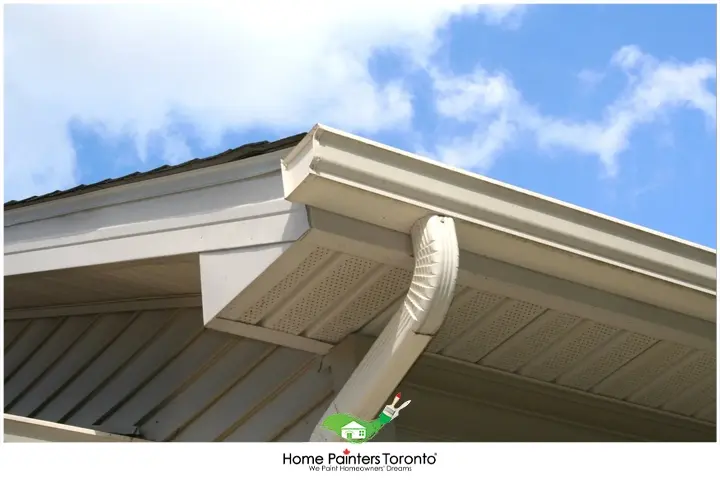
Aluminum vs. Vinyl vs. Wood Soffit at a Glance
Aluminum soffit costs the most upfront but lasts the longest with the least upkeep, vinyl soffit costs the least and installs fastest but turns brittle in deep cold, and wood soffit offers a custom profile but demands the most frequent repainting and repair in a Toronto climate. Each material trades cost against longevity in a different place, so the table below lines them up on the factors that actually matter over a 20-year ownership window.
| Material | Relative Cost | Typical Lifespan | Cold-Weather Behaviour | Maintenance Level |
|---|---|---|---|---|
| Aluminum | Highest upfront | 25 to 40 years on a properly installed coil-coated panel | Excellent; rigid and does not crack or warp | Low; occasional cleaning, repaint every 15 to 20 years if desired |
| Vinyl | Lowest upfront | 15 to 25 years | Fair; stiffens and can crack under impact below freezing | Low; not designed for long-term repainting |
| Wood | Mid to high, plus finishing | 10 to 20 years with consistent upkeep | Poor if unsealed; swells and rots without a breathable coating | High; repaint or reseal every 3 to 5 years |
These figures reflect typical manufacturer coil-coating warranty terms and general vinyl product specifications, and they can shift with panel gauge, product line, and how well the original installation handled ventilation and fastening. A full soffit and fascia replacement or repair project on an average GTA home is usually priced within the same mid-size exterior painting and repair range that covers other rooflines and siding-adjacent work, with the chosen material shifting the estimate up or down inside that band.
Aluminum Soffit: Strength, Cost, and Where It Falls Short
Aluminum soffit resists cracking, warping, and pest entry better than vinyl or wood, which is why it remains the default choice for most GTA rooflines even though it costs more per panel than vinyl. The panels are stamped from coil stock finished with a baked-on enamel coating, then perforated or left solid depending on how the roofline needs to ventilate. That coating is what gives aluminum its long service life, since the metal itself will not rot, absorb moisture, or attract carpenter ants the way exposed wood can.
Aluminum is not indestructible. A ladder set carelessly against a fascia board or a large hailstone can dent a panel, and dents in aluminum do not pop back out the way a scuff in vinyl sometimes will. Homes close to Lake Ontario see slightly faster finish fading from wind-driven salt spray in winter, so a heavier gauge panel is worth the extra cost on an exposed elevation.
Existing aluminum soffit and aluminum siding and window painting can both be refreshed with the right primer system instead of replaced outright, which keeps a functioning roofline in service for another 15 years or more at a fraction of the replacement cost.
Vinyl Soffit: Affordable but Vulnerable to Cold-Weather Cracking
Vinyl soffit costs less than aluminum or wood and goes up fast, but the PVC compound stiffens as temperatures drop and can crack on impact during a hard Toronto cold snap. That trade-off makes vinyl a reasonable choice on a tight budget, less so on a home where branches, hockey pucks, or ladders regularly come near the roofline.
Colour is baked into the material instead of sprayed on top, so vinyl never needs repainting to hold its original shade, and it will not chip the way an aluminum panel can after a hard knock. The trade-off is a narrower colour range than vinyl siding and window painting can offer once custom colour matching gets involved, since factory vinyl tones are fixed at manufacture and dark colours are usually restricted because they absorb heat and can warp the panel.
Perforated vinyl soffit ventilates an attic just as well as perforated aluminum when the net free area matches, but a solid vinyl panel installed where the attic needed intake airflow is a common and expensive mistake that only shows up as ice damming or musty insulation the following winter.
Wood Soffit: Classic Look, Real Maintenance Commitment
Wood soffit gives older and character homes an authentic profile that aluminum and vinyl cannot fully replicate, but it needs repainting or resealing far more often to avoid rot. Cedar and pine are the two species most GTA contractors install, chosen for their natural resistance to decay compared with construction-grade lumber, though neither is rot-proof without a proper coating system.
Bare wood needs an oil-based alkyd or shellac-based primer to seal the grain and block tannin bleed, followed by two coats of a 100% acrylic exterior topcoat that stays flexible through winter movement. Skipping the primer step, or repainting over a chalky old coating without scraping and sanding first, is the single fastest way to see peeling return within a single season.
Wood is also the material most vulnerable to squirrel and woodpecker entry, since both can chew or peck through a soft, moisture-softened board in a way they cannot manage against aluminum or vinyl. Homeowners weighing wood against the alternatives should also look at how it pairs with the rest of the exterior wood siding on the house, since mismatched materials on the same elevation rarely age at the same rate.
Why Toronto's Freeze-Thaw Climate Changes the Calculus
Toronto's freeze-thaw cycle, with dozens of temperature swings across the 0°C mark every winter, stresses every soffit material differently, and that single factor should carry more weight in the decision than colour or brand. Materials that expand and contract at different rates than their fasteners or trim pieces are the ones that loosen, buckle, or crack first.
Aluminum vs Vinyl Expansion Rates in Sub-Zero Temperatures
Vinyl expands and contracts noticeably more than aluminum across a wide temperature range, which is why the Vinyl Siding Institute's cold-weather installation clearance requirements call for widening the expansion gap around panels to 3/8 inch (9.5 mm) once installation temperatures drop below 40°F (4.4°C), compared with a standard 1/4 inch (6.4 mm) gap in milder weather. Aluminum's much lower coefficient of thermal expansion means installers do not need to adjust clearances the same way, which is part of why aluminum panels stay tight and rattle-free through a full Toronto winter while a poorly installed vinyl panel can work itself loose.
Wood behaves differently again, since it absorbs and releases moisture with the seasons instead of expanding purely from temperature. A board that swells in a damp fall and then freezes before it fully dries is under real internal stress, which is exactly the mechanism behind cracked and cupped fascia boards seen every spring across the GTA.
Ventilation and Perforation: The Detail Most Comparisons Skip
Soffit is not just cladding; it is the primary intake vent for attic airflow, and choosing a material without checking net free area can starve the attic of ventilation regardless of how good the panel looks from the driveway. A gorgeous new roofline with the wrong perforation pattern can still leave an attic overheating in summer and collecting condensation in winter.
Net Free Area: The Number Most Contractors Never Mention
Net free area is the actual open space in a perforated panel that air can pass through, and it is usually a small fraction of the panel's total surface area regardless of material. Aluminum and vinyl panels are manufactured with a published net free area per linear foot, while a solid wood board provides none on its own and needs separate vent strips or circular vents cut into it to move any air at all.
A roofline mixing solid and perforated panels in the wrong places is one of the most common ventilation mistakes found during exterior inspections, and it often traces back to a previous repair that matched colour without checking airflow. Sealing gaps properly during any soffit project also depends on sound exterior caulking around windows and doors nearby, since a leaking window head can send moisture straight into the soffit cavity regardless of which material sits on the roofline.
Matching Existing Siding, Brick, and Trim
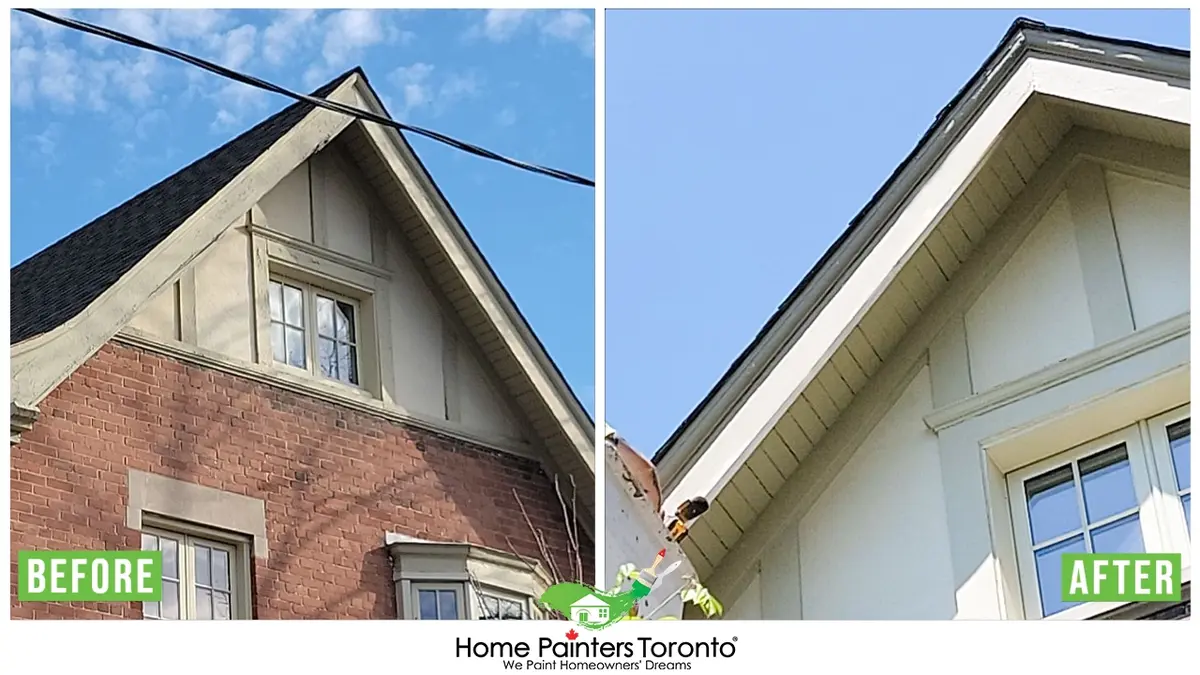
Matching new soffit to existing siding, brick, or trim usually rules out one material fairly quickly, since aluminum and vinyl come in a fixed factory colour range while wood can be custom painted to any shade a homeowner wants. A brick home with cream or almond trim will usually stay closest to its original look with factory aluminum, while a home already finished in exterior brick staining or a custom body colour often needs a painted wood or hand-matched aluminum solution to keep the roofline from looking mismatched.
- At a recent soffit and fascia repaint in the Kingsway area of Etobicoke, our crew recoated oxidized aluminum fascia with Sherwin-Williams Emerald Exterior Acrylic Latex in Satin, applying two coats at 4 to 5 mils wet film thickness measured with a wet mil gauge after degreasing and scuff-sanding the factory finish to promote adhesion.
- The home's original aluminum capping was nearing 30 years old and still structurally sound, so a proper repaint restored the colour match to the home's new aluminum siding painting at a fraction of full replacement cost.
Stucco homes present their own matching challenge, since exterior stucco siding often has a warmer, textured undertone that a stark white factory aluminum panel can clash against. In those cases, a custom colour-matched aluminum or a carefully sealed and painted wood soffit usually reads as more intentional than an off-the-shelf white panel.
Which Soffit Material Should You Choose
Most Toronto homeowners get the best long-term value from aluminum soffit unless the home is a character property that calls for wood profiles, or the budget rules out anything beyond vinyl for now. Aluminum wins on the combination of longevity, low upkeep, and cold-weather stability that matters most across a GTA winter, and it is the material our crews recommend by default when a homeowner has no strong reason to choose otherwise.
When Wood Still Makes Sense on Century Homes
Wood still makes sense on a heritage or century home where the original roofline profile is part of the property's character, and where a factory aluminum or vinyl panel would look visibly out of place next to original trim details. In those cases, the added maintenance is simply the cost of keeping the home's original architecture intact.
- Choose aluminum for the lowest lifetime maintenance and the best performance through Toronto winters, especially on standard subdivision and post-war homes.
- Choose vinyl when budget is the deciding factor and the roofline is well protected from impact, such as a rear elevation away from a driveway or play area.
- Choose wood on heritage properties, custom builds, or any home where matching an existing painted profile matters more than minimizing future upkeep.
Home Painters Toronto is WSIB compliant and fully insured on every soffit and fascia project, and all work is warranty-backed so the material recommendation made on-site holds up after the crew leaves. Homeowners weighing the options can see the reasoning behind past projects in our client reviews and browse examples in our recent painting and repair projects before deciding, or read more about why Toronto homeowners choose HPT for exterior work like this.
FAQ About Soffit Materials
Vinyl soffit can work in a cold climate, but it is more prone to cracking than aluminum once temperatures drop well below freezing. It performs best on protected elevations away from impact risk, and installers should follow manufacturer cold-weather clearance guidance to avoid buckled panels.
Aluminum soffit typically lasts 25 to 40 years when installed correctly, based on typical coil-coating manufacturer warranty terms. The finish can fade or chalk over time, but the panel itself rarely fails structurally within that window.
Vinyl soffit is not built for long-term repainting, since standard paint does not bond well to the flexible PVC surface and dark colours can cause warping from heat absorption. Aluminum and wood soffit both hold a repaint far better than vinyl over time.
Wood soffit is worth the extra maintenance mainly on heritage or character homes where matching original architectural profiles matters more than minimizing upkeep. On a standard home, most homeowners get better long-term value from aluminum.
Aluminum soffit can dent from a hard impact like a dropped ladder or large hailstone, though everyday weather will not dent it. A dented panel section can usually be replaced on its own instead of requiring a full roofline replacement.
Aluminum is usually the best soffit material for a brick Toronto home, since factory colours are chosen to complement common brick and mortar tones. A custom-matched painted option is worth considering only when the brick has already been stained or painted a non-standard colour.

Get Expert Advice on the Right Soffit Material
Aluminum, vinyl, and wood soffits all have a place on GTA rooflines, and the right one depends on the home's age, budget, and how much maintenance a homeowner wants to take on. Home Painters Toronto's crews assess the existing panel, the ventilation behind it, and how it needs to match the rest of the exterior before recommending a material, instead of defaulting to whatever is fastest to install.
Get fast free quotes and warranty-backed work on your next soffit and fascia project.
Contact Home Painters Toronto to get started.
Get a Free Estimate