

A home painting estimate in Toronto should read like a contract, not a guess. Homeowners across North York, Etobicoke, and the wider GTA often collect two or three quotes for the same project and end up with totals that do not line up at all. The gap usually comes down to what each home painting estimate actually spells out, not the skill of the crew behind it. A properly detailed estimate names the paint product, the number of coats, the prep work involved, and the payment schedule, so you can compare offers item by item instead of guessing which company left something out. This guide breaks down exactly what belongs on that document before you sign anything, and what its absence usually signals.
A complete home painting estimate includes the exact scope of work, the paint brand and number of coats, itemized prep work, separate labour and material costs, a project timeline, a payment schedule, and written warranty terms. Leaving out any of these makes it difficult to compare quotes fairly or hold a contractor accountable once the work begins.
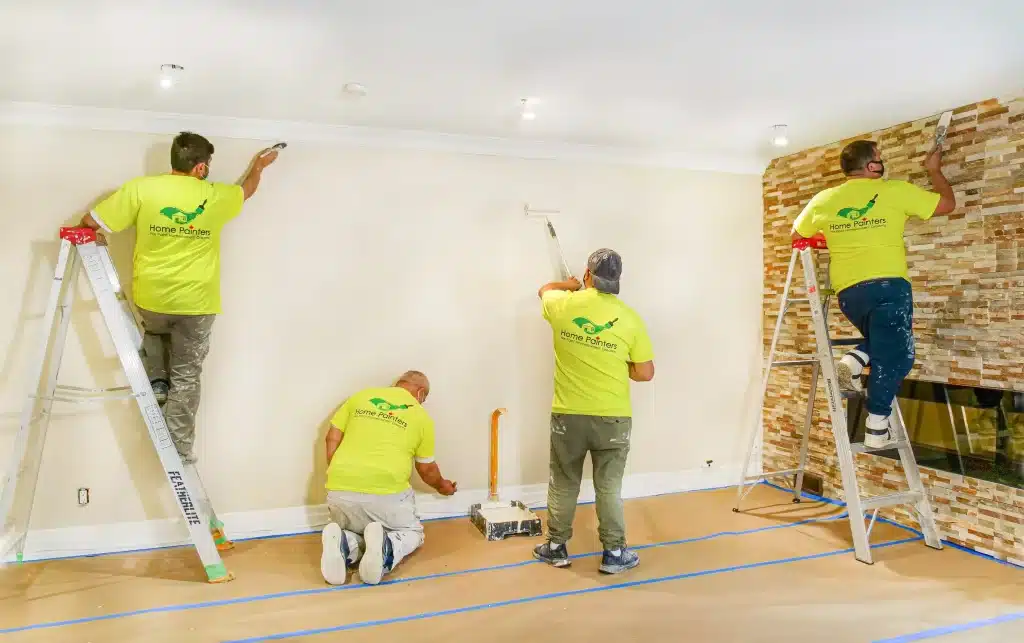
What a Complete Home Painting Estimate Includes
A complete home painting estimate includes nine core elements: scope of work, surfaces and rooms covered, prep work, number of coats, paint brand and product line, labour costs, material costs, project timeline, and payment schedule. Skipping even one of these makes an estimate hard to trust and hard to measure against a competing quote.
Toronto homeowners planning an interior project can start with HPT's interior painting calculator to get a rough baseline before requesting a formal estimate. For a broader look at typical price ranges before that step, our guide to the cost of painting a house covers ranges by project size. Neither tool replaces the itemized document a contractor should hand over before work starts.
- Scope of work, stating which rooms, elevations, or surfaces the crew will paint by name.
- Surfaces covered, including walls, ceilings, trim, doors, and any areas specifically excluded.
- Prep work, covering scraping, sanding, caulking, priming, and any drywall or wood repair.
- Number of coats, since one coat and two coats are priced and warrantied differently.
- Paint brand and product line, named specifically instead of described as "quality paint."
- Labour costs, whether shown as a separate figure or folded into the total.
- Material costs, covering paint, primer, caulking, and site supplies.
- Project timeline, with a start date, expected duration, and weather notes for exterior work.
- Payment schedule, spelling out the deposit, any progress payments, and the final balance.
Home Painting Estimate Checklist for Toronto Homeowners
Use this checklist when you sit down with a quote from any home painting estimate, whether it covers a single room or a full exterior repaint.
| Line Item | Why It Matters |
|---|---|
| Scope of work | Confirms which rooms or exterior elevations are actually covered |
| Prep work | Prevents disputes over what "prep" was supposed to include |
| Paint brand and sheen | Determines durability, cleanability, and warranty eligibility |
| Number of coats | Affects both price and long-term coverage |
| Payment schedule | Protects you from paying most of the balance before work starts |
Larger exterior projects generally need more detail on this checklist than a single-room touch-up, since elevation count, substrate type, and access equipment all add their own line items. A full exterior repaint on a two-storey home should still name each of these nine elements, even if some are grouped under a single elevation-by-elevation breakdown instead of a room-by-room one.
Labour and Materials: How a Proper Estimate Breaks Them Down
A proper home painting estimate separates labour and materials into two distinct categories, even when the final number is shown as one lump sum. Some Toronto contractors itemize labour and materials on separate lines. Others combine them into a single scope-based price and provide the breakdown only if you ask for it. Both approaches can be legitimate, as long as the contractor is willing to explain where the money goes when you request it.
Materials typically include paint, primer, caulking, drop cloths, tape, and any specialty coatings such as elastomeric products for exterior masonry. Labour covers crew time for prep, application, and cleanup, and it usually represents the larger share of a residential repaint. If a home painting estimate cannot tell you roughly how the total splits between the two, ask before signing. A contractor who cannot answer this in plain terms is often the same contractor who struggles to answer questions about warranty coverage later.
This distinction matters most when comparing a full interior job against a smaller one, such as a single kitchen cabinet painting project, where materials make up a much larger share of the total because of the specialty primers and sprayed finishes involved.
A home painting estimate sometimes bundles labour and materials because the contractor buys product in volume and prefers a flat scope price over tracking receipts by room. This is not a red flag by itself. The concern only starts when a company refuses to explain the split at all, since that usually means the underlying numbers were never worked out carefully in the first place.
Why the Paint Product and Coat Count Belong on Every Line Item
The paint product and coat count belong on every home painting estimate because they determine how long the job lasts and whether HPT's warranty terms even apply. A lifetime interior warranty or a three-year exterior warranty is tied to a specific product and a specific number of coats, not to painting in general. If an estimate only says the job includes quality paint, there is no way to confirm which product was actually used if a problem shows up two years later.
Manufacturer technical data sheets set the standard here. Benjamin Moore's published technical data for its exterior coatings outlines spreading rate and recommended film build for each product line, and a contractor working from those figures can explain how many litres a given room or elevation needs and why two coats are specified instead of one on a colour change, instead of estimating by eye.
Low-VOC and zero-VOC formulations add another detail worth naming on the estimate, since some product lines require longer dry times between coats to reach full VOC compliance indoors. A home painting estimate that names the product line will usually name its VOC rating in the same breath, which matters most in bedrooms, nurseries, and other rooms with limited ventilation during the project.
Sheen and Product Line: Why "Quality Paint" Isn't a Line Item
Sheen changes how a surface performs, not just how it looks. Eggshell and satin finishes clean more easily than flat finishes in kitchens and hallways, while a low lustre exterior finish resists chalking better than a high-gloss product on brick trim exposed to direct sun. An estimate for interior residential painting should name the sheen for each room instead of grouping every surface under one generic line, and the same standard applies to a kitchen cabinet painting estimate, right down to the spray finish and cure time between coats.
Prep Work That Should Be Spelled Out Before You Sign
Prep work belongs in its own itemized section covering scraping, sanding, caulking, priming, and any drywall or wood repair needed before paint goes on. This is the part of a home painting estimate most likely to get compressed into a single vague line, and it is also the part that determines whether the finish holds up over time.
- Scraping and sanding, to remove loose or failing paint down to a sound surface.
- Caulking, closing gaps around trim, windows, and doors before priming begins.
- Spot priming, sealing bare wood, patched drywall, or stained areas so the topcoat cures evenly.
- Drywall repair, patching holes, cracks, or water stains before any paint is applied.
- Surface cleaning, removing dust, grease, or mildew that would otherwise block adhesion.
Skipping primer on bare substrate is one of the most common causes of early paint failure, since the topcoat has nothing stable to bond to. An estimate that lumps prep into one unexplained line, especially on a job that includes drywall repair and installation or exterior wood repair, is worth questioning before you approve it.
Exterior prep raises a few extra questions worth asking. Power washing should run at a controlled water pressure low enough to clean the surface without forcing moisture into wood siding or brick, and bare wood should generally test below roughly 15 percent moisture content, a common threshold in PDCA application standards, before primer goes on. An estimate for exterior work should note whether this kind of surface testing is part of the process or left to the crew's judgement on-site.
Payment Schedule and Deposit Terms to Expect in Ontario
A fair payment schedule spreads cost across a deposit, one or two progress payments on larger jobs, and a final balance held back until the punch-list walkthrough is complete. In Ontario, once you accept a written estimate, it generally becomes part of the contract, and the final price should not run far above that accepted figure without your agreement. Ontario's consumer guidance on home renovations and repairs confirms that a proper estimate should describe the work and list products, services, and prices before it becomes part of the agreement.
A deposit in the range of 10 to 30 percent is common for residential painting projects across the GTA, with the remainder split between progress and completion. Be cautious of any home painting estimate that asks for most of the total before the crew has finished, since that removes your leverage if the final walkthrough turns up unfinished work. Our FAQ page covers more of these process questions if you want to review them before requesting a quote.
A payment schedule also ties into warranty paperwork more than most homeowners expect. Many warranty registrations require proof of the final invoice and the product used, so a payment structure that never produces a clear final document can make a future warranty claim harder to support. Ask whether the final invoice will match the original estimate line by line, since a mismatch between the two is where most disputes actually start.
Red Flags That Signal an Incomplete or Vague Estimate
An incomplete estimate usually shows itself through vague language, missing prep detail, or a payment schedule that front-loads most of the cost before work starts. Watch for these signs before you approve any home painting estimate.
- No named paint brand, sheen, or product line, only "quality paint."
- No stated coat count, leaving room coverage to guesswork.
- Verbal pricing only, with nothing written down to reference later.
- A deposit well above 30 percent of the total project cost.
- No project timeline or start date, even for a multi-day job.
- No mention of warranty terms or a final walkthrough before payment.
Reading through verified client reviews before you sign is a reasonable way to see whether a company's past estimates actually matched what happened on-site.
None of these red flags mean a company is dishonest. A smaller, newer crew might genuinely price by feel instead of by a formal system. What matters is whether the company can fill in the missing detail the moment you ask for it. A contractor who welcomes the question and updates the estimate in writing is a very different risk than one who brushes it off or asks you to just trust the total.
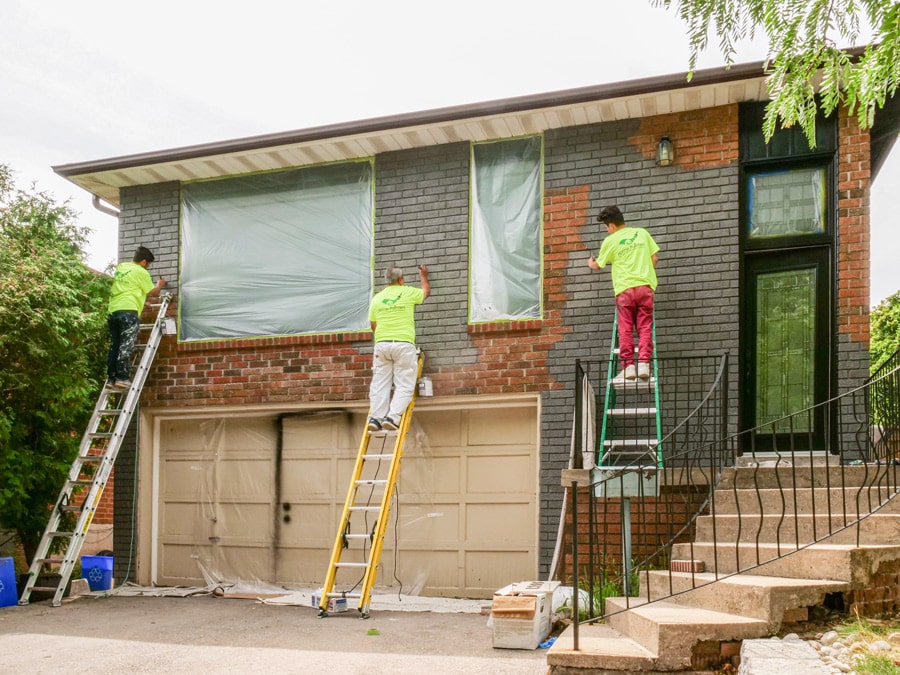
A Recent Toronto Estimate, Line by Line
At a recent interior repaint in Leslieville, the estimate we handed the homeowner broke the project into exactly the line items described above, and it is a useful example of what a complete document looks like in practice. The house was a two-storey semi-detached with a combined living and dining room, and the homeowner had two competing quotes that each listed only a single total.
- Our estimate specified Benjamin Moore Ben Interior in Eggshell for the walls, applied in two coats over a spot-primed surface, since the existing paint was a darker accent colour that needed full coverage before the new tone would read true.
- The crew measured a wet film thickness of roughly 3.5 to 4 mils per coat during application, consistent with the spreading rate Benjamin Moore lists for that product line, which confirmed the room would need slightly more than one litre per coat once trim and ceiling cutting-in were factored into the total.
- The estimate itemized prep work, which covered two patched drywall dents and caulked baseboard gaps, separately from labour and materials. The payment schedule called for a deposit at booking, a progress payment after the first coat, and the balance due only after the final walkthrough confirmed the punch list was clear.
Mil Thickness and Coverage Rate on This Job
The homeowner later told the project manager that her other two quotes had simply listed a total price for the room with no mention of brand, sheen, or coat count. Neither of those other estimates could tell her why one price was nearly double the other. Once she saw the coat count and product line spelled out on our version, the price difference made sense on its own, without needing to guess whether one contractor was cutting corners.
| Line Item | Estimated Range |
|---|---|
| Living and dining room walls (2 coats) | $400 - $900 |
| Trim, doors, and baseboards | $700 - $1,200 |
| Drywall patch and caulking prep | Included in scope |
| Total project (this scope) | $1,500 - $2,400 |
The homeowner could compare this against her other two quotes item by item instead of comparing two unexplained totals. That is the entire point of an itemized home painting estimate, and the same standard applies to an exterior residential painting quote as much as it does to an interior one. Every crew we send out is WSIB compliant and fully insured, and the estimate reflects warranty-backed results tied to the exact product and coat count specified, not a general promise. You can see similar completed projects in our portfolio of Toronto painting work.
Home Painting Estimate FAQs
Yes, a painting estimate should name the exact paint brand, product line, and sheen for every surface. This is the only way to confirm the correct product was used if a warranty claim comes up later, and it lets you compare quotes that might otherwise look similar on price but very different in quality.
Two estimates usually differ because they assume different scopes, not because one contractor is simply charging more for the same work. One quote might include two coats and full prep while another assumes one coat and minimal prep, so the totals are not actually comparable until you line up what each one covers. Ask each company to confirm coat count and prep scope in writing before comparing the bottom line.
A verbal estimate is difficult to enforce in Ontario because there is nothing written to reference if a dispute comes up. Once you accept a written estimate, it becomes part of your contract, which is why a home painting estimate should always be provided in writing before work starts.
The final bill should not run significantly higher than an accepted estimate unless you approved additional work along the way. Ontario's consumer guidance generally treats a large unapproved increase over the accepted price as a red flag, so any noticeable jump should be questioned before you pay it.
Prep work should be itemized separately, or at minimum clearly described, since it is the part of the job most likely to be shortened when contractors compete on price. An estimate that folds prep into one vague line makes it hard to know what you are actually paying for, and it gives a company an easy place to cut corners without you noticing until the topcoat starts failing.
Most homeowners get two to three quotes before choosing a painting contractor, which is enough to compare pricing structures and estimate detail without dragging the process out. What matters more than the number of quotes is whether each one is itemized enough to compare fairly. If you want a second opinion on a quote you already have, contact our team, and we can walk through it with you.
Getting a Home Painting Estimate You Can Actually Compare
Getting an estimate you can actually compare comes down to insisting on the details this guide has covered: named products, coat counts, itemized prep, a clear payment schedule, and warranty terms in writing. A contractor who is confident in their process will not hesitate to put these on paper.
Home Painters Toronto has served Toronto and the GTA since 1991, and every estimate we issue for interior painting or exterior painting work follows this same itemized format. If you want to see why homeowners keep choosing us for these projects, our About Us page covers our process in more detail.

Ready to see what a fully itemized home painting estimate looks like for your own project? Home Painters Toronto provides fast, free quotes and warranty-backed work for interior and exterior projects across Toronto and the GTA.
Get a Free Estimate