

Hidden repairs during home painting are a normal part of repainting older houses in Toronto, where much of the housing stock is decades old. Once a crew scrapes failing paint or pulls a loose trim board, soft wood, cracked parging, or water-stained sheathing can show up for the first time. At Home Painters Toronto, a family-run company serving Toronto and the GTA since 1991, our crews have handled these surprises across 20,000+ homes painted. What protects you is a clear process: stop, document, price, and get written approval before any extra work starts. This guide explains that process from the field, backed by the same approach behind our 1,200+ positive reviews on HomeStars, Google, and Houzz.
When a painting crew uncovers hidden damage mid-project, work stops on that area only. The crew shows the homeowner the problem, records moisture readings and photos, and presents written repair options with a price. Nothing proceeds until the homeowner signs a change order, and Ontario rules cap charges at 10% over a contract estimate without that signature.
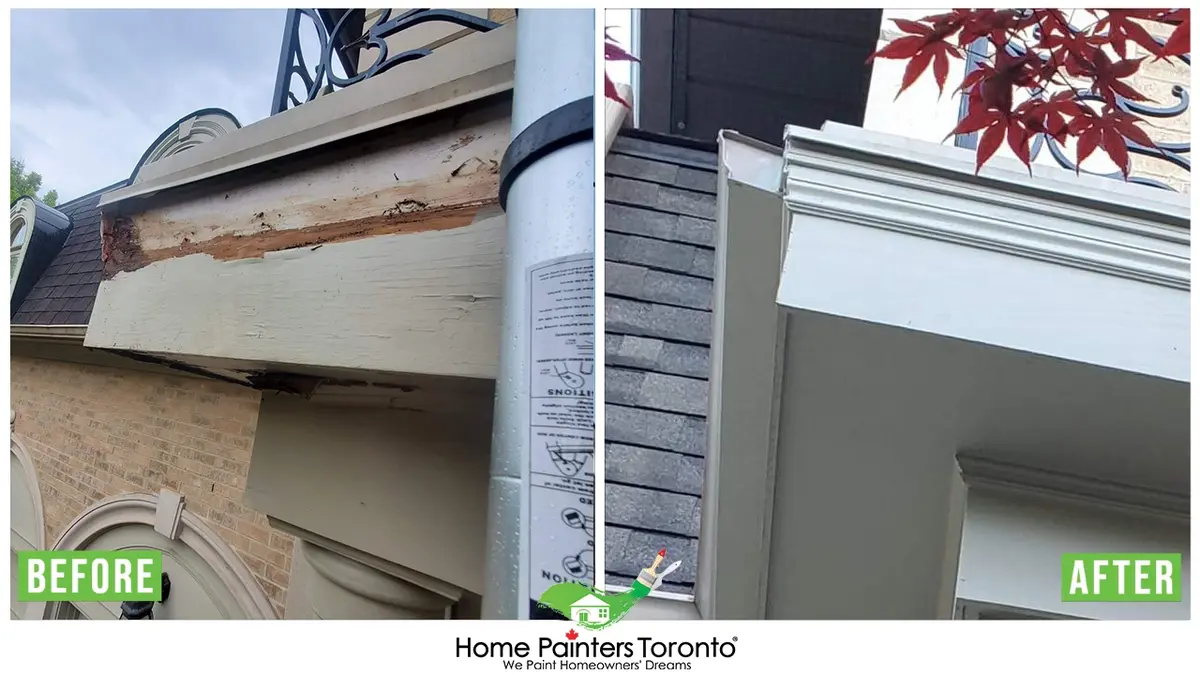
Proper prep is what uncovers hidden damage before the primer goes on
Why Hidden Repairs Get Discovered During Home Painting
Hidden repairs get discovered during home painting because proper surface preparation strips away the layers that were hiding the damage. Paint film is flexible, so it can bridge over a soft sill or a rotted fascia board for years. From the street, the house looks fine. Up close, a scraper or a probe tells a different story.
Good prep is aggressive by design. Crews scrape loose coatings, sand to a sound edge, cut out failed caulk, and probe every horizontal wood surface. Each of those steps exposes the substrate that the new coating will bond to. If the substrate is wet or decayed, the crew finds out before the primer goes on.
Toronto weather speeds up this hidden wear. Water gets behind cracked caulk or through an open end grain, and repeated freezing and thawing through the winter widens those gaps. The damage grows from the inside out, which is why it often shows no warning signs until the old paint comes off. Any thorough exterior painting job will turn up at least some of it on an older home.
The discovery itself is not a sign of a bad contractor or a neglected house. It is a sign that the crew is preparing the surface properly. The real test of a painting company is what happens in the next ten minutes.
The Most Common Hidden Issues Found Behind Old Paint
The most common hidden issues found behind old paint are rotted window sills, soft fascia boards, failed caulking, decayed porch wood, and cracked foundation parging. Each one sits where water collects or where end grain is exposed. The table below shows where each problem hides, and the warning signs a crew looks for during prep.
| Hidden Issue | Where It Hides | Warning Sign During Prep | Typical Fix |
|---|---|---|---|
| Rotted window sills and frames | Bottom rails, sill noses, joints at corners | Probe sinks in, paint lifts in sheets | Epoxy consolidation or sill section replacement |
| Soft fascia and soffit boards | Behind eavestroughs and at roof edges | Dark staining, swollen grain, loose nails | Board replacement, then prime all six sides |
| Failed caulking at openings | Window and door perimeters | Caulk cracks, pulls away, or crumbles | Cut out and recaulk with a paintable sealant |
| Decayed porch floor and posts | Post bases, board ends, stair treads | Soft spots, fungal growth at end grain | Replace affected boards or post bases |
| Loose or split siding | Lower courses near grade, behind downspouts | Boards flex or gaps open when pressed | Siding repair and refastening |
| Cracked foundation parging | Grade line on block or poured foundations | Hollow sound when tapped, flaking coat | Remove loose parging and reapply |
| Water-damaged drywall (interior) | Under windows, below bathrooms, ceilings | Soft paper, brown rings, bubbling paint | Cut out, replace, tape, and prime |
Most of these repairs sit outside what a paint crew alone can fix. Soft roof edges need proper soffit and fascia repair, and decayed sills often need window wood repair before any coating goes on. Open joints around frames call for fresh exterior caulking for windows and doors.
Lower on the house, split boards may need professional siding repair, while soft steps and post bases fall under porch wood repair. At grade, hollow or flaking coatings need foundation parging repair before the area can be finished. Inside the home, stained ceilings and bubbling walls usually point to drywall repair after the leak source is fixed.
What Happens the Moment Hidden Damage Is Found
The moment hidden damage is found, a professional crew stops work on that area, protects it, and brings the homeowner in to see it before anything else happens. Work on unaffected parts of the house usually continues. That keeps the schedule moving while the repair decision is made. Here is the sequence our crews follow on every project.
- Stop work on the affected area. No primer, filler, or caulk goes over suspect wood until it has been assessed.
- Protect the opening. Exposed wood or sheathing gets covered so rain cannot soak in while the decision is pending.
- Show the homeowner the damage in person. The crew lead points out soft spots with a probe and explains the likely water source.
- Take moisture readings and photos. Numbers and images go into the project file so the findings are clear and on record.
- Present written repair options. Each option lists the scope, the price, and any change to the timeline.
- Get a signed change order. The homeowner approves the chosen option in writing before the carpenters start.
- Repair, recheck, then paint. The new or consolidated wood is tested again before primer and topcoats go on.
The key step is number six. A verbal "go ahead" at the ladder is not enough protection for either side. A signed change order records exactly what was agreed, which prevents billing disputes at the end of the job.
Documenting Damage With Moisture Readings and Photos
A pin-type moisture meter gives a number that removes guesswork from the conversation. Painting industry specifications that follow Master Painters Institute (MPI) guidance set 15% as the maximum wood moisture content before coating. A reading well above that line on one board, next to a normal reading on sound trim nearby, shows the homeowner exactly where the problem is. Photos taken beside the meter display make the record easy to review later.
Good documentation also protects your warranty and your resale file. If a buyer or home inspector later asks about a replaced fascia or sill, you have dated photos and readings. That record is worth asking for on any project where hidden repairs come up.
How Scope and Pricing Changes Are Handled in Ontario
Scope and pricing changes for hidden repairs are handled through a written change order that becomes part of your original painting contract. Ontario gives homeowners real protection here. According to the Government of Ontario, a contractor cannot charge more than 10% above an estimate included in your contract unless you agree to new work and sign a change. The same guidance says any home renovation contract over $50 must be in writing.
In practice, that means hidden repairs are priced as a separate line, not folded into the painting price. Your base quote covers the painting scope you approved. The repair gets its own scope, price, and signature. That keeps the painting estimate clean and makes each added cost easy to trace.
The table below shows typical exterior painting ranges by home size and the hidden repairs most often quoted alongside each. Repair pricing depends on the length of board replaced, the wood species, and access, so it is always quoted after the damage is exposed and measured. For a full breakdown of base painting costs, see our guide to the cost of painting a house.
| Home Size | Exterior Painting Range (CAD + HST) | Hidden Repairs Often Quoted Alongside |
|---|---|---|
| Small | $2,000 – $4,000 | Sill sections, door trim, caulking |
| Medium | $4,000 – $8,000 | Fascia runs, window frames, porch boards |
| Large | $8,000 – $10,000 | Multiple fascia runs, siding courses, soffits |
| Extra large | $12,000 – $30,000 | Porch systems, Tudor boards, parging at grade |
How Hidden Repairs During Home Painting Affect Your Warranty
Hidden repairs during home painting affect your warranty because no contractor can back a finish applied over failing wood. Paint bonds to the surface below it. If that surface is decaying, the coating will lift no matter how well it was applied. Fixing the substrate first is what makes coverage possible.
Home Painters Toronto offers a 3-year warranty on exterior painting and a lifetime warranty on interior painting, subject to current terms and conditions. Ask for the repaired areas to be listed on your change order. That way, the new wood and the finish over it are clearly part of the warranty-backed work you are paying for.
Why Painting Over Soft Wood Guarantees Early Failure
Painting over soft wood guarantees early failure because paint cannot stop decay that is already feeding on moisture inside the board. Fresh coating can even speed up the damage. A new, tight paint film slows the rate at which trapped water escapes. The wood stays wet longer, and the fungus keeps working behind a surface that looks brand new.
Rot is a moisture problem first. The USDA Forest Products Laboratory Wood Handbook explains that decay fungi need wood moisture near the fibre saturation point, roughly 30%, to start breaking wood down. Keep wood dry and decay stalls. Leave the water source in place, and no coating system will hold.
This is where many low bids fall apart. Some crews fill soft spots with painter's putty or auto body filler and paint straight over them. The repair looks sharp at the final walkthrough. By the second or third winter, the filler pops loose, the paint peels in a ring around it, and the rot has spread further along the board.
The right sequence is always the same. Find and stop the water source, remove or consolidate the decayed wood, confirm the moisture reading is back in range, then prime and paint. Skipping any one of those steps shifts the cost into the future and makes it larger.
Epoxy Consolidation vs. Full Board Replacement
Epoxy consolidation suits small, localized rot on detailed or hard-to-replace pieces, while full board replacement suits long runs of decay or any piece that carries load. Carpenters choose between them after probing to find where sound wood begins. The comparison below shows how each method fits common hidden repairs.
| Factor | Epoxy Consolidation | Full Board Replacement |
|---|---|---|
| Best for | Small pockets of rot on sills and trim details | Long runs of fascia, porch boards, siding |
| Keeps original wood | Yes, saves profiled or heritage pieces | No, new material is milled or matched |
| Structural use | Not suited to load-bearing parts | Required for posts, treads, and framing |
| Cure and prep time | Needs full cure before sanding and priming | New boards need priming on all six sides |
| Main risk if done poorly | Rot left behind the epoxy keeps spreading | Poor joints let water back in at the ends |
Our in-house carpenters handle both methods, which is why exterior carpentry and wood repair can happen in the same visit as the painting. You avoid booking a second trade, waiting on their schedule, and then waiting again for the painters to return.
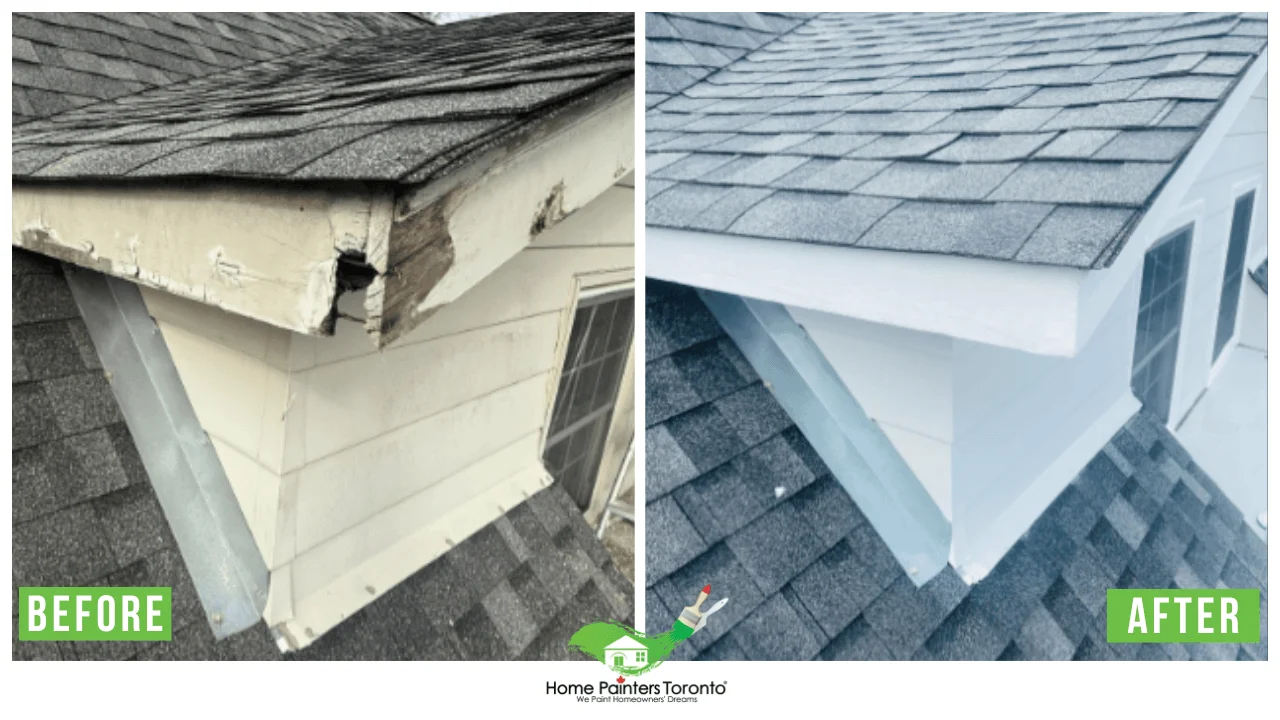
In-house carpenters let repair and repaint happen in one visit
Our Recent Hidden Rot Repair in Leaside
On a recent exterior repaint of a 1940s brick home in Leaside, our crew found soft fascia and two decayed window sills during the scraping stage. The front of the house looked sound from the sidewalk. Once the old paint came off the second-storey fascia, a probe sank almost a full centimetre into the wood. We stopped work on that elevation right away.
Our moisture meter read 31% on the damaged fascia. Sound trim a metre away read 11%. The cause was an eavestrough that had been overflowing behind the fascia for several seasons. We covered the exposed area, walked the homeowners through the photos and readings, and presented two options in writing that same afternoon.
The homeowners signed a change order to replace the full fascia run on that side and to consolidate the two sills with epoxy. Our carpenters removed the rotted boards, installed new stock primed on all six sides, and rebuilt the sill noses. The eavestrough was cleared and refastened to stop the overflow. Before any paint went on, every repaired surface read below the 15% MPI limit.
We primed the new wood with Benjamin Moore Fresh Start High-Hiding All Purpose Primer. Two finish coats of Benjamin Moore Aura Exterior in Low Lustre went on at 14°C. That sits well above the 4°C (40°F) minimum application temperature Benjamin Moore lists for Aura Exterior. The repair added two working days to the project, and the rest of the house stayed on schedule because the crew kept painting the other elevations.
This is how exterior residential painting should run when surprises appear. The homeowners saw the problem, understood the cause, approved the fix in writing, and got a finish that will actually last.
Hidden Repairs FAQs
A professional crew stops work on the rotted area and shows you the damage before doing anything else. They take moisture readings and photos, explain the likely water source, and give you written repair options. The rest of the house can usually keep moving while you decide. Nothing gets repaired or painted over until you approve it.
Yes, hidden repairs are extra work, so they are priced separately from your painting quote. Under Ontario rules, a contractor cannot go more than 10% over an estimate in your contract without your signed agreement to the new work. A good company gives you the repair price in writing before starting. You should never see a surprise line on the final invoice.
Some painting companies can fix rotted wood, but only if they have carpenters on staff. Home Painters Toronto has in-house carpenters who handle fascia, soffits, sills, siding, and porch wood. That means the repair and the repaint happen in one project. Companies without carpenters will need to bring in a second trade, which adds delay.
You can decline a repair, but a reputable contractor will not paint over active rot. The coating will fail over decaying wood, so the area would be left out of the warranty. Most crews will skip that section or leave it primed only until you decide. Painting over the damage only hides it and lets it spread.
Most hidden repairs add one to three working days to a typical exterior painting project. Small sill or trim repairs can often be done the same day they are found. Longer fascia runs or porch repairs take more time, and epoxy needs to cure before sanding. Weather and wood drying time can also affect the schedule.
Finding some rot is common when repainting an older Toronto home, especially on sills, fascia, and porch boards. These areas collect water and expose end grain to the weather. Houses with overflowing eavestroughs or old, cracked caulking are the most likely to have it. A pre-project walkthrough with a probe catches much of it before the quote is signed.
Planning for Hidden Repairs Before Your Painting Project Starts
The best way to plan for hidden repairs is to ask for a pre-project inspection and a written repair process before you sign a painting contract. A contractor who probes sills and fascia during the estimate can flag likely trouble spots early. That gives you a realistic budget and fewer surprises once work begins. Use this checklist when comparing quotes.
- Ask whether the estimator will probe wood trim, sills, and fascia during the site visit.
- Confirm the company uses written, signed change orders for any added work.
- Ask if carpenters are on staff or if repairs go to an outside trade.
- Request moisture readings and photos for any damage found mid-project.
- Check that the estimate is written into the contract, so Ontario's 10% rule applies.
- Confirm how repaired areas are treated under the warranty terms.
Home Painters Toronto is WSIB compliant, fully insured, and backs its work with some of the strongest warranties in the GTA. Founder Brian Young has worked in the painting industry since 1987, and our crews bring that experience to every repair decision. You can read what homeowners say about how we handle these situations in our client reviews.

If you are planning a repaint and want a crew that will find hidden damage, explain it clearly, and fix it properly before painting, we are ready to help. We offer fast, free quotes and warranty-backed work across Toronto and the GTA.
Contact Home Painters Toronto