

What Is Aluminum Siding Corrosion and Why Does Toronto Make It Worse?
Aluminum siding corrosion is one of the most overlooked threats to GTA home exteriors. It creeps in quietly, eating away at paint and metal long before most homeowners notice anything wrong. By the time the chalking, pitting, or bubbling becomes obvious, the damage is already well underway.
Toronto's climate is especially hard on aluminum. The city uses heavy volumes of road salt every winter, and freeze-thaw cycles push that chloride-laden moisture directly into any gap in your siding's paint film. Homes near major roads face additional road spray, which delivers a concentrated dose of salt and grime at tire height, season after season.
This article explains exactly what is happening to your siding, what the warning signs look like, and how professional painting stops the cycle before it costs you a full replacement.
What you'll learn in this article:
Why Aluminum Siding Corrosion Hits Toronto Homes Harder Than Most Cities
Aluminum siding corrosion begins when chloride ions, the active ingredient in road salt and salt-laden air, breach the paint film on your siding. Aluminum doesn't rust like steel or iron. Instead, it reacts with chloride to form aluminum chloride, which disrupts the natural oxide layer that normally protects the metal.
Once that protective layer is compromised, the metal beneath starts to pit. You see this as tiny craters in the surface or white powdery deposits. Left unchecked, the pitting spreads and the paint above it begins to bubble, flake, and fail.
Toronto's road treatment program applies significant volumes of de-icing salt each winter. Research published by the International Molybdenum Association confirms that cities, including Toronto, experience very high chloride exposure and that corrosion can appear within the first year of salt contact on unprotected metal. That timeline is sobering for anyone with aging aluminum siding.
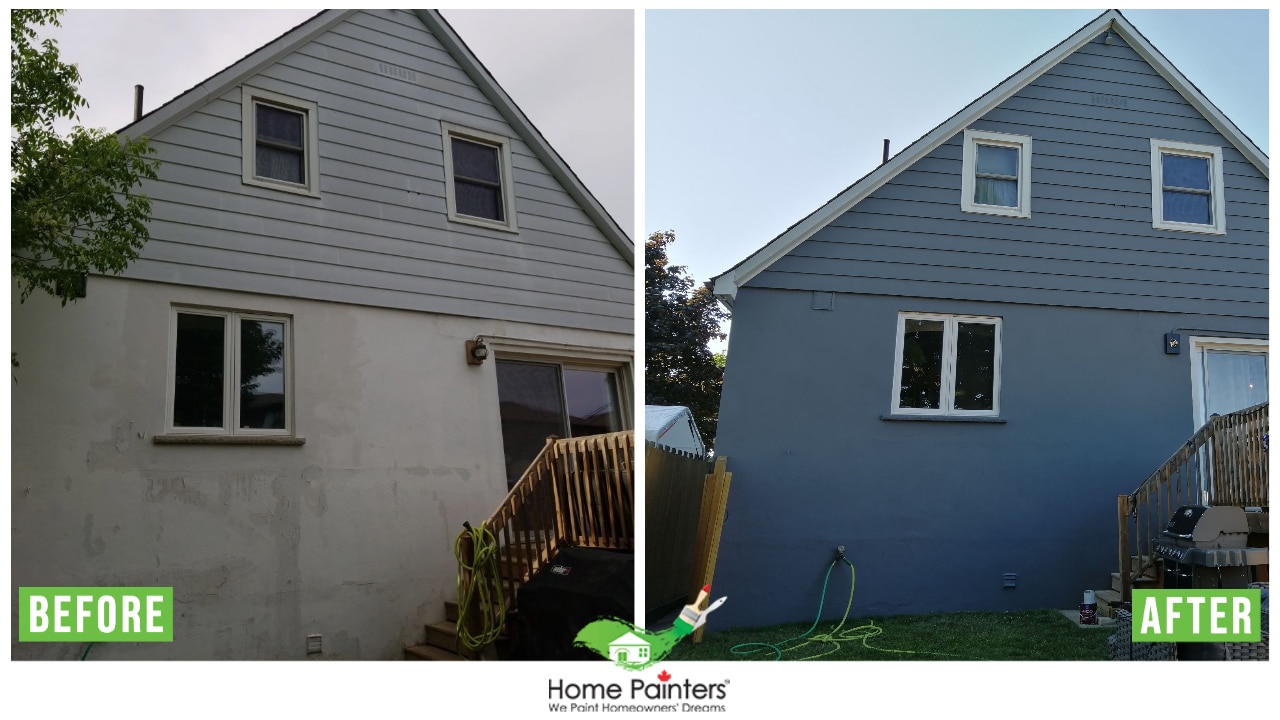
How Road Salt Actually Gets onto Your Siding
Most homeowners picture salt damage as something that affects the base of a wall, near the ground. The reality is more widespread. Vehicles travelling at speed generate tire spray that can reach two to three metres up a wall. Sidewalk salt tracked onto driveways migrates as runoff. Wind-carried road dust deposits chloride across the full face of a home.
The lower panels of your siding take the hardest hits. However, homes on busy streets or corner lots often show corrosion across the full elevation, not just at ground level. Any home within a block of a plowed arterial road is at measurable risk each winter.
Salt doesn't act alone, either. It holds moisture against surfaces longer than rain does. That extended contact gives chloride more time to penetrate micro-cracks in old or thin paint films.
The Role of Freeze-Thaw Cycles in Paint Failure
Toronto averages dozens of freeze-thaw cycles each winter. Each cycle is a small but damaging event for your siding paint.
When moisture that has penetrated a crack in the paint film freezes, it expands. That expansion pushes against the paint from underneath. When it thaws, the paint relaxes but doesn't seal back perfectly. Over dozens of cycles, small cracks become large ones, and what started as a hairline failure becomes a patch of missing paint.
Salt water has a lower freezing point than fresh water, so it stays liquid longer and penetrates deeper before it freezes. That makes it especially destructive inside the micro-cracks in your siding's paint. A paint film in good repair resists this cycle. A paint film that is already aged, thin, or chalking provides almost no resistance at all.
Warning Signs of Aluminum Siding Corrosion Every GTA Homeowner Should Know
Catching corrosion early saves money and preserves more of your existing siding. For a deeper guide on protecting your siding, check out painting your aluminum siding can save you thousands. Here are the signs to watch for:
Run your hand along the siding. If a white or grey powder comes off on your palm, the paint binder has broken down. The paint is no longer protecting the aluminum beneath it.
Bubbles under the paint surface mean moisture has gotten between the paint and the metal. Salt water is often the driver in Toronto homes.
Tiny craters or rough patches in the metal itself, visible where paint has fully peeled away, indicate active corrosion. Pitting cannot be reversed. It can only be stabilized and recoated.
These are aluminum oxide and aluminum chloride compounds forming on the surface. They look like white film or powder in crevices and around fasteners.
Fasteners are a weak point. Salt water runs along them and concentrates at the hole edges. Rust-coloured or white streaks below screws and nails signal early corrosion that will spread if left untreated.
The horizontal overlaps between siding panels trap moisture. Peeling that starts at those edges is a reliable early warning.
Does Salt Air from Lake Ontario Affect Inland Toronto Homes?
This is a common question from GTA homeowners, and the answer is worth understanding clearly.
Lake Ontario is a freshwater lake, so it does not produce the same airborne chloride levels as an ocean coastline. Direct salt air from the lake is not the primary threat for most Toronto homes. However, research from Linetec, an architectural aluminum finishing authority, notes that significant airborne chloride deposits from even freshwater industrial environments can affect metal finishes at meaningful distances. More importantly, road salt in Toronto is the dominant chloride source, and it is not limited to waterfront areas.
Homes in Etobicoke, North York, Scarborough, and Mississauga face the same road salt exposure as those in the downtown core. The threat is citywide, not just near the waterfront.
Why Old Paint Makes Aluminum Siding Corrosion Much Faster
The original factory finish on aluminum siding was applied under controlled conditions using baked-on enamel. That factory finish was tough. However, most Toronto homes with aluminum siding are decades old, and that original finish has been weakening for years.
As factory paint ages, it oxidizes. The surface becomes chalky and porous. A porous surface absorbs moisture instead of shedding it. Once the film becomes permeable, chloride from road spray and salt air has a direct pathway to the metal.
Each coat of house paint applied over the years either slowed this process or accelerated it, depending on how the prep was done. Paint applied over a chalky surface without proper cleaning and priming tends to peel faster than the original finish. You end up with multiple failing paint layers on top of corroding metal, which is exactly the situation that makes professional remediation necessary.
Proper priming aluminum siding is not optional at this stage. It is the difference between a finish that lasts a decade and one that begins failing in two or three years.
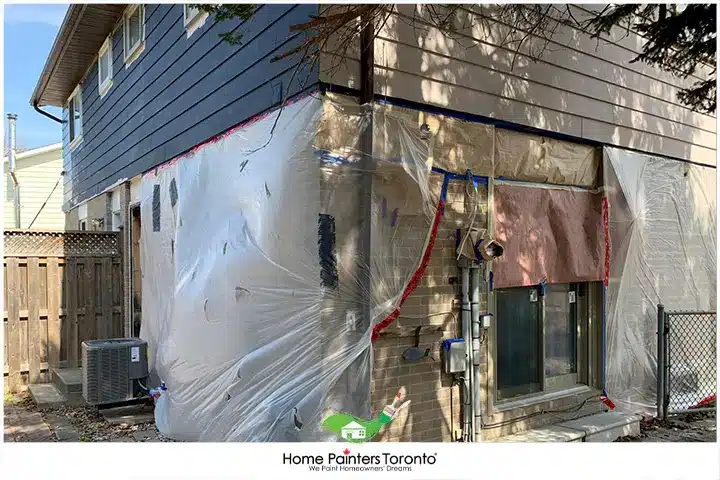
How Professional Painters Stop Aluminum Siding Corrosion
Professional aluminum siding painting addresses corrosion at the source. It does not simply cover up the problem.
This process, done correctly, produces a finish that can last eight to twelve years on Toronto aluminum siding. A rushed DIY job that skips steps two and three is typically looking at peeling within two to four years, with corrosion worse underneath than it was before.
Can You Paint Corroded Aluminum Siding Yourself?
You can. However, it is worth being honest about the gaps between a DIY outcome and a professional one.
The mechanical prep work is physically demanding and time-consuming. Properly cleaning and sanding a full home exterior takes most weekenders multiple days. Identifying and treating active corrosion correctly requires knowledge of which products work on aluminum specifically and how to apply them.
Choosing the wrong primer is a common and costly mistake. Some primers designed for wood or steel do not adhere properly to aluminum and will cause premature peeling. The same applies to finish coats: standard latex formulations may not flex enough through a Toronto winter.
Rental equipment, materials, safety equipment for working at height, and the time investment add up faster than most homeowners expect. And if the prep work is incomplete, you're painting over a problem that will re-emerge, usually within two seasons.
For homeowners with early-stage chalking on a smaller home, a careful DIY project with the right products can buy some time. For anything involving active pitting, multiple failing paint layers, or a full home with significant corrosion, the risk/reward calculation favours calling a professional.
Aluminum siding painting in Toronto handled by an experienced crew means the prep is done thoroughly, the right materials are used, and the result is backed by a warranty.
How Toronto's Housing Stock Makes Aluminum Siding Issues Common
Aluminum siding became popular in Toronto and the GTA during the 1950s through the 1970s. Post-war bungalows, semi-detached homes, and two-storey houses in neighbourhoods like Scarborough, East York, Etobicoke, and North York were commonly clad in aluminum siding during this era.
That housing stock is now 50 to 70 years old. The original factory finishes on these homes have been weathered, repainted, and weathered again. Many have never had a professional paint job that properly addressed the substrate.
As a result, a significant portion of GTA aluminum-sided homes are sitting with multiple layers of failing paint over corroding metal. The good news is that aluminum siding, properly treated and repainted, can last another generation. Replacement costs far more than remediation. The window to act effectively is open, but it closes as corrosion advances deeper into the metal.
Why Home Painters Toronto for Aluminum Siding Corrosion Repairs
Home Painters Toronto has been working on GTA aluminum siding for over three decades. The team understands the specific challenges that Toronto winters, road salt, and aging paint systems create for aluminum-clad homes.
Every aluminum siding project begins with a detailed inspection, not just a visual once-over. The crew identifies where corrosion is active, where prep needs to go deeper, and what priming approach will perform best for that specific home and exposure level.
The exterior residential painting process is backed by a three-year warranty on exterior work. Homeowners can also ask about services that combine siding with other surfaces like trim, soffits, fascia, deck, and fence staining, handled in one coordinated project.
If your home has aluminum siding that is showing any of the warning signs above, the most practical step is a professional assessment. An experienced painter can tell you quickly whether you're dealing with surface chalking or deeper corrosion that needs more aggressive prep.
For homes where the siding is vinyl rather than aluminum, the vinyl siding painting process differs but shares the same emphasis on prep and appropriate coatings.
Timing Your Aluminum Siding Paint Job in the GTA
Avoid scheduling a paint job immediately after a wet spring. The siding needs to be thoroughly dry before any primer or paint is applied. A few dry days before the crew arrives makes a meaningful difference in adhesion.
After a wet winter with heavy road salt use, it's worth having the siding assessed in early spring, even if painting won't happen for a few months. That early assessment lets you understand what you're dealing with and plan accordingly.
Frequently Asked Questions About Aluminum Siding Corrosion in Toronto
Protect Your Home from Aluminum Siding Corrosion Before It Goes Deeper
Aluminum siding corrosion in Toronto is not a question of if but when. Every winter, road salt, freeze-thaw cycling, and moisture work together to break down paint films and attack the metal underneath. The older the original factory finish, the less protection it provides, and the faster that process moves.
The good news is that this damage is manageable when it's caught at the right stage. A professional paint job with proper prep, the right primer, and quality acrylic finish coats can extend the life of your aluminum siding by a decade or more. That's a fraction of the cost of full siding replacement.
Home Painters Toronto has been protecting GTA aluminum-clad homes for over 30 years. The team combines thorough surface preparation, proven products, and a three-year exterior warranty to give your siding the best possible defence against Toronto's harsh winters.
Is Your Siding Showing Chalking, Pitting, or Bubbling?
If your siding is showing chalking, pitting, bubbling, or streaks around fasteners, don't wait for spring to call. Contact Home Painters Toronto today for a free quote and professional assessment. The earlier you act, the more you preserve and the less you spend.
Get a Free Quote Call 416-494-9095