

Why the Best Exterior Paint for Canadian Winters Starts With the Right Finish
A Toronto home's exterior paint can peel within two seasons when the wrong finish is applied, even if the brand is premium. Toronto's freeze-thaw cycles, moisture exposure, snow buildup, and rapid temperature swings put constant stress on exterior surfaces throughout the year. When the wrong sheen or finish is used, paint can crack, blister, trap moisture, and fail far earlier than expected.
Choosing the best exterior paint for Canadian winters is not only about colour selection. It is about using the right finish to protect siding, brick, stucco, and trim against harsh weather conditions while keeping the home looking clean and well-maintained for years.
Toronto homeowners deal with conditions that most paint guides simply do not address. Lake-effect moisture rolls in from Lake Ontario. Temperatures in a single week can swing from -10°C to +5°C and back again. Victorian homes, post-war bungalows, and semi-detached houses across the GTA have aging wood, brick, aluminum siding, and stucco, and every surface type responds differently to weather stress. That is why finish selection matters as much as brand or colour.
Our team at Home Painters Toronto has been helping GTA homeowners protect and refresh their exteriors for over 38 years through professional exterior painting Toronto services. Here is what you need to know:
- Satin is the recommended finish for most exterior siding in the GTA
- Semi-gloss is the standard for trim, doors, and shutters
- Flat and matte finishes rarely hold up outdoors in Canada's climate
- The right finish depends on surface type, condition, and exposure
- Professional application and prep work dramatically extend paint life
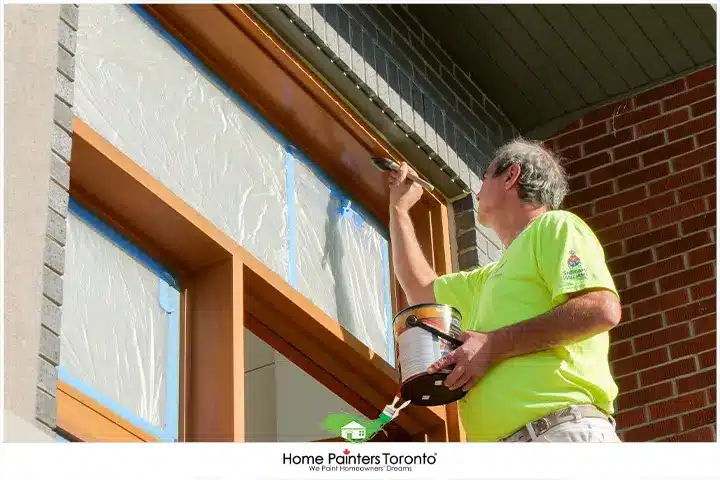
Satin for siding, semi-gloss for trim — the two-finish approach is the professional standard for Toronto homes facing freeze-thaw cycles, UV, and lake-effect moisture
How Toronto's Climate Destroys the Wrong Exterior Paint Finish
Toronto's weather is genuinely hard on exterior paint. Each winter, the city experiences dozens of freeze-thaw cycles where temperatures rise above and drop below freezing, sometimes multiple times in a single week. According to peer-reviewed research published in Theoretical and Applied Climatology (Ho and Gough, 2006), Toronto area weather stations show documented patterns of freeze-thaw activity across the colder months of the year.
Here is what happens when water gets into a paint film that is not built for these conditions. Moisture seeps into tiny cracks. When temperatures drop, that water expands as it freezes. The expanding ice physically pushes the paint away from the substrate. Over time, what starts as hairline fractures becomes full peeling, blistering, and bare siding exposed to the elements.
This is why finish selection for Toronto exteriors is not a cosmetic decision. It is a structural one.
The Main Finishes and How They Behave Outdoors
| Finish | Sheen Level | Best For | Toronto Suitability |
|---|---|---|---|
| Flat / Matte | No sheen | Interior walls only | Not suitable for exteriors |
| Eggshell | Very low | Interior walls | Avoid on GTA exteriors |
| Satin | Low to medium | Exterior siding, fascia | Excellent for most surfaces |
| Semi-Gloss | Medium to high | Trim, doors, shutters | Ideal for high-exposure areas |
| High Gloss | High | Select accent features | Use selectively by pros only |
The rule is simple. As sheen level rises, so does moisture resistance, cleanability, and durability under freeze-thaw stress. The trade-off is that higher sheens show surface imperfections more clearly. That is why prep work is non-negotiable before applying semi-gloss or gloss outdoors.
Satin vs. Semi-Gloss: Which Exterior Finish Is Right for Your Toronto Home?
This is the question most Toronto homeowners have, and the honest answer is both, applied strategically.
Reflects enough light to resist UV fading and repel moisture, but not so much that every dent and texture flaw becomes visible. Cleans easily, performs reliably through repeated freeze-thaw cycles. The professional standard for wood, aluminum, fibre cement, and vinyl in Toronto.
Harder, more moisture-resistant, and more washable than satin. The right choice for surfaces taking direct weather hits: window trim, door frames, fascia, shutters, and front doors. Creates visual contrast against satin siding that defines your home's architectural lines.
Flat finishes absorb moisture rather than shedding it. Difficult to clean and fail quickly in climates with regular freeze-thaw activity. Behr Canada's official sheen guidance confirms: lower sheens for the home body, higher sheens for trim and doors.
When we prep an older Toronto home, we often find the previous paint was a flat or low-sheen product that absorbed years of moisture. Even if the colour looks fine, the film integrity is compromised. Before recommending a finish, our team tests adhesion and checks for moisture-related failures underneath. The finish you choose only works as well as what is beneath it. That is why a thorough surface inspection always comes before any product recommendation.
What Is the Best Exterior Paint Finish for Each Surface Type in Toronto?
Surface type matters as much as climate. Toronto's housing stock includes everything from century-old brick Victorians to post-war aluminum-sided bungalows to newer stucco semis. Each material has its own finish requirements.
Wood Siding and Trim
Satin for siding body / Semi-gloss for trimWood expands and contracts significantly with temperature changes. A flexible satin finish handles that movement better than a harder gloss. All bare wood and repaired areas need primer first before any finish coat is applied.
Aluminum and Vinyl Siding
Satin with metal-specific primerPaint for aluminum and vinyl must flex with the material rather than crack against it. Our aluminum siding painting service uses products and prep methods specifically matched to metal and synthetic surfaces.
Brick
Breathable coating / Penetrating stainBreathable coatings are essential. Trapping moisture inside brick causes spalling through freeze-thaw cycles. Our brick staining service uses penetrating stains that allow moisture to escape rather than building up a surface film. Carries a 15-year warranty.
Stucco
Elastomeric coatingStucco needs elastomeric coatings that flex and compress through freeze-thaw cycles rather than cracking. They also seal hairline cracks that would otherwise become moisture entry points over the season.
Decks, Fences, and Outdoor Woodwork
Specialized deck stainThese surfaces need specialized deck stains rather than standard exterior paint. Our deck and fence staining team matches product type to wood species and exposure level for lasting results.
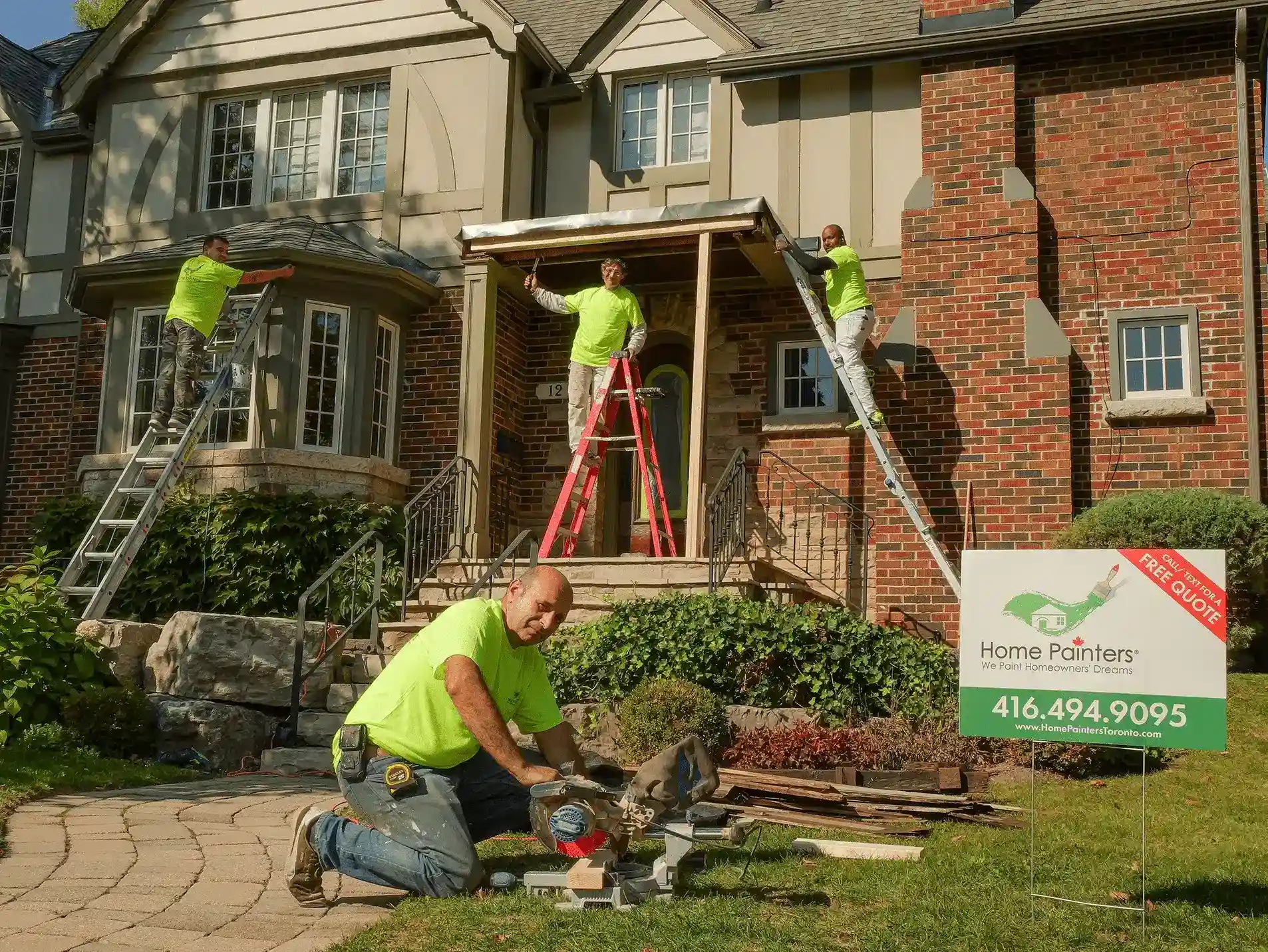
Every surface type in Toronto's housing stock has its own finish requirement — satin, semi-gloss, breathable masonry coating, or elastomeric depending on material and exposure
Does Paint Finish Affect How Long Your Exterior Paint Lasts in Toronto?
Yes, significantly. Finish choice directly influences how long your exterior paint holds up before cracking, fading, or peeling. In Toronto's climate, with proper prep and a quality satin or semi-gloss system applied professionally, most exterior paint jobs last 8 to 10 years on well-maintained surfaces.
According to the Paint Quality Institute, proper exterior paint preparation alone can extend exterior paint life by up to 50 percent on wood and masonry substrates. The variables that shorten or extend that range include surface preparation, primer selection, product quality, application technique, and timing.
The Biggest Durability Factors in Toronto
- Surface prep: Scraping all loose paint, sanding edges, caulking gaps, and priming bare areas. This is where most DIY and budget paint jobs fail.
- Primer: The right primer locks down the surface and improves adhesion. Skipping it, or using the wrong type for the surface material, leads to early failure.
- Application temperature: Exterior paint requires surface temperatures of at least 10 degrees Celsius. In Toronto, that means late spring through early fall is your window.
- Number of coats: Two finish coats over a primed surface is the professional standard. One coat might look fine for a few months and fail within a year.
We always check caulking as part of any exterior project. Gaps around windows, doors, and trim are major moisture entry points. If the caulk is cracked, shrunk, or missing, water gets behind the paint and causes failure from the inside out. Our team handles exterior caulking as part of a complete prep process, not as an afterthought. Sealing those gaps before painting is what separates a job that lasts 5 years from one that lasts closer to 10.
When Should Toronto Homeowners Repaint Their Home's Exterior?
Knowing when to repaint saves you from expensive repairs down the line. Exterior paint does not just fade visually. It stops protecting your home. Here are the signs your exterior paint is due for attention:
- Peeling, flaking, or bubbling paint anywhere on the surface
- Chalking: a powdery residue that transfers to your hand when you touch the siding
- Fading colour that no longer looks uniform in sunlight
- Cracked or missing caulk around windows, doors, or trim
- Bare wood or siding visible through the existing paint
- Mildew or dark staining that does not wash off
Toronto homes typically need a full exterior repaint every 8 to 10 years with a quality satin system. Trim and doors finished in semi-gloss may need attention more frequently, especially on south and west-facing surfaces that absorb the most UV exposure. Getting your exterior residential painting services done at the first signs of failure is always less costly than waiting until moisture damage reaches the wood or masonry underneath.
Is It Worth Hiring a Professional for Exterior Painting in Toronto?
This is a fair question, and the honest answer is almost always, yes.
Exterior painting looks simpler than it is. The finish you choose is only as good as the prep underneath it. Professional preparation includes pressure washing, thorough scraping and sanding, priming bare areas, caulking all gaps, and completing any needed wood repairs before a drop of finish paint touches the surface. Without that prep, even a premium satin finish will peel within a few years.
Beyond prep, professional painters understand surface compatibility. Applying the wrong primer under vinyl siding or using the wrong finish over brick leads to early failure that costs more to fix than the original job. There is also the safety factor. Working on ladders along two-storey or high-peaked homes carries real risk for homeowners without proper equipment and training.
If your home has rot, damaged siding, or failing wood trim, those issues need to be addressed before painting. Home Painters Toronto handles exterior wood repair and carpentry in-house, so structural repairs and painting happen in the same project. That saves time and ensures the new paint goes onto a properly prepared surface.
For pricing guidance on what a complete exterior project involves, our detailed exterior painting cost guide breaks down the variables that affect what you will actually pay.
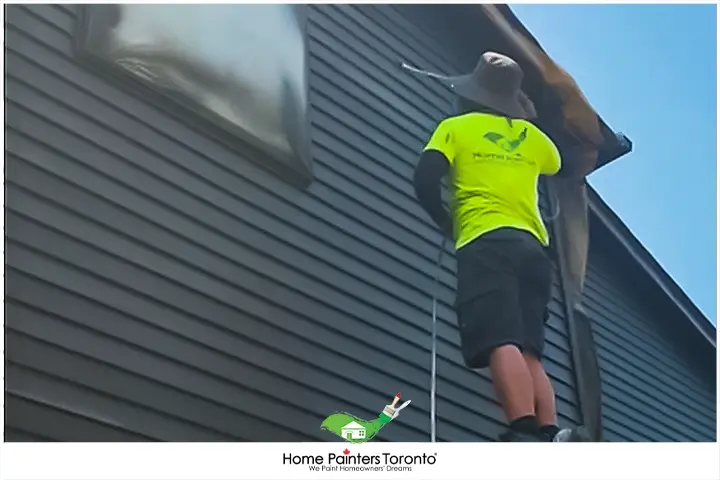
Professional painters understand surface compatibility, monitor application conditions, and ensure prep is complete before any finish coat is applied — all critical for an 8 to 10-year result
Why Toronto Homeowners Choose Home Painters Toronto for Exterior Work
Home Painters Toronto has been serving GTA homeowners since 1987, bringing over 38 years of hands-on exterior painting experience to every project. The team is backed by a 3-year exterior warranty, a 15-year brick staining warranty, more than 1,200 positive reviews, and a client base of over 17,000 satisfied homeowners across Toronto and the GTA.
Every exterior project starts with a thorough inspection and a clear written estimate. Prep work, priming, and finish application are all included. The team is open seven days a week and provides same-day pricing estimates for most projects.
Whether your home needs a full repaint, a targeted trim refresh, or a complete exterior restoration including carpentry, the team at Home Painters Toronto manages the whole scope from start to finish.
Frequently Asked Questions About the Best Exterior Paint for Canadian Winters
Satin is the best exterior paint for Canadian winters on most siding surfaces. It resists moisture and freeze-thaw stress, hides minor surface imperfections, and holds colour well through UV exposure. Semi-gloss is the right choice for trim, doors, and shutters where maximum durability and cleanability matter. Flat and matte finishes are not suitable for Toronto's outdoor conditions.
With quality satin or semi-gloss finishes applied over proper prep and primer, most Toronto exterior paint jobs last 8 to 10 years. Surfaces with higher exposure to sun, wind, and moisture may need attention sooner. Signs like peeling, chalking, or cracked caulk are your cues to repaint before moisture damage reaches the structure underneath.
Both are used on most GTA homes, applied to different surfaces. Satin is better for large siding areas where you want durability without highlighting every texture flaw. Semi-gloss is better for trim, doors, window frames, and shutters where you need maximum hardness and moisture resistance. Using both together is the professional approach to a complete exterior paint system.
No. Even the best exterior paint for Canadian winters needs to be applied in the right conditions, not during winter itself. Surface temperatures must be at least 10 degrees Celsius for paint to cure properly. In Toronto, that window is generally late May through early October. Painting during freeze-thaw cycles or in high humidity causes adhesion failure and early peeling.
The most common cause is insufficient prep. Paint applied over loose, chalking, or moisture-damaged old paint will not bond properly, regardless of the finish. Other causes include painting in cold or wet conditions, skipping primer, using an incompatible product for the surface material, and ignoring failed caulking around windows and trim. Professional preparation is what separates a long-lasting job from one that fails within a few years.
Surface material guides the decision. Wood siding gets satin with a good primer. Aluminum and vinyl siding get a flexible satin formulated for those materials. Brick and masonry need breathable coatings, often a penetrating stain rather than a surface-film paint. Stucco does best with elastomeric coatings that flex through freeze-thaw cycles. A professional assessment at the quoting stage will confirm the right system for your specific home.

Choosing the Best Exterior Paint for Canadian Winters: The Right Call for Your Toronto Home
Choosing the best exterior paint for Canadian winters means matching the right finish to the right surface, backed by thorough prep and professional application. Satin for siding, semi-gloss for trim, breathable coatings for brick, and flexible systems for stucco. These choices, made correctly and applied well, are what determine whether your exterior holds up for a decade or starts failing after two winters.
Toronto's climate does not forgive shortcuts. Freeze-thaw stress, lake-effect moisture, and wide seasonal temperature swings test every exterior paint system on every home in the GTA. The paint finish you choose is your first line of defence, and getting it right from the start is always worth it.
Home Painters Toronto has been helping GTA homeowners protect their homes with the right paint systems for over 38 years. If your exterior is showing signs of wear, or you are planning a refresh this season, do not guess.
Get a Free Estimate Today
Contact us today for a free estimate and let our team recommend the right finish, prep approach, and coating system for your home's specific surfaces, conditions, and goals.
Contact Us for a Free Estimate