

Best Exterior Paint for Wood: What Toronto Homeowners Need to Know
The best exterior paint for wood in Toronto is typically 100% acrylic latex because it can flex with seasonal temperature swings, resist moisture, and hold up against harsh Canadian weather conditions. Toronto's climate puts wood through a brutal cycle every year. Temperatures swing from humid summers above 30 degrees Celsius to deep freezes well below zero. Wood expands and contracts through all of it. A paint that can move with the wood, breathe, and resist moisture is the only kind built to survive here.
If your wood siding, trim, or deck is peeling, cracking, or looking grey and weathered, that is not just a cosmetic problem. Exposed wood absorbs moisture, which leads to rot, mould, and structural damage. The right paint, applied correctly, acts as a protective barrier that extends the life of your wood by years.
This guide covers the paint types that perform best on Toronto exteriors, what makes each one right or wrong for different surfaces, and why professional prep and application make the difference between a finish that lasts two years and one that lasts ten. For a full overview of what a professional project looks like, visit our exterior painting services in Toronto.
- Why Toronto's climate demands a specific type of exterior paint
- The top paint types for wood and how they compare
- Which products work best for siding, trim, decks, and doors
- Why prep work determines how long your paint lasts
- How to know when it is time to call a professional
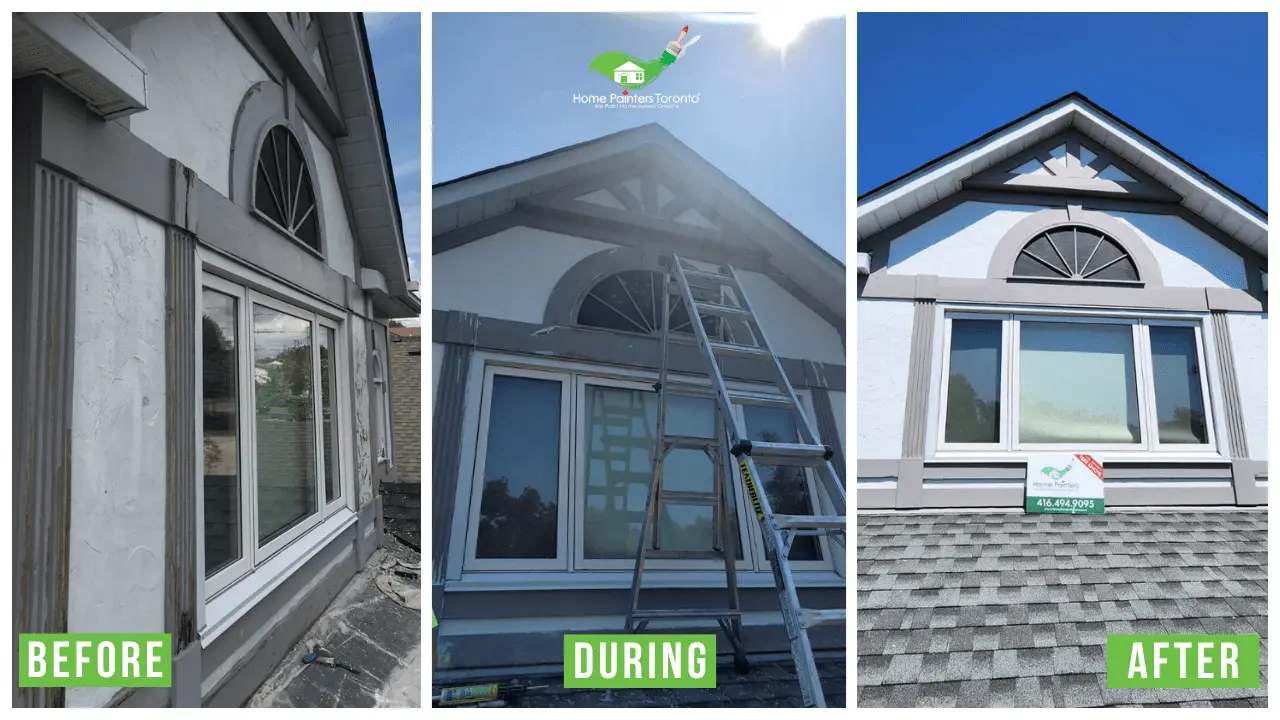
The best exterior paint for wood in Toronto must flex through freeze-thaw cycles, breathe to prevent moisture trapping, and resist mildew — product selection is half the equation, prep is the other half
Why Toronto's Climate Is Especially Hard on Exterior Wood Paint
Toronto's four-season climate is especially hard on exterior wood paint because constant freeze-thaw cycles, moisture exposure, humidity, and UV rays force wood to expand and contract throughout the year, leading to cracking, peeling, and paint failure. Repeated freeze-thaw cycles through winter cause wood fibres to expand and contract. Paint that cannot flex with this movement cracks, lifts, and eventually peels.
Summer brings its own challenges. High humidity from Lake Ontario creates ideal conditions for mildew and moisture intrusion. UV radiation fades and degrades coatings from May through September. As a result, most low-quality or mismatched paints begin failing within two to three years on Toronto homes.
Research from the National Research Council of Canada confirms that exterior wood coatings must maintain extensibility throughout their service life. Without it, coatings crack, peel, and delaminate as wood dimensions change with moisture. This is why paint selection is not just about colour. It is about choosing a product engineered to handle the specific conditions your home faces.
Common housing types in the GTA add another layer of complexity. Victorian homes, post-war bungalows, and semi-detached houses often have older wood siding with multiple layers of existing paint, checking, and exposed grain. These surfaces need more than a fresh coat. They need a complete prep-and-prime system matched to the right topcoat.
The 3 Main Types of Exterior Paint for Wood
The three main types of exterior paint for wood are 100% acrylic latex, oil-based paint, and solid stains. Each has distinct performance characteristics worth understanding before you commit to a product for your home.
100% Acrylic Latex
The gold standard for exterior wood in Toronto. Water-based and breathable. Moisture that gets into wood can escape without causing blistering. Stays flexible after curing, expanding and contracting through freeze-thaw cycles without cracking.
- Excellent adhesion to properly prepared wood
- Mildew-resistant formulations for humid conditions
- UV-stable pigments that hold colour through summer heat
- Faster dry times — efficient two-coat application
- Low VOC and easy water cleanup
Oil-Based Paint (Alkyd)
Industry standard for decades. Penetrates wood deeply and provides excellent initial adhesion. However, oil-based coatings become brittle over time, cracking through freeze-thaw cycles within four to six years. The NRC's climate-resilient building research highlights how seasonal temperature swings accelerate degradation in coatings that cannot flex adequately.
- Strong initial penetration and adhesion
- Becomes brittle — loses extensibility with age
- Longer dry times (6–8 hours)
- Higher VOC content
- Best role: primers, specific problem surfaces only
Solid Stains (Acrylic-Based)
A hybrid product between a semi-transparent stain and full paint. Penetrates into the wood rather than forming a thick surface film, reducing the risk of peeling. Provides full colour coverage and UV protection. Works exceptionally well for deck and fence staining and rough-sawn surfaces.
- Penetrating formula reduces peeling risk
- Wears gradually rather than peeling dramatically
- Easier recoating over time
- May need more frequent application on smooth vertical surfaces
- Preferred for decks, fences, and weathered siding
Acrylic vs. Oil-Based Paint: A Quick Comparison for Toronto Wood
| Feature | 100% Acrylic Latex | Oil-Based (Alkyd) |
|---|---|---|
| Flexibility in freeze-thaw | Excellent | Degrades over time |
| Moisture breathability | High | Low |
| Mildew resistance | Very good | Moderate |
| Dry time | 1–2 hours | 6–8 hours |
| Lifespan on Toronto wood | 7–10 years (proper prep) | 4–6 years before brittleness |
| Ease of recoating | Easy | Requires compatibility check |
| VOC content | Low | Higher |
| Best use case | Siding, trim, doors | Primer coats, problem surfaces |
What Paint Sheen Should You Choose for Exterior Wood?
The best paint sheen for exterior wood depends on the surface and exposure level. In Toronto's climate, higher-sheen finishes generally provide better moisture resistance, easier cleaning, and improved durability on heavily exposed areas. Sheen level affects both appearance and durability. The general rule for Toronto exteriors is a higher sheen on surfaces that see the most moisture exposure.
Holds dirt and moisture. Difficult to clean. Fails faster in all exterior exposures. Avoid on wood surfaces.
The most versatile sheen for exterior walls. Resists moisture, cleans well, and does not look overly glossy. The professional standard for most exterior siding.
Higher moisture resistance and cleanability. Best for trim, window frames, fascia boards, and doors. Repels moisture more effectively on high-contact surfaces.
Maximum sheen and durability. Reserved for front doors and accent pieces. Highlights surface imperfections, so prep must be thorough before application.
On north-facing walls or surfaces shaded by trees, choose a paint with added mildewcide. These areas stay damp longer and are far more susceptible to mould growth. Over the years, Home Painters Toronto has seen shaded wood siding and trim fail much faster when mildew-resistant coatings were not used, especially on homes surrounded by mature trees. Ask your painting contractor to specify a mildew-resistant formula for those elevations.
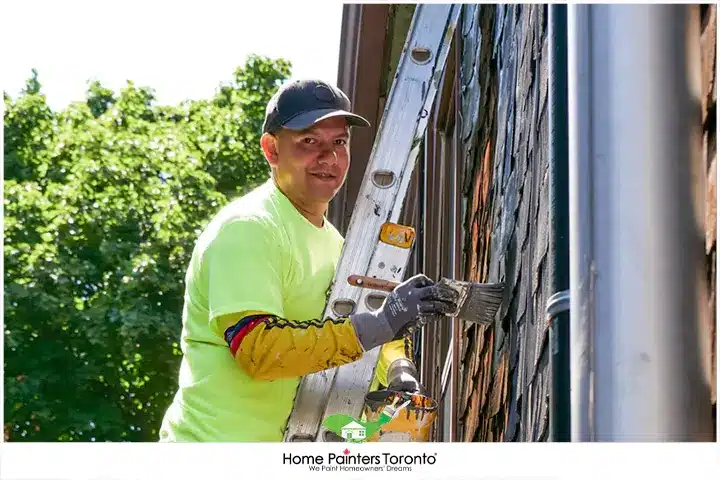
Primer is the adhesion layer that determines how long the topcoat holds — applying primer twice to end grain on older wood siding is one of the highest-value steps a professional crew performs
Why the Right Primer Matters as Much as the Paint
The right primer matters as much as the paint because it creates proper adhesion, seals porous wood, blocks moisture penetration, and helps exterior paint last significantly longer in Toronto's demanding climate. Primer is not optional on exterior wood. It is the layer that determines how well your topcoat adheres and how long the finish holds. Skipping primer, or using the wrong one, is one of the most common reasons paint fails prematurely.
For bare or previously unpainted wood, a high-quality oil-based or shellac-based primer seals the grain, blocks tannins from bleeding through (especially on cedar), and provides a stable bonding surface for the topcoat. For previously painted surfaces in good condition, a quality acrylic primer typically suffices.
Key primer considerations for Toronto exteriors:
- Use a stain-blocking primer on cedar, pine, or any resinous wood to prevent knot bleed-through
- Apply primer to all end grains, which absorb moisture faster than face grain
- Use a flexible primer on older wood with moderate checking or hairline cracking
- Allow full primer dry time before topcoating, particularly in cooler spring and fall weather
At Home Painters Toronto, our crews prime end grain twice on older wood siding and window frames. End grain is where moisture enters first. This extra step adds time but dramatically reduces the risk of early paint failure on houses built before the 1980s, which make up a significant portion of GTA housing stock.
Paint for Specific Wood Surfaces: What Works Where
Different exterior wood surfaces require different paint or stain based on their exposure, moisture levels, foot traffic, and durability needs. The right product for your siding may not perform well on your front door or deck.
Wood Siding
Satin 100% Acrylic LatexVertical surfaces. Use a 100% acrylic latex topcoat over a compatible primer. Satin sheen is the standard. Two full coats over a primed surface provide the best coverage and longevity.
Exterior Trim and Fascia
Semi-Gloss Acrylic LatexProvides the moisture resistance and cleanability these surfaces need. Proper exterior caulking at all joints before painting prevents water intrusion that can lift paint from behind.
Decks and Fences
Solid Stain or Deck AcrylicHorizontal surfaces face direct sun, standing water, and foot traffic. Solid stains or deck-specific acrylic formulations perform better than standard wall paint. Standard exterior paint film is not engineered for the combination of UV, rain, and mechanical wear decks experience.
Exterior Doors
Gloss or Semi-Gloss Acrylic/AlkydDoors need a topcoat that handles daily mechanical wear and extreme temperature changes. Look for acrylic or alkyd-modified formulas designed specifically for doors and trim. Front door refinishing as a specialty service involves fine sanding and precise application that is rarely achieved on a weekend.
Why Prep Work Determines How Long Your Exterior Wood Paint Lasts
The best exterior paint for wood will fail within two years on a surface that was not properly prepared. This is the single most important concept in exterior wood painting, and it is also where DIY projects most commonly fall short.
Professional prep for exterior wood includes:
- Pressure washing to remove dirt, mildew, chalking paint, and surface contamination
- Scraping all loose and peeling paint down to a firm substrate
- Sanding to feather edges and smooth transitions between old and bare wood
- Wood repairs for any rot, checking, or structural damage
- Caulking all gaps, joints, and penetrations
- Priming all bare wood and repaired areas before topcoating
Many homeowners underestimate the time and skill required for steps one through five. A two-day DIY paint project often means skipping or shortcutting these steps. The result is paint that looks fine initially but fails by the following summer. Professional wood siding repair and replacement teams handle rot and structural damage before the paint crew arrives. This sequence, repair first and paint second, is how professional projects protect their finish for the long term.
How Long Should Exterior Paint Last on Wood in Toronto?
A professionally applied exterior paint job on properly prepared wood should last seven to ten years in Toronto conditions. DIY applications on surfaces with minimal prep typically last two to four years before visible failure begins.
Several factors affect longevity:
- Surface preparation quality: The single biggest variable in how long any paint job lasts
- Product quality: 100% acrylic latex outperforms lower-grade products significantly in Toronto's climate
- Number of coats: Two full coats always outperform one thick coat for adhesion and longevity
- Sun and weather exposure: South and west-facing walls degrade faster due to UV intensity
- Application timing: Paint applied in temperatures below 10 degrees Celsius may not cure properly
Toronto's window for ideal exterior painting is late May through September. This timing avoids both spring freeze-thaw risks and the cold that prevents proper film formation. For your specific home and surfaces, our team at exterior residential house painting can assess your wood's condition and recommend a product and prep system matched to your home.
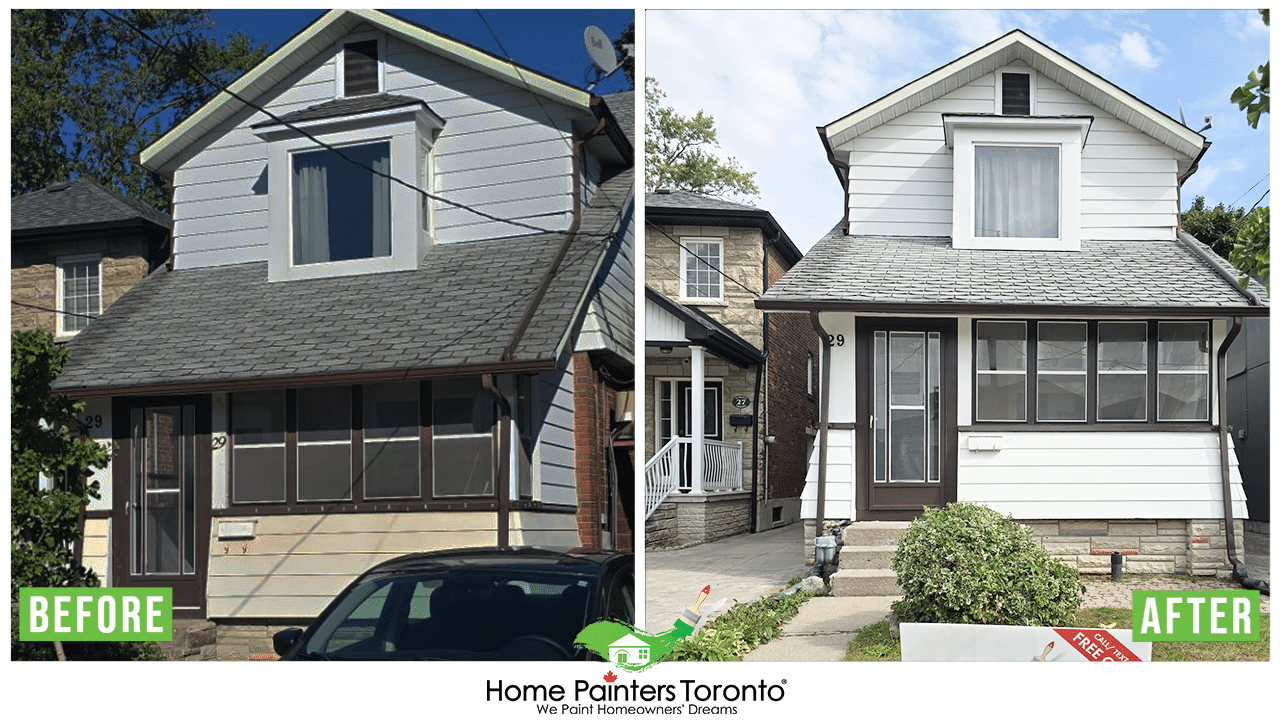
Seven to ten years from a professionally prepped and painted exterior wood surface — that is the return when prep, product, and timing all align in Toronto's climate
When Is It Worth Hiring a Professional for Exterior Wood Painting?
Almost always. That is the honest answer. Professional exterior painters bring equipment, expertise, and warranties that a weekend project cannot replicate. Pressure washers, airless sprayers, extension ladders rated for the work, and years of experience reading wood conditions all contribute to a result that holds longer and looks better.
From a cost perspective, a professionally painted exterior on a standard Toronto semi-detached or detached home may feel like a significant investment upfront. Compare that to the cost of repainting in two years because prep was skipped, or replacing rotted siding boards that were painted over rather than repaired. The economics strongly favour doing it right the first time.
Home Painters Toronto has been painting wood exteriors across the GTA for over 38 years. The process starts with a thorough surface assessment. Repair before paint, prime before topcoat, and the project is not considered complete until the client confirms satisfaction. Get a sense of what a professional project investment looks like by reviewing the cost of painting a house, then contact us for a free, no-obligation quote matched to your specific home.
Frequently Asked Questions About the Best Exterior Paint for Wood in Toronto
The best exterior paint for wood in the GTA is a premium 100% acrylic latex paint applied over a compatible primer system. Acrylic latex stays flexible through Toronto's freeze-thaw cycles, breathes to prevent moisture trapping, and resists mildew in humid conditions. High-end formulations from major Canadian-grade manufacturers offer the longest service life on local housing stock.
Professionally applied exterior paint on properly prepared wood lasts seven to ten years in Toronto's climate. DIY applications with minimal prep typically last two to four years. Surface preparation quality is the single biggest factor, followed by product quality and application conditions.
No, not for most Toronto applications. Oil-based paint provides strong initial adhesion but becomes brittle over time, cracking through freeze-thaw cycles. Premium 100% acrylic latex maintains flexibility, breathes better, and outlasts oil-based products on Toronto's four-season wood exteriors. Oil-based primers still have a role in certain prep applications on resinous or problematic wood.
Satin is the recommended sheen for most wood siding in Toronto. It provides moisture resistance, cleans easily, and does not highlight surface imperfections. Semi-gloss is better suited for trim, fascia, and doors where extra durability and moisture resistance are priorities. Flat or matte finishes are not recommended for most exterior wood applications.
You can paint over old exterior paint if it is firmly adhered, not chalking excessively, and is compatible with your new topcoat. Loose, peeling, or heavily chalked paint must be removed first. Painting over unstable existing paint is the most common cause of early failure. A professional inspection quickly identifies whether your existing coating is a suitable base or needs to be stripped before repainting.
Signs that paint and prep alone can address include peeling, fading, surface checking, and mildew staining on otherwise firm wood. Signs that the wood itself needs attention before painting include soft or spongy areas when pressed, visible rot, significant cracking through the wood fibre, and boards that have warped or separated from the structure. A professional assessment quickly identifies which category your siding falls into and prevents money from being spent painting wood that should be replaced.

The Best Exterior Paint for Wood: Choose Right, Apply Right, Last Longer
The best exterior paint for wood holds up in Toronto only when the right product meets thorough preparation. Premium 100% acrylic latex is the professional standard for Toronto's climate, with solid stains offering a strong alternative for decks, fences, and rough-sawn surfaces. Product selection is only half the equation. Proper pressure washing, scraping, repairs, priming, and correct timing for Toronto weather conditions determine whether your finish lasts two years or ten.
DIY exterior painting often underestimates what proper prep requires. The result is a finish that looks acceptable initially but fails before the next full season. Professional painting pairs the right product system with thorough prep and experienced application, protecting your wood and your investment for the long term.
Home Painters Toronto has been delivering professional exterior painting results across the GTA since 1987. The team assesses your wood, completes repairs, selects the right product system, and backs every project with a warranty.
Get a Free Quote and Find Out What's Right for Your Home
Contact us today for a free quote and find out what a properly done exterior wood paint job looks like on your home.
Contact Us for a Free Quote