

Why Choose Exterior Painting in GTA?
Homeowners across Mississauga, Brampton, and the rest of the GTA repaint vinyl siding every year because it costs less than full replacement. Picking the best paint for vinyl siding matters more than most people realize, since the wrong product can cause real warping in Ontario's hot summers. Many people assume any exterior paint works on vinyl, and that assumption often leads to peeling, fading, or buckled panels within a year. A flexible, correctly rated finish protects against sun damage and the freezing and thawing cycles that define an Ontario winter. This guide breaks down which paint products actually hold up, what the job costs across the GTA, and how a trained crew preps vinyl siding so the finish lasts for years.
Exterior painting gives GTA homeowners a faster, cheaper way to refresh a home than full siding replacement. The best paint for vinyl siding is a 100% acrylic or urethane modified acrylic formula with a light reflectance value above 55. WSIB compliant, insured painters apply it and back the work with a warranty.
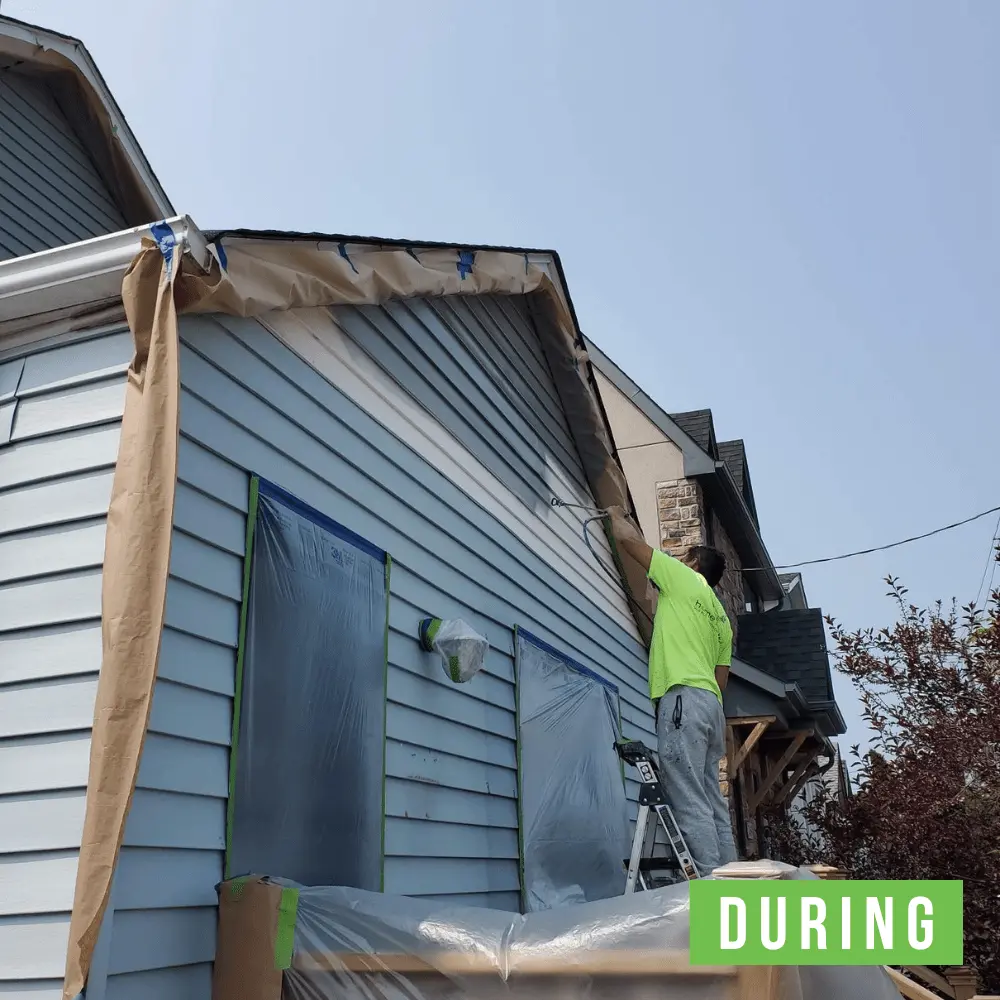
A rigid paint film cannot move with vinyl's heat-driven expansion, so it cracks at the nail slots and panel laps first — a flexible, correctly rated finish protects against sun damage and the freezing and thawing cycles that define an Ontario winter
Urethane Modified Acrylic Paint Is the Best Paint for Vinyl Siding in the GTA
Urethane modified 100% acrylic paint is the best paint for vinyl siding sold in the GTA today. This formula flexes as PVC panels expand and contract through hot summers and cold winters. Standard latex paint stays stiffer by comparison and often cracks along panel seams within two to three seasons. Our team has used this formula on countless GTA homes, and it is part of why Home Painters Toronto has earned over 1,200 positive reviews across HomeStars, Google, and Houzz. Premium lines built on this resin combine flexibility with strong adhesion, so priming is rarely needed on sound, previously painted vinyl siding. Most modern exterior lines in this category are also low VOC, which matters for crews working close to windows and intake vents during application. Substrate preparation still drives the final outcome more than the can on the shelf, a point covered in detail later in this guide.
| Paint Type | Flexibility | Adhesion on Vinyl | Recommended Use |
|---|---|---|---|
| Urethane modified acrylic | Excellent | Excellent | Vinyl siding, aluminum siding, trim |
| 100% acrylic latex | Good | Good | Vinyl siding in lighter colours |
| Standard latex, builder grade | Fair | Fair | Not recommended for vinyl |
| Oil based enamel | Poor | Poor | Avoid on vinyl siding |
Best Paint for Vinyl Siding: Acrylic Latex vs Urethane Modified Acrylic
Acrylic latex paint earns its reputation through years of field use on vinyl, aluminum, and wood siding. Urethane modified versions add a tougher resin that resists blocking, the tacky stickiness that traps screens and storm doors against fresh paint in summer heat. That resin also lets manufacturers formulate safe, deeper colours without raising the warping risk. Homeowners switching from a faded almond or beige vinyl colour to a richer tone should ask for the urethane modified option by name.
Standard Latex Paint Fails on Vinyl Siding During Ontario Heat Waves
Standard latex paint fails on vinyl siding because it cannot flex enough to track the panel's heat driven expansion. Vinyl panels grow longer as surface temperature rises, sometimes shifting several millimetres along their length on a hot July afternoon. A rigid paint film cannot move with that shift, so it cracks at the nail slots and panel laps first. Once the film cracks, moisture works underneath, and the bond fails completely within two summers. This is one of the most common callbacks painting crews see across Brampton and Vaughan, usually traced back to a big box store paint that was never rated for vinyl. Our exterior house painting crews carry a heat rated, urethane modified product on every vinyl siding quote for exactly this reason. A film that cannot move with the substrate also tends to fail first at corner posts and J channel trim, since these areas see the sharpest temperature swings on a sunny elevation. Replacing a few cracked panels after a failed repaint often costs more than the original job, since matching discontinued vinyl colours gets harder every year.
An LRV Above 55 Prevents Warping on Painted Vinyl Siding
An LRV, or light reflectance value, above 55 is the threshold that keeps painted vinyl siding from warping in direct sun. Darker colours absorb more solar heat, and that heat is what causes the buckling homeowners fear, not the paint itself. Sherwin Williams' VinylSafe colour technology is engineered specifically to allow deeper shades while staying inside a safe heat range. A handheld colorimeter, or a paint store's LRV chart, will confirm where a chosen colour falls before a single panel gets coated. Homeowners who want a deep green, charcoal, or brick red field colour should budget for one of these heat rated product lines instead of a standard tint. Most major manufacturers now print the LRV directly on the back of their colour chips for exactly this reason, so the number is easy to check before ordering paint. South and west facing walls in the GTA take the most direct afternoon sun, so contractors often recommend staying closer to the safe end of the range on those elevations even when the rest of the home uses a deeper accent colour.
| Colour Family | Typical LRV Range | Vinyl Safe Without Upgrade? |
|---|---|---|
| White, cream, light beige | 70 to 85 | Yes |
| Light grey, pale blue | 55 to 70 | Yes |
| Medium taupe, sage green | 40 to 55 | Only with a heat rated formula |
| Charcoal, forest green, brick red | Below 40 | Only with a heat rated formula |
Cost to Paint Vinyl Siding in the GTA
Painting vinyl siding in the GTA typically costs between $2,000 and $10,000 CAD plus HST, depending on the size of the home and the condition of the existing siding. These figures cover surface cleaning, minor repairs, two coats of premium paint, and full cleanup. Homes with chalking, mildew, or loose panels typically land at the higher end of each range. For a full breakdown across every exterior service, see our cost of painting a house guide.
| Home Size | Estimated Cost (CAD + HST) |
|---|---|
| Small, bungalow under 1,500 sq ft | $2,000 – $4,000 |
| Medium, two storey, 1,500 to 2,500 sq ft | $4,000 – $8,000 |
| Large, 2,500+ sq ft, multiple gables | $8,000 – $10,000 |
| Extra large or custom estate home | $12,000 – $30,000 |
How Long Does It Take to Paint Vinyl Siding?
Most detached homes across the GTA require between two and five working days, depending on the amount of preparation involved. Cleaning, repairs, drying time, masking, and weather all influence the final schedule.
Typical timeline:
| Stage | Typical Time |
|---|---|
| Washing and cleaning | 1 day |
| Drying | 1 day |
| Minor repairs and masking | Half day to 1 day |
| Painting | 1 to 2 days |
| Final inspection and cleanup | Half day |
Larger custom homes or projects requiring carpentry repairs may take longer, particularly when damaged wood or trim is discovered during preparation.
Five Factors That Change Vinyl Siding Painting Costs in the GTA
Five factors drive the final cost of painting vinyl siding: surface area, panel condition, colour choice, storey count, and access. A two storey home in Markham with a steep roofline takes longer to stage safely than a single storey bungalow in Ajax. Crews factor that staging time into the final quote before the first panel gets cleaned. Tight side yards, fences, and mature landscaping in older Etobicoke and Scarborough neighbourhoods can add real time to a project as well. Townhomes and semidetached homes in Markham and Richmond Hill often share walls or tight setbacks with a neighbour, which changes how a crew stages ladders and scaffolding safely. Larger detached homes in Oakville and Burlington tend to carry more trim, soffit, and fascia detail around the siding, and each of those surfaces adds time, even when the siding panels themselves are straightforward.
| Factor | Impact on Cost | Details |
|---|---|---|
| Surface area | High | More panels mean more labour and material |
| Panel condition | High | Chalking and mildew need extra cleaning and priming |
| Colour choice | Medium | Heat rated, deeper colours cost more than standard tones |
| Storey count | Medium | Multi storey homes need ladders, scaffolding, or lifts |
| Access | Low to Medium | Fences, decks, and tight side yards slow the crew down |
Surface Prep Determines Whether Paint Bonds to Vinyl Siding
Surface prep determines whether paint bonds to vinyl siding for the long term, more than the brand of paint used. Crews start by inspecting every panel for cracks, holes, or loose sections, and repair or replace damaged pieces before any cleaning begins, since paint cannot bridge a structural gap. Crews mask windows, trim, and landscaping before the first coat goes on, and check caulking around windows and doors for gaps that need sealing first. Two coats of premium acrylic typically deliver even colour and a uniform film thickness across the whole elevation. This Old House's painting team notes that a properly applied vinyl repaint can hold its finish for ten to twelve years before it needs a refresh, a lifespan that depends heavily on colour choice and sun exposure.
Cleaning and Chalk Removal Before Priming
Vinyl siding chalks as its surface resin breaks down under UV exposure, leaving a powdery residue that blocks adhesion. Crews test for chalk by wiping a panel with a dark cloth and checking for residue. A pressure wash at a controlled output, typically around 1,200 to 1,500 PSI, lifts dirt and chalk without driving water behind the panels. Mildew gets treated separately with a diluted bleach solution before the final rinse. Crews then allow the siding a full day to dry completely, since trapped moisture under a fresh coat is one of the most common causes of early blistering.
Primer Selection for Faded or Previously Painted Vinyl
Heavily faded or chalky siding needs a bonding primer formulated for vinyl and PVC trim. This step creates a stable base so the topcoat does not telegraph old colour or stains through to the surface. Sound, factory finished vinyl in good condition often skips primer entirely when paired with a high build acrylic topcoat. Skipping primer on bare or damaged panels, though, is one of the fastest ways to see peeling within a single season.
Our Recent Vinyl Siding Repaint in Port Credit, Mississauga
1,400 PSI Wash, Sherwin Williams Emerald Exterior Acrylic Latex Low Lustre at LRV 58, 26°C Surface Temp
At a recent vinyl siding repaint in Port Credit, Mississauga, our crew found vinyl that had been touched up with mismatched paint years earlier, leaving brittle patches along the south wall. We cleaned the siding at 1,400 PSI to lift years of chalking without forcing water behind the panels. After the surface dried, we applied Sherwin Williams Emerald Exterior Acrylic Latex in a Low Lustre finish, using a colour confirmed at an LRV of 58 to stay inside the safe heat range. Two coats went on at roughly four mils of wet film thickness each, and a surface thermometer read 26 degrees Celsius at application, well inside the manufacturer's working window. The full project ran across three working days, including a full day for cleaning, repairs, and drying before any paint went on. You can see more projects like this one in our recent painting projects gallery, and read what past clients say in our client reviews. The result is a warranty backed finish, delivered by a WSIB compliant, fully insured crew.
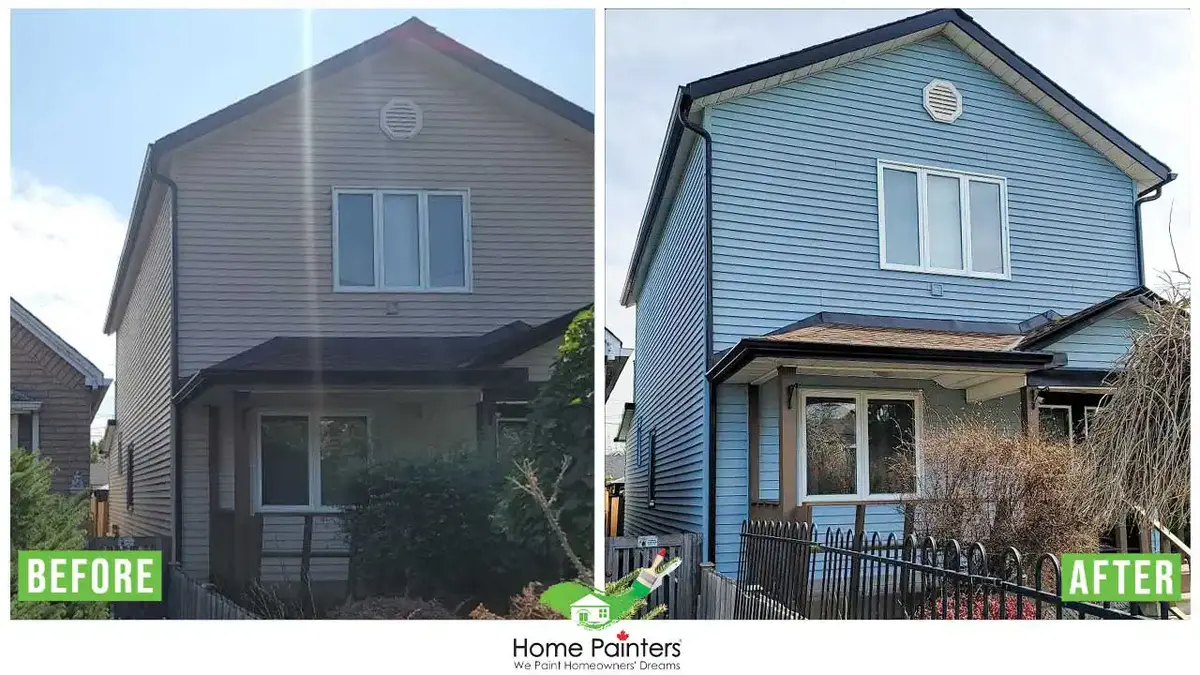
Port Credit, Mississauga project: brittle mismatched touch-up patches on south wall, 1,400 PSI wash to lift chalking, Sherwin Williams Emerald Exterior Acrylic Latex Low Lustre at LRV 58, two coats at roughly 4 mils WFT each, 26°C surface temperature — three working days including cleaning, repairs, and drying
Why GTA Homeowners Choose Professional Repainting Over Vinyl Siding Replacement
GTA homeowners choose professional repainting over full vinyl siding replacement because it solves the same fading and colour problem at a fraction of the cost and disruption. Replacing siding on an average two storey home can run into five figures once disposal, new flashing, and labour are factored in. Old vinyl panels also end up in landfill once removed, since most municipal vinyl recycling programs in the GTA are limited or unavailable. A professional repaint solves the same visual problem in days, not weeks, and keeps the original panels in service. Home Painters Toronto has worked across the GTA for more than 38 years, and our crews carry $5 million in general liability insurance along with full WSIB compliance. Every crew member passes a criminal background check before stepping onto a client's property. Interior work carries a lifetime warranty, and exterior work, including vinyl siding, carries a 3 year warranty backed by a 100% satisfaction guarantee. That track record helped us win the HomeStars Best of Award 2026, recognition based directly on verified client feedback. The same flexible, heat rated approach applies to aluminum siding, wood siding, and stucco siding projects across the GTA, since every exterior material reacts differently to colour and heat. Read more about why GTA homeowners choose Home Painters Toronto for these projects.
When Vinyl Siding Should Be Replaced Instead of Painted
Painting is the right solution for most vinyl siding that has faded but remains structurally sound. It is not the right solution when the siding has significant cracks, severe warping, impact damage, or loose panels that can no longer lock together properly. Paint improves appearance and adds another layer of protection, but it cannot correct structural failures.
A professional inspection identifies whether repainting or replacement offers the better long-term value. In many GTA homes, only a few damaged panels need replacement before the remaining siding can be professionally painted, keeping costs much lower than a complete replacement.
Frequently Asked Questions
The best paint for vinyl siding is a 100% acrylic or urethane modified acrylic exterior paint formulated for PVC. These formulas flex with the panel as temperatures change and resist the cracking that standard latex develops within a few seasons. Look for a product line that states it is vinyl safe, and confirm the chosen colour's LRV before committing to anything darker than the original shade.
Yes, but only with a heat rated, vinyl safe product line and a colour that keeps the LRV reasonably high. Standard formulas in dark shades absorb enough solar heat to warp or buckle the panels within a single hot summer. A reputable paint store or contractor can confirm whether a specific dark colour is rated safe for vinyl before any work begins.
Sound, clean, factory finished vinyl in good condition often does not need a primer when paired with a high build acrylic topcoat. Faded, chalky, or previously damaged siding does need a bonding primer to create a stable base. Skipping primer on compromised panels is one of the fastest ways to see early peeling.
A properly prepped and painted vinyl exterior typically holds its finish for ten to twelve years before it needs a refresh. Lighter colours tend to last longer than dark ones, since they absorb less heat and fade more slowly. Regular cleaning also extends the life of the finish.
Some vinyl manufacturers do limit or void their warranty once the siding is painted, so it is worth checking the original paperwork first. Most warranty concerns focus on colour change, not the act of painting itself. A reputable contractor will flag this before starting the project.
Painting is almost always cheaper than full replacement, often costing a fraction of a new siding installation. Replacement only makes sense when panels are cracked, warped beyond repair, or missing pieces that are no longer manufactured. For siding that is structurally sound but faded, painting solves the appearance problem without the cost of new material and disposal fees.

Final Thoughts
Choosing the right paint, the right colour, and the right prep schedule is what separates a vinyl siding repaint that lasts a decade from one that peels within a year. Home Painters Toronto's crews bring 38 years of GTA experience to every project, backed by full WSIB compliance, $5 million in liability coverage, and a track record that earned the HomeStars Best of Award 2026. See our frequently asked questions for more details on timelines and process. Contact Home Painters Toronto today for fast, free quotes and warranty backed work on your next vinyl siding project.
Get a Fast, Free Quote for Vinyl Siding Painting in the GTA
Contact Home Painters Toronto today for fast, free quotes and warranty backed work on your next vinyl siding project. Same day estimates available seven days a week.
Contact Us for a Free Quote