

The Best Time of Year for Siding Repair in Toronto (and Why It Matters)
Toronto homeowners often call about siding damage the moment they spot it, no matter the season. That instinct makes sense, but timing still shapes the outcome. Home Painters Toronto, backed by 1,200+ positive reviews across HomeStars, Google, and Houzz, books most siding repair work between late spring and early fall for a reason. Caulking needs warmth to cure. Paint needs a dry surface to bond. Panels need stable temperatures to seat flush against the wall. Get the timing wrong and a repair that should last a decade can fail within two years.
The best time for siding repair in Toronto is late spring through early fall, when air temperatures sit between 10°C and 27°C. This range lets caulking cure, paint bond, and replacement panels expand and contract the way they will once winter returns. Repairs completed outside this window often fail within one to two years.
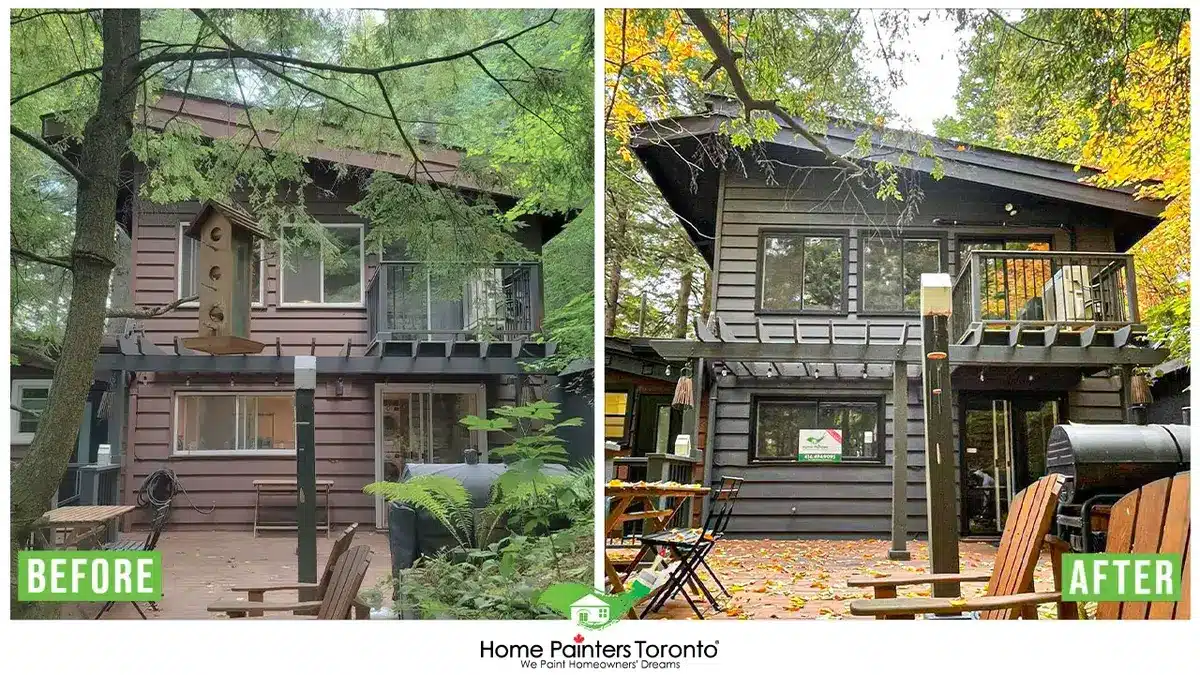
Get the timing wrong and a repair that should last a decade can fail within two years
The Best Time for Siding Repair in Toronto Is Late Spring Through Early Fall
Late April through mid-October gives contractors the temperature window that most siding materials and sealants need. Vinyl, wood, aluminum, and fibre cement all respond differently to cold, but every one of them cures, bonds, or seats better above 10°C. Below that line, caulking skins over instead of curing through, and cold vinyl becomes brittle enough to crack under normal handling.
The table below shows how Toronto's typical monthly conditions line up with siding repair suitability. It reflects average conditions, not a single year, so always confirm the forecast before a booking is locked in.
| Month | Average Temp (°C) | Siding Repair Suitability |
|---|---|---|
| December to February | -7 to 0 | Poor: caulk and paint will not cure reliably |
| March | 0 to 6 | Limited: workable on mild days only |
| April to May | 7 to 17 | Strong: ideal curing and bonding conditions |
| June to August | 19 to 27 | Strong, with midday heat management needed |
| September to mid-October | 10 to 19 | Strong: often the best window of the year |
| Late October to November | 2 to 9 | Limited: narrowing daylight and cooling nights |
September stands out for a reason many homeowners miss. Days stay warm enough to cure sealants, but nights are cool enough that panels are not fighting expansion the way they do in July. That combination is why many GTA contractors treat early fall as the single best stretch of the year.
Each siding material responds a little differently within that window. Vinyl siding becomes stiff and prone to cracking once temperatures drop toward freezing, so cold handling alone can cause new damage during a repair visit. Wood siding tolerates a slightly wider range but still needs a dry, warm surface for primer and paint to bond. Aluminum siding expands and contracts less than vinyl, yet cold fasteners can still loosen if the panel is forced into place. Fibre cement is the most temperature-tolerant of the group, but its joints and caulking still need the same 10°C minimum to cure fully. Stucco walls behave differently again, since the finish cures more like masonry than like a panel product.
Homeowners across Mississauga, Vaughan, Markham, and Oakville see the same seasonal pattern, since the GTA shares a similar climate band. A repair booked in late April in Oakville faces the same curing constraints as one booked the same week in Scarborough. Local microclimates near the lake can shift daytime highs slightly, but the core temperature window stays consistent across the region.
Why Freeze-Thaw Cycles and Humidity Control the Repair Window
Freeze-thaw cycles and humidity decide whether a siding repair holds or fails within a season. Ontario winters push materials through repeated cycles of expansion and contraction. A repair made without accounting for that movement is a repair that is already working against itself before the crew leaves the site.
Freeze-Thaw Cycles and Siding Material Expansion
Vinyl, wood, and fibre cement all expand and contract with temperature, just at different rates. A panel installed too tight in cold weather can buckle once summer heat expands it. A panel installed too loose in summer heat can rattle and pop once winter contracts it. Professional installers leave a calculated gap for exactly this reason.
Benjamin Moore's own application guidance notes that paint and coating performance depends on air temperature, surface temperature, and overnight temperature together, not just the daytime reading on a thermometer.
You can review the full guidance here: Benjamin Moore's temperature guide for exterior painting.
The table below breaks down the main factors that push a repair timeline earlier or later in the year.
| Factor | Impact on Timing | Details |
|---|---|---|
| Air and surface temperature | High | Most caulks and paints need surface readings above roughly 10°C to cure fully |
| Overnight low temperature | High | A cure can stall if overnight temperatures drop near freezing within 48 hours of application |
| Humidity level | Medium | High humidity slows drying and can trap moisture behind new caulking |
| Material type | Medium | Vinyl becomes brittle in cold, while wood and fibre cement are more temperature tolerant |
| Daylight hours | Low to medium | Shorter fall and winter days limit the working window per visit |
Dew point matters just as much as the thermometer reading. If a surface sits within a few degrees of the dew point, moisture can condense on the panel while a crew is working, which stops caulking and paint from bonding correctly. The same curing rules apply to caulking around windows and doors, not just wall panels. A professional crew checks both the air temperature and the dew point before starting, not just one number pulled from a weather app.
Humidity above roughly 70% slows drying times enough that a coat applied in the morning may still be tacky by late afternoon. Dust, pollen, and even light rain can stick to a tacky surface and ruin the finish. Homes with mixed exteriors often run into the same scheduling issue with brick and mortar repair, since mortar also needs a minimum cure temperature. That is why a clear, low-humidity forecast matters as much as a warm one.
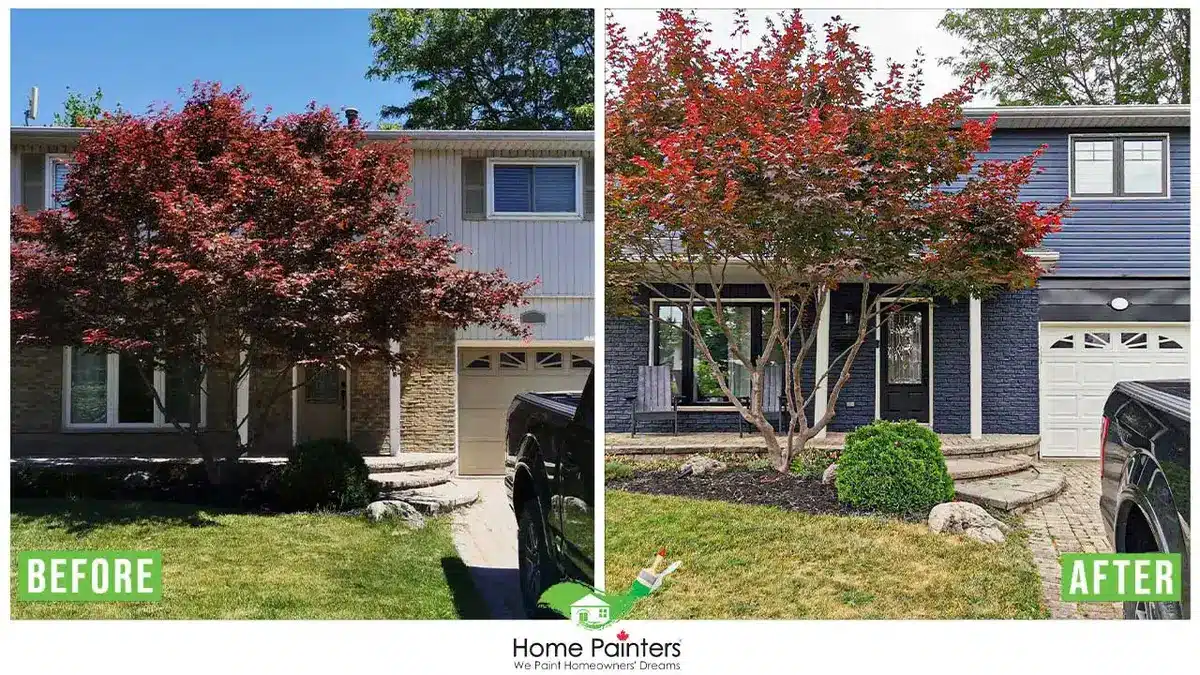
How Our Crew Times a Professional Siding Repair Project
A professional crew starts every siding repair with a site assessment, not a calendar date. We check the current condition of the panels, the extent of any hidden moisture, and the forecast for the coming days before we schedule the work itself.
Best Time for Siding Repair Scheduling: Spring vs Fall Booking
Spring bookings tend to fill first because homeowners want damage fixed before summer entertaining season. Fall bookings often give a calmer schedule and cooler working conditions, which suits larger repairs that involve multiple panels or a full colour match.
Sherwin-Williams' own exterior application guidance confirms that surface, air, and material temperatures all need to sit within the product's stated range, and that overnight conditions matter just as much as the daytime forecast.
See the manufacturer's full answer here: Sherwin-Williams' exterior application FAQ.
Once a date is set, our crew follows the same sequence on every job. We remove and inspect the damaged section first. We check the sheathing behind it for moisture, and flag any wood frame repair needs before closing the wall back up. We replace or repair the panel, then seal and finish it to match the surrounding wall.
- Confirm forecast and surface temperature before the crew arrives
- Remove damaged panels and inspect the sheathing underneath
- Replace, patch, or refasten based on what the inspection shows
- Seal, caulk, and colour match to the existing wall
- Recheck the repair once it has fully cured
Lead times shift with the season too. Spring bookings across Toronto, Richmond Hill, and Burlington often need to be placed a few weeks ahead, since many homeowners call at once after the first mild week. Fall bookings tend to move faster, since fewer homeowners think to schedule siding work once summer projects wrap up. That gap is part of why fall repairs are often easier to schedule quickly.
Why Waiting Until Winter Costs You More
Waiting until winter turns a small siding repair into a larger one. A cracked panel left through a Toronto winter lets snowmelt and freeze-thaw cycles work their way behind the wall, which often turns a single panel replacement into a multi-panel job by spring.
Emergency Repairs Do Not Wait for the Right Season
Storm damage, animal intrusion, and impact damage do not check the calendar, and often affect soffit and fascia at the same time as the wall panels. When siding fails mid-winter, a professional crew can still install temporary protection to stop water intrusion, then complete the full repair once temperatures allow proper curing.
The table below shows how the cost impact of a delayed repair tends to build over a single season.
| Season Delay | Relative Cost Impact | Why |
|---|---|---|
| Fixed within weeks | Baseline | Damage is contained to the original panel or section |
| Delayed one season | Moderate increase | Moisture spreads behind adjacent panels |
| Delayed a full winter | Significant increase | Sheathing and insulation may need replacement, not just siding |
For context, a typical exterior repair scope in the GTA runs in the $2,000 to $4,000 range for smaller sections, and $4,000 to $8,000 for medium scope work that spans a wider wall area. A delayed repair often pushes a project from the smaller range into the larger one. For a broader look at exterior project budgeting, see our cost of painting a house guide.
There is also an insurance angle worth noting. Storm and impact damage reported quickly, with clear photos and a professional assessment, is usually easier to document for a claim. Damage left unreported through a full winter can raise questions about when it actually happened, which can complicate a claim later on.
The Hidden Risk of Rushing a Repair in Peak Summer Heat
Most guides praise summer as an easy repair season, but peak heat carries its own risk. Dark siding in direct July sun can run well above the surrounding air temperature, and paint applied to an overheated surface can dry on the outside before it bonds underneath.
That mismatch shows up later as blistering or premature peeling, often within a single season. A professional crew checks surface temperature with a handheld thermometer before starting work, then shifts to a shaded wall if a reading runs too high.
This is why early fall often outperforms peak summer for larger repairs. Air temperatures stay warm enough to cure materials properly, while surface temperatures rarely spike the way they do on a still July afternoon.
On a hot Toronto afternoon, our exterior house painting crews rotate around the house instead of working a single wall start to finish. Starting on the shaded side in the morning and moving with the sun keeps surface temperatures inside a workable range all day. That single scheduling habit prevents most of the heat-related failures we see on rushed jobs.
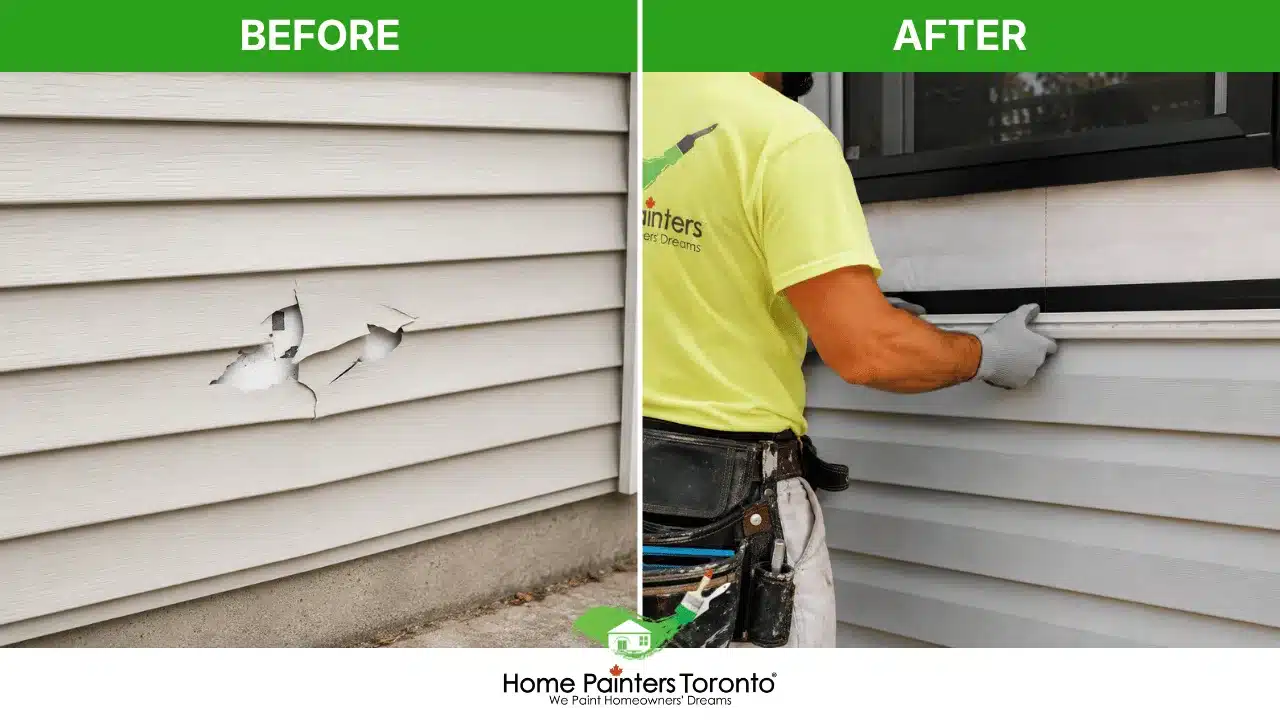
Starting on the shaded side in the morning and moving with the sun keeps surface temperatures inside a workable range all day
How Long a Properly Timed Siding Repair Lasts in the GTA
A siding repair completed within the proper temperature window can last well beyond a decade with routine maintenance. A repair rushed through cold or overheated conditions often shows signs of failure within one to two years, regardless of the material used.
Longevity depends on more than timing alone. Correct fastening, proper flashing, and colour-matched finishing all play a role. Timing simply gives every other step the conditions it needs to hold.
| Material | Typical Lifespan After a Well-Timed Repair | Common Failure Point If Rushed |
|---|---|---|
| Vinyl siding | 15 to 25 years | Cracking from cold weather handling |
| Wood siding | 10 to 20 years with maintenance | Peeling from a damp or overheated surface |
| Aluminum siding | 20 to 30 years | Loose fasteners from cold weather installation |
| Fibre cement siding | 25 to 40 years | Caulking failure at panel joints |
These ranges assume routine upkeep and a repair completed within the proper temperature window. A rushed repair can cut every one of these numbers down substantially, sometimes to a single season before visible failure appears. Homeowners with exterior wood siding should budget for a repaint at the same cycle to protect the repair underneath it.
What to Look for in a Siding Repair Contractor Before You Book
The right contractor plans around weather, not just around your calendar. Ask any siding repair company how they schedule around temperature and humidity before you sign anything. A vague answer is a warning sign.
- WSIB compliance and proof of general liability insurance
- A written scope that names the materials and finish being used
- A clear plan for checking sheathing and moisture, not just the surface panel
- A written warranty on the completed repair
- Local project history across GTA neighbourhoods, not just stock photos
A short conversation usually reveals whether a contractor plans around weather. Ask what temperature range they consider safe for your specific siding material. Ask how they handle a booking if the forecast shifts a few days before the crew arrives. A contractor with a real process will have a clear, specific answer instead of a general reassurance.
- At a recent siding repair project in Leslieville, Toronto, our crew found 18% moisture content behind a cracked vinyl panel using a pin-type moisture meter, well above the safe range for closing the wall back up.
- We dried the sheathing, replaced the damaged section, and finished the touch-up work with Benjamin Moore Aura Exterior in a Low Lustre finish to match the existing wall colour.
- The homeowner's project was covered under our standard warranty-backed process, with WSIB compliance and full insurance confirmed before the crew stepped on site.
Frequently Asked Questions
Here are the questions Toronto homeowners ask most often before booking a siding repair. Our full FAQ page covers more general painting and repair questions.
September is often the strongest single month. Days stay warm enough to cure caulking and paint, while nights are cool enough to limit heat-related expansion during the work.
Emergency repairs can happen in winter to stop water intrusion. Full permanent repairs, including caulking and colour-matched finishing, generally need to wait for temperatures above roughly 10°C to cure properly.
Both work well. Spring bookings fill up faster because homeowners want repairs done before summer. Fall often gives cooler, more stable conditions for larger or multi-panel repairs.
A single panel repair often finishes within one day. Larger repairs involving multiple sections, colour matching, or sheathing replacement can take several days depending on the scope.
Most like-for-like repairs do not need a permit. Larger scope work that changes the building envelope may require one, so it is worth confirming with your contractor before work begins.
Water and freeze-thaw movement can spread behind the wall, turning a small panel repair into a larger job that involves the sheathing underneath by the time spring arrives.

Book Your Siding Repair at the Right Time
Timing shapes how long a siding repair actually lasts. Booking within the right seasonal window, with a crew that checks temperature, humidity, and hidden moisture before starting, protects the investment you are already making in your home.
Home Painters Toronto has served 17,000+ clients across the GTA over 38+ years, and our team is proud to hold the HomeStars Best of Award 2026. You can learn more about our team and process on our About page. Every siding repair follows the same WSIB-compliant, fully insured process, with warranty-backed results on the finished work.
Ready for a fast, free quote and warranty-backed siding repair? Contact Home Painters Toronto today.
Get a Free Siding Repair Quote Timed Right for Toronto's Climate
Fast, free same day estimates and warranty backed repairs from a WSIB compliant, family owned GTA contractor with 38+ years of experience.
Get Your Free Estimate