

If you're wondering about the best time to stain a deck in Toronto, timing isn't just about convenience, it's the difference between a finish that lasts years and one that peels by fall. During these windows, temperatures sit between 10°C and 25°C, humidity stays moderate, and rain is less frequent. Moreover, these shoulder seasons allow stain to penetrate properly and cure without freezing overnight or drying too fast in the afternoon sun.
Timing matters more than most Toronto homeowners realize. Staining a deck the wrong week, and you could see peeling, blotching, or premature fading within a single season. Here's what you need to know at a glance:
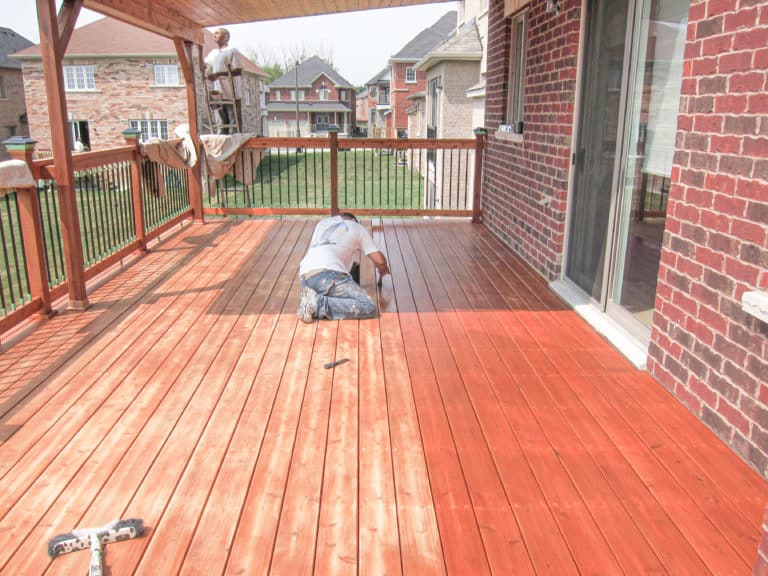
Why Toronto's Climate Makes Timing So Critical
Toronto's weather is unforgiving for exterior wood. Winters bring freeze-thaw cycles. Summers deliver humidity spikes and sudden thunderstorms. Consequently, the window for a stain job that actually lasts is narrower here than in milder regions. This climate reality is the same reason Toronto homes need repainting every 5 to 7 years; our weather cycles punish exterior finishes far faster than other Canadian cities.
According to Environment and Climate Change Canada, Toronto receives roughly 831 mm of precipitation annually, spread evenly across the seasons. That means moisture is almost always a factor. Furthermore, Lake Ontario keeps humidity high, which slows drying and can trap moisture beneath the finish if the wood isn't fully dry before application.
This is exactly why scheduling matters. A deck stained during a humid July afternoon may look fine for a few weeks, then start peeling by fall. However, the same deck stained during a dry stretch in late May or early September can hold up beautifully for 2 to 3 years.
Don't just check tomorrow's forecast. Look at a 5-day forecast window before booking any staining work. You need two dry days before application and 48 hours of dry weather afterward. In Toronto, professional crews track weather patterns daily and adjust schedules to protect your investment.
Late Spring and Early Fall: The Two Ideal Windows
Late Spring: May to Mid-June (The Sweet Spot)
Late spring is arguably the best time to stain deck boards in the GTA. By mid-May, overnight temperatures are consistently above 5°C. Additionally, pollen season winds down by early June, which matters because pollen stuck in wet stain creates a gritty, uneven finish.
Why late spring works so well:
- Stable daytime temperatures between 15°C and 22°C
- Lower humidity compared to July and August
- Longer daylight hours allow crews to work efficiently
- Your deck is ready to use right as patio season begins
The catch? Late spring is also the busiest booking window for every reputable painter in Toronto. Consequently, waiting until May to call can push your project into July. Smart homeowners contact a professional in February or March to lock in a late-spring slot.
Early Fall: September to Early October (The Underrated Choice)
September and early October often deliver the most stable staining conditions of the year. Moreover, humidity drops after Labour Day, rain patterns become more predictable, and the brutal summer sun loses its intensity.
Fall staining advantages:
- Cooler surface temperatures reduce flash drying
- Lower humidity helps stain cure evenly
- Bug pressure decreases significantly
- Your deck gets protected before the winter freeze-thaw begins
That said, you have to watch the calendar carefully. Once mid-October hits, overnight lows can dip below 5°C. As a result, the stain may fail to cure properly, and a single frost can ruin a fresh coat. Fall is also an ideal time to tackle related exterior projects such as exterior brick staining, which shares similar weather requirements.
What Temperature Is Best for Staining a Deck?
Most manufacturers specify an application window of 10°C to 30°C (50°F to 90°F). However, the sweet spot is much narrower.
| Condition | Ideal Range | Why It Matters |
|---|---|---|
| Air temperature | 15°C to 25°C | Balanced penetration and cure time |
| Surface temperature | Under 30°C | Prevents flash drying and lap marks |
| Overnight low | Above 5°C | Allows proper curing overnight |
| Humidity | 40% to 70% | Stain absorbs evenly |
| Rain window | 48 hours dry before and after | Prevents peeling and blotching |
A stain applied in direct sun on a 32°C July afternoon will dry before it penetrates. On the other hand, a stain applied when overnight temperatures drop to 3°C simply won't cure. Both scenarios lead to the same outcome: peeling, fading, and a full redo within 12 months.
Can You Stain a Deck in Summer in Toronto?
Yes, but it's the trickiest season. July and August in Toronto regularly hit 28°C to 32°C with humidity above 75%. Furthermore, afternoon thunderstorms are common and often unpredictable. If summer is your only option, the work must happen early morning (before 10 a.m.) or late afternoon (after 5 p.m.), on overcast days when the deck surface stays cool, and with extended drying windows to account for humidity.
Honestly, this is where DIY summer staining goes wrong most often. Homeowners start at 11 a.m. on a sunny Saturday, the deck surface hits 40°C, the stain flashes off, and the finish looks blotchy within weeks. A professional crew works the shade, splits the job across cooler morning hours, and knows when to stop and come back tomorrow.
Why DIY Deck Staining Often Costs More in the Long Run
Staining a deck looks simple on YouTube. In reality, it rarely is. The prep work, weather timing, product selection, and application technique all have to align. Miss one, and you're redoing the whole thing.
Common DIY Problems We Fix Every Year
- Peeling within one season because the wood wasn't fully dry, or the old stain wasn't stripped
- Blotchy finish from applying too much product or working in direct sunlight
- Trapped moisture causing mould and wood rot beneath the surface
- Wasted materials from buying the wrong type of stain for Toronto's climate
- Physical strain and safety risks, especially on elevated or multi-level decks
The hidden cost adds up quickly. A failed DIY stain job often means stripping, sanding, and re-prepping the entire deck before a professional can apply a proper finish. That doubles your labour cost compared to simply hiring pros the first time. For serious damage like loose boards, rot, or structural issues, you may also need wood deck replacement and repairs before staining can even begin.
The biggest hidden DIY cost isn't the stain or the brushes. It's the opportunity cost of spending 3 to 5 weekends on a project that a professional crew finishes in 1 to 3 days with a 3-year warranty.
How Often Should You Stain a Deck in Toronto?
Most Toronto decks need restaining every 2 to 3 years. That said, the exact timing depends on several factors:

| Factor | Effect on Frequency |
|---|---|
| Sun exposure (south/west facing) | May need restaining closer to 2 years |
| Traffic level (high use) | Walkways wear first, monitor annually |
| Transparent stains | May need annual touch-ups |
| Solid stains | Can last 4 to 5 years with proper prep |
| Heavy shade or tree cover | Holds dampness, encourages mildew sooner |
Signs it's time to re-stain include water no longer beading on the surface, visible greying, small cracks forming, or faded colour in high-traffic zones. When those signs appear, delay is costly. Unprotected wood absorbs moisture within weeks, and once rot starts, staining alone won't save it.
What Happens If You Skip Deck Staining Entirely?
Leaving a Toronto deck unstained for 5+ years is a guaranteed path to replacement. Without protection, UV rays break down lignin in the wood, water soaks into the grain, and the board structure eventually fails. Moreover, unprotected cedar and pressure-treated lumber can split and warp beyond repair after just a few freeze-thaw cycles. Replacing a full deck costs many multiples of what regular staining costs. Consequently, staying on a 2-to-3-year staining schedule is one of the smartest investments a Toronto homeowner can make.
What to Expect When You Hire a Professional
A professional deck staining project typically moves through four clear stages:
- Free on-site assessment with colour consultation and detailed estimate
- Scheduling around the ideal weather window for your neighbourhood
- Full prep including cleaning, sanding, repairs, and masking adjacent surfaces
- Two-coat application followed by a final walk-through and quality check
Most small-to-medium decks finish in 1 to 2 days. Larger or multi-level decks can take 3 to 5 days, depending on prep needs. In contrast, the same project DIY often stretches across several weekends, with weather interruptions adding more.
Why Toronto Homeowners Trust Home Painters Toronto
With 38+ years of experience staining decks and fences across the GTA, we understand exactly how Toronto's weather affects wood. Furthermore, our in-house crew, not subcontractors, handles every project from surface prep to final inspection.
- ✓Thorough surface prep: We scrape, sand, clean, and repair before any stain touches your deck
- ✓Weather-smart scheduling: We adjust timing based on forecasts, not calendars
- ✓Premium stains: Benjamin Moore and Sherwin-Williams products selected for your specific wood and exposure
- ✓3-year warranty on all exterior services
- ✓Insured crew with $5M general liability and full WSIB coverage
- ✓Colour consultation included in every quote
Frequently Asked Questions About the Best Time to Stain Deck Surfaces
Late May to mid-June and early September to early October are the best times to stain a deck in Toronto. These windows offer temperatures between 10°C and 25°C, moderate humidity, and lower rain frequency compared to mid-summer.
The best temperature to stain a deck is between 15°C and 25°C, with overnight lows staying above 5°C. Most stain manufacturers allow a broader range of 10°C to 30°C, but results are most consistent in the narrower window.
Wait at least 48 hours after rain before staining, and confirm no rain is forecast for 48 hours afterward. Even if the surface looks dry, moisture deep in the wood can prevent the stain from penetrating properly.
You can, but it's the riskiest window. High humidity and surface temperatures above 30°C cause flash drying, blotchy finishes, and poor penetration. Professional crews work early mornings, late afternoons, or overcast days to manage the risk.
Most Toronto decks need restaining every 2 to 3 years. Transparent stains may need annual touch-ups, while solid stains can last 4 to 5 years. Watch for water no longer beading, greying, or cracking as signs you're due.
Both work exceptionally well. Late spring is ideal if you want to enjoy the deck all summer. Early fall is ideal for protection ahead of winter freeze-thaw cycles. Professional availability is often better in the fall than in the spring rush.
In most cases, yes, especially if the old stain is peeling, film-forming, or significantly different in colour. Stripping ensures the new stain bonds properly and absorbs evenly. This prep step is a core part of every professional deck staining project.
Book the Best Time to Stain Deck Projects With a Trusted Toronto Pro
The best time to stain deck surfaces in Toronto is late spring or early fall, when temperature, humidity, and rainfall align to give you a finish that actually lasts. However, timing alone isn't enough. Proper prep, the right stain for your wood, and weather-smart scheduling are what separate a deck that still looks great in year three from one that's peeling by month six.
At Home Painters Toronto, we've spent 38+ years perfecting exactly that. Our in-house crew handles every step, from assessment to final walk-through, and we back our work with a 3-year exterior warranty. Consequently, you get a deck that looks beautiful, lasts longer, and protects the investment in your home.