

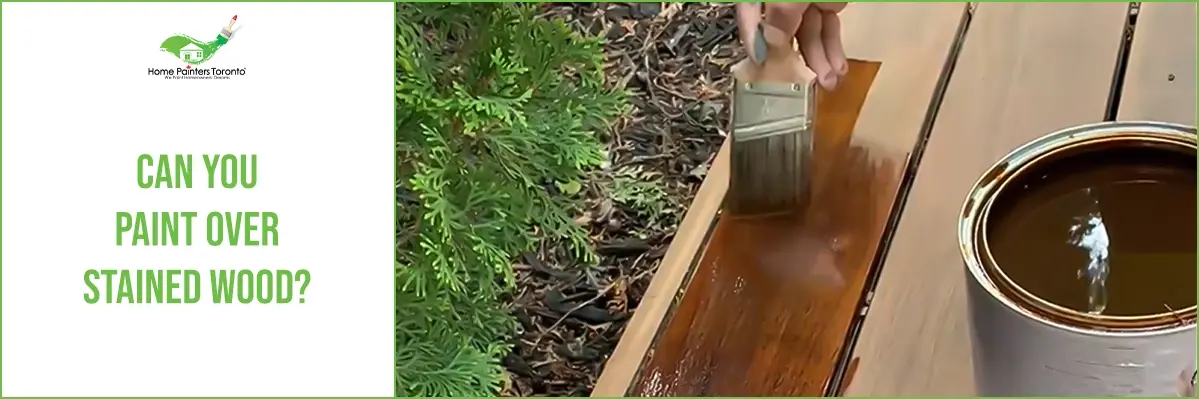
Yes, you can paint over stained wood, but the result depends heavily on the preparation.
Many homeowners ask this question when they want to update dated trim, dark wood features, built-ins, doors, or cabinets without removing and replacing them. Painting stained wood can completely change the look of a room, but it is not a surface you should treat like fresh drywall or previously painted trim.
Stained wood often has a sealed, glossy finish. That means the surface usually needs cleaning, sanding, and priming before paint is applied. If those steps are skipped, the finish can peel, chip, or show stain bleed-through.
For Toronto homeowners trying to modernize older interiors, painting stained wood is often a smart upgrade when done correctly.
If you are updating dark trim, built-ins, or interior woodwork, learn more about professional interior painting Toronto services for proper prep and a durable finish.
Yes, You Can Paint Over Stained Wood
The short answer is yes. Stained wood can usually be painted successfully.
The important part is not whether it can be painted, but whether it is prepared properly first. Most stained wood surfaces have a protective topcoat that reduces paint adhesion. That is why professional painters focus so much on prep before they ever open a finish can.
When homeowners try to paint stained wood without proper surface preparation, the finish often looks uneven or begins failing much earlier than expected.
Why Painting Over Stained Wood Requires Proper Prep
Painting over stained wood is not just about changing colour. It is about creating a stable, bondable surface that allows primer and paint to perform properly.
Stain can block adhesion
Many stained wood surfaces are sealed with varnish, polyurethane, or another protective finish.
These coatings make the surface smoother and more resistant to moisture, but they also make it harder for paint to stick. If paint is applied directly over that finish, adhesion problems are much more likely.
Glossy finishes create problems
Glossy wood trim and woodwork are especially difficult if they are not dulled or sanded first.
The smoother and shinier the surface, the less grip the new coating has. That is why sanding is usually part of the process before primer is applied.
Bleed-through can ruin the finish
Some stained woods contain tannins or dark pigments that can migrate through ordinary paint.
Without the correct primer, the finished surface may show yellowing, discoloration, or uneven patches. This is one of the biggest reasons stained wood should be primed correctly before painting.
How To Paint Over Stained Wood Properly
The general process is straightforward, but each step matters.
Clean the surface first
Wood trim, doors, railings, and cabinets often collect dust, oils, and residue over time.
Before sanding or priming, the surface should be cleaned thoroughly. Paint applied over contaminants will not bond as reliably, even if the rest of the process is done correctly.
Sand the stained wood
Sanding helps dull the existing finish and gives primer a better surface to grip.
This step does not always require taking the wood back to bare wood. In many cases, the goal is to scuff the sealed surface enough to improve adhesion rather than remove the entire stain system.
For painted trim, doors, and wood details throughout the home, proper prep is one reason many homeowners hire experienced Toronto painters instead of treating the project like a quick weekend job.
Use the right primer
Primer is usually the most important product in this process.
A high-quality bonding or stain-blocking primer helps seal the old finish, reduce bleed-through, and create a reliable base for the topcoats. Skipping primer is one of the most common reasons painted stained wood fails.
This matters even more in high-touch areas such as doors, trim, stair components, and cabinetry.
Apply the finish coats properly
Once the surface is cleaned, sanded, and primed, the finish coats can be applied.
A smooth, durable result depends on proper drying time, careful application, and the right type of paint for the surface. Different surfaces may need different products based on wear, cleaning frequency, and desired sheen.
Where Homeowners Commonly Paint Over Stained Wood
This type of project is common in homes with older interior finishes.
Homeowners often choose to paint stained wood on:
- interior trim
- baseboards
- doors
- built-in shelving
- stair railings
- wood paneling
- bathroom or kitchen cabinetry
For kitchen projects, preparation and finish quality are especially important. If the stained wood is part of a cabinet update, it makes sense to review professional cabinet painting Toronto services before deciding how to proceed.
If the stained wood is part of a staircase or handrail system, homeowners may also want to explore stair painting and refinishing services where adhesion and durability matter even more.
When Painting Over Stained Wood Is Not a Simple DIY Project
Some stained wood painting projects are more complex than they first appear.
Large amounts of trim require consistent prep and a uniform finish across many rooms. Detailed millwork can be time-consuming to sand and prime properly. Older surfaces may also have multiple existing coatings that complicate adhesion.
Cabinets, railings, and high-traffic woodwork also demand more durable finishes than ordinary wall painting.
When the goal is a clean, furniture-like result rather than a brush-marked repaint, professional application becomes much more valuable.
Planning to update stained trim, wood doors, or cabinets throughout your home? See how professional house painters Toronto handle prep, priming, and finish work for long-lasting results.
Common Mistakes When Painting Stained Wood
The most common mistake is assuming stained wood can be painted the same way as any other surface.
Other frequent problems include:
- not cleaning the surface properly
- skipping sanding
- using the wrong primer
- applying paint too heavily
- not allowing enough drying or curing time
These issues often lead to visible brush marks, peeling, poor adhesion, or stain bleed-through. In high-visibility areas, that usually means the work has to be redone.
Should You Paint or Re-Stain Wood Instead?
Not every stained wood surface should automatically be painted.
Sometimes the wood has attractive grain, architectural character, or a finish that still works with the space. In other cases, the stain looks dated, too dark, or inconsistent with a newer interior design style.
Painting is often chosen when homeowners want a brighter, cleaner, more modern look. Re-staining may make more sense when the natural wood appearance is still part of the room’s appeal.
If the project is part of a broader interior refresh, it can be helpful to review related trim painting services to understand how wood details fit into the overall design of the home.
Frequently Asked Questions About Painting Over Stained Wood
Do you need to sand stained wood before painting?
In most cases, yes. Sanding helps dull the sealed surface and improves primer adhesion. The goal is usually to scuff the finish, not always to strip it completely.
Can you paint over stained wood without primer?
It is not recommended. Primer helps block stain bleed-through and creates a better surface for the finish coats to bond to.
Will stain bleed through paint?
It can. Some stained woods and older finishes contain pigments or tannins that may come through the paint without the right primer.
Can stained kitchen cabinets be painted?
Yes. Many stained cabinets can be painted successfully, but they require thorough prep and the correct coating system because they are high-touch surfaces.
Is painting stained trim worth it?
It often is, especially when homeowners want to brighten older interiors and modernize heavy wood finishes without replacing trim or millwork.
Can You Paint Over Stained Wood?
If you are considering painting stained wood in your home, the finish will only be as good as the preparation underneath it.
Learn more about professional interior painting Toronto services to get help with proper prep, priming, and a cleaner final result on trim, doors, cabinets, and woodwork.
Call 416.494.9095 or email [email protected] for a FREE quote. And don’t forget to check us out on our social media channels below!