

What Is Chalking Aluminum Siding and Why Is It Happening?
If you've ever run your hand across your home's exterior and come away with a white, powdery residue on your fingers, you're looking at chalking aluminum siding, and it's more common in Toronto than most homeowners realize. That chalky film is oxidation: a sign that the paint's protective binders have broken down from years of UV exposure, freeze-thaw cycles, and Ontario's punishing seasonal swings.
It looks like a cosmetic problem, but left untreated, it signals that your siding's protective coating is failing. The good news? In most cases, chalking aluminum siding doesn't mean replacement. It means it's time for a professional repaint.
Quick facts Toronto homeowners should know:
Understanding What Causes Chalking on Aluminum Siding
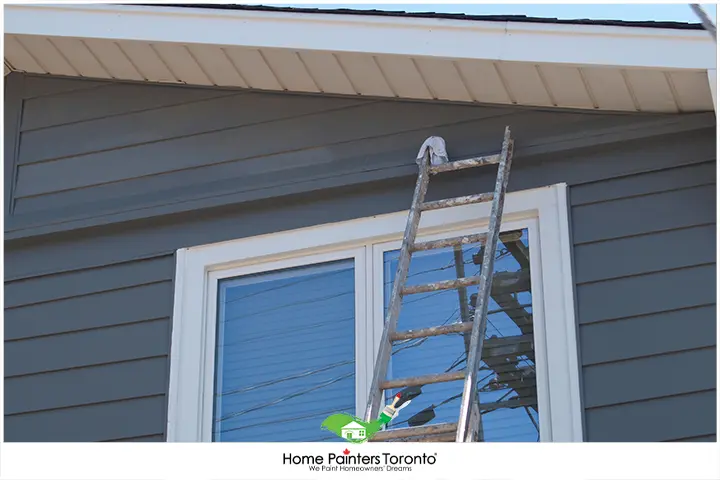
Aluminum siding was built to last. But the paint applied to it, whether from the factory or a previous coat, doesn't last forever. Over time, UV radiation from the sun attacks the binding resin that holds the paint together. As the resin degrades, the pigment particles lose their grip and rise to the surface as a fine white powder.
This is oxidation on aluminum siding in action. It's the same chemical process that causes metal to rust, just expressed differently on a painted surface.
How Toronto's Climate Makes Chalking Worse
Toronto's climate is particularly hard on exterior paint. According to information published by Environment and Climate Change Canada, the GTA experiences wide seasonal temperature swings, from well below freezing in January to hot, humid stretches in July and August. That combination creates conditions where paint failure accelerates faster than in more temperate climates.
Here's what happens season by season:
Freeze-thaw cycles force water into microscopic cracks in the paint film. When it freezes, it expands and widens those cracks.
Moisture and temperature shifts stress the bond between paint and aluminum.
UV radiation is at its peak. The sun bakes the paint binder, speeding up chalking and fading.
Fluctuating temperatures stress the surface again before the cycle repeats.
Darker-coloured siding tends to absorb more heat and UV, making it especially vulnerable. But no colour is immune once the paint has aged past its serviceable life.
How Old Does Siding Need to Be Before It Chalks?
There's no fixed timeline. Factory-applied paint on aluminum siding from the 1960s through 1990s, the period when most Toronto aluminum-sided homes were built, was designed to last 20 to 30 years. Most of that paint is well past its prime.
Even more recent paint jobs can chalk within five to ten years if the original prep work was poor, a low-quality product was used, or the application was done in unsuitable weather conditions.
How to Tell If Your Aluminum Siding Is Chalking
You don't need to be a painter to identify chalking. The test is simple.
On a dry day, press your palm flat against the siding and drag it slowly. If you pull your hand back with a white or grayish powder coating it, the siding is chalking. The heavier the residue, the more advanced the oxidation.
Other signs to look for:
- Faded, washed-out colour that looks lighter than it once did
- Streaks of white running down from the siding onto window frames, brick, or trim
- Paint that feels powdery or slightly rough instead of smooth to the touch
- Uneven sheen, with some sections appearing dull while others still retain some gloss
One important thing to understand: the presence of chalking doesn't mean your siding is failing structurally. Aluminum itself doesn't rot or rust the way wood does. The issue is entirely with the paint layer, which is also why a professional repaint, done correctly, can restore siding that looks worn-out and extend its life significantly.
Why Chalking Aluminum Siding Is More Than a Cosmetic Problem
Some Toronto homeowners notice the chalky residue and assume it's just a visual issue. That's an understandable first reaction. But chalking is a symptom of paint breakdown, and once that protective layer has degraded, the underlying surface becomes more vulnerable.
Here's what's at stake:
- Paint adhesion failure. Chalky residue is essentially a barrier between the surface and any new coating. If you apply fresh paint over an uncleaned, chalky surface, that new paint bonds to the powder, not to the aluminum. The result is a paint job that peels in a matter of months.
- Moisture entry. As the paint layer thins and breaks down, it becomes less effective as a moisture barrier. Over time, this can allow water to penetrate behind the siding, creating conditions for mould, rot in adjacent wood framing, and corrosion. Proper exterior caulking becomes critical at this stage to seal gaps before they worsen.
- Loss of property value and curb appeal. For homeowners in Toronto's competitive real estate market, exterior condition matters. Chalky, faded siding signals deferred maintenance and can reduce a home's perceived value significantly. For more on how exterior updates improve first impressions, see our curb appeal ideas.
- Staining on adjacent surfaces. As it rains, the chalky powder washes down from the siding and deposits on window frames, brick, concrete, and walkways below. This secondary staining becomes its own problem to address.
Can You Remove Chalking from Aluminum Siding Yourself?
This is a question worth answering honestly, because a lot of homeowners attempt DIY cleaning before realizing how much work is actually involved.
Yes, you can remove light chalking yourself. But doing it properly, well enough that a paint job will actually stick and last, is harder than it looks.
What Proper Chalk Removal Actually Requires
Power washing aluminum siding alone is not enough. Industry professionals are clear on this: pressure washing can blast off surface grime, but it doesn't remove enough chalky residue from the surface profile without risking damage to the siding at close range.
Proper chalk removal requires:
- A light initial rinse with a garden hose or low-pressure washer
- Hand-scrubbing with a cleaning agent such as TSP (trisodium phosphate) or a commercial chalk-removing solution applied using a soft-bristle brush
- Thorough attention to the edges, laps, and lips of each siding panel, spots where contaminants collect, and rain can't rinse naturally
- A final rinse, followed by a wipe test: dragging a clean white cloth across the dry surface to confirm no powder remains
- If powder still transfers to the cloth, the cleaning process needs to be repeated
That's before any sanding, priming, or painting happens.
The Realistic DIY Risks
If you're a capable, methodical homeowner with the right equipment and several days to spare, you may be able to get the cleaning done adequately. But even then, there are common failure points:
- Missing hidden chalk deposits in the laps and joints that cause delamination later
- Applying primer before the surface is fully dry, causing adhesion failure
- Using the wrong primer: not all primers bond well to aluminum, and using a standard wall primer can cause premature peeling
- Applying paint in poor weather conditions: temperature below 10°C or above 30°C, high humidity, or direct sun on a hot surface all affect adhesion
- Skipping or underestimating sanding where the surface is smooth or glossy
The honest reality is that for most homeowners, DIY chalk removal and repainting produce results that look fine for a season or two and then begin to fail, exactly the outcome that motivated them to paint in the first place.
How Professional Painters Fix Chalking Aluminum Siding the Right Way
This is where experience and process separate a result that lasts from one that doesn't.
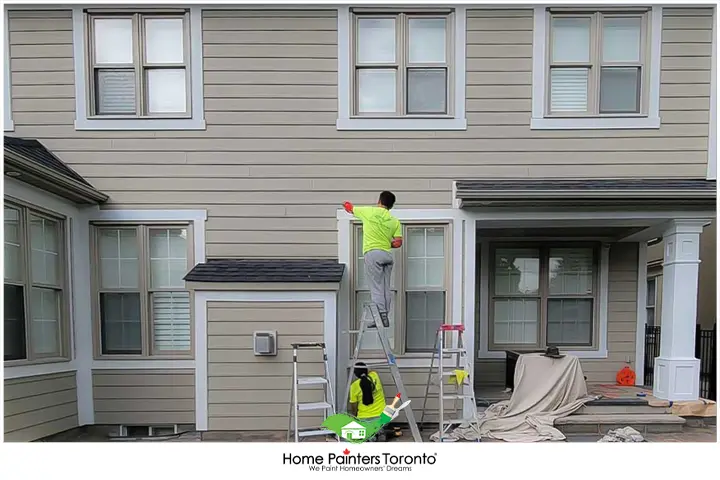
When a professional painting crew addresses chalking aluminum siding in Toronto, they follow a systematic approach. Here's what that looks like at a high-quality company like Home Painters Toronto:
On-Site Assessment
Before any work begins, a qualified estimator inspects the siding in person. They assess the severity of chalking, identify any areas with underlying damage (loose panels, failing caulk, compromised trim), and provide a detailed written scope of work. There are no surprises once the job starts.
Thorough Surface Preparation
This is the step that most directly determines whether the paint job lasts three years or ten. Preparation for aluminum siding that's chalking includes:
- Power washing to remove loose debris and surface contamination
- Hand scrubbing with a TSP-based or chalk-removing solution to pull oxidation from the surface profile, including the edges and laps that a pressure washer can't reach adequately
- Wipe testing to confirm chalk removal before proceeding
- Spot sanding of glossy areas and any sections with remaining paint failure
- Caulking all joints, seams, and gaps where moisture can penetrate
- Spot priming damaged or bare metal areas with a metal-appropriate bonding primer
Surface prep routinely takes longer than the painting itself, and with good reason. It's the foundation on which everything else depends.
Primer Application
On aluminum siding with significant chalking or paint history, a full coat of bonding primer applied to the entire surface is often the correct call. A quality bonding primer chemically adheres to the aluminum and creates a stable base for the topcoat. This step is where DIY projects most commonly cut corners and where professional work pays for itself.
Topcoat Application
The right paint for aluminum siding in Toronto's climate is a high-quality 100% acrylic exterior paint with UV inhibitors and flexible binders. Flexible binders allow the paint film to expand and contract with the aluminum as temperatures change, a critical property given Toronto's seasonal extremes.
Brands like Benjamin Moore and Sherwin-Williams offer products specifically engineered for metal substrates in demanding climates. A professional crew knows which products perform in local conditions and applies them according to manufacturer specifications for dry-film thickness, application temperature, and recoat timing.
Final Walkthrough and Warranty
A professional job ends with a walkthrough where the homeowner inspects the work before the crew leaves. Any touch-ups are addressed on the spot. And at a company like Home Painters Toronto, the completed exterior painting work comes with a 3-year warranty, because a properly prepared, properly painted surface shouldn't be a cause for concern.
Why Toronto Homeowners Choose Professional Painters Over DIY for This Job
Beyond the technical complexity, there are practical reasons why professional repainting of chalking aluminum siding makes sense for most Toronto homeowners:
A proper chalk-removal and repainting project on a typical Toronto home takes anywhere from two to five days of skilled labour. That's not a weekend project.
Professional-grade pressure washers, brushes, sprayers, scaffolding or ladders, and safety gear add up quickly if you're renting or buying for a one-time job.
Primer and paint selection for chalking aluminum requires specific knowledge. The wrong product means redoing the work.
Working at height on ladders and scaffolding is one of the leading causes of serious home improvement injuries. Professional crews are trained, insured, and equipped for this kind of work.
When a professional company backs their work with a written warranty, you have recourse if something goes wrong. DIY offers no such protection.
A professional repaint done correctly on chalking aluminum siding can last seven to fifteen years. A poorly executed DIY job may begin failing within a season, meaning you spend more and do it more often.
When Is the Best Time to Repaint Chalking Aluminum Siding in Toronto?
The ideal window for exterior painting in Toronto is late spring through early fall, roughly May to October, when daytime temperatures consistently stay between 10°C and 30°C. Paint needs adequate dry time between coats, and high humidity or temperatures outside this range compromise adhesion and curing.
Booking in early spring for a late-May or June start is often the sweet spot. It avoids the rush of peak summer scheduling and gives the paint a full season to cure before winter. If your siding also has related damage like rotting soffits or fascia boards, it's worth bundling that into the same project, see soffit and fascia repair for what's involved before painting begins.
Home Painters Toronto typically begins booking exterior house painting in March and April for the season ahead.
What About Painting Aluminum Siding vs. Replacing It?
This is a common question, and it's worth addressing directly.
Aluminum siding replacement is a significant project. It involves removing the existing siding, addressing any underlying sheathing or insulation issues, and installing new panels, all at a cost that is typically several times higher than a professional repaint.
For siding that is structurally sound, no major dents, no loose panels, no significant corrosion, a professional repaint is almost always the more cost-effective choice. It restores the appearance, improves weather resistance, and extends the life of the existing material without the disruption and expense of full replacement. For a detailed breakdown of how much you can save, read painting your aluminum siding can save you thousands.
It's also worth noting that some homeowners consider switching from aluminum to vinyl siding during replacement. While vinyl doesn't chalk the same way, it comes with its own issues, including warping in heat and limited colour-change options. For most Toronto homes with structurally sound aluminum, repainting remains the smarter investment.
Explore the full range of exterior painting services in Toronto to understand what a professional scope of work includes and what results you can realistically expect.
How Much Does It Cost to Fix Chalking Aluminum Siding in Toronto?
The cost of repainting chalking aluminum siding in Toronto depends on the size of the home, the severity of the chalking, how many storeys need to be reached, and the condition of adjacent surfaces like trim and soffits. As a general range, an aluminum siding painting job runs between $1,500 and $12,000, though homes with extensive prep needs or multi-storey access requirements can fall outside that range.
What drives cost up is almost always preparation, not paint. A home with heavy chalking that requires multiple rounds of hand scrubbing, extensive caulking, and full priming aluminum siding will cost more than a home where the chalking is light and the surface responds well to a single cleaning pass.
The best way to get an accurate number is with a free estimate. Home Painters Toronto provides detailed written quotes after inspecting the siding in person, so you know exactly what's included before any work begins.
Other Exterior Surfaces That Often Need Attention at the Same Time
Chalking aluminum siding rarely exists in isolation. When a home has reached the point where the siding paint is breaking down, other exterior surfaces are often in a similar condition. A professional assessment often identifies:
- ✓Wood trim and soffits that have begun to peel or crack
- ✓Fascia boards with exposed wood due to failing paint
- ✓Exterior doors that have faded or lost their finish
- ✓Decks or fences that need cleaning and staining
Addressing all of these surfaces at the same time, as part of a single project, is generally more efficient and cost-effective than returning for each surface separately. Home Painters Toronto's exterior painting service is designed to handle the full exterior in a coordinated scope.
If your home also has wood siding sections alongside the aluminum, or features like cedar trim or board-and-batten accents, it's worth reviewing the wood siding painting services to understand what proper preparation looks like for those materials.
How Home Painters Toronto Approaches Aluminum Siding Work
Home Painters Toronto has been working on aluminum-sided homes across Toronto and the GTA for over 38 years. That experience matters when it comes to a surface like chalking aluminum, where the prep work is demanding, and the margin for error is low.
Our process is built around the understanding that homeowners aren't just buying paint, they're buying years of protection and the assurance that the work will hold up through Toronto's demanding seasonal cycles.
Key elements of our service that directly address the challenges of chalking aluminum siding:
- ✓In-house painters (not subcontractors), trained and accountable on every job
- ✓Written scopes of work so expectations are set before work begins
- ✓Systematic surface preparation that goes beyond pressure washing
- ✓Product selection appropriate to the surface and the climate
- ✓A 3-year warranty on exterior painting work
- ✓Free colour consultation included with every project
For homeowners in Toronto's established neighbourhoods, where aluminum siding from the 1970s and 1980s is still common, this level of preparation isn't optional. It's what separates a paint job that holds up from one that becomes a recurring frustration.
Frequently Asked Questions About Chalking Aluminum Siding
Chalking on aluminum siding is caused by UV radiation breaking down the binding resin in the paint over time. As the resin degrades, pigment particles rise to the surface and create a white, powdery residue. Toronto's climate, with its high summer UV exposure, humidity, and freeze-thaw cycles, accelerates this process.
Chalking itself is not structurally dangerous. The aluminum underneath remains intact. However, chalking indicates that the paint's protective layer has broken down, which over time reduces weather protection and moisture resistance. If left unaddressed, it can allow moisture to penetrate behind the siding and affect underlying materials.
No. Painting over uncleaned chalky siding is one of the most common reasons exterior paint jobs fail prematurely. New paint bonds to the powdery residue rather than to the aluminum, which causes it to peel quickly. The chalk must be thoroughly removed before any primer or paint is applied.
Chalk removal requires hand-scrubbing with a TSP-based or specialized chalk-removing solution and a soft-bristle brush, combined with rinsing. Power washing alone is insufficient. The surface must pass a wipe test; a clean white cloth dragged across the dry surface should show no residue before priming and painting can proceed.
With proper surface preparation, the right primer, and a high-quality 100% acrylic topcoat, paint on aluminum siding can last between seven and fifteen years in Toronto's climate. Poor preparation or low-quality products can reduce that lifespan to three to five years or less.
If the siding is structurally sound, no major dents, corrosion, or loose panels, repainting is almost always the more cost-effective choice. Replacement costs significantly more and involves greater disruption. A professional repaint restores appearance and weather protection without the expense of new siding installation.
Yes. Visibly chalky, faded siding signals deferred maintenance and can affect buyer perception and property value in Toronto's market. Addressing it with a professional repaint is one of the most straightforward ways to improve curb appeal and protect the investment before a sale or refinance.
Don't Let Chalking Aluminum Siding Go Unaddressed in Toronto
Chalking aluminum siding is a clear signal that your home's protective paint layer has reached the end of its effective life. In Toronto's climate, with its combination of UV exposure, freeze-thaw cycles, and seasonal humidity, that deterioration accelerates. The good news is that properly prepared and painted aluminum siding can look and perform like new for another decade or more.
But the keyword is "properly." This is not a job where cutting corners on prep pays off. The chalk must come off before anything goes on, and that requires the right process, the right products, and the experience to know the difference between a surface that's ready and one that isn't.
Home Painters Toronto has been getting this right on Toronto and GTA homes for over 38 years. Whether your chalking is light or severe, whether it's just the siding or the full exterior that needs attention, their team can assess the condition honestly and give you a clear picture of what the work involves.