

Homeowners in Leaside and across Toronto often treat a missed gutter cleaning as a minor chore, not a structural risk. That assumption is usually wrong. Clogged gutters fascia damage are one of the most common reasons homeowners search for soffit and fascia repair in the first place, and it rarely starts as a big problem. Water that cannot drain through a blocked downspout backs up over the rear lip of the gutter and runs straight down the face of the fascia board, soaking the same strip of wood every time it rains. Over one or two seasons, that repeated wetting is often enough to start wood decay long before peeling paint makes the damage visible from the ground. Understanding exactly how that process unfolds is the first step toward stopping it before a simple cleaning turns into a full board replacement.
Yes, clogged gutters damage fascia. When debris blocks drainage, rain overflows the back of the gutter and runs down the fascia board instead of through the downspout, soaking the same wood with every storm. Left unaddressed for a year or more, that repeated wetting pushes fascia past the moisture threshold where rot fungi take hold.
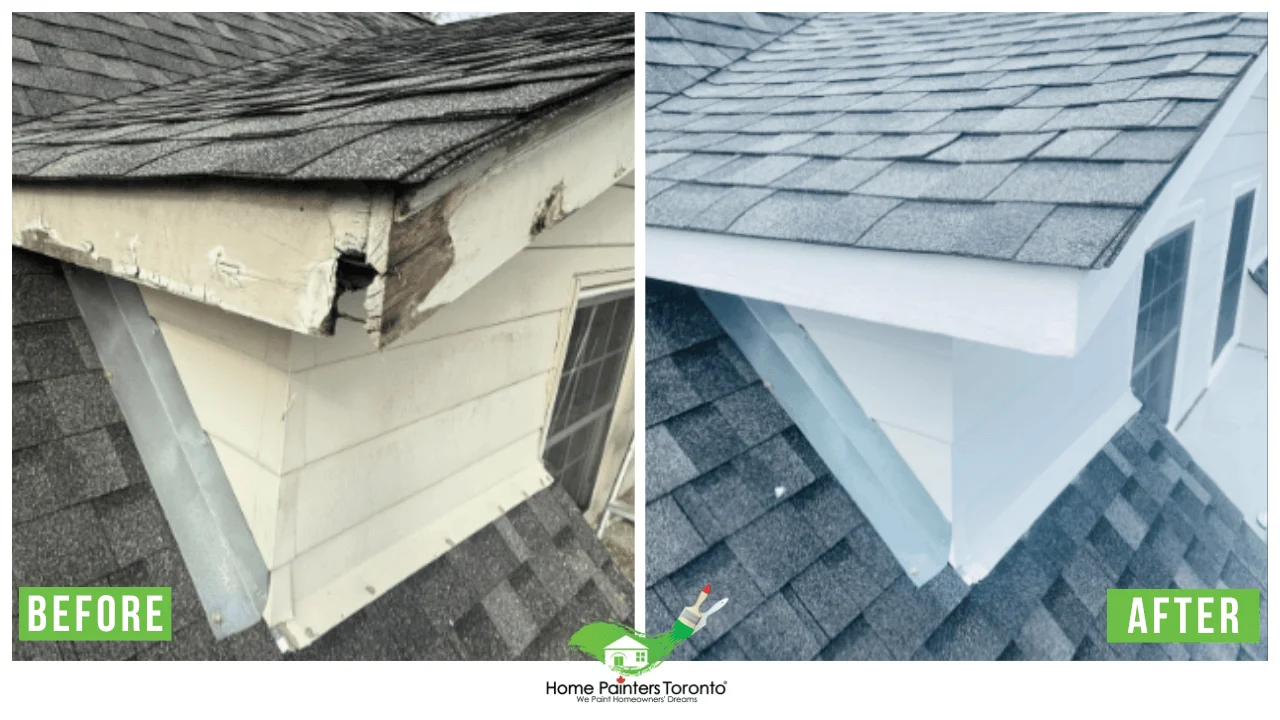
Do Clogged Gutters Damage Fascia?
Yes, clogged gutters damage fascia by forcing overflow water to run down the wood face instead of through the downspout, and that repeated wetting is one of the leading causes of fascia rot we see on service calls across Toronto and the GTA. A functioning gutter system is supposed to carry roof runoff away from the house in a controlled channel. Once leaves, shingle grit, or seed pods pack into the trough, water has nowhere to go but over the edge. On most homes, that edge sits directly above or against the fascia board, so overflow becomes a slow, repeated soak instead of a single event.
The damage does not happen overnight. A single overflowing storm rarely causes serious harm, since exterior-grade paint and primer sheds most incidental water. The real risk comes from repetition. Each blocked gutter season adds another cycle of wetting and drying to the same six to eight inches of wood, and wood fibres that never fully dry between storms are what let decay fungi establish themselves.
The City of Toronto's property standards bylaw also requires eavestroughs and downspouts to safely collect and discharge roof water, which is part of why a clogged gutter is not just a maintenance shortcut but a compliance issue too. Home Painters Toronto is WSIB compliant and fully insured, and our crews see this pattern often enough that we can usually tell from ground level whether a fascia problem started with the gutters or with something else entirely, like a roofing flashing issue or a blocked attic vent. That distinction matters, because treating the wrong cause means the fascia keeps getting wet no matter how many times it gets repainted.
The debris that triggers this cycle is rarely just leaves. On a typical GTA service call, our crews find a mix of:
- Whole leaves and leaf fragments packed against downspout screens
- Maple and elm seed pods, which arrive earlier in the season than most homeowners expect
- Roof shingle granules that wash down with every rain and settle in the lowest point of the run
- Twigs, pine needles, and nesting material left by birds and squirrels
How Gutter Overflow Reaches the Fascia Board
Overflow reaches the fascia board through the narrow gap between the back lip of the gutter and the wood itself, where standing water finds the path of least resistance and wicks sideways into the end grain. Most homeowners picture water simply spilling over the front of the gutter and missing the house entirely. In practice, a clogged gutter fills from the bottom up, and once the water level rises above the back lip, it runs directly against the fascia instead of the yard.
Wood pulls moisture along its grain far faster than across it, a property known as capillary action. End grain, exposed at every seam, nail hole, and mitred corner of a fascia board, acts like a straw. Once water sits against that end grain for hours at a time, it travels into the board well beyond the wet-looking surface stain a visual inspection might catch.
The same wicking effect explains why fascia damage often shows up first at butt joints and outside corners, not in the middle of a long run. Every joint is a seam where two boards meet, originally sealed with caulking and paint film. Once that caulking shrinks or cracks, a normal process after several Toronto winters, the joint becomes the fastest path for water into the wood, well before overflow along a continuous, unbroken section causes similar damage.
Paint and primer slow this process but do not stop it indefinitely. Exterior painting coatings are built to shed bulk water, not to withstand standing water pressed against the surface for hours at a time. Once the coating film breaks down at a seam or fastener, often the same spot exterior caulking would normally protect, the wood underneath is exposed directly to water that used to be diverted safely into the downspout.
Signs Clogged Gutters Are Already Damaging Your Fascia
Five visible clues usually appear before a fascia board needs full replacement, and catching them early keeps the repair small.
| Sign | What It Usually Means |
|---|---|
| Paint bubbling or peeling directly under the gutter line | Moisture is trapped between the coating and the wood |
| Dark streaking down the fascia face | Water has been running down the same path repeatedly |
| Soft or spongy wood when pressed | Decay has already started beneath the surface |
| Gutter sagging away from the fascia | Fasteners are pulling loose from softened wood |
| Moss or plant growth on the gutter lip | Standing water has been sitting long enough to support growth |
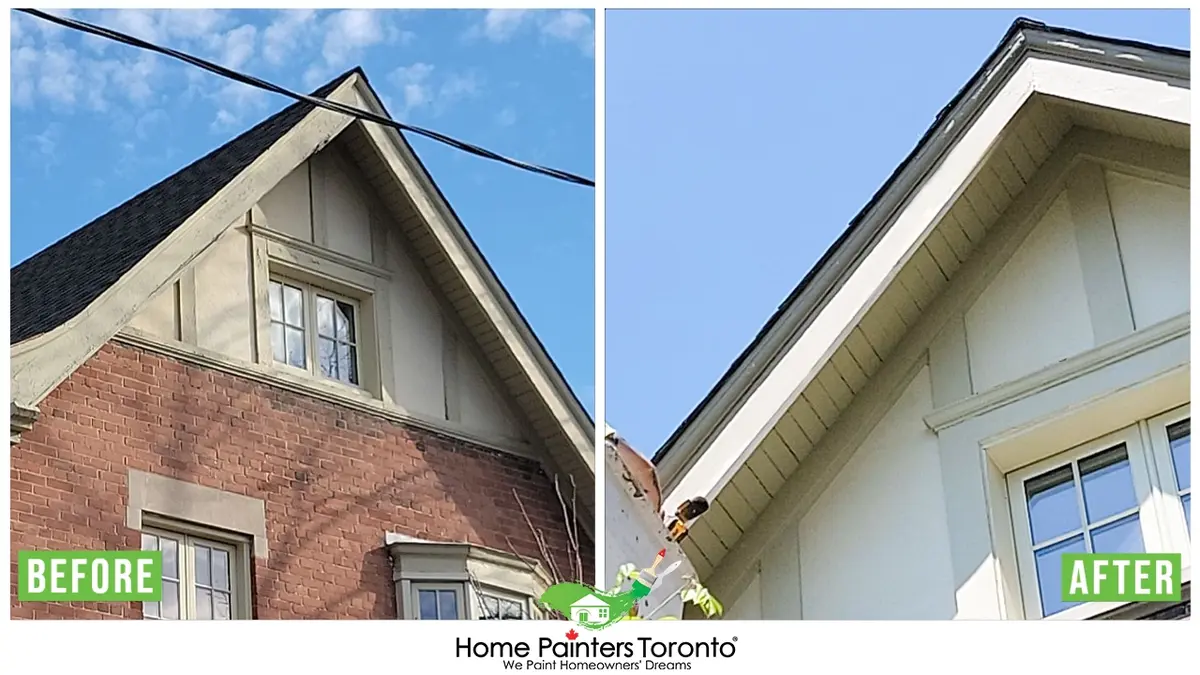
Five visible clues usually appear before a fascia board needs full replacement, and catching them early keeps the repair small
Why Toronto Gutters Clog So Often
Toronto gutters clog often because of the city's mature tree canopy, aging housing stock, and gutter systems that were often sized for smaller roof loads decades ago. Many established GTA neighbourhoods, including Leaside, the Beaches, and parts of Etobicoke, were built when boulevard trees were planted close to the street. Those same trees are now mature, and their canopies overhang rooflines for a large part of the year.
Leaf drop is only part of the problem. Maple seed pods, cedar fronds, and shingle granules from aging roofs all settle into gutters between cleanings, and they compact into a dense mat far faster than loose leaves alone. Once that mat sits through a rain event, it becomes heavier and harder to dislodge, which is why a gutter that looked clear in October can be fully blocked by the first thaw.
Tree Canopy Coverage in Older GTA Neighbourhoods
Toronto's tree canopy currently covers an estimated 28 to 31 percent of the city, according to the City of Toronto's Tree Canopy Study, and older residential wards with mature street trees generally sit at the higher end of that range. Homes on streets with a dense, overhanging canopy typically need gutter cleaning at least twice as often as homes on newer, tree-sparse streets to keep pace with debris load.
Downspout placement compounds the problem on many older GTA lots. A downspout that empties too close to the foundation adds standing water at grade on top of an already overworked gutter system, and that combination is a common driver of the moisture issues behind foundation parging repair calls we take alongside fascia work. Extending downspouts away from the house and keeping the gutters themselves clear both need to happen together, since fixing only one leaves the other free to keep pushing water where it doesn't belong.
How Long Before Overflow Becomes Rot?
Fascia typically starts to decay once its wood moisture content stays above roughly 20 percent for extended periods, and clogged gutters can push a board past that threshold within a single wet Toronto season. Below that level, the moisture content at which most exterior-grade wood settles once properly primed and painted, decay fungi cannot establish a foothold. Above it, especially when the wood also sits in the 50 to 90 degree Fahrenheit range common through a GTA spring and summer, fungal growth can begin within weeks of sustained wetting.
- At a recent inspection in the Leaside neighbourhood of Toronto, our crew found a section of pine fascia reading 34 percent moisture content on a pin-type moisture meter, directly behind a gutter run that had not been cleaned in roughly three years.
- The board was soft enough to probe with a screwdriver at several points.
- After removing and replacing the rotted section, we primed the new fascia with an exterior-grade primer and topcoated it with Benjamin Moore Aura Exterior in Low Lustre, applied within the product's specified dry film thickness range per the manufacturer's technical data sheet, then cleared and re-pitched the gutter run so water would no longer collect against the new wood.
It was the same approach we use on full exterior residential painting projects, just scaled down to a single roofline section.
Comparing painted and bare fascia shows how much the coating matters. A properly primed and top-coated cedar or pine board can often handle years of occasional splashing without measurable damage, since the paint film sheds water before it reaches the wood grain. Strip that same board of its coating, whether through age, sun exposure, or repeated pressure washing, and moisture content can climb into decay range within a single soggy week.
How Fast Untreated Wood Fascia Absorbs Moisture
Untreated or bare wood fascia absorbs moisture far faster than primed and painted fascia, often within hours instead of days of standing water contact. A fully cured exterior coating slows water absorption at the surface, but any break in that film, from a hairline crack, an exposed nail head, or an unsealed mitred joint, gives water direct access to raw wood. Once that access point exists, repeated gutter overflow can re-wet the same spot faster than it dries between storms, which is exactly the cycle that leads to the moisture readings described above. It is the same failure mode we see behind rotted window wood and damaged exterior wood siding, just concentrated at the roofline instead of the wall.
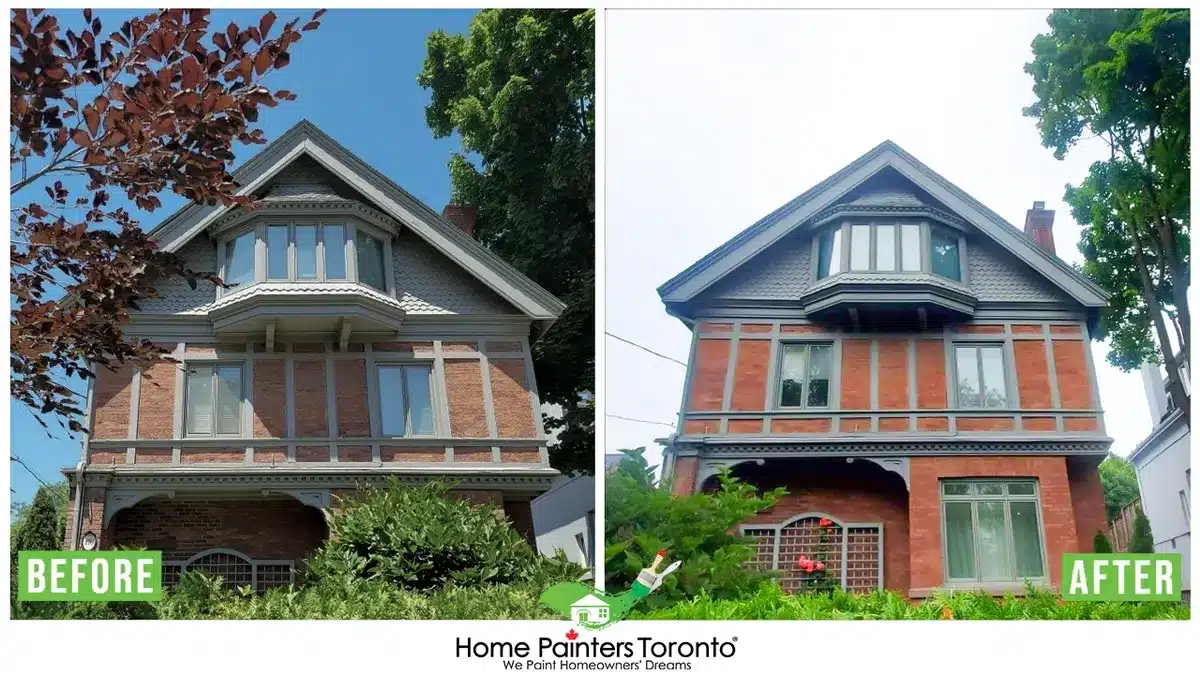
The gutter run was cleared and re-pitched so water would no longer collect against the new wood
Gutter Maintenance Schedule to Protect Your Fascia
Protecting fascia from gutter overflow comes down to keeping gutters clear on a predictable seasonal schedule, not waiting until a problem is visible. Two cleanings a year is the baseline the City of Toronto recommends for eavestrough maintenance, though homes under heavy tree cover often need a mid-season check as well.
| Season | Task | Why It Matters |
|---|---|---|
| Spring (April to May) | Clear winter debris and check for ice-related damage | Confirms the system is ready before spring downpours |
| Early summer (June) | Check for sagging sections and re-secure loose hangers | Prevents low spots where water pools against the fascia |
| Fall (October to November) | Remove leaves and seed pods before winter | Stops the heaviest debris load of the year from freezing in place |
| After major storms | Spot-check for new blockages | Storm debris can clog a downspout in a single event |
Spring vs. Fall Gutter Cleaning Priorities
Spring cleaning focuses on clearing what winter left behind, since melting snow and ice can pack debris into a solid mass that a simple rinse will not dislodge. Fall cleaning is about getting ahead of leaf drop before the first hard freeze, because a gutter that clogs in November often stays blocked and full of ice until a proper spring thaw. Homes with heavy tree cover benefit from treating both seasons as equally important, instead of leaning on one cleaning to cover an entire year.
Do Gutter Guards Actually Help?
Gutter guards reduce how quickly debris builds up, but they do not eliminate the need for maintenance, and a poorly fitted guard can trap moisture right at the fascia line instead of keeping it away. Mesh and screen-style guards catch larger leaves effectively, yet fine debris like maple seed wings and roof grit still works through most guard systems over time. Guards also need their own inspection, since a guard that has warped or pulled away from the fascia can direct water backward instead of into the gutter channel.
Homeowners considering guards generally choose between a few common styles:
- Mesh screens, which sit on top of the existing gutter and block larger debris while letting fine grit through
- Reverse-curve or surface-tension guards, which rely on water clinging to a curved surface to drop into the gutter while debris slides off the front
- Foam inserts, which fill the gutter channel and can hold moisture against the metal longer than an open system
Each style still needs an annual inspection to confirm it has not shifted, warped, or trapped a slow leak against the fascia board behind it. The bigger risk with guards is installation quality, not the product itself. A guard mounted too tightly against the fascia, or one that traps a thin film of standing water beneath it after every rain, can keep the board wetter for longer than an open gutter that dries fully between storms. Guards are a useful tool for stretching the interval between cleanings, but they are not a substitute for periodic inspection of the fascia itself.
Frequently Asked Questions About Gutters and Fascia Damage
These are the questions we hear most often from GTA homeowners; our full FAQ page covers pricing, scheduling, and warranty details beyond gutters and fascia specifically.
Most Toronto homes need gutters cleaned at least twice a year, in spring and fall, based on the maintenance guidance the City of Toronto provides for eavestroughs and downspouts. Homes with heavy tree cover, including many streets in Leaside, the Beaches, and parts of Etobicoke, often need a mid-season check as well to stay ahead of debris buildup.
Gutter access on a two-storey or steep-roof home carries real fall risk, and homeowners insurance does not always cover ladder-related injuries on residential property. A professional crew working with proper fall protection can also spot early fascia damage during the same visit, which is easy to miss from ground level or a short ladder.
No, gutter guards reduce debris buildup but do not eliminate the need for cleaning entirely. Fine debris still collects on top of most guard systems, and the guards themselves need periodic inspection to confirm they have not pulled away from the fascia or warped out of position.
Look for paint that is bubbling or peeling directly under the gutter line, dark streaking down the fascia face, and any softness when the board is pressed firmly. A gutter that has started to sag away from the roofline is often a sign that the fasteners holding it are pulling loose from softened wood underneath, and that stage usually means the repair has moved beyond a simple recoat.
Coverage for fascia rot caused by clogged gutters is inconsistent, since most policies treat gradual water damage from neglected maintenance differently than sudden storm damage. Speak with your insurance provider directly about your specific policy language, since Home Painters Toronto can supply a written repair estimate but is not a substitute for insurance or legal advice.

Stop Gutter Overflow from Damaging Your Fascia
Clogged gutters damage fascia gradually, which is exactly why so many Toronto homeowners do not notice a problem until paint is peeling or wood has gone soft. A predictable seasonal cleaning schedule, paired with an occasional close look at the fascia itself, catches most problems while they are still a repair, not a full board replacement. Home Painters Toronto has served Toronto and the GTA for 38+ years, backed by 1,200+ client reviews and a portfolio of recent roofline and exterior projects across the GTA. See why Toronto homeowners choose us for fascia and roofline repairs, and every job is backed by warranty-backed work with same-day estimates available seven days a week. Whether the fix is a single board on a bungalow in Etobicoke or a full roofline on a century home in Leaside, the same principle applies: clear the gutters, repair the wood while it is still a small job, and finish it with a coating system built for Ontario's freeze-thaw climate.
If your gutters have been overflowing or your fascia paint has started to bubble along the roofline, get fast free quotes and warranty-backed work before a small repair turns into a full board replacement.
Contact Home Painters Toronto today to book a free assessment.
Get a Free Estimate