

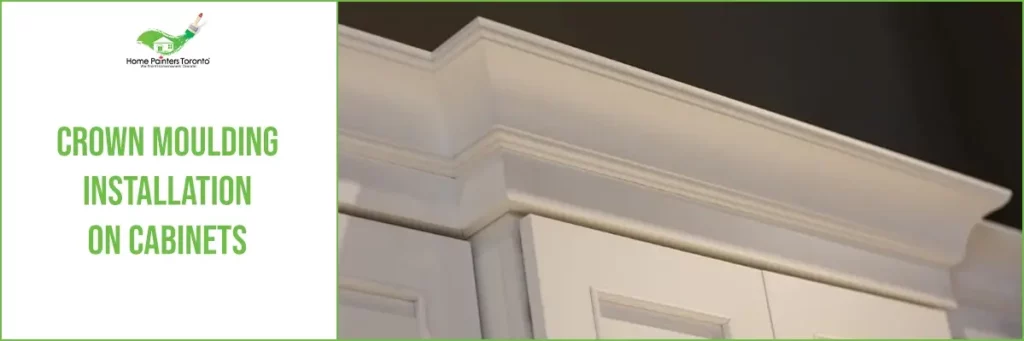
Crown molding is one of the simplest ways to make kitchen cabinets look more custom and refined. By adding decorative trim where cabinets meet the ceiling, homeowners can transform basic cabinetry into a more finished and cohesive design feature.
In many kitchens, cabinets stop short of the ceiling and leave an empty gap. Crown molding installation helps close that visual gap and gives the entire kitchen a more polished architectural look.
If you’re planning to upgrade your kitchen cabinets, professional cabinet painting Toronto services can combine cabinet refinishing with trim installation to dramatically improve the overall appearance of your kitchen.
Why Crown Molding Is Popular for Kitchen Cabinets
Many homeowners add crown molding during kitchen renovations or cabinet refinishing projects. The trim creates a smooth transition between cabinetry and the ceiling while adding decorative detail that elevates the overall design.
Instead of cabinets appearing like separate pieces installed against a wall, crown molding makes them look built-in and intentional.
For kitchens with existing cabinets that still function well, adding crown molding can provide a major visual upgrade without replacing the entire cabinetry system.
What Crown Molding Adds to Cabinet Design
A More Finished Kitchen Appearance
Without trim, cabinets can appear unfinished or abrupt where they meet the ceiling or soffit. Crown molding softens this transition and creates a cleaner visual line across the kitchen.
This detail is especially effective when paired with cabinet refinishing or painting.
Homeowners exploring a kitchen refresh often combine trim upgrades with cabinet painting Toronto to achieve a completely updated look without the cost of replacing cabinets.
Closing the Gap Between Cabinets and Ceiling
Many cabinet installations leave a small gap above the cabinets. Crown molding helps conceal this space while visually extending cabinetry upward.
This technique works particularly well in kitchens where cabinets do not reach the ceiling.
Increasing Visual Height in the Kitchen
Adding crown molding can also make kitchens appear taller. Vertical trim lines guide the eye upward and create the impression of greater ceiling height.
In smaller kitchens, this design detail helps make the space feel more open and finished.
Types of Crown Molding Used on Cabinets
Different styles of crown molding can dramatically change the look of kitchen cabinets.
Traditional Crown Profiles
Traditional crown molding features decorative curves and detailed profiles that complement classic kitchen designs.
These profiles are often used in homes with traditional or transitional interiors.
Modern and Minimal Trim
For contemporary kitchens, simpler crown profiles with clean lines are often preferred.
These trims maintain the streamlined appearance of modern cabinetry while still creating a finished edge.
Stacked or Layered Crown Molding
Some kitchens use stacked trim pieces to create deeper, more dramatic crown molding.
Layering trim profiles allows designers to create custom architectural details that elevate the cabinetry.
Homeowners looking for fully customized trim work may benefit from custom millwork Toronto when designing decorative cabinet features.
How Crown Molding Installation on Cabinets Works
Installing crown molding on cabinets requires careful measurements and precise cutting.
Even small inaccuracies can cause visible gaps at the corners or along the ceiling line.
Measuring and Planning
The first step is measuring cabinet dimensions and determining how the molding will wrap around corners and edges.
Planning ensures the trim aligns evenly across the entire cabinet run.
Cutting and Fitting the Molding
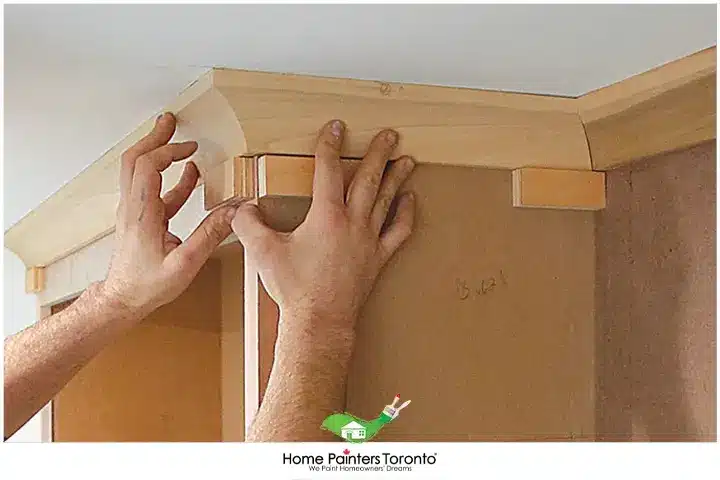
Crown molding is typically cut using angled miter and bevel cuts to create clean corners.
Proper cutting ensures the trim pieces meet tightly and follow the cabinet layout.
Securing the Trim
Once cut, the molding is attached to the cabinet frame or support blocks installed above the cabinets.
Proper fastening keeps the molding stable and prevents separation over time.
Caulking, Sanding, and Finishing
After installation, seams and nail holes are filled and sanded.
The molding is then painted or finished to match the cabinets for a seamless appearance.
Planning to upgrade the look of your cabinets? Explore cabinet painting Toronto services to combine cabinet refinishing with trim installation for a complete kitchen transformation.
When Crown Molding Works Best on Cabinets
Crown molding is most effective when cabinets:
stop short of the ceiling
have a flat top edge suitable for trim installation
are being repainted or refinished
are part of a kitchen refresh or renovation
Even older cabinets can benefit from crown molding if the structure is still in good condition.
Common Challenges During Cabinet Crown Installation
Installing crown molding on cabinets can be more complicated than standard wall molding.
Common challenges include:
uneven ceilings
cabinet runs that are not perfectly level
tight corner angles
limited attachment points
Professional installers often use filler blocks or support pieces to ensure crown molding sits at the correct angle.
This is why trim installation is often completed alongside cabinet refinishing or carpentry work.
Combining Crown Molding With Cabinet Painting
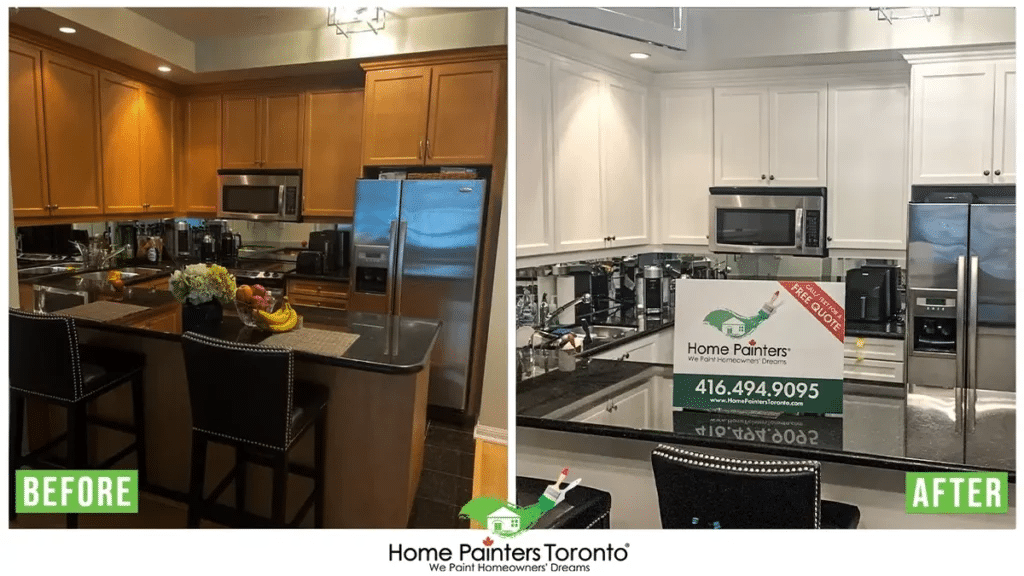
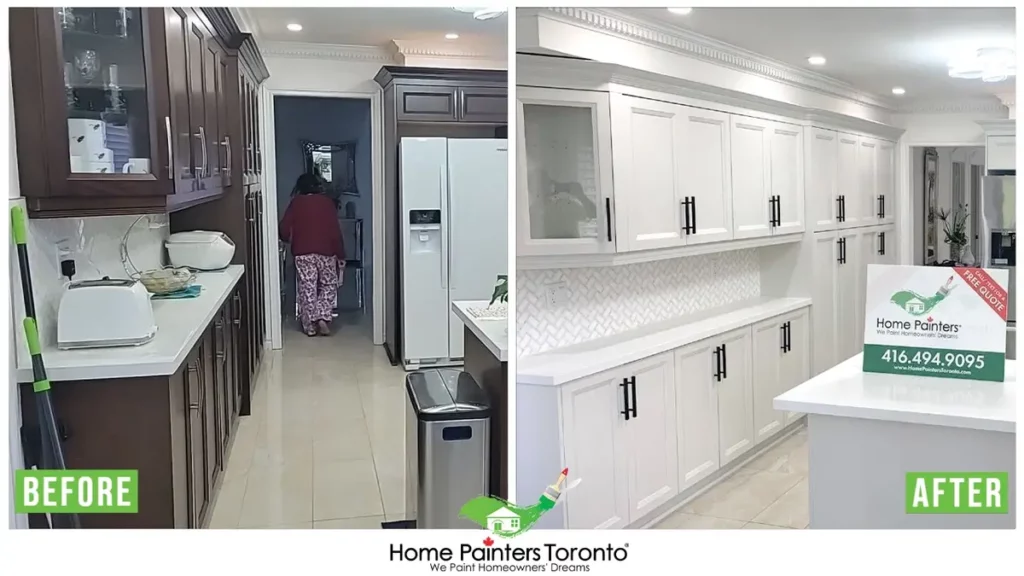
One of the most effective ways to upgrade a kitchen is to install crown molding and repaint the cabinets at the same time.
This approach allows the trim and cabinetry to be finished together so the entire kitchen looks cohesive.
Professional cabinet painting also ensures:
smooth finishes
durable coatings
consistent color across cabinets and trim
Get a Cabinet Painting Quote in Toronto
If you’re planning a kitchen upgrade, crown molding installation combined with cabinet painting Toronto can dramatically improve the appearance of your cabinets without replacing them. Contact Home Painters Toronto to explore professional cabinet refinishing and trim installation options.
If you are considering brick staining or repainting your exterior brick, visit our exterior painting Toronto service page to learn more or request a consultation.
Frequently Asked Questions About Crown Molding Installation for Cabinets
Can crown molding be added to existing cabinets?
Yes. Crown molding can often be installed on existing cabinets if there is enough space above the cabinet frame to attach the trim properly.
Does crown molding make cabinets look taller?
Yes. Crown molding draws the eye upward and can make cabinets appear taller and more built-in.
Do cabinets need to reach the ceiling for crown molding?
No. Crown molding can bridge the gap between cabinets and the ceiling, making cabinets appear more integrated into the space.
Should crown molding be painted the same color as cabinets?
In most kitchens, crown molding is painted the same color as the cabinets to create a seamless appearance.
Is crown molding installed before or after cabinet painting?
Crown molding is typically installed before painting so the trim and cabinets can be finished together for a consistent look.