

Deck Stain Peeling: What Your Wood Is Telling You
Deck stain peeling is one of the most common and most preventable problems Toronto homeowners face every spring. You invested time and money into protecting your deck, and now it looks worse than before. The good news? Peeling stain is fixable. The frustrating news? If you don't address the root cause, the same problem will return next season.
Toronto's climate is genuinely brutal on exterior wood. Freeze-thaw cycles through the winter, humid summers, and unpredictable spring weather create a punishing environment for any deck coating. Most peeling isn't random bad luck. It traces back to one or more specific mistakes made during prep, product selection, or application. This article walks you through everything you need to know.
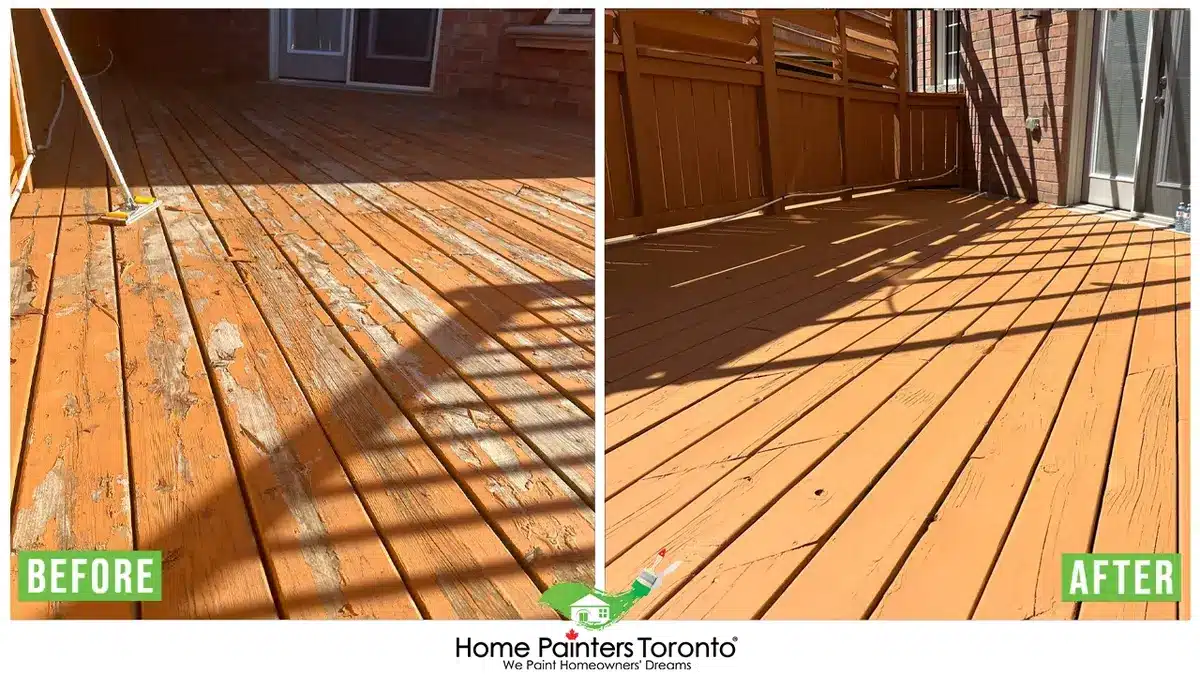
Why Is Your Deck Stain Peeling? The Real Causes
Deck stain peeling happens when the stain sits on top of the wood instead of penetrating into it. Deck stain is designed to absorb into wood fibres, not coat the surface like paint. When penetration fails, the stain forms a thin film that quickly cracks, lifts, and flakes under foot traffic and weather stress. There are four main culprits, and most peeling jobs involve at least two of them working together.
Poor Surface Preparation
If the wood surface carries any old stain residue, mill glaze, mildew, dirt, or moisture, the new stain cannot penetrate. It bonds to the contaminant instead of the wood and then peels right along with it. New pressure-treated lumber is especially tricky. It comes from the mill with surface treatments and elevated moisture content. Staining too early, before the wood has had time to dry and open its pores, almost guarantees failure.
Wrong Product for the Application
Not all deck stains are equal, and horizontal surfaces are the hardest application in exterior wood finishing. The Canadian Wood Council notes that coatings on wear surfaces like decks face challenges that vertical surfaces simply don't. Solid-colour stains form a thick film over the wood surface. On a fence or vertical rail, that works fine. On a deck floor, the film cracks under foot traffic and moisture cycling.
Over-Application
More stain is not better. When too much product is applied, or a second coat goes on before the first has fully dried, the stain pools on the surface instead of soaking in. That pooled layer dries into a film, and films peel. This is one of the most common DIY mistakes, and it's one reason that "I followed the instructions" doesn't always prevent failure.
Unfavourable Application Conditions
Toronto summers can be unpredictable. Staining in direct mid-afternoon sun causes the stain to dry before it can absorb properly. Staining when the wood moisture content is above approximately 20% has the same effect. Rain within 24 to 48 hours of application can wash out the fresh stain before it cures.
Test wood moisture before you stain. Sprinkle a few drops of water on the board. If the water soaks in quickly, the wood is ready. If it beads on the surface, the wood is still too wet. This simple test takes 30 seconds and can save you an entire redo.
Surface Peeling vs. Deep Stain Failure: Why the Difference Matters
Not all peeling looks the same, and the pattern tells you a lot about the fix required.
Surface Flaking
Thin chips lifting from the topmost layer. Often happens when an old coat of stain wasn't fully stripped before a new product was applied. The solution involves stripping the surface layer and reapplying correctly.
Widespread Lifting and Curling
Usually signals moisture trapped beneath the stain. The deck boards themselves may have begun to absorb water, swell, and push the coating off from below. Stripping alone isn't enough — the boards need time to dry before any new coating goes on.
Grey Weathered Wood Under Stain
UV damage has already begun eating into the wood fibres. Restaining will improve the look and slow further damage, but some weathering is permanent if left long enough.
Soft or Spongy Boards
That's not a staining problem anymore — that's rot. Our wood deck repair team can assess the extent of the damage and replace compromised boards before restaining begins.
The Right Way to Fix Peeling Deck Stain
Once the deck stain starts peeling, there's no shortcut. Painting or staining over peeling stain just traps the failure underneath and accelerates the next round of peeling. The only lasting fix involves complete stripping and proper prep. Here's the process that actually works:
Strip the existing stain: A deck stripper dissolves and loosens the failed coating so it can be washed away. This is not the same as a pressure wash. A good stripping process involves applying the chemical, allowing adequate dwell time, then rinsing thoroughly.
Clean and brighten: After stripping, the wood is typically darkened and raised in grain. A wood brightener, usually an oxalic acid-based product, restores the wood's natural pH, opens the grain, and creates the ideal surface for stain absorption.
Sand where needed: Boards that are rough, cupped, or weathered may need mechanical sanding to open the pores properly. This is especially true of boards where the grain has been raised significantly by cleaning.
Test moisture content: The wood must be below approximately 20% moisture before staining. On a Toronto deck in spring, this can take several days of dry weather after cleaning.
Choose the right product: For deck floors, a penetrating semi-transparent or semi-solid oil-based stain is usually the best choice. The Canadian Wood Council's guidance on exterior wood coatings confirms that thick film-forming products like solid stains and paints are frequently challenged on horizontal wear surfaces.
Apply correctly: Work with the boards, not across them. Apply in sections, maintaining a wet edge. Back-brush the stain into the wood to ensure penetration. Avoid applying in direct sunlight or on days above 30°C.
Apply stain to a deck in the early morning or late afternoon, when the boards are in shade. Direct summer sun heats the deck surface well above the air temperature. A deck surface at 45°C will flash-dry a stain before it can penetrate, even if the air temperature feels reasonable.
Solid Stain vs. Semi-Transparent Stain: Which Is Better for a Toronto Deck?
| Stain Type | Appearance | Durability on Deck Floors | Best For |
|---|---|---|---|
| Transparent / Clear | Shows full grain | Shortest (1 year or less) | New, high-quality cedar or hardwood |
| Semi-transparent | Shows wood grain | 1 to 2 years on horizontal surfaces | Decks in good condition |
| Semi-solid | Slight grain visible | 2 to 3 years on horizontal surfaces | Decks with minor weathering |
| Solid colour | Opaque finish | Longest initially, but peels more dramatically | Vertical surfaces, older weathered wood |
The irony is that solid stains seem like the "toughest" choice. In reality, their thick film fails more visibly on deck floors, and when they do peel, the strip-and-prep process is more labour-intensive than starting over with a penetrating stain. For most Toronto decks, a quality penetrating semi-transparent or semi-solid stain, applied correctly over a properly prepped surface, gives the best balance of longevity and ease of maintenance.
The Best Time to Restain a Toronto Deck
Spring (April to early May): Often too wet and too cold. Wood moisture content tends to be high after snowmelt, and night temperatures can drop below the minimum application threshold for most stains.
Late May through June: Usually ideal. Temperatures are moderate, humidity is manageable, and you have the whole summer ahead to enjoy the finished deck.
July through August: Works well if you apply in the morning or evening. Midday heat accelerates drying and can prevent proper penetration.
September: Good conditions, but time the project carefully. Cooler nights start returning, and most stains need 24 to 48 hours of temperatures above 10°C to cure fully.
October and beyond: Generally too risky. An early frost on fresh stain is a common cause of premature failure on fall-stained decks.
Frequently Asked Questions about Deck Stain Peeling
Deck stain peeling after a single season almost always points to a prep failure or an unfavourable application. The most common causes are: staining over a wet or contaminated surface, applying solid stain over a horizontal deck floor, or staining during conditions that prevented full absorption (extreme heat, high humidity, or rain within 48 hours). Deck stain is designed to penetrate into wood fibres, not form a film over them. When that penetration doesn't happen, peeling follows quickly.
Yes. Applying a new stain over peeling stain is one of the most common deck restoration mistakes. The new product bonds to the failing old stain rather than the wood. When the old stain continues to lift, it pulls the new coat with it. Proper stripping, brightening, and prep is not optional, it's what determines whether the new stain lasts.
The Canadian Wood Council indicates that stains applied to deck boards and horizontal surfaces typically last one to two years, depending on sun exposure, foot traffic, and the type of stain used. Semi-transparent and semi-solid penetrating stains fall in this range for deck floors. Vertical surfaces like railings and fence boards tend to last longer, often two to five years. Toronto's freeze-thaw cycles and lake-effect humidity tend to push decks toward the shorter end of that range.
Not for the deck floor surface. Solid colour stains form a thicker film over the wood, which looks great initially but fails more dramatically on horizontal, high-traffic surfaces. When a solid stain peels on a deck floor, stripping it is harder and more labour-intensive than restoring a penetrating stain. Semi-transparent and semi-solid penetrating stains require more frequent maintenance coats, but each maintenance application is much simpler because there's no failing film to remove first.
Yes. Peeling stain is more than a cosmetic problem. When the wood surface loses its protective coating, it becomes fully exposed to moisture. In Toronto's wet springs and freeze-thaw winters, exposed wood absorbs and releases moisture repeatedly. Over time, that moisture cycling encourages mould, mildew, and eventually rot. Boards that are allowed to remain unprotected for multiple seasons often develop soft spots and structural weakness that go beyond what stain alone can fix.
That's a sign of wood rot and needs attention before any restaining. Soft or spongy boards have lost structural integrity and will not hold stain properly, even if you strip and prep the surface correctly. The affected boards should be replaced, the new wood allowed to acclimate and dry, and then the full prep and staining process can proceed. Home Painters Toronto's carpentry team handles deck board replacement as part of a complete deck restoration project.
Stop the Cycle of Deck Stain Peeling for Good
Deck stain peeling is a solvable problem, but only when you address it correctly from the start. The cycle of peeling, re-staining over the damaged surface, and peeling again is frustrating and expensive. Breaking that cycle means stripping back to clean, dry wood, choosing the right product for a Toronto climate, and applying it under the right conditions.
Done right, a properly prepped and stained deck can look sharp and stay protected through years of Southern Ontario summers and winters. If your deck is showing signs of peeling stain, don't wait. The longer the exposed wood sits unprotected, the more moisture damage accumulates. Contact Home Painters Toronto today for a free assessment and quote. Our team will tell you honestly what your deck needs and deliver a finish that actually lasts.