

How Exterior Caulking in Toronto Stops Heat Loss — and What Happens When It Fails
Exterior caulking in Toronto is one of the most underestimated lines of defence between your home and the elements. Most homeowners think about their furnace, their insulation, and their windows when heating bills spike. Almost none of them think to check the thin bead of sealant running along every window and door frame.
That bead does a serious job. It blocks cold air from pushing in, keeps conditioned air from escaping, and stops moisture from working its way into your wall assembly. According to Natural Resources Canada, windows, doors, and skylights can account for up to 35 percent of total house heat loss. Failed caulking around those openings accelerates that loss significantly.
For homeowners considering professional exterior caulking for windows and doors in Toronto, understanding why sealant fails is the first step toward fixing it correctly. Toronto's climate makes this problem worse than in many other cities. The GTA experiences dozens of freeze-thaw cycles every winter. Each cycle causes building materials to expand and contract, stressing caulking joints until they crack, shrink, or pull away from the frame entirely.
Signs your exterior caulking may be failing:
- Visible cracks, gaps, or shrinkage along window and door frames
- Drafts near windows even when they are fully closed
- Condensation or frost forming on the inside of window glass
- Water stains, soft wood, or paint bubbling around exterior frames
- Higher-than-normal heating or cooling bills with no clear cause
- Caulking that has turned yellow, brittle, or crumbly

Even a 1 mm gap in window or door caulking allows significant air exchange throughout a Toronto winter — and once moisture enters, the damage extends well beyond energy loss
Why Toronto's Freeze-Thaw Climate Destroys Exterior Sealants Faster
Toronto's freeze-thaw climate destroys exterior sealants faster because repeated temperature swings cause constant expansion and contraction around sealed joints, which weakens the caulking over time. The city regularly cycles through temperatures above freezing during the day and well below freezing overnight, especially in November, March, and April. Each temperature swing causes the gap between a window frame and the surrounding wall to open and close slightly.
Over time, even high-quality sealant cannot keep up. It loses elasticity, develops hairline cracks, and eventually pulls away from one or both bonding surfaces. Once that seal breaks, warm interior air escapes and cold outdoor air infiltrates directly through the joint.
This is not a cosmetic issue. Failed caulking is a structural vulnerability. Water that enters a compromised joint migrates into the wall cavity, damages wood framing, promotes mould growth, and causes paint to fail prematurely. Pairing re-caulking with exterior residential painting services is often the most cost-effective way to address both problems in one visit.
The south-facing side of your home is typically the first to show wear. Sealant on that exposure faces direct UV radiation and the most dramatic daily temperature swings, which together break down the polymer structure faster than shaded sides.
What Are the Warning Signs of Failed Exterior Caulking?
Failed exterior caulking reveals itself through drafts, visible cracks, peeling paint near frames, interior condensation, and sealant that has become yellow, brittle, or stiff. A draft near a closed window is the most common complaint. Many people assume the window itself is defective and consider expensive replacement. In many cases, the window is fine and the caulking joint around it has simply failed.
Visible Gaps and Cracks
Run your eye along every window and door frame from outside. Any gap wide enough to see daylight through, or any crack that runs the length of the joint, means the seal is compromised. Even a 1 mm gap can allow significant air exchange over the course of a Toronto winter.
Paint Peeling Near Frames
Moisture entering through a failed caulking joint saturates the wall assembly from inside. That moisture eventually migrates outward, pushing paint away from the substrate in bubbles or strips. If you see peeling paint concentrated around window corners or door frames, the caulking below it has likely failed. For homes with wood frames, unaddressed moisture can lead to rot that requires wood frame window repair and replacement before re-caulking is even possible.
Condensation Inside Windows
Interior condensation is a classic indicator of air leakage at the joint. When warm, moist indoor air meets the cold glass surface through a gap in the seal, it drops its moisture there. Homeowners often blame the window's glazing when the actual cause is a failed bead around the frame.
Yellow or Brittle Sealant
Caulking that has turned yellow, stiff, or powdery has passed its serviceable life. It may look intact from a distance but no longer flexes with building movement. A thumbnail pressed gently into old caulking reveals quickly whether it still has any give.
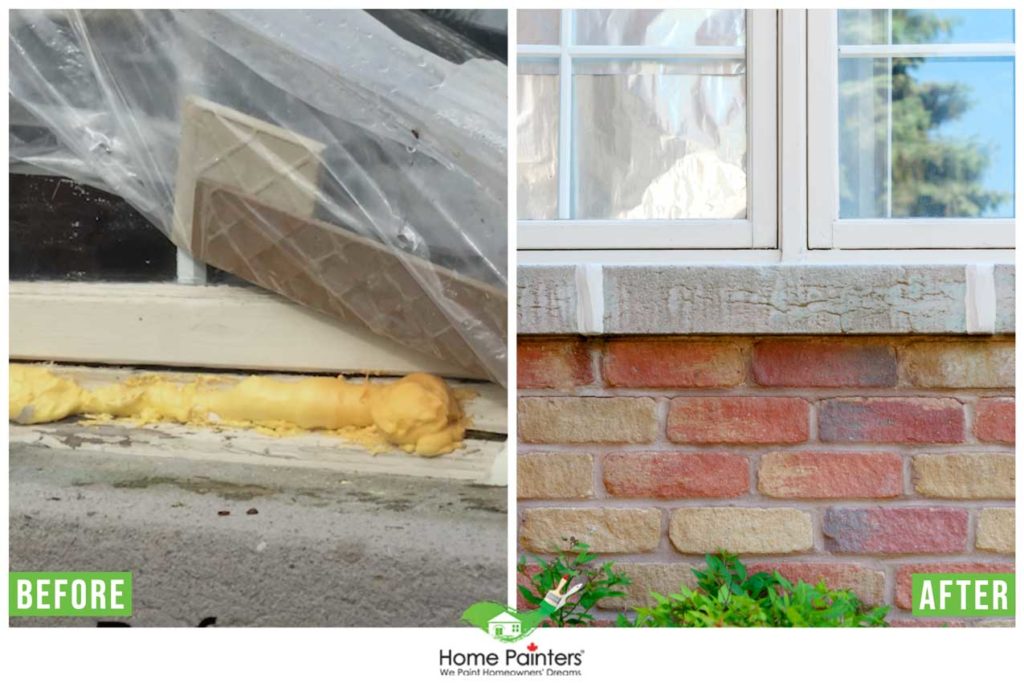
Peeling paint concentrated around window corners and door frames is almost always a sign that caulking below it has already failed — the moisture has been entering the wall assembly for months
How Long Does Exterior Caulking Last on a Toronto Home?
Most exterior caulking lasts between five and ten years under normal conditions. In Toronto's climate, however, that range often skews toward the lower end. The frequency of freeze-thaw cycles, combined with summer humidity and UV exposure, creates more stress on sealants than milder climates produce.
Surface preparation is the detail most homeowners underestimate. Old caulking must be fully removed, the substrate must be clean and dry, and the joint must be the right width and depth for the new bead to bond and flex correctly. Skipping any of those steps shortens the life of the new application, regardless of product quality.
In my experience working on Toronto homes, the biggest cause of premature caulking failure is not product quality. It is residual moisture at the time of application. We always check the forecast before scheduling any caulking work and require at least 24 hours of dry weather before and after. A bead applied over a damp substrate fails in months, not years. That is a conversation we have with every client upfront, because rushing the timing costs everyone money.
The Real Cost of Ignoring Failed Exterior Caulking
Delaying re-caulking feels like a small saving. In practice, it tends to be the most expensive decision a homeowner makes about their exterior. The costs compound at every stage.
Every gap in your building envelope forces your HVAC system to work harder. According to Natural Resources Canada, windows, doors, and skylights can account for up to 35 percent of total house heat loss. Failed caulking amplifies that figure.
Moisture entering through compromised joints causes paint to bubble, peel, and flake. Repainting a wall that was not caulked properly first just delays the same failure and doubles the cost of the fix.
Water sitting inside a wall cavity breaks down wood framing over months. By the time rot becomes visible from the exterior, it has often spread to adjacent framing. Addressing exterior wood siding repairs caused by water infiltration is far more expensive than the re-caulking job that would have prevented it.
Persistent moisture in wall cavities creates conditions where mould grows. Mould remediation is costly, disruptive, and often requires professional contractors. The return on professional re-caulking is straightforward: a modest investment in sealing protects a much larger investment in paint, framing, and the home itself.
Does Exterior Caulking Affect Different Siding Types Differently?
Yes. The relationship between caulking and siding material shapes which products work and how long they last.
- Brick and Masonry Homes: Older Toronto brick houses, including Victorian semis and post-war bungalows, often have original wood window frames set into brick openings. The joint between wood and masonry is particularly vulnerable because the two materials expand and contract at different rates. Homeowners with brick homes may also need to pair caulking with brick and mortar repair if the mortar around window openings is also deteriorating.
- Aluminum Siding: Aluminum expands significantly in summer heat, which stresses caulking joints at window and door openings. Silicone-based products handle that movement better than rigid formulations. Homes with aluminum siding benefit from a full joint inspection before any exterior painting project.
- Vinyl Siding: Vinyl homes require sealants that stay flexible across a wide temperature range. Improper products can crack in winter or soften in summer. Vinyl windows and siding have specific joint dimensions that determine the correct bead profile.
- Wood Siding and Trim: Wood moves more than any common cladding material and requires paintable sealants that cure flexibly. Checking all trim intersections, not just primary window frames, is part of a thorough inspection.
Should You Re-Caulk Doors as Well as Windows?
Yes. Every exterior door frame, including the sides, top, and threshold joint, requires the same inspection and maintenance as windows. Entry doors in Toronto take significant weather punishment. Rain drives against frames, snow piles at thresholds, and repeated opening and closing add mechanical stress to every joint.
Many homeowners who invest in exterior front door refinishing find that the caulking inspection and replacement happen at the same time, protecting the new finish from the start. Garage doors and sliding patio doors also need attention. Any transition where a moving door assembly meets a fixed frame creates a joint that will degrade over time.
When I inspect a home before a caulking project, I check not just the window and door frames but also where any penetration passes through the exterior wall. Dryer vents, hose bibs, gas meter connections, cable conduits, and AC lines are all points where sealant can fail and water can enter. These spots are easy to miss during a visual pass but are some of the most common sources of hidden moisture damage I find in Toronto homes.
Why Professional Re-Caulking Delivers Better Results
Professional re-caulking delivers better results because proper surface preparation, joint sizing, sealant selection, and application technique determine whether the seal lasts through years of Toronto freeze-thaw cycles or fails after a single season.
The core issue is preparation. Removing old caulking completely, cleaning the joint thoroughly, applying backer rod where the joint is too deep, and tooling the new bead correctly all require skill and experience. A bead applied over old sealant, a contaminated surface, or an improperly sized joint will fail far sooner than one installed correctly.
Product selection also matters more than most homeowners realize. Brands like Mono, Dymeric, Dap, and Dow Corning all perform differently depending on the substrate, joint dimension, and exposure conditions. Matching the right product to each specific joint on a home requires a working knowledge of material compatibility that takes time to develop. Professional teams also carry liability coverage and can identify related issues, such as early wood rot or failing paint, before they escalate.
What to Expect When You Hire a Professional Caulking Team
When you hire a professional caulking team, you can expect a structured process that includes inspection, removal of failed sealant, surface preparation, application of high-performance exterior caulking, and a final quality check to ensure long-term weather protection.
- Initial Walkthrough The crew inspects all windows, doors, and wall penetrations to identify failed or at-risk caulking joints.
- Removal of Old Sealant All degraded caulking is cut away and cleared from the joint. This step determines how well the new bead bonds.
- Surface Cleaning Joints are cleaned to remove dust, residue, and any contamination that would prevent adhesion.
- Product Selection The right sealant is chosen for each substrate type, exposure, and joint dimension across the home.
- Application and Tooling The new bead is applied and tooled to a smooth, concave profile that sheds water and flexes with building movement.
- Final Walkthrough The team reviews the completed work with the homeowner before considering the project done. Home Painters Toronto does not process final payment until the homeowner confirms complete satisfaction.
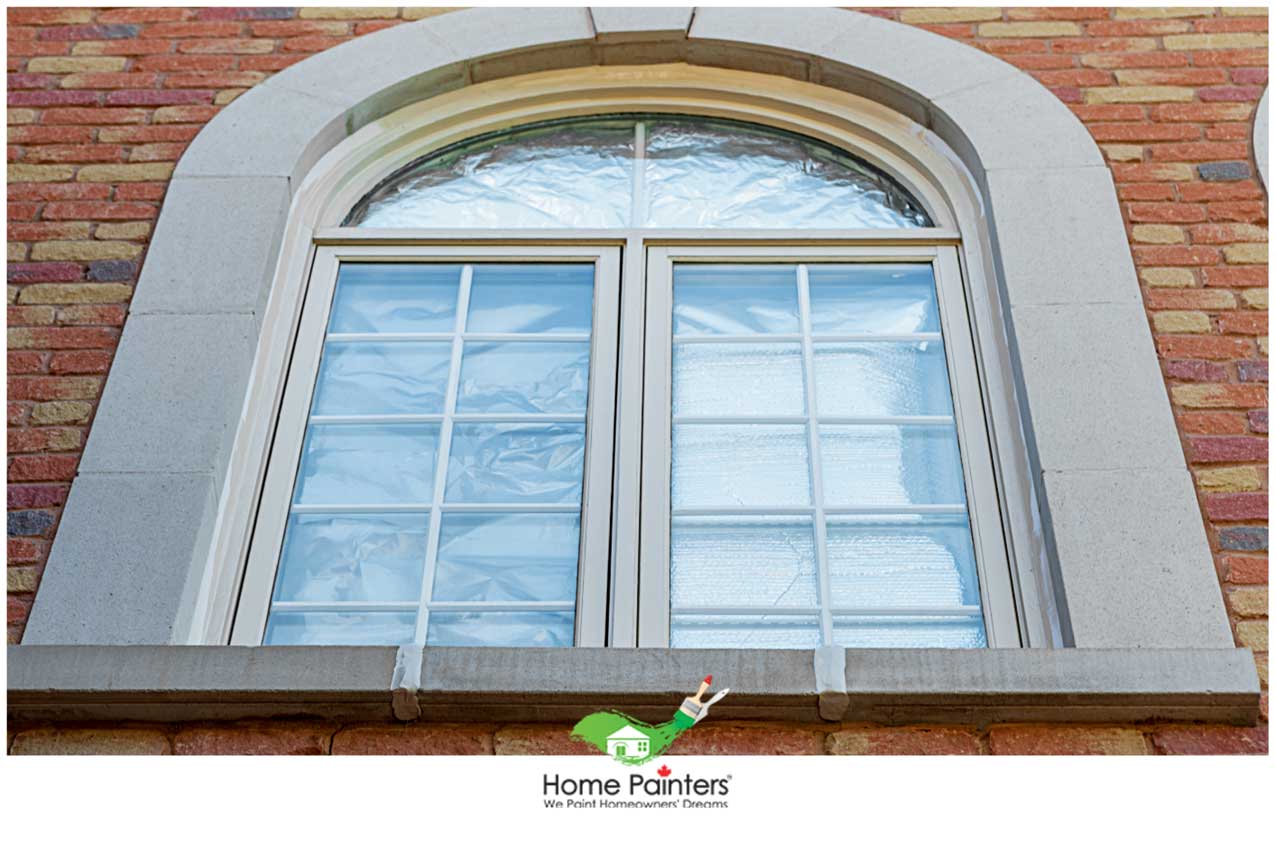
A properly tooled bead — applied to a clean, dry substrate, concave in profile, and bonded to both sides of the joint — is what holds through Toronto's freeze-thaw cycles for five to ten years
Why Home Painters Toronto Is the Right Call for Exterior Caulking in the GTA
Home Painters Toronto has been serving GTA homeowners for over 38 years. The team brings that depth of experience to every caulking project, approaching each home as a whole system rather than a checklist of isolated repairs.
The company uses only professional-grade sealants suited to Toronto's climate demands, including silicone formulations that stay flexible through Canadian winters. Caulking is also integrated naturally into exterior painting projects, ensuring that every painted surface is properly sealed before any finish coat goes on.
The team operates seven days a week and provides a detailed walkthrough before and after every project. For homeowners who want a full picture of their home's exterior condition, combining a caulking inspection with a broader exterior assessment is the most efficient approach. Contact Home Painters Toronto for a free quote and find out what professional re-caulking can do for your home's comfort and energy efficiency.
Frequently Asked Questions About Exterior Caulking in Toronto
Most exterior caulking needs replacement every five to ten years, but Toronto's freeze-thaw cycles can accelerate that timeline. Inspecting caulking every spring and fall gives you early warning before any joint fails completely.
The most common signs include visible gaps or cracks along window and door frames, interior drafts near closed windows, paint bubbling or peeling near frames, condensation on interior glass, and caulking that has turned yellow or brittle.
Yes. Once a caulking joint separates from the frame, water enters the wall cavity during rain or snowmelt. Over time, that moisture damages wood framing, promotes mould growth, and causes paint to fail on both interior and exterior surfaces.
Silicone sealant stays flexible across a wider temperature range than acrylic or latex, making it a better choice for Toronto's extreme seasonal swings. However, product selection also depends on the substrate type and whether the finished joint needs to be painted over.
Costs vary based on the number of windows and doors, the condition of existing sealant, the siding material, and the number of wall penetrations involved. For an accurate figure specific to your home, request a free quote from Home Painters Toronto.
Yes. Every exterior door frame is a joint between a moving assembly and a fixed wall, and that joint degrades over time. Failed door caulking causes the same drafts, moisture infiltration, and energy loss as failed window caulking.

Exterior Caulking in Toronto: Protect Your Home Before the Next Freeze-Thaw Season
Exterior caulking in Toronto is not a maintenance task you can defer without consequence. Every failed joint around a window or door frame is a direct path for heat to escape, cold air to enter, and moisture to work its way into your wall assembly. Toronto's climate, with its repeated freeze-thaw cycles and humid summers, puts more stress on exterior sealants than most homeowners recognize.
The good news is that professional re-caulking is one of the highest-value exterior maintenance investments available. It protects your paint, your framing, your indoor air quality, and your heating budget simultaneously. Done correctly with the right products and proper surface preparation, it performs for years. Home Painters Toronto has served GTA homeowners for over 38 years and brings that experience to every caulking project.
Get a Free Quote for Exterior Caulking in Toronto
Protect your home before the next season tests every seal on your exterior. Contact us today for a free, no-obligation quote.
Get Your Free Quote Today