

Toronto homeowners are asking a lot more questions about exterior house painting storm damage insurance claim coverage this year, and for good reason. The September 2, 2026 storm that tore through the GTA brought large hail, torrential rain, and confirmed tornado risk to neighbourhoods from Etobicoke to Richmond Hill, leaving siding dented, trim stripped, and paint film cracked along exposed south and west walls. Many of those homeowners have never filed a property claim before and do not know what a standard policy actually covers. This guide walks through what typically qualifies as covered storm damage, what adjusters look for on painted exteriors, and how a contractor's written estimate strengthens a claim file. It draws on Home Painters Toronto's field experience assessing storm-damaged exteriors across the GTA.
Most standard home insurance policies cover exterior paint and siding damage caused by sudden storm events like hail, high wind, and wind-driven rain, but they exclude gradual paint failure from age, sun exposure, or deferred maintenance. Document the damage with photos immediately, avoid discarding damaged material, and get a written contractor estimate before your adjuster visits. Coverage depends on your specific policy, so confirm details with your insurer.
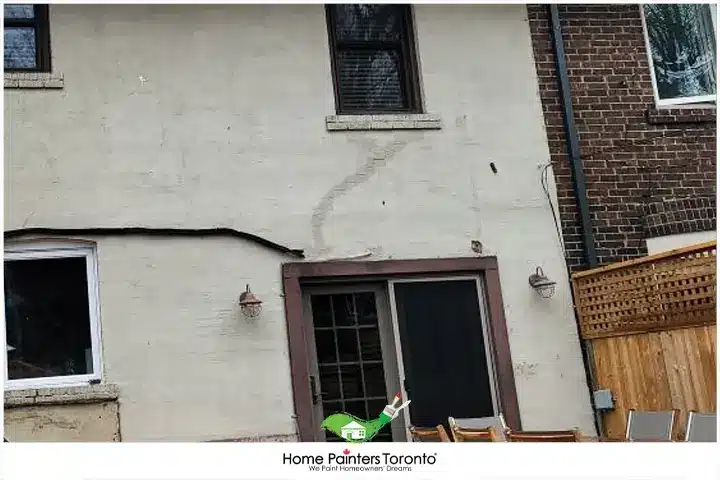
Insurers separate two categories of loss: sudden accidental damage from an insured peril, and gradual deterioration that happens over years
Does Home Insurance Cover Storm Damage to Exterior House Paint?
Standard home insurance policies in Ontario cover exterior paint and siding damage when it results from a sudden, identifiable storm event such as hail, high wind, or wind-driven rain entering through a new opening in the building envelope. Insurers separate two categories of loss: sudden accidental damage from an insured peril, and gradual deterioration that happens over years. A hailstorm that pits and cracks paint film, or wind that tears siding loose and exposes bare wood to rain, typically falls into the first category. Faded paint from ten summers of UV exposure falls into the second, and it sits outside most policies entirely.
According to the Insurance Bureau of Canada, standard home policies cover damage caused by hail or wind, including water entering through a sudden opening, while pre-existing damage stays excluded. That distinction, sudden versus gradual, is the single biggest factor in whether an exterior paint claim gets approved. Canadian property insurance also has no blanket exclusion for extreme weather, since the Insurance Bureau of Canada confirms wind and tornado damage is an insured peril with no "act of God" exclusion, not something insurers simply refuse.
What Counts as Covered Storm Damage vs. Normal Wear and Tear
A claim gets approved or denied based on one question: did a specific storm event cause the damage, or did the paint simply wear out over time? Adjusters look for a clear before-and-after moment tied to a dated weather event. Damage that fits that pattern is usually covered. Damage that built up slowly across several seasons usually is not, regardless of how bad it looks.
| Type of Damage | Typically Covered? | Why |
|---|---|---|
| Hail pitting or cracking on painted siding | Yes | Sudden impact damage from an insured peril |
| Wind-torn siding exposing bare wood to rain | Yes | Direct storm damage plus resulting water intrusion |
| Paint blistering after a roof leak from storm-damaged shingles | Often, as a secondary loss | Tied to a specific covered event |
| Peeling paint from years of sun exposure | No | Gradual wear, not a sudden event |
| Chalking or fading on south-facing walls | No | Normal weathering, not storm-related |
| Mould or rot from a slow, unreported leak | Rarely | Treated as deferred maintenance |
Step-by-Step: What to Do Right After Storm Damage to Your Exterior
The first 48 hours after a storm set the tone for the entire claim. Move quickly, but document everything before you touch or remove anything.
- Check for safety hazards first, including downed power lines, loose siding panels, and damaged soffits that could fall.
- Photograph every affected surface from multiple angles, including wide shots that show the whole wall and close-ups of individual hail marks or torn siding.
- Note the date and approximate time of the storm, since your insurer will match it against regional weather data.
- Contact your insurance provider within a few days to open a claim file and ask about your policy's specific deadline for reporting.
- Avoid discarding damaged siding, trim, or paint chips until your adjuster has seen them or told you it is safe to remove.
- Cover any openings that are letting water into the wall assembly with a temporary tarp to prevent further interior damage.
- Request a written estimate from a licensed exterior painting services contractor to support the claim before repair work begins.
What an Insurance Adjuster Looks for on Exterior Paint and Siding
An adjuster inspecting storm-damaged exterior paint checks for physical evidence that ties the damage to a specific weather event, not just visible wear. They carry moisture meters, take reference photos against known storm dates, and compare the pattern of damage across the whole elevation.
- Directional damage patterns, since hail and wind-driven rain usually mark the storm-facing side of a home more heavily than sheltered walls.
- Paint film failure versus impact damage, because cracked and lifted paint from a hail strike looks different under close inspection than paint that simply aged out.
- Moisture readings taken with a pin-type meter to confirm whether water has entered the substrate behind the paint.
- Consistency between the reported storm date and the visible condition of the damage, including how fresh the exposed wood or bare siding looks.
- Secondary damage, such as staining or blistering, that traces back to a single leak point instead of widespread age-related failure.
Wind and Hail Damage vs. Water Intrusion: How Adjusters Tell the Difference
Adjusters distinguish wind and hail damage from separate water intrusion by checking whether moisture entered through a storm-caused opening or through a pre-existing gap in the caulking or flashing. A fresh hail strike leaves a sharp-edged crack in the paint film with little to no surrounding discoloration. Older water intrusion around a window frame usually shows a gradual stain pattern and softened wood that predates the storm. Sherwin-Williams technical guidance notes that coating failure from ongoing moisture exposure develops progressively, which is one reason adjusters treat long-term staining differently from a sudden impact mark. This is also where exterior caulking around windows and doors becomes relevant, since a storm can widen an existing gap that was already letting in moisture.
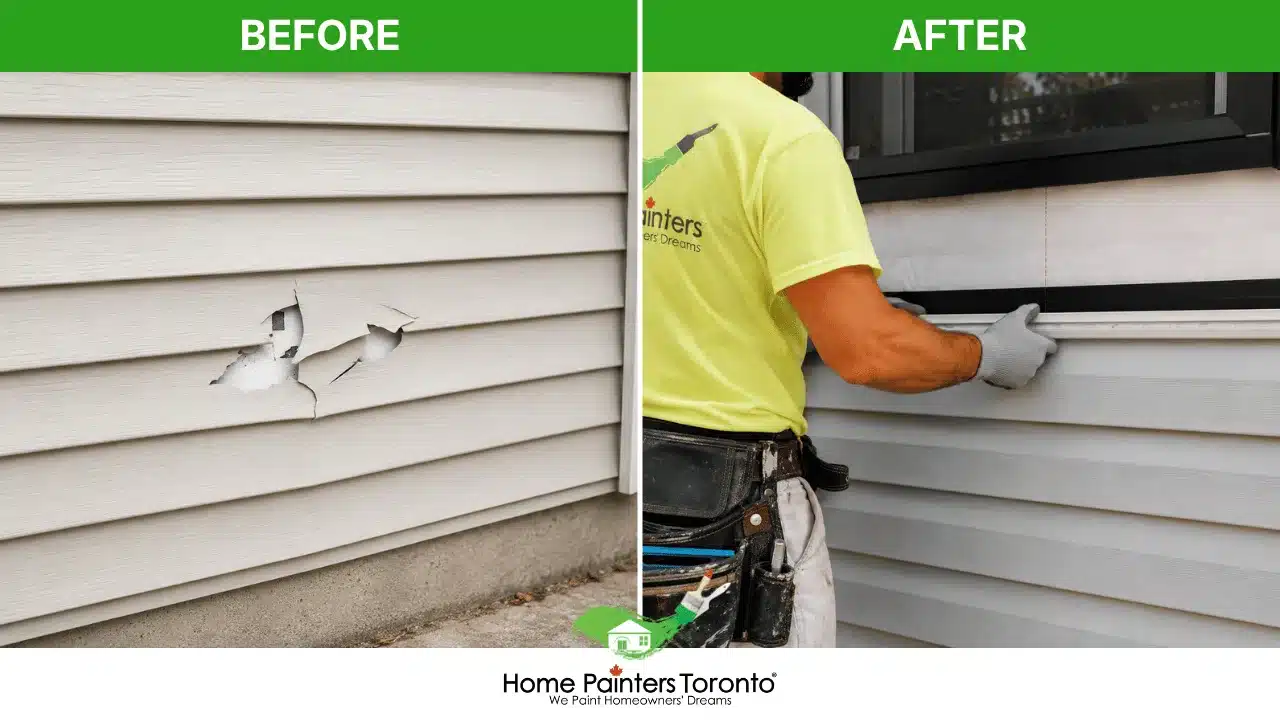
A fresh hail strike leaves a sharp-edged crack in the paint film with little to no surrounding discoloration
How a Contractor's Written Estimate Supports Your Claim
A detailed written estimate from a licensed painting contractor gives your adjuster a professional, line-item record of the damage and the cost to correct it, which speeds up approval. The estimate should separate storm-related repairs from any unrelated maintenance items, since mixing the two can slow down or reduce a payout. A strong estimate includes dated photographs, a description of the affected square footage, the specific coating system needed for the repair, and a clear repair-versus-repaint recommendation. At Home Painters Toronto, our crews document moisture readings and substrate condition alongside the visual damage, which gives adjusters a fuller picture than photos alone. This kind of documentation matters most on borderline claims, where the line between storm damage and pre-existing wear is not obvious from the street.
- At a recent exterior repaint in Etobicoke following wind and hail damage from a summer storm, our crew found a moisture reading of 19% along the north wall where torn siding had exposed the sheathing to rain for several days.
- After the siding repair and substrate drying, we applied Benjamin Moore Aura Exterior in Low Lustre at a 4 to 5 mil wet film thickness per coat, matching the manufacturer's published spec for full hiding and adhesion on cedar siding.
The homeowner's insurer had already approved the claim based on our written estimate and photo documentation, so the repaint moved forward within two weeks of adjuster sign-off.
Deductibles, Depreciation, and What You'll Likely Pay Out of Pocket
Most Ontario homeowners pay a set deductible on an approved storm damage claim, and some policies apply depreciation to older exterior paint before calculating the payout. A typical home insurance deductible in Ontario runs from a few hundred to over a thousand dollars, and some insurers apply a separate, higher deductible specifically for wind or hail events in storm-prone areas. If your exterior paint was already several years old when the storm hit, your insurer may apply an actual cash value calculation that subtracts depreciation from the replacement cost, meaning you receive less than the full cost of a fresh repaint. Full exterior repaints in the GTA typically range from $4,000 to $8,000 for a medium-sized home, with larger properties running $8,000 to $10,000 or more, so understanding your deductible and depreciation terms before work begins helps you budget for the difference.
What Your Home Insurance Deductible Means for a Painting-Related Claim
Your deductible is the fixed amount you pay before your insurer covers the rest of an approved exterior paint or siding claim, and it applies once per claim instead of once per damaged section. A homeowner with a several-hundred-to-thousand-dollar deductible on a repaint estimated in the $4,000 to $8,000 range pays that fixed amount first, while the insurer covers the remaining balance before any depreciation is factored in. Some policies carry a percentage-based deductible for wind and hail specifically, which can run higher than the standard flat deductible. Confirming this figure with your broker before work starts prevents an unpleasant surprise on the final invoice.
When Damage Isn't Covered: Gradual Deterioration and Deferred Maintenance
Insurers routinely deny exterior paint claims when the damage pattern points to age and neglect instead of a single storm event, and this is the part of the process most homeowners misunderstand. Chalking, fading, and alligator-pattern cracking that developed over several seasons are treated as maintenance issues, not insured losses, even if a recent storm made the problem more visible. Paint that was already failing before the storm will not suddenly become a covered claim just because bad weather drew attention to it. Insurers also flag claims where the damaged area shows no directional wind or hail pattern, since storms tend to hit one elevation harder than the others.
- Chalky, powdery paint residue that predates the storm by multiple seasons
- Peeling limited to areas with known drainage or grading problems near the foundation
- Widespread fading with no correlating impact marks or torn material
- Rot or soft wood that shows layered discoloration consistent with a slow, ongoing leak
Pre-Existing Paint Failure and Why Insurers Flag It
Insurers flag pre-existing paint failure by comparing the damage pattern against the reported storm date and looking for signs of coating breakdown that predate the event. A coating that was already chalking or peeling before the storm will show uneven, non-directional wear across multiple elevations, not just the storm-facing side. PDCA application standards note that exterior coatings applied without proper substrate preparation, including primer on bare wood, tend to fail earlier and in patterns unrelated to weather events. An adjuster trained to spot that pattern will separate the pre-existing failure from the fresh storm damage and adjust the payout accordingly, which is why an honest, itemized contractor estimate protects the homeowner as much as the insurer.
Getting Your Exterior Repainted After a Covered Claim
Once your claim is approved, the repaint itself should follow the same substrate preparation and coating standards as any professional exterior painting services job, regardless of who is paying for it. That means addressing the underlying wood siding repair or fence repair first, allowing the substrate to dry to an acceptable moisture range, and applying a coating system suited to the surface, whether that is aluminum siding painting, vinyl siding painting, or aluminum window and siding painting. Skipping proper prep to move faster after a claim often leads to early coating failure and a second round of problems within a few years. Working with a fully insured, WSIB compliant contractor who provides warranty-backed results gives you a second layer of protection once the insurance-funded work is complete.
Other exterior elements commonly affected by the same storms include soffit and fascia repair, deck repair, and foundation parging repair, all worth mentioning to your adjuster if a single storm caused damage across more than just your painted surfaces. Homeowners weighing a contractor can review our HomeStars reviews and our exterior residential house painting page for examples of comparable storm-recovery projects across the GTA.
Storm Damage Insurance Claim FAQs
Yes, most standard Ontario home insurance policies cover hail damage to exterior paint and siding as a named peril. The damage needs to trace back to a specific storm event instead of general wear, and your insurer may apply a separate deductible for wind and hail claims in some regions.
It depends on whether the water entered suddenly through storm damage or slowly through a pre-existing gap. Peeling tied to a sudden opening caused by wind or hail is typically covered, while peeling from a slow, unreported leak is usually treated as deferred maintenance.
Reporting deadlines vary by insurer and policy, and some contracts require notice within a set number of days after the loss is discovered. Contact your insurance provider as soon as possible after a storm and confirm the exact deadline in your policy documents.
Many insurers will only pay to repair or repaint the specifically damaged section, unless matching an undamaged area is not feasible with the same product or colour. A contractor's estimate that explains why a full elevation needs repainting for a consistent finish can support a broader payout.
No, coating failure caused by poor original application, such as skipping primer or painting over a damp substrate, is treated as a workmanship or maintenance issue instead of storm damage. Insurers look closely for this distinction before approving a claim.
Most insurers want a written, itemized estimate that separates storm-related repairs from unrelated work, along with dated photographs and a description of the coating system needed. Moisture readings and substrate notes strengthen the file further, especially on claims near the covered-versus-excluded line.

Getting Your Storm-Damaged Exterior Back on Track
Filing an exterior house painting storm damage insurance claim goes more smoothly when you document quickly, understand the difference between sudden storm damage and gradual wear, and bring in a contractor who can back up your claim with real technical detail. Home Painters Toronto provides fast free quotes and warranty-backed work for GTA homeowners repairing storm-damaged exteriors, from siding repair through final coats.
Get a Free EstimateCoverage depends entirely on your specific policy and insurer. This article is general information, not insurance or legal advice. Confirm details directly with your insurance provider before assuming coverage.