

Toronto homeowners ask this question every year: is it cheaper to paint the exterior of their home in spring or fall? The answer depends on demand cycles, contractor availability, and how Ontario's climate affects paint adhesion. For most properties in the GTA, from a Scarborough semidetached to a Vaughan two storey, timing your project correctly can mean the difference between a flawless finish and a costly failure. Home Painters Toronto has been completing exterior house painting Toronto projects for 38 years across the GTA, and we know exactly which season gives you the best value.
Fall exterior painting in Toronto generally costs less than spring because contractor demand drops after the summer rush, opening up scheduling flexibility and occasionally lower rates. Spring carries a pricing premium of roughly 10 to 20 percent due to high booking volume. Both seasons are technically viable when temperatures stay above 10°C.
Lower contractor demand, base rates or occasional discounts, shorter wait times of 1 to 3 weeks, lower humidity, and drier substrates after the summer.
10 to 20% pricing premium, 3 to 6 week average wait times, higher humidity risk, and saturated substrates from snowmelt well into April.
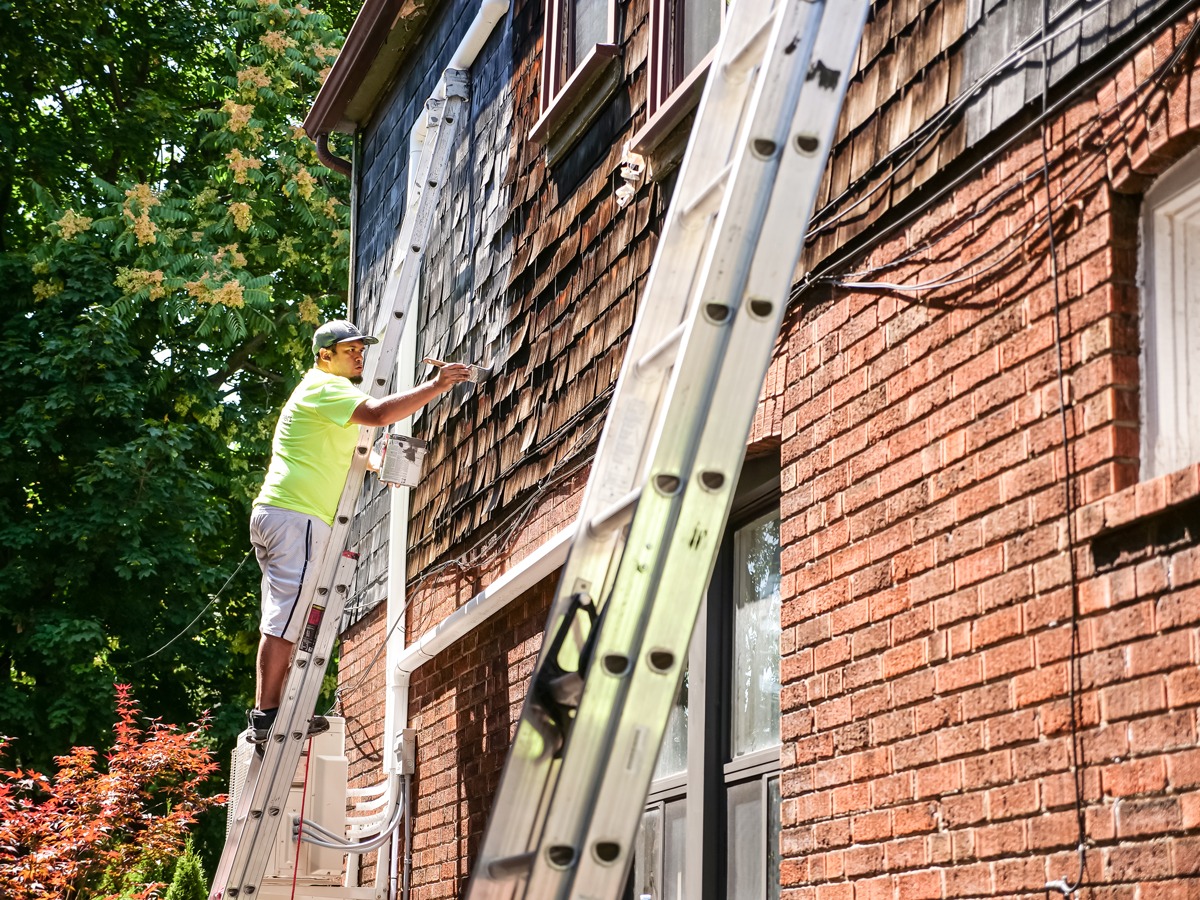
Fall exterior painting in Toronto — September and October offer stable temperatures, lower humidity, and drier substrates that consistently produce stronger paint adhesion than spring applications over wet post-snowmelt wood
Spring vs Fall Exterior Painting in Toronto: Which Season Costs Less?
Fall exterior painting in Toronto is typically less expensive than spring because contractor demand falls sharply after Labour Day, creating availability and competitive pricing that spring bookings simply cannot match.
| Factor | Spring (April – June) | Fall (September – November) |
|---|---|---|
| Demand level | Very high — peak season rush | Moderate — post summer slowdown |
| Scheduling wait time | 3 to 6 weeks average | 1 to 3 weeks average |
| Typical price premium | 10 to 20% above base rates | Base rates or occasional discounts |
| Temperature suitability | Good — warming but watch cold snaps | Good — stable and dry through October |
| Humidity risk | Higher — spring rains delay prep | Lower — dryer air improves adhesion |
| Daylight hours for work | Increasing — good for multi day jobs | Decreasing — plan for shorter workdays |
Pricing for a standard residential exterior in Toronto ranges from $2,000 to $4,000 for smaller homes and $4,000 to $8,000 for medium homes, plus HST. Larger properties run from $8,000 to $10,000, and premium or oversized homes can reach $12,000 to $30,000. These ranges apply in both seasons, but a fall booking is more likely to land at the lower end because contractors have fewer competing jobs.
For a full breakdown of what drives pricing, see our detailed guide on the cost of painting a house.
Why Spring Exterior Painting Often Costs More in Toronto
Spring carries a demand premium because every Toronto homeowner who delayed their project over winter calls a contractor at the same time. This surge in bookings between late April and mid-June drives up both wait times and, on occasion, the quoted price.
Spring also introduces a technical risk that most homeowners overlook. After a Toronto winter, exterior substrates are saturated. Wood siding and masonry absorb snowmelt and rain well into April. Applying paint over a surface with moisture content above 15 percent traps vapour inside the film. That vapour expands and contracts with temperature shifts, causing blistering and peeling within one to two seasons.
Rain delays in spring are frequent, which extends project timelines and increases labour costs. A job quoted for three days of work can stretch to five days when a contractor loses a morning to rain. Substrate drying time after a spring shower can add 24 to 48 hours before application can resume. Fall tends to offer longer dry spells, particularly in September and early October.
If your exterior includes masonry surfaces, this matters even more. Our exterior brick staining team uses moisture meters on every project before applying any coating, regardless of season.
When Fall Is the Smarter Season for Exterior Painting
Exterior Painting Toronto: The Scheduling Window That Most Contractors Miss
The ideal fall window in Toronto runs from early September through the third week of October. Daytime temperatures hold between 10°C and 20°C, humidity drops, and UV intensity decreases. These conditions are chemically optimal for acrylic latex and elastomeric coatings to form a dense, uniform film.
Benjamin Moore specifies a minimum application temperature of 7°C for its Aura Exterior product line. Sherwin Williams sets the same threshold for Duration Exterior. In Toronto, that threshold is reliably met from September through mid October. By November, overnight lows begin to threaten adhesion, which is why professional crews monitor the forecast carefully during late fall projects.
A fall project also gives your home a fresh protective coating before winter moisture and freeze and thaw cycling stress the substrate. Paint applied in October has fully cured before the first hard frost, typically in late November or December. Spring paint jobs face immediate heat and UV exposure before the film has reached maximum hardness, which can reduce long term durability.
Homes with exterior wood siding particularly benefit from fall application. Wood grain closes slightly in cooler temperatures, which produces a smoother, more uniform film than the open grain of a hot summer surface.
If your project includes deck and fence staining, fall is also the preferred season. Stain penetrates wood more evenly when surface temperatures are moderate, and solid stains cure better without direct midday sun accelerating drying on one face of each board.
The Science Behind Paint Performance in Toronto's Seasonal Temperature Windows
How Toronto's Freeze and Thaw Cycles Affect Exterior Paint Adhesion
Toronto experiences an average of 50 to 70 freeze and thaw cycles per winter. Each cycle expands moisture trapped in masonry or wood by up to 9 percent in volume. Paint films that are not fully bonded to the substrate will delaminate under this repeated mechanical stress.
A paint applied in fall has 6 to 8 weeks of curing time before the first freeze. Acrylic latex coatings reach 80 percent of their final hardness within 30 days at temperatures above 10°C. A spring paint job applied in April may face a surprise frost in early May before the film has had a full cure window, particularly on the north and east faces of the building.
Moisture Readings and Substrate Temperature: What the Numbers Mean
Professional painters use a pin type or pinless moisture meter before applying any primer or topcoat. For wood substrates, the accepted safe threshold is below 15 percent moisture content, as specified by the Painting and Decorating Contractors of America (PDCA) standard PC 3. For masonry, the target is below 12 percent. Spring substrates in Toronto frequently register 18 to 22 percent in April. Fall substrates, following a dry August and September, consistently fall within the safe range.
Substrate surface temperature also matters. Paint should not be applied to a surface within 5°F (approximately 3°C) of the dew point, per Benjamin Moore technical data sheets. Cold morning surfaces in fall can hold condensation, so professional crews begin painting at mid morning once the surface has warmed above the dew point threshold. This is standard practice at Home Painters Toronto on every exterior job.
Cost Breakdown by Season: What Toronto Homeowners Actually Pay
Exterior painting costs in Toronto depend on home size, storey count, surface material, and the complexity of prep work. The following table shows typical ranges by season, all in CAD plus HST.
| Home Size | Spring Range (CAD + HST) | Fall Range (CAD + HST) | Potential Fall Saving |
|---|---|---|---|
| Small (under 1,500 sq ft) | $2,200 – $4,400 | $2,000 – $4,000 | $200 – $400 |
| Medium (1,500 – 2,500 sq ft) | $4,400 – $8,800 | $4,000 – $8,000 | $400 – $800 |
| Large (2,500 – 3,500 sq ft) | $8,800 – $11,000 | $8,000 – $10,000 | $800 – $1,000 |
| XL / Estate (3,500+ sq ft) | $13,200 – $33,000 | $12,000 – $30,000 | $1,200 – $3,000 |
These ranges assume full exterior painting including siding, trim, soffits, and fascia. Jobs that include additional services such as caulking windows and doors, stucco repair, or aluminum siding will carry added costs in both seasons.
Homes with aluminum siding painting or exterior stucco siding may need additional prep that adds to the base quote. Our team provides same day estimates open 7 days a week so you can compare season to season pricing before committing.
Proper sealing is a critical cost factor as well. Our caulking windows and doors service is often paired with exterior painting to prevent water infiltration, particularly on homes built before 1990.
A Recent Exterior Project in Scarborough That Taught Us Timing Matters
1970s Two Storey Brick and Wood Siding — $600 Saved by Switching to Fall
Last October, our crew completed an exterior painting project on a 1970s two storey brick and wood siding home in the Clairlea neighbourhood of Scarborough. The homeowner had received a spring quote in May at the higher end of the medium home range. She called us in September to check if fall pricing was available, and we confirmed her project could be scheduled within two weeks at a lower total cost.
Before we touched a brush, our lead painter checked the substrate moisture reading on the wood siding using a Delmhorst J 2000 pin meter. The reading came in at 11 percent, well within the safe threshold of under 15 percent. The brick face registered at 9 percent. Surface temperature at 10 a.m. on the first day of application was 14°C, comfortably above the dew point of 7°C that morning.
We applied a coat of Benjamin Moore Fresh Start High Hiding Primer on all bare wood areas at 3 mil wet film thickness per pass. The topcoat was Benjamin Moore Aura Exterior in Low Lustre finish, applied in two full passes at 4 mil wet film thickness each. The Low Lustre sheen was specified by the homeowner to minimize glare on the south facing wall, where afternoon light reflects across neighbouring properties.
The project was completed in three days with zero weather delays. The homeowner saved approximately $600 compared to her May quote for the same scope of work. She also got the protection of our 3 year exterior painting warranty and warranty backed results that cover labour and materials against defects in workmanship.
See similar completed projects in our portfolio of completed projects, or read what clients say on our client reviews page.

Why Toronto Homeowners Trust HPT for Seasonal Exterior Painting
Home Painters Toronto has served 17,000+ satisfied clients across the GTA since 1987, making us one of the most experienced family owned painting contractors in Ontario. We have earned 1,200+ positive reviews on HomeStars, Google, and Houzz, and we hold the HomeStars Best of Award 2026. That recognition is not accidental. It comes from consistently applying the right product to the right substrate at the right time of year.
We are WSIB compliant with full workers compensation coverage, carry $5M general liability insurance, and conduct criminal background checks on all crew members. Every exterior painting project is backed by our 3 year exterior warranty and 100% Satisfaction Guaranteed policy. These are not generic assurances. They are verifiable, written commitments.
Being fully insured protects both our crew and your property. Most budget contractors either carry inadequate coverage or none at all. If a worker is injured on your property without WSIB coverage, the liability can fall on the homeowner. This is a risk no Toronto homeowner should accept.
Learn more about our standards on the why Toronto homeowners choose HPT page, or browse our frequently asked questions for more detail on our process.
We also offer front door restaining and refinishing as a standalone service, which pairs well with a fall exterior project since the front entry is one of the first surfaces to show UV and seasonal wear.
Frequently Asked Questions
Yes. The fall window from early September to mid October is technically sound for exterior painting in Toronto. Temperatures typically stay above 10°C during the day, which meets the minimum application threshold specified by major paint manufacturers including Benjamin Moore and Sherwin Williams. Professional crews monitor both air temperature and surface temperature before starting each day.
The savings range from roughly $200 to $3,000 depending on the size of your home. Smaller homes see modest savings in the $200 to $400 range, while estate or oversized properties with complex prep requirements can see fall savings of $1,200 to $3,000 compared to equivalent spring quotes. The gap comes primarily from reduced contractor demand, not a change in material costs.
Most professional grade acrylic latex coatings require a minimum air and surface temperature of 7°C to 10°C, maintained for at least 24 hours after application. Benjamin Moore Aura Exterior specifies 7°C as the lower threshold in its technical data sheet. Once overnight temperatures in Toronto drop below 5°C consistently, which typically happens in early to mid November, exterior painting projects should be wrapped up or postponed until spring.
Yes. Masonry and brick surfaces, including those treated with exterior brick staining products, are more forgiving in fall because brick absorbs less ambient humidity in dry September air. Wood siding benefits from fall application because the grain closes slightly in cooler temperatures, producing a tighter bond with the primer coat. Aluminum siding is the least season sensitive surface because it does not absorb moisture, but surface temperature must still be above the dew point at time of application.
A professionally applied exterior paint job in Toronto lasts 7 to 10 years on well maintained siding and 5 to 7 years on surfaces with prior deferred maintenance. Homes with south facing walls experience faster UV degradation. Home Painters Toronto backs all exterior painting with a 3 year warranty on labour and materials. The warranty is written and transferable, not a verbal promise.
Yes. Many Toronto homeowners get a fall estimate and lock in their spring slot before the peak booking rush. This strategy gives you the benefit of advance planning while choosing your preferred season. HPT offers same day estimates open 7 days a week. Booking early for spring can sometimes help you avoid the peak demand premium by securing a confirmed slot before April.

Get Your Free Exterior Painting Quote Today
Both spring and fall are valid seasons for exterior painting in Toronto. Fall gives most homeowners a clear pricing advantage, shorter wait times, and optimal substrate conditions. Spring is the busier season but remains a solid choice when temperatures stabilise and substrates have dried out after snowmelt.
The most important decision is not the season. It is choosing a contractor who understands Toronto's climate, checks substrate conditions before every application, and backs their work with a real warranty. Home Painters Toronto has been that contractor for 38 years, earning 1,200+ reviews and the HomeStars Best of Award 2026 along the way.
Ready to move forward? Contact Home Painters Toronto today for fast free quotes and warranty backed work. We are open 7 days a week with same day estimates available across the GTA.
Get a Fast Free Quote for Exterior Painting in Toronto
Contact Home Painters Toronto today for fast free quotes and warranty backed work. We are open 7 days a week with same day estimates available across the GTA.
Contact Us for a Free Quote