

Exterior Painting Winter Toronto: Why Climate Makes or Breaks Your Paint Job
Exterior painting winter Toronto projects carry risks most homeowners do not anticipate until the damage is already done. Toronto's climate is one of the most demanding in Canada for exterior finishes. Temperatures swing from summer highs above 30 degrees Celsius to deep winter lows well below minus 20, and that range hammers your home's exterior paint year after year.
If you have noticed peeling, cracking, or bubbling paint after a hard winter, the problem usually started long before the cold arrived. A paint job applied at the wrong time, with the wrong product, or without proper preparation sets itself up to fail the moment temperatures drop.
Our exterior painting Toronto team has spent over 38 years working through every season the GTA throws at us. Here is what every Toronto homeowner needs to know about how climate affects exterior paint and why getting it right the first time saves money in the long run.
- Why winter is the wrong time to apply exterior paint in the GTA
- What freeze-thaw cycles actually do to a paint film
- Which surfaces are most vulnerable to Toronto's seasonal extremes
- When the right painting window opens each year
- Why professional preparation is the most important factor in paint longevity
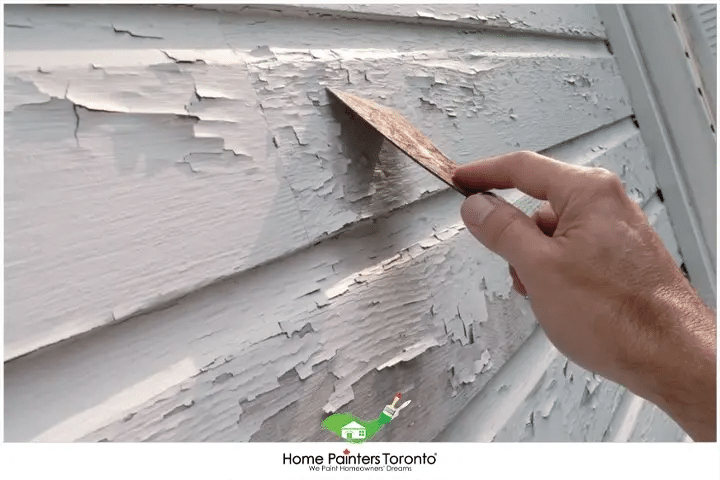
Toronto's freeze-thaw cycles are the leading cause of premature exterior paint failure in the GTA — damage that is almost entirely preventable with proper timing and preparation
What Toronto's Winter Climate Actually Does to Exterior Paint
Toronto's winters damage exterior paint through a combination of freeze-thaw cycling, moisture intrusion, and sub-zero temperatures that prevent proper curing. January averages a high near minus 1 degree Celsius and a low near minus 7, according to Canada's historical climate data. That means your home's exterior surfaces constantly cross back and forth over the freezing threshold, sometimes within hours.
Paint is not a rigid film. It is a flexible coating that bonds to a substrate. When that substrate expands in warmth and contracts in cold, the paint moves with it. A paint job that cured fully under the right conditions can handle this stress. One that did not cure properly cannot.
Every Toronto winter brings dozens of freeze-thaw cycles. Each one tests the bond between your paint and your siding, brick, or wood. Over time, that bond weakens, and the result shows up as cracks, bubbles, and peeling sheets by spring.
The Freeze-Thaw Cycle: Toronto's Biggest Threat to Paint Adhesion
Freeze-thaw damage is the leading cause of premature exterior paint failure in the GTA. Understanding the exact mechanism helps explain why proper prep and timing matter so much.
Water seeps into small cracks or gaps in the paint film, often through failed caulk around windows and trim
As temperatures drop, trapped moisture expands up to 9% by volume, physically prying the paint film away from the substrate
Ice contracts and water drains away, leaving a slightly larger gap than before the cycle began
Each cycle pushes further into the same gap. By spring, hairline cracks have become flaking sections and exposed substrate
Left unaddressed, the exposed wood or masonry beneath absorbs moisture directly. Rot, mould, and structural deterioration follow, all of which cost far more to repair than a properly done paint job would have. This is why exterior caulking around windows, doors, and trim is so critical before any exterior painting project. Gaps in caulk are the entry points for the moisture that destroys paint from behind.
At Home Painters Toronto, we inspect every caulk line before starting any exterior project. Old, cracked caulking around windows and doors is where freeze-thaw damage begins. Replacing failing caulk is a standard part of our prep process, because no paint job survives long on a poorly sealed surface. This is one step many homeowners overlook, and it is the one that creates the most costly problems later.
Why Exterior Painting in a Toronto Winter Is Not an Option
Paint needs a minimum surface temperature of 10 degrees Celsius to cure properly. Toronto's winters make that impossible for most of the season. Even on a mild January day when the air temperature reaches 3 or 4 degrees, the surface of north-facing siding or shaded trim is often still below freezing. Paint applied to a cold surface stays tacky, never fully bonds, and fails within weeks.
According to BEHR PRO's cold-weather painting guidance, even premium paints formulated for lower temperatures are rated only down to around 2 degrees Celsius. Surface temperature always matters more than air temperature, because that is the environment the paint actually cures in.
Beyond temperature, winter brings additional challenges. Frost, condensation, and snow on siding surfaces prevent proper adhesion. Short daylight hours mean less curing time before overnight temperatures drop again. Any painter suggesting exterior work is safe through a Toronto winter is either working without the right information or cutting corners on your project.
Which Toronto Home Surfaces Are Most Vulnerable in Winter?
Wood siding, stucco, and older brick surfaces are the most vulnerable Toronto home exteriors in winter because they absorb moisture, expand and contract during freeze-thaw cycles, and are more prone to cracking and paint failure. Understanding which ones are at risk helps homeowners prioritize maintenance and scheduling.
Wood Siding and Trim
High RiskWood is the most vulnerable surface on any Toronto home. It absorbs moisture readily and expands and contracts dramatically with temperature swings. Victorian homes in Cabbagetown, the Annex, and Parkdale typically have original wood trim that has endured decades of freeze-thaw stress. Paint on wood siding without proper priming and sealing fails faster than on any other material.
Aluminum Siding
Medium-High RiskAluminum expands and contracts significantly across temperature ranges. Paint on aluminum siding applied under marginal conditions will begin to chalk, crack, or peel when the metal moves. Aluminum siding painting requires specific primers that flex with the metal rather than crack against it.
Decks and Fences
High RiskHorizontal surfaces like decks collect snow, ice, and standing water all winter. The freeze-thaw stress on a wood deck is extreme. Deck and fence staining applied in poor conditions or at the wrong time of year shows visible failure within a single season.
Brick and Masonry
Medium RiskBrick is more forgiving than wood but still vulnerable. Moisture trapped behind a paint or stain coating can cause spalling, where the brick face literally breaks away under freeze-thaw pressure. Exterior brick painting requires careful product selection and proper surface assessment before any work begins.
Vinyl Siding
Lower RiskVinyl is more dimensionally stable than wood or aluminum across temperature swings. However, it still benefits from proper caulking and periodic inspection, particularly at joints and where vinyl meets trim or masonry.
| Surface Type | Freeze-Thaw Risk | Key Winter Concern |
|---|---|---|
| Wood siding and trim | High | Moisture absorption, cracking, rot under failed paint |
| Aluminum siding | Medium-High | Metal expansion, coating adhesion failure |
| Decks and fences | High | Ice accumulation, standing water, surface degradation |
| Brick and masonry | Medium | Spalling from moisture trapped behind coating |
| Vinyl siding | Lower | UV fading, minor expansion at joints and seams |
Toronto's Exterior Painting Season: When the Window Actually Opens
The safe exterior painting window in Toronto runs roughly from mid-May through mid-October. Within that window, June and September stand out as the most reliable months. June offers warming temperatures without peak summer humidity, and September brings cooler, drier air that is ideal for paint adhesion.
Spring, while tempting, comes with real risks. April in Toronto can swing from 15 degrees to near freezing overnight. Paint applied on a warm afternoon may still face surface frost before morning. Rushing into spring painting too early is one of the most common reasons paint jobs fail before summer arrives. Late October and November are equally problematic. Nighttime frost begins appearing, and humidity from Lake Ontario stays elevated.
Freeze-thaw, cold surfaces, frost, condensation
Safe once overnight lows stay consistently above 10°C
Best combo of temperature and lower humidity for exterior work
Viable but high heat and humidity can slow curing; avoid direct afternoon sun
Cool, dry air improves adhesion; ideal conditions before freeze-thaw returns
Acceptable if weather cooperates; risk increases toward month's end
At Home Painters Toronto, we check the extended forecast before every exterior project start date. We look for a stretch of dry weather with overnight temperatures staying above 10 degrees Celsius. One cold night mid-cure can undo days of prep and application. Booking six to eight weeks ahead of your preferred window ensures you get a slot in the right conditions, not simply the first available slot.
How Toronto's Summer Heat and Humidity Also Affect Exterior Paint
While winter draws the most attention, Toronto's summer conditions create their own challenges for exterior painting. Humidity above 80 percent slows paint curing and weakens adhesion. Hot, direct afternoon sun above 30 degrees Celsius can cause paint to skin over on the surface while the layer beneath stays wet. That trapped moisture eventually bubbles and peels.
Lake Ontario's influence on GTA weather means coastal humidity stays elevated into the evenings during July and August. Experienced painters in Toronto often start early in the morning, finish application before the hottest afternoon hours, and avoid south-facing walls during peak sun. Exterior residential house painting services done by professionals include this kind of timing awareness. A fresh coat applied at noon on a 32-degree July day behaves very differently from the same product applied at 8 a.m. on the same morning.
What Paint Products Perform Best in Toronto's Climate?
The best paint products for Toronto's climate are premium 100 percent acrylic latex paints because they stay flexible through temperature swings, resist moisture and UV damage, and last longer through harsh seasonal changes. The right paint makes a significant difference in how long an exterior finish lasts through Toronto's seasonal extremes. Budget products typically fail much faster in a demanding climate. The performance gap between a premium product and a low-cost alternative is most visible after the first hard winter.
100 percent acrylic latex is the standard for GTA exteriors. It stays flexible across temperature swings, breathes with the substrate, resists UV fading, and cures relatively quickly. Oil-based paints, by comparison, become brittle in cold and carry higher VOC content.
Key properties to look for in a Toronto exterior paint:
- Elasticity: The coating must flex without cracking through dozens of freeze-thaw cycles
- Breathability: Moisture needs to escape from wood substrates; a film that traps moisture causes blistering
- UV resistance: South-facing walls in Toronto receive intense summer sun that fades inferior coatings faster
- Low-temperature flexibility: The finish must remain stable at temperatures that drop well below freezing after curing
Choosing the right product for the specific surface, whether wood, masonry, aluminum, or vinyl, is part of what separates a paint job that lasts many years from one that needs redoing within a few seasons.
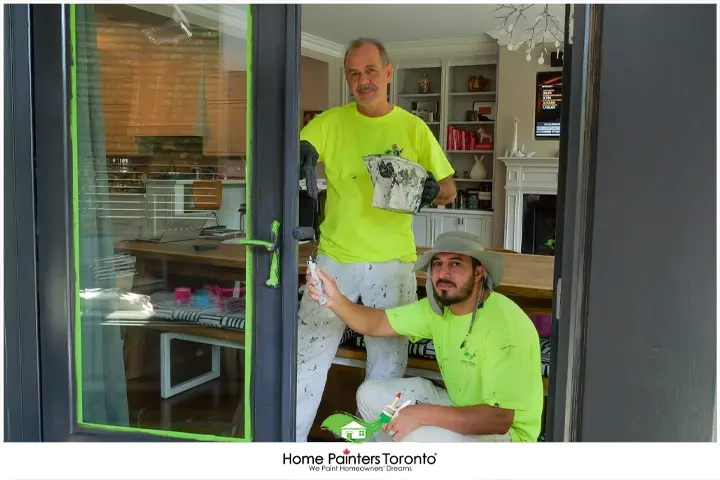
Premium 100% acrylic latex applied in the right seasonal window — with thorough prep and properly monitored overnight temperatures — is what survives Toronto's climate for years
Why Professional Prep Work Is the Real Difference-Maker
Professional prep work is the real difference-maker because proper cleaning, scraping, sanding, and priming determine whether exterior paint withstands Toronto's harsh winters or starts peeling within months. The paint itself is only part of the story. Preparation determines whether a coating survives Toronto's winters or fails by spring. Skipping or shortcutting prep is the most expensive mistake a homeowner can make.
A thorough exterior prep process includes:
- Power washing to remove dirt, mildew, chalking, and loose debris
- Scraping and sanding all peeling or failing paint back to a stable surface
- Wood repairs and carpentry for rot, split boards, or damaged trim
- Caulking of all gaps around windows, doors, and trim junctions
- Priming of all bare wood, repaired areas, and colour changes
- Timing application within the correct temperature and humidity window
A paint job applied over poor prep will fail regardless of product quality. When that happens, the cost is not just the paint. It is the labour to strip, re-prep, and recoat, on top of any structural damage moisture caused in the meantime. Understanding the cost of painting a house in the GTA becomes clearer when you factor in preparation as an investment in longevity rather than simply an added expense.
Why Toronto Homeowners Choose a Professional for Exterior Painting
Toronto homeowners choose a professional for exterior painting because experienced painters understand how to manage timing, product selection, surface preparation, and application techniques that hold up against the city's demanding climate. Timing, product selection, surface preparation, and application technique all need to align for an exterior paint job to survive Toronto's climate. Getting even one of these wrong can significantly shorten a paint job's lifespan.
Home Painters Toronto has been protecting GTA homes for over 38 years. Our crews understand the city's climate, the housing stock from Victorian Annex rowhouses to post-war bungalows in Etobicoke and Scarborough, and the specific challenges that different surfaces present across different seasons.
Every exterior project includes full surface preparation, climate-appropriate product selection, and warranty-backed workmanship. We schedule projects around verified weather windows, not just calendar availability. Our team also carries full insurance and WSIB coverage so your home and everyone working on it is protected throughout the project.
Frequently Asked Questions About Exterior Painting Winter Toronto
Exterior painting in Toronto winter conditions is not recommended for any surface. Paint requires a minimum surface temperature of 10 degrees Celsius to cure properly. Toronto's winters push surfaces well below that threshold for most of the season. Even mild winter days rarely warm exterior surfaces enough for safe application. Attempting to paint in freeze-thaw conditions results in poor adhesion, premature peeling, and wasted investment.
Paint that peels after a single Toronto winter typically failed to cure properly before the freeze-thaw cycles began. Common causes include painting too late in the season, skipping primer on bare or repaired surfaces, inadequate caulking that allowed moisture intrusion, or using a product not suited for Canadian climate conditions. Professional prep and timing are the most reliable ways to prevent this outcome.
Toronto homeowners should avoid exterior painting from November through April. The safest window is mid-May through mid-October. June and September offer the most reliable conditions. September is often ideal: temperatures are moderate, humidity drops after summer, and the paint has time to cure fully before freeze-thaw cycles return in November.
Each freeze-thaw cycle allows moisture to penetrate small gaps or cracks in a paint film. As that moisture freezes, it expands and widens the gap, weakening the bond between the paint and the substrate. Over dozens of cycles through a Toronto winter, this progressive damage causes the paint film to separate and peel. Surfaces with poor caulking or failed primer are especially vulnerable to this type of climate-driven failure.
A properly prepared, professionally applied exterior paint job using premium acrylic products can last many years on a Toronto home. Longevity depends on surface material, sun exposure, quality of preparation, and whether caulking and minor repairs are maintained between full paint cycles. South-facing walls face the most UV stress and may show wear earlier than shaded areas.
Toronto's winter climate affects all exterior surfaces, though the degree varies by material. Wood siding and trim are the most vulnerable due to high moisture absorption and significant expansion and contraction. Aluminum siding and wood decks also face elevated risk. Brick and masonry can experience spalling if moisture is trapped beneath a coating during freeze-thaw cycles. Vinyl siding is more resistant but still benefits from proper caulking and periodic inspection.

Exterior Painting Winter Toronto: Protect Your Home Before the Season Turns
Exterior painting winter Toronto conditions creates a challenge that costs homeowners significantly when ignored. Toronto's freeze-thaw cycles, subzero lows, lake-effect humidity, and seasonal temperature swings all work against a coating that was not applied at the right time, with the right products, over the right preparation.
The good news is that this kind of damage is almost entirely preventable. Scheduling your exterior painting project within the proper seasonal window, working with painters who understand GTA climate conditions, and insisting on thorough surface preparation before any paint goes on are the three factors that determine whether your home's finish lasts a few seasons or many years.
Home Painters Toronto has been delivering climate-smart, warranty-backed exterior painting across the GTA for over 38 years. Our team knows when to paint, what to use, and how to prepare every surface type for Toronto's demanding seasons.
Protect Your Home Before the Next Winter Cycle Hits
Request a free estimate today and our team will respond the same day, seven days a week.
Get Your Free Estimate