

Can You Do Exterior Painting in Winter in Toronto?
Toronto homeowners often face a real dilemma in November and December: the house needs painting but the weather is closing in fast. Across the GTA, surface temperatures can swing from 12°C on a mild afternoon to well below zero overnight, making exterior painting a genuine technical challenge. Many painting companies simply shut down exterior work from late November through March. But the right product, the right conditions, and a knowledgeable crew change that equation entirely. Here is what you need to know before booking any exterior painting work in winter.
Yes, exterior painting in winter in Toronto is possible under specific conditions. Surface temperatures must stay above 5°C during application and for at least 4 hours after. Professionals use low temperature latex or alkyd based coatings rated for cold weather. Without these precautions, paint fails within one season.
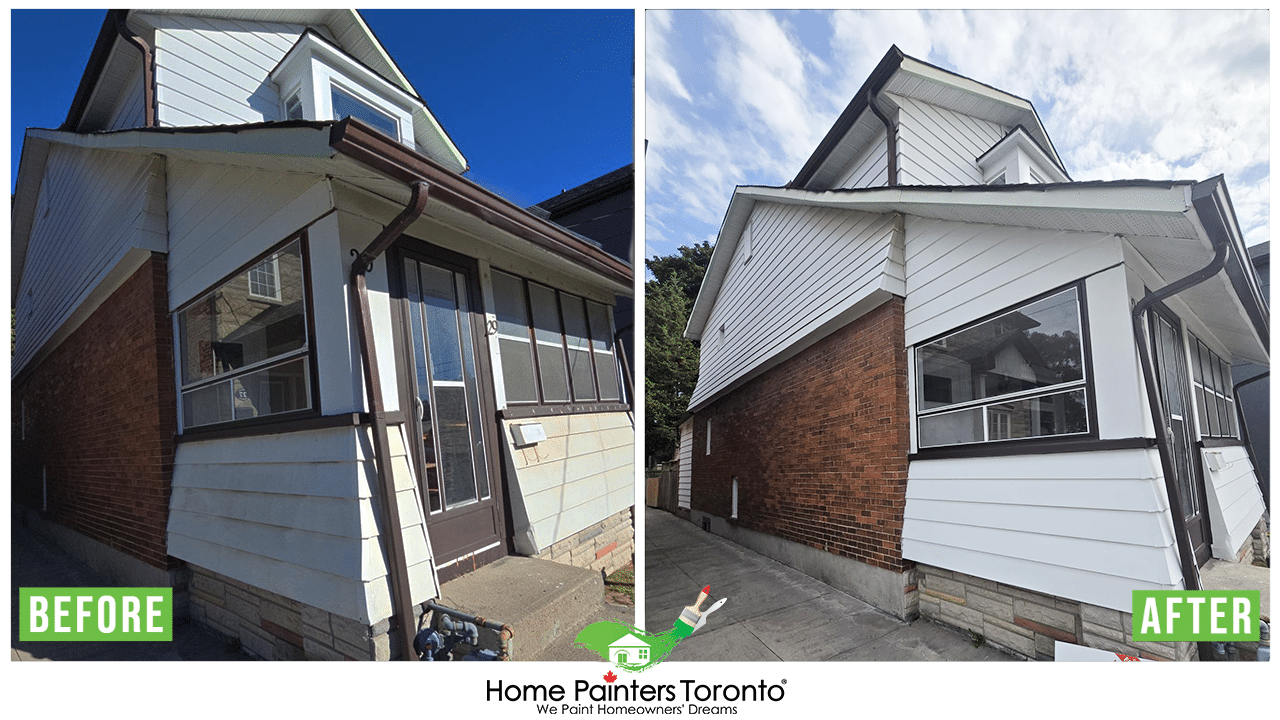
The common mistake: checking the air temperature forecast instead of the wall surface temperature. North facing and shaded walls can read 4°C to 8°C colder than the air on clear still nights — a 10°C afternoon air reading does not guarantee safe substrate conditions on every elevation
What "Too Cold to Paint" Actually Means for Toronto Exteriors
Most standard exterior latex paints require a minimum surface temperature of 7°C to form a proper film. Below that threshold, the paint cannot coalesce correctly and the result is a coating that chalks, cracks, or peels before spring arrives. Toronto's shoulder seasons, October through November and March through April, sit right in this danger zone where air temperature can feel mild but north facing walls and shaded soffits remain well below the minimum safe threshold. This is the mistake most homeowners and inexperienced crews make: they check the air temperature, not the surface temperature.
The 5°C Rule and Why Most Latex Paints Fail Below It
The 5°C rule comes from paint chemistry. Standard acrylic latex emulsions contain water as the carrier. Below 5°C, that water freezes before the film fully forms. The paint appears to dry on the surface, but underneath, the emulsion never fully cross links. According to Benjamin Moore's technical data sheets, their standard exterior lines require a minimum substrate and ambient temperature of 7°C, and that temperature must hold for four hours after application. When a crew rushes a November job without checking substrate readings, the coating fails before the first real freeze and thaw cycle even hits.
You can review Benjamin Moore's cold weather specifications directly at benjaminmoore.com, their technical guidance is one of the clearest in the industry.
The Science Behind Paint Failure in Ontario Winters
Ontario's freeze and thaw cycles are among the most punishing in North America. Toronto averages over 40 freeze and thaw cycles per winter, and each cycle puts enormous stress on any coating that has not fully bonded to the substrate. When moisture penetrates a partially cured film, it expands as it freezes and breaks the adhesion between the paint and the surface beneath it. The result is widespread peeling that looks like it happened from outside the wall, but the failure actually started from inside the film.
Wood substrates absorb moisture especially fast. If the moisture content of the wood is above 15%, paint will not adhere correctly regardless of temperature. Fibre cement and aluminum siding are more stable in cold weather, but they still require a surface temperature check before application. Environment and Climate Change Canada tracks ground frost data across Ontario, and their historical records show that surface temperatures in Toronto can be 4°C to 8°C colder than the air temperature on clear, still nights.
Environment and Climate Change Canada provides frost depth and surface temperature data, which professional crews use to plan exterior work through the shoulder season.
The bigger risk is invisible. A crew that applies paint on a 10°C afternoon on a wall that has been in shadow since morning may be painting onto a 3°C substrate. That paint will appear to hold for weeks, then lift in early spring when the substrate finally warms up and the bonding failure becomes visible across the entire surface.
| Failure Mode | Root Cause | When It Shows Up |
|---|---|---|
| Chalking and powdering | Emulsion fails to coalesce below 5°C | Within 1 to 3 months |
| Widespread peeling | Moisture trapped under partially cured film | First spring thaw |
| Blistering | Substrate moisture above 15% at application | During first warm spell |
| Cracking along grain | Substrate expansion on wood before full cure | Within the first winter |
| Loss of adhesion on trim | Surface temperature below threshold on shaded walls | Spring, often sudden |
When Winter Exterior Painting in Toronto Is Actually Possible
Mild weather windows do occur in Toronto through November and into early December. A string of three to five days where daytime highs reach 8°C to 12°C gives a professional crew enough time to complete a full exterior on a semidetached or detached home. The key is watching both the surface temperature and the overnight forecast. If temperatures will drop below zero within six hours of application, the job does not start that day. This is the discipline that separates experienced contractors from crews that simply push through cold weather and hope for the best.
Exterior Painting Winter Toronto: The Narrow Weather Window Pros Watch For
Professional crews working exterior painting in winter in Toronto typically target late morning application windows, from around 10 a.m. to 2 p.m., when solar gain has warmed south and west facing walls above the 7°C threshold. North facing and shaded walls may never reach that threshold on a cold day, and those surfaces get deferred. The schedule is not about speed but about substrate temperature management. Using a non contact infrared thermometer at multiple points across each wall face before opening any can of paint is the professional standard. Skipping that step is the reason so many winter paint jobs fail.
The most common winter painting mistake is trusting the forecast app instead of the wall. A south facing brick wall in direct November sun can read 11°C at 11 a.m. The north side of the same house in shadow may read 2°C at the same moment. Our crews check every elevation independently with an infrared thermometer before painting begins, and defer any surface that reads below 5°C regardless of what the air feels like.
Products Professionals Use for Cold Weather Exterior Painting
Not every exterior paint performs the same in cold weather. The product selection for any exterior painting work in winter in Toronto matters as much as the timing. There are three main categories that professional crews rely on for cold season applications.
| Product Type | Min. Application Temp | Best Use Case |
|---|---|---|
| Benjamin Moore Aura Exterior | 4.4°C (40°F) | Wood siding, trim, doors |
| Sherwin-Williams Duration Exterior | 4.4°C (40°F) | Fibre cement, wood, primed surfaces |
| Alkyd based primers | 2°C to 4°C | Bare wood, spot repairs, adhesion layer |
| Elastomeric masonry coatings | 5°C minimum | Stucco, concrete block, brick |
| Low VOC waterborne alkyds | 4°C minimum | Trim, doors, window frames |
The Benjamin Moore Aura Exterior line uses proprietary Colour Lock technology and cross linking resins that allow film formation at temperatures closer to 4°C rather than the 7°C minimum of standard lines. This is why Aura is a preferred product for professional crews doing exterior work on Toronto homes in late autumn. The film forming threshold being lower does not mean the product can be applied in freezing conditions. It simply expands the viable application window by two to three degrees.
Alkyd based primers are often the smarter choice for spot repairs and bare wood in cold weather. Alkyds cure through oxidation rather than water evaporation, which means they are less sensitive to low temperatures than water based acrylic latex products. A properly applied alkyd primer on bare wood in 4°C conditions will outperform an acrylic primer applied in the same conditions every time.
Our full range of exterior house painting Toronto services covers every substrate and season.
For homes with aluminum siding painting needs, the cold weather product selection shifts toward direct to metal primers applied in dry, frost free conditions.
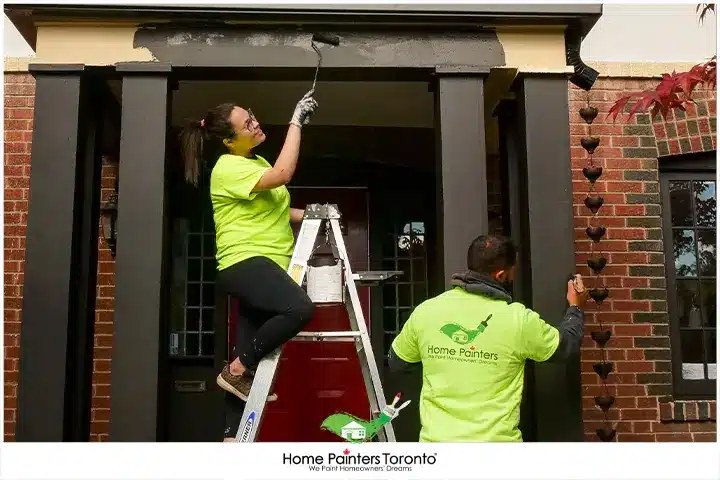
Benjamin Moore Aura Exterior at 4.4°C minimum application temperature versus the 7°C standard threshold — the cross-linking resin technology that expands the viable cold weather application window for professional crews in Toronto's late autumn
A Recent Winter Exterior Project in Etobicoke
Four Elevations, 3.9°C North Wall Deferred, Benjamin Moore Aura Exterior at 4 Mils, Completed on Schedule With 3-Year Warranty
At a project in the Islington area of Etobicoke last November, the homeowner needed the wood siding and all trim work completed before the holiday season. The job had been scheduled for September but got pushed due to a full interior repaint running long. By mid November, the window was narrow.
Our crew arrived on a Monday morning at 9 a.m. and used a non contact infrared thermometer to check surface temperatures across all four elevations. The south facing front elevation read 8.2°C at 10:15 a.m. The north facing rear wall read 3.9°C and was flagged as a no go for that day. We prioritised the south, east, and west faces across the first two days.
The product used was Benjamin Moore Aura Exterior in Low Lustre finish, applied at a wet film thickness of 4 mils per coat. The substrate moisture content was confirmed below 12% using a pin style moisture meter before any paint was opened. Overnight lows were forecast at 1°C, so all work concluded by 1:30 p.m. each day to guarantee the minimum four hour curing window above 5°C.
The north elevation was completed on day four after a warm front pushed daytime temperatures to 11°C. The entire exterior came in on schedule, and the client received a 3 year exterior warranty on the finished work. We are WSIB compliant, fully insured with $5 million general liability coverage, and every project we take on is backed by warranty backed results.
Read what GTA homeowners say about projects like this one on our client reviews page.
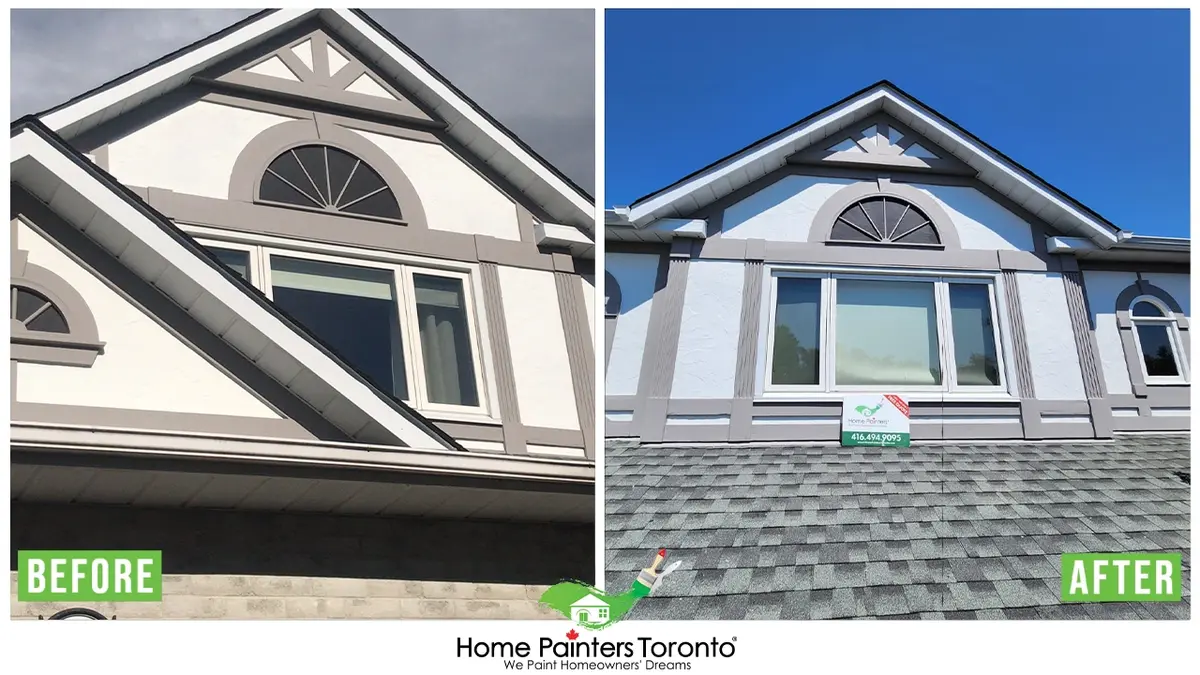
Islington project: 8.2°C south elevation at 10:15 a.m., 3.9°C north wall deferred, moisture below 12% confirmed by pin meter, work concluded by 1:30 p.m. daily for 4-hour cure window above 5°C, north elevation completed day 4 after warm front at 11°C — delivered on schedule, 3-year exterior warranty
Speed and Reliability: Getting a Fast Quote for Winter Exterior Work in Toronto
Toronto homeowners who leave exterior painting until late autumn often feel like they have run out of options. The reality is that an experienced contractor can assess your home in a same day estimate and tell you within the first visit whether the remaining weather window will work for your project or whether a strategic plan for early spring is the smarter move.
Home Painters Toronto offers same day estimates seven days a week. When you contact us for a winter exterior quote, we assess surface condition, moisture content, substrate type, and the five day forecast before committing to a start date. We do not book jobs we cannot complete correctly. That discipline is what has driven over 1,200 positive reviews on HomeStars, Google, and Houzz.
The cost of painting a house depends on size, storey count, and substrate condition. Winter pricing for exterior work does not carry a premium with HPT, but scope assessment is critical before any booking.
| Home Size | Estimated Cost (CAD + HST) |
|---|---|
| Small exterior | $2,000 – $4,000 |
| Medium exterior | $4,000 – $8,000 |
| Large exterior | $8,000 – $10,000 |
| Extra large / estate | $12,000 – $30,000 |
See our full exterior wood siding service page for details on substrate prep and cold weather considerations specific to wood clad homes.
If your project includes weatherproofing work, our caulking windows and doors service is often completed in the same mobilisation as the exterior paint job.
Why Toronto Homeowners Trust HPT for Cold Season Exterior Work
Choosing a painting contractor for cold weather exterior work requires a different level of confidence than a straightforward summer project. The margin for error is smaller and the consequences of a rushed application last for years. Home Painters Toronto has been a family owned and operated business for over 38 years. In that time, the team has completed exterior projects across every season and on every substrate type common to Toronto and the broader GTA.
Every crew member has passed a criminal background check. The company is WSIB compliant, carries $5 million in general liability insurance, and all exterior painting work comes with a 3 year warranty. The HomeStars Best of Award 2026 and Three Best Rated 2025 recognition reflect what over 17,000 satisfied clients across the GTA have experienced: honest scheduling, correct product selection, and work that holds up.
Learn more about our approach and credentials on the about Home Painters Toronto page.
We also handle deck and fence staining and exterior brick staining.
Frequently Asked Questions
Yes, under specific conditions. Surface temperatures must remain above 5°C during application and stay above that threshold for at least four hours afterward. Professional crews use cold weather rated coatings such as Benjamin Moore Aura Exterior and monitor substrate temperature with an infrared thermometer before and during work. Standard latex paint should not be applied below 7°C.
Most exterior paints fail to cure properly when surface temperatures drop below 5°C to 7°C. The risk is not just the air temperature but the wall temperature, which can be several degrees colder than the air on north facing or shaded surfaces. A surface that reads 3°C is too cold to paint, even on a 10°C afternoon. Professionals check the substrate directly, not the forecast app.
It can appear to dry, but appearance is not the same as curing. Standard acrylic latex paint below 5°C forms a surface skin without fully cross linking the film beneath. The result is a coating that looks fine through winter but lifts or peels dramatically in the first warm spring week. Cold weather rated formulations with lower minimum application temperatures exist for exactly this reason.
Cure time increases significantly in cold weather. A product that cures in two hours at 20°C may take six to eight hours to reach the same level of cure at 7°C. This is why professional crews working in autumn or early winter limit daily application windows to morning and early afternoon, ensuring the coating has as many daylight hours as possible above the minimum temperature before overnight temperatures drop.
Yes, and many experienced contractors recommend it. Weather permitting, some exterior work can proceed through late autumn. If your project needs to wait for spring, booking a quote in winter means you are first in the scheduling queue when March and April arrive. Home Painters Toronto offers same day estimates seven days a week and will give you an honest assessment of whether your project can proceed now or is better positioned for early spring.
North facing masonry walls, shaded wood siding, and any surface with visible frost or moisture should not be painted in winter. Brick and stucco require a masonry coating and are especially sensitive to substrate moisture during freeze and thaw cycles. Decks and horizontal wood surfaces collect moisture too quickly in winter to hold a new coating reliably. A professional assessment identifies which elevations and surfaces are viable and which should wait.

Ready to Book Your Exterior Painting Estimate?
Winter exterior painting in Toronto is not a gamble when the right crew, the right product, and the right conditions come together. Home Painters Toronto has the experience to assess your home honestly, apply the correct coating at the correct temperature, and back the work with a 3 year exterior warranty.
Whether your project can proceed this season or needs a firm early spring booking, the first step is a fast, no obligation quote. We offer same day estimates across the GTA, seven days a week.
Get a Fast Free Quote for Exterior Painting in Toronto
Contact Home Painters Toronto today for fast free quotes and warranty backed work on every exterior project. Same day estimates available seven days a week across the GTA.
Contact Us for a Free Quote