

Faded, Chalky Aluminum Siding: Professional Repair and Refinishing Options
Faded aluminum siding is one of the most common exterior complaints Home Painters Toronto hears from homeowners across the GTA, especially on homes built in the 1970s and 1980s when aluminum was the standard cladding choice. The dull, powdery look usually means the factory finish has broken down and is chalking, not that the panels themselves have failed. Homeowners often ask whether a quick siding repair will fix faded aluminum siding or whether the whole wall needs a full refinish. The right answer depends on how far the oxidation has spread, how the panels were installed, and what is happening underneath the surface. Home Painters Toronto has assessed this exact problem for thousands of GTA homes and carries over 1,200 positive reviews across HomeStars, Google, and Houzz for exterior work like this.
Faded, chalky aluminum siding can often be repaired with spot cleaning, priming, and targeted refinishing when oxidation is light, and panels remain straight. Heavier chalking, pitting, or colour mismatch across multiple walls usually calls for full refinishing. A professional inspection determines which approach protects the substrate and restores an even, lasting finish.
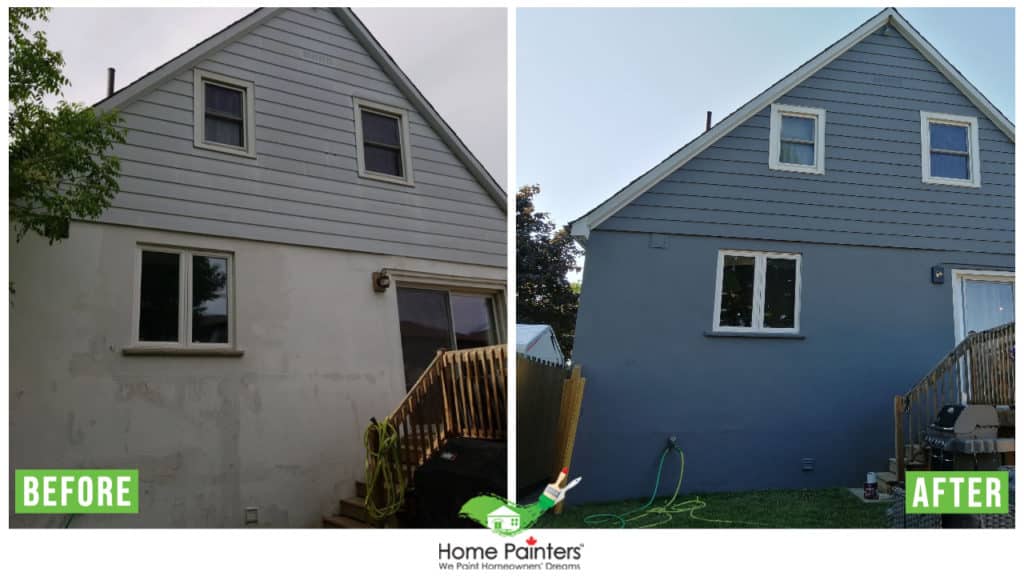
The dull, powdery look usually means the factory finish has broken down, not that the panels themselves have failed
Repairing vs Refinishing Faded Aluminum Siding: Which Fixes Chalky Panels in Toronto?
Spot repair fixes faded aluminum siding when the chalking is light and confined to one or two panels. Full refinishing is the better fix when oxidation covers most of the wall or the existing coating has failed across multiple elevations.
| Option | Best For | Typical Scope | Investment Range |
|---|---|---|---|
| Spot Repair | Light chalking on one or two panels | Wash, prime, feather blend, spot refinish | $2,000 – $4,000 |
| Partial Wall Refinish | Chalking spread across one elevation | Full wash, chalk seal primer, one coat colour matched topcoat | $4,000 – $8,000 |
| Full Refinish | Heavy chalking, pitting, or colour loss on multiple walls | Complete decontamination, primer system, two-coat topcoat | $8,000 – $10,000 |
A contractor starts by running a simple chalk assessment before recommending either option. Sherwin Williams' explanation of paint chalking describes chalking as the formation of fine, white powder on a coated surface caused by weathering, which often makes a finish look faded even when the panels underneath are sound. Some chalking is normal wear. Heavy chalking that leaves a thick residue on a dark cloth usually signals the coating has eroded past the point where a simple wash will help.
Proper substrate preparation matters as much as the coating chosen. A contractor scuff sands the glossy factory finish so a new primer bonds mechanically, then spot fills any small dents before priming. Skipping substrate preparation is the second most common reason a spot repair fails early, right behind skipping the primer itself.
Faded Aluminum Siding and the Hand Rub Chalk Test
A crew wipes a clean, dark cloth firmly across a shaded section of the wall. Light powder transfer means the chalking is still in the early stage. Heavy, thick powder that keeps transferring after repeated wipes points to advanced oxidation. This single test tells a contractor whether a section needs a light wash and spot primer or a full decontamination wash before any coating goes on. Skipping this step is a common reason a repaint on faded aluminum siding fails within a year or two.
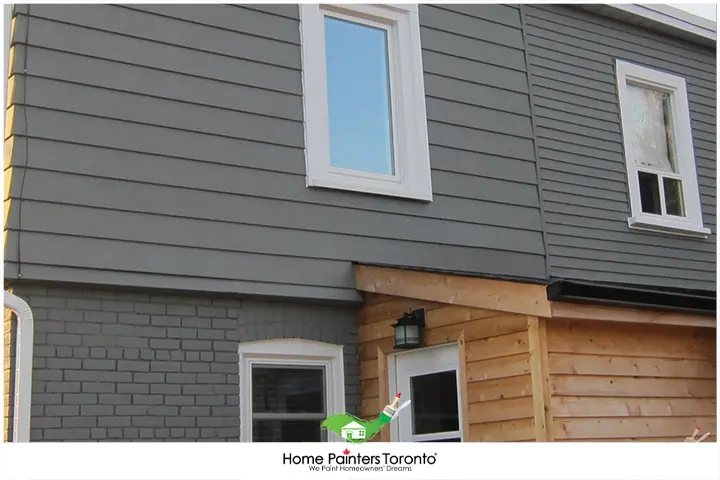
Why Washing Alone Never Stops Aluminum Siding From Chalking Again
Pressure washing removes surface chalk but does not stop new chalk from forming. The coating underneath is still breaking down from UV exposure, so the same powder returns within a season or two.
The factory finish on most aluminum siding is a thin baked-on enamel or acrylic coating, not a heavy multi-coat paint system. Once ultraviolet light and moisture start breaking down that thin layer, the pigment binder degrades faster than a resin-rich exterior paint would. A wash resets the surface look for a few months, but it does not rebuild the binder that holds pigment in place. That is why homeowners who wash faded aluminum siding every spring often see the chalk return heavier the following year, especially on south and west facing walls that take the most direct sun.
South and west facing walls see far more direct UV exposure across a Toronto summer than north facing walls tucked behind mature trees or a neighbouring property. That uneven sun exposure is why chalking on the same house often looks patchy instead of uniform, with one wall clearly duller than the rest even though every wall started with the same factory finish.
When Spot Repair Makes Sense for Faded Panels
Spot repair makes sense when chalking sits on one shaded elevation, and the panels are still straight, tightly fastened, and free of pitting or corrosion holes.
- Chalking limited to a single wall or a few panels near ground level
- No visible pitting, rust bleed, or bare metal showing through
- Panels remain flat with no oil canning or waviness
- The rest of the home's coating is still performing well
- Colour match is achievable because the existing tone has not shifted much
A spot repair still needs a proper wash, a bonding primer rated for chalky or lightly oxidized metal, and a colour-matched topcoat feathered into the surrounding panels. Skipping the primer step on bare or heavily chalked aluminum is a fast way to see peeling within a single Ontario winter.
A spot repair is also the right moment to check the flashing and house wrap behind the panel edges. Aluminum siding rarely traps moisture the way wood does, but a compromised moisture barrier at a window or corner can still let water reach the sheathing and cause the coating to fail again from behind, even after a clean repair on the surface.
When Full Refinishing Is the Smarter Call
Full refinishing is the smarter call when chalking covers most of the home, the coating has faded unevenly between walls, or pitting and small corrosion spots have started to appear on the panel surface.
Signs Refinishing Beats a Simple Repaint
- Chalking and colour loss on three or more elevations
- Visible colour difference between sun-exposed and shaded walls
- Small pinhole corrosion spots or white oxidation crust on seams
- Panels older than 30 to 40 years with multiple past repaints
- A homeowner planning to sell or wanting one consistent finish across the whole exterior
A full refinish uses a complete decontamination wash, a bonding primer built for metal, and a UV-resistant topcoat across every elevation so the colour reads evenly from every angle. Coatings built with Benjamin Moore's Aura Exterior UV-resistant resin technology are formulated specifically to slow the pigment breakdown that causes chalking, which matters most on aluminum because the substrate itself will not forgive a thin or poorly bonded coat. On a full refinish, every panel gets the same prep and the same number of coats, so there is no patchwork of old and new finish.
On aluminum with early pitting or fine surface pinholes, some contractors move to an elastomeric coating system instead of a standard acrylic topcoat, since the added film build bridges small imperfections that a thinner coat would telegraph through. Every coating used on an occupied Toronto home should also meet current VOC compliance standards for low-emission exterior products, which keeps the job safe for anyone living on site during application.
Cost Comparison: Spot Repair vs Full Refinishing for Faded Aluminum Siding
Four factors drive the price difference between spot repair and full refinishing: prep time, primer coverage, number of topcoats, and the number of elevations involved. More elevations and heavier chalking always push the project toward the higher end of the range.
| Factor | Spot Repair | Full Refinish |
|---|---|---|
| Prep time | 1 to 2 hours per panel | Full day wash and chalk seal |
| Primer | Spot bonding primer | Full elevation acrylic bonding primer |
| Topcoat | Colour matched touch up | Two-coat 100% acrylic system |
| Investment Range | $2,000 – $4,000 | $8,000 – $10,000 |
Homeowners in Toronto and across the GTA typically budget within these investment ranges for exterior services of this scope. A written, on-site estimate is the only way to know which range applies to a specific home, since wall count, access, and chalking severity all shift the number.
Access also plays a role. Two-storey walls, tight side yards, or gardens close to the foundation add setup time for ladders or staging, which shows up in the labour portion of either range. A contractor who inspects the property in person before quoting accounts for all of this instead of guessing from a phone call.
A Recent Faded Aluminum Siding Refinish in Etobicoke
- At a recent project on a bungalow near Etobicoke's Longbranch neighbourhood, the crew found chalking across the south and west walls and only light powder on the shaded north side.
- The homeowner had already tried two seasonal washes without lasting results.
- Before priming, the crew measured surface moisture with a pin-type meter and recorded readings between 12 and 16 percent on the sun-exposed panels, high enough to hold off priming for a full day of drying.
- The team applied a bonding primer rated for chalky aluminum, followed by two coats of Benjamin Moore Aura Exterior in Low Lustre finish, targeting a combined dry film thickness of about 4 mils. Application happened at an ambient temperature of 18°C, within the product's recommended range.
- The crew worked from staging along the south wall to keep coating thickness even across the full elevation, since uneven application is a common cause of blotchy chalking on future recoats.
Eighteen months later, the colour still reads even across every wall, with no return of heavy chalking.
Home Painters Toronto is WSIB compliant and fully insured on every exterior project, including aluminum refinishing work like this one, and the finish carries warranty-backed results consistent with our standard exterior coverage.

Eighteen months later, the colour still reads even across every wall, with no return of heavy chalking
How Toronto's Freeze-Thaw Winters Accelerate Aluminum Oxidation
Toronto's freeze-thaw cycle speeds up chalking on aluminum siding because the metal expands and contracts faster than the coating bonded to it, which stresses the paint film and opens tiny cracks that let in more moisture and UV light.
Freeze-Thaw Cycling and Coating Adhesion Loss
Aluminum has a higher rate of thermal expansion than most coatings applied over it. Each time the temperature swings from a mild afternoon to a cold overnight low, the panel moves slightly more than the paint film on top of it. Over dozens of freeze-thaw cycles each winter, that repeated micro movement fatigues the bond between coating and metal. Microscopic cracks form long before any peeling is visible to the eye. Those cracks let in moisture and UV light, which speeds up the chalking process described earlier. Homes on unshaded, wind-exposed elevations in Scarborough, Mississauga, and North York tend to show this pattern earliest because they see the widest daily temperature swings.
Choosing a Contractor for Faded Aluminum Siding Repair in the GTA
The right contractor for faded aluminum siding repair carries WSIB coverage and liability insurance, inspects the chalking in person before quoting, and can explain the primer and coating system by name instead of describing it in vague terms.
- WSIB compliant with proof of coverage available on request
- Full liability insurance covering the crew and the property
- An on-site inspection and chalk test before any written quote
- A named primer and topcoat system, not a generic "exterior paint" line item
- A written warranty with specific terms, not a verbal promise
- Local project history on aluminum siding specifically, not just wood or vinyl
A contractor who only works in vinyl or wood siding may not carry the right primer system for chalky metal, and using the wrong primer on aluminum is a fast way to see early peeling. Ask any prospective contractor how many aluminum-specific jobs they have completed in the past year and whether they can name the primer and topcoat system by product, not just by category.
Home Painters Toronto has completed exterior refinishing work across Toronto, Mississauga, Etobicoke, and the wider GTA for 38+ years as a family-owned company, and every crew member passes a criminal background check before stepping onto a client's property.
Faded aluminum panels are often part of a bigger exterior picture. Related services include stucco siding, caulking around windows and doors, and soffit and fascia repair.
Frequently Asked Questions
Most faded aluminum siding can be restored without full replacement. Light chalking usually needs a proper wash, bonding primer, and spot refinish. Heavier chalking across multiple walls typically needs a full refinish instead of a full tear-off, since the panels themselves are often still structurally sound even after the coating has failed.
Chalking happens when ultraviolet light and weather exposure break down the binder in the coating, leaving the pigment as a loose powder on the surface. It shows up as a dull, white residue that transfers to a hand or cloth when rubbed across the panel.
Cost depends on how many elevations are affected and how heavy the chalking is. Spot repairs on a single wall generally fall in a lower exterior repair range, while a full refinish across every elevation moves into a broader exterior painting range. A written, on-site estimate gives the most accurate number for a specific home.
Pressure washing removes loose surface chalk and improves the look short term, but it does not rebuild the coating underneath. Without a bonding primer and a fresh topcoat, the chalking typically returns within a season or two, especially on sun-exposed walls.
A properly prepped and coated aluminum refinish, using a bonding primer and a UV-resistant topcoat, commonly performs well for many years before chalking becomes noticeable again. Local exposure, wall orientation, and coating quality all affect how long the finish holds up.
Not usually. Chalking is a coating problem, not a structural one. Panels only need replacement when there is pitting, corrosion holes, or physical damage like dents and warping underneath the faded finish.
Late spring through early autumn works best, since most bonding primers and topcoats need stable temperatures above about 10°C to cure properly. Scheduling outside that window risks poor adhesion and an uneven finish once cold weather returns.

Get a Professional Assessment for Faded Aluminum Siding
Faded, chalky aluminum siding almost always points to a coating problem, not a reason to tear off the panels. The right fix depends on how far the chalking has spread, how the panels have held up, and what a proper on-site inspection finds underneath the surface.
Home Painters Toronto assesses every faded aluminum wall in person, tests the chalking, and recommends the option that will actually last through another Toronto winter. Every project is backed by fast, free quotes and warranty-backed work, plus the WSIB compliance and insurance coverage described above.
Contact Home Painters Toronto to book a free, on-site assessment for faded or chalky aluminum siding anywhere in the GTA.
Get a Free Estimate