

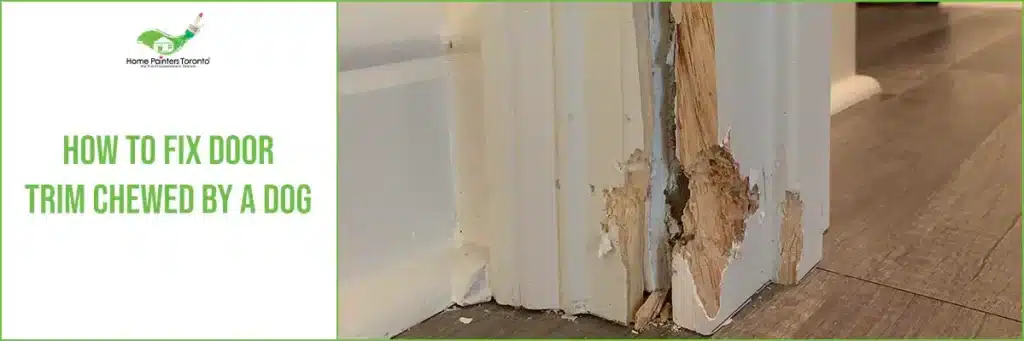
Dog-chewed door trim is a common issue for homeowners, especially in high-traffic areas like entryways and interior doors.
While the damage may look severe, many cases can be repaired with the right approach. The key is knowing when a simple repair is enough and when full replacement is the better option.
This guide walks through how to fix door trim chewed by a dog, including repair techniques and finishing steps to restore the original look.
If you’d rather have the repair done cleanly and professionally, our team provides exterior wood repair and carpentry and trim restoration services for long-lasting results.
Why Dogs Chew Door Trim
Understanding why the damage happened can help prevent it in the future.
Common reasons include:
- separation anxiety
- boredom
- teething (for younger dogs)
- stress or confinement
Door frames and trim are often targeted because they are near entry points and high-activity areas.
Can You Repair Chewed Door Trim or Should You Replace It?
Not all damage requires full replacement.
Repair is usually possible if:
- the damage is surface-level
- the structure of the trim is intact
- only small sections are affected
Replacement may be needed if:
- the trim is deeply gouged
- large sections are missing
- the wood is split or weakened
In many cases, a combination of repair and repainting can restore the trim effectively.
Tools and Materials Needed
For most repairs, you will need:
- wood filler or epoxy filler
- putty knife
- sandpaper
- primer
- paint matched to existing trim
Using the right materials ensures the repaired area blends with the surrounding trim.
How to Fix Door Trim Chewed by a Dog (Step-by-Step)
Step 1: Assess the Damage
tart by examining how deep the damage goes.
Identify whether the trim can be rebuilt or if sections need to be replaced.
Step 2: Remove Loose or Damaged Material
Clean the damaged area by removing splintered or loose wood.
This helps create a stable surface for repair materials to adhere to.
Step 3: Fill and Rebuild the Surface
Use a high-quality wood filler or epoxy to rebuild the damaged area.
Apply in layers if necessary, allowing each layer to set before adding more.
This step is essential for restoring the original shape of the trim.
Step 4: Sand and Smooth the Area
Once the filler is fully cured, sand the area until it is smooth and flush with the surrounding trim.
Proper sanding ensures the repair is not visible after painting.
Step 5: Prime and Paint the Trim
Apply primer to the repaired area before painting.
Then apply paint that matches the existing trim.
Blending the finish is key to making the repair look seamless.
If the trim is part of a larger interior update, services like interior painting Toronto can help ensure a consistent finish throughout the space.
Common Mistakes When Repairing Chewed Trim
Many repairs fail due to avoidable mistakes.
These include:
- skipping surface preparation
- applying filler too thick at once
- not sanding properly
- skipping primer before painting
Taking the time to do each step correctly improves the final result.
When to Call a Professional
DIY repair can work for small damage, but professional help is often the better option for more visible or extensive issues.
Consider hiring a professional if:
- the trim is heavily damaged
- you want a seamless finish
- multiple areas need repair
- repainting is required across a larger space
Professionals can match finishes and restore trim so it blends naturally with the rest of your home.
Conclusion: Restoring Your Trim Properly
Fixing door trim chewed by a dog is a manageable project when approached correctly.
The key steps include:
- proper preparation
- careful rebuilding of the damaged area
- sanding and finishing
- matching the final paint
Done properly, the repair can blend in seamlessly and restore the look of your trim.
If you want professional results without visible patchwork, contact Home Painters Toronto for expert exterior wood repair and carpentry and painting services.
Frequently Asked Questions
Can chewed door trim be repaired without replacing it?
Yes, in many cases surface damage can be repaired using wood filler and proper finishing techniques.
What is the best filler for chewed wood trim?
High-quality wood filler or epoxy is typically used to rebuild damaged areas.
How do you match paint on repaired trim?
Using the same paint type and finish as the existing trim helps blend the repair.
When should trim be replaced instead of repaired?
Replacement is recommended when the damage is deep, widespread, or affects the structural integrity of the trim.
How long does trim repair take?
Small repairs can often be completed in a few hours, while larger repairs may take longer depending on drying time.