

Why Exterior Painting in Oakville Is Never Just About Looks
Skipping exterior painting in Toronto can lead to higher long-term costs by exposing your home to moisture damage, wood rot, and premature exterior deterioration. Many homeowners across the GTA put off this project to save money, but postponing it almost always makes the final bill much larger. Paint is not decoration. On an Oakville home, it is the first line of defence against moisture, freeze-thaw cycles, and the kind of slow structural damage that stays hidden until it becomes expensive to fix.
Whether your home is a post-war bungalow in South Oakville, a Victorian semi near the town centre, or a newer build in River Oaks, the exterior surfaces need consistent protection. Our crews see firsthand what happens when that protection lapses. The results are rarely cosmetic.
For Oakville and GTA homeowners, understanding what exterior painting Toronto professionals actually protect against starts with knowing what is at stake. Here is a summary of what this article covers:
- Why exterior paint fails faster in Oakville's climate
- The structural and financial damage that builds when painting is skipped
- Warning signs to watch for before damage becomes serious
- Why professional prep work makes the difference between a 5-year job and a 10-year job
- How to plan your next exterior project with confidence
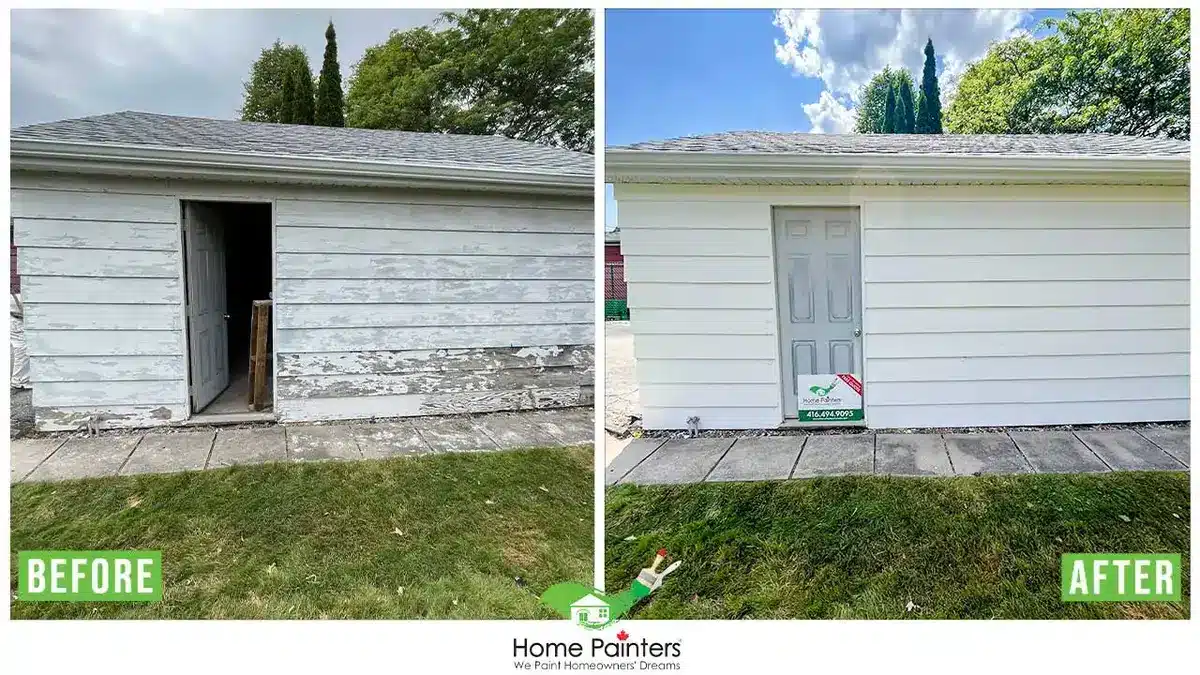
Paint is not decoration — on an Oakville home it is the primary moisture barrier between your siding, trim, and the freeze-thaw cycles that compound damage every winter
How Oakville's Climate Puts Your Exterior Finish at Risk
Ontario's freeze-thaw cycle is one of the harshest pressures any exterior surface faces. Oakville sits close to Lake Ontario, which means higher humidity through the warmer months and sudden temperature swings from late fall through early spring. Paint that is already aging becomes brittle, cracks, and allows water to penetrate behind the surface film.
When water gets behind paint on wood siding, it has nowhere to go. It freezes in winter, expands, and pushes the paint away from the substrate. Each cycle widens the gap. By the time peeling is visible from the street, moisture has likely been active beneath the surface for one or more seasons already.
Homes with aluminum or vinyl siding are not immune either. Caulking around windows, doors, and trim deteriorates independently of the siding material. Failed caulking is one of the most common moisture entry points on older GTA homes, and it often goes unnoticed until paint failure makes it obvious.
What Actually Happens When You Delay Exterior Painting
What actually happens when you delay exterior painting is that moisture, UV exposure, and temperature changes continue breaking down the surface, causing faster paint failure, wood damage, and more expensive repairs over time. The sequence is predictable: the paint film thins and loses elasticity, small cracks form, moisture enters the substrate, wood fibres absorb water and begin to swell, and paint adhesion fails across larger areas.
At that point, a straightforward repaint becomes a repaint plus repair. Our exterior residential painting services teams in the GTA regularly assess homes where one painting cycle was skipped and the repair scope had roughly doubled.
| Stage | What Is Happening | Typical Outcome |
|---|---|---|
| Early (1–2 years overdue) | Surface chalking, minor cracking | Standard repaint with light prep |
| Moderate (3–4 years overdue) | Peeling, exposed wood grain, failing caulk | Repaint plus caulking replacement and spot priming |
| Advanced (5+ years overdue) | Active rot, mould, structural softening | Carpentry repairs required before painting can begin |
Each stage adds time, labour, and material cost to the project. The homeowner who waits an extra two or three years often pays significantly more than they would have if they had acted on schedule.
The Real Financial Difference: Timely Repainting vs. Delayed Action
A timely exterior repaint on a standard Oakville home, when surfaces are in good shape, involves straightforward prep, prime, and two coats. When wood rot has set into trim, window frames, or soffits, the project now includes carpentry repairs before a single drop of paint is applied. Material and labour costs climb significantly for that additional scope.
- Pressure wash and surface cleaning
- Scraping loose paint, light sanding
- Spot caulking and priming
- Two coats of finish paint
- Predictable scope and timeline
- Lower overall project cost
- 7 to 10 years of protection from the result
- Plus carpentry repairs for rotted trim and sills
- Plus full caulking replacement throughout
- Plus stripping where paint has failed completely
- Plus wood replacement on fascia and soffits
- Plus extended timeline and additional crew days
- Plus mould remediation if moisture reached framing
- Same finish result — at much higher total cost
Understanding the cost of painting a house relative to the cost of deferred repairs makes this trade-off concrete. Painting on a regular schedule is almost always the lower-cost path over any 10 to 15 year horizon.
The Hidden Structural Costs of Moisture Damage
Wood rot is the consequence most homeowners underestimate. Once moisture reaches untreated wood framing, trim, or siding, biological decay begins quickly. According to the Natural Resources Canada guide on exterior wall moisture, signs of moisture problems include staining, mould growth, and rot that often go undetected until surfaces receive a full inspection. By that point, the damage extends well beyond what paint alone can address.
In Oakville homes, the areas most vulnerable are:
- Wood window trim and sills: Constant exposure to rain and condensation makes these early failure points
- Soffits and fascia boards: Water from failed gutters or ice dams concentrates here and stays longer
- Porch posts and railings: Ground splash and standing water accelerate decay at the base
- Wood siding panels: Especially on north and west-facing elevations that receive less drying sun
Proper exterior caulking and sealant work closes the gaps that allow moisture to start this cycle. It is a fraction of the cost compared to structural repairs later, and it is always part of a professional exterior paint job done correctly. The Ontario Building Code's provisions on protection of cladding from moisture underscore why protective coatings on wood cladding are not optional maintenance. They are an active moisture-control measure.
In my experience walking Oakville properties before quoting, the homes that need the most costly repairs are rarely the oldest ones. They are the ones where painting was delayed three or four years during a stretch of "everything looks fine." By the time peeling is obvious from the driveway, I am almost always looking at carpentry work before I can touch a brush. I always recommend homeowners schedule a walkthrough well before they think they need one.
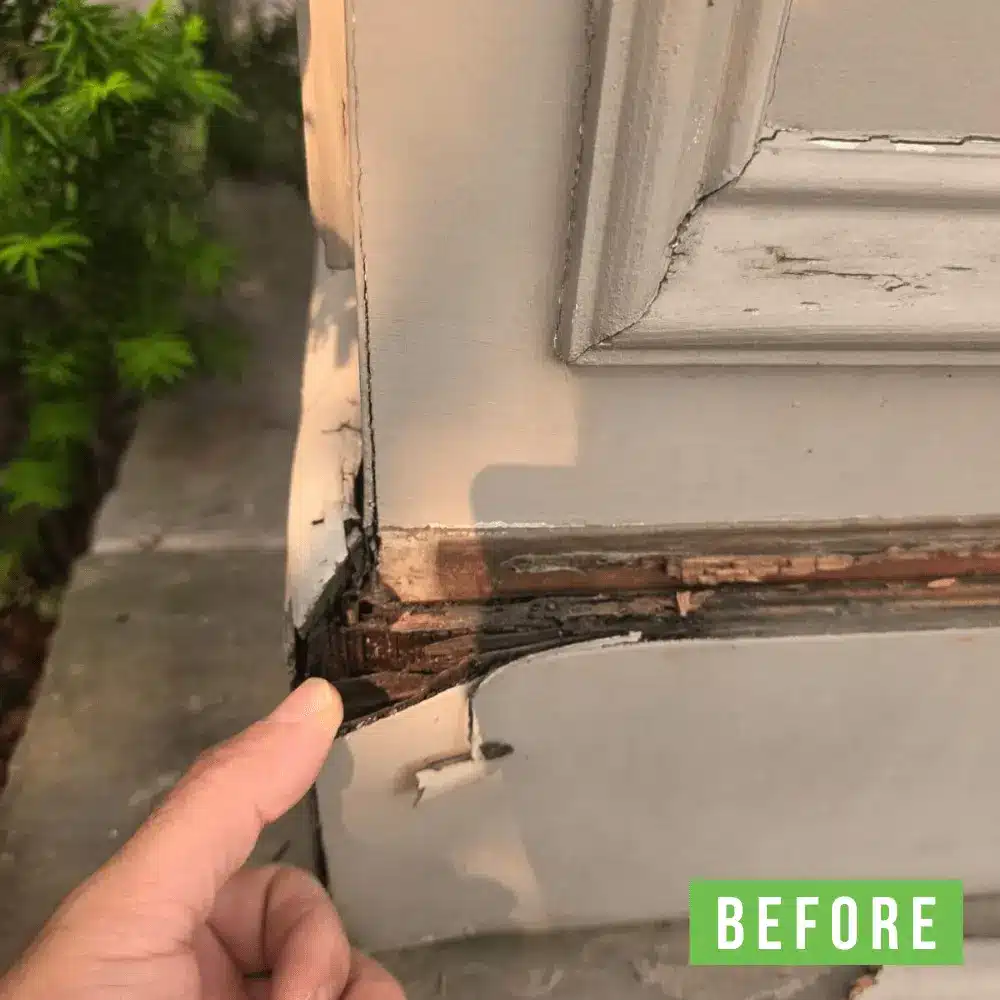
By the time wood rot is visible on soffits, fascia, and window sills from the street, the damage has typically been active for one or more seasons — and carpentry now precedes paint
Skipping Paint Also Affects Your Deck, Fence, and Outbuildings
The exterior paint conversation often focuses on the house itself. Decks, fences, and detached garages, however, face the same moisture pressures with even less protection. Untreated or under-maintained wood decks are among the first structures to show advanced rot, because they are horizontal surfaces that collect and hold water.
Proper deck and fence staining protects these surfaces and keeps them structurally sound through multiple seasons. Replacing deck boards costs significantly more than maintaining the finish on a regular cycle. Many homeowners coordinate their house exterior painting with deck and fence maintenance in the same project. This approach is more efficient and often more cost-effective than treating each surface as a separate job year by year.
Signs Your Oakville Home Needs Exterior Painting Now
Most homeowners do not need to guess whether their home is due. Walk the perimeter and look for these warning signs. Any one of these means the maintenance window is open. More than two or three means it is closing fast.
- Peeling or bubbling paint: Moisture is already present beneath the film
- Chalking: A powdery residue on your hand after touching the siding means the paint binder has broken down
- Fading or uneven colour: UV degradation means the film is thinning and losing protective capacity
- Visible wood grain through paint: The surface is no longer fully sealed
- Cracks around windows and door frames: Caulk has failed and water is entering
- Soft or spongy wood: When pressed lightly at trim or sill edges, early rot has started
How Often Should You Paint Your Home's Exterior in the GTA?
Most Oakville and GTA homes need exterior repainting every 7 to 10 years under normal conditions. That range shifts based on several factors:
- Surface material: Wood siding typically needs attention more frequently than fibre cement or newer composites
- Sun exposure: South and west-facing elevations fade and degrade faster than shaded sides
- Previous paint quality: Homes painted with lower-grade products may need repainting in 5 to 7 years
- Prep quality from the last job: Inadequate prep shortens the life of any coat applied over it
Homes with aluminum siding painted on a proper maintenance cycle can often extend repainting intervals, because the substrate itself does not rot. Oxidation and chalk buildup still break down the paint film, however, and must be addressed on schedule.
One pattern I see repeatedly on Oakville properties is homeowners relying on the original paint job from when the house was built or last sold. Builder-grade exterior coatings are often applied for appearance, not longevity. I have assessed homes that looked fine in a real estate listing, showing significant substrate damage within two years of the sale. Always get a current condition assessment rather than going by the listed age of the last paint job.
Does Exterior Paint Actually Protect Against Structural Damage?
Yes, exterior paint forms a physical barrier between vulnerable building materials and rain, humidity, UV radiation, and temperature cycling. Wood siding without a sealed paint or stain coat absorbs moisture directly. That moisture expands and contracts with temperature changes, splits wood grain, and creates the conditions for fungal decay.
In Oakville homes with exterior wood siding maintained on a proper cycle, the wood substrate stays dimensionally stable longer. Professional painters use primers designed to penetrate and bond to wood fibre, not simply sit on top. The topcoat then provides a flexible, weather-resistant membrane that breathes without cracking. This is also why surface preparation matters as much as the paint itself. A high-quality topcoat applied over a compromised surface will still fail prematurely.
Why Professional Prep Work Changes the Outcome
Professional prep work changes the outcome because proper cleaning, sanding, priming, and caulking create the stable surface needed for exterior paint to bond correctly and last for years instead of failing prematurely. DIY exterior painting typically shortens or skips the prep phase — not because homeowners are careless, but because it is time-consuming, physically demanding, and requires specific knowledge to execute correctly. Painting over failed caulk or unsound surfaces traps the problem rather than solving it.
Working at height on multi-storey homes carries real safety risk. Professional crews are equipped and insured for ladder and scaffold work. For most Oakville homeowners, the combination of prep quality, finish quality, safety, and warranted results makes professional exterior painting the practical choice.
If your deck, fence, or outbuildings also need attention, exterior wood repair and carpentry can often be coordinated alongside the main paint project to address everything in a single mobilization.
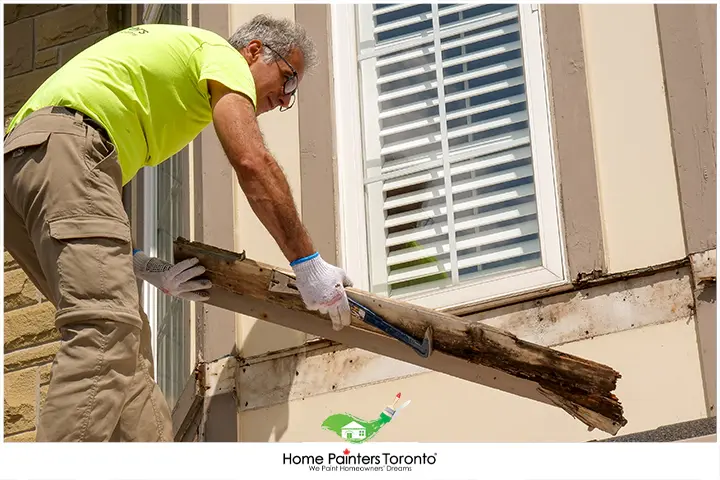
Professional prep — thorough cleaning, caulking, priming, and surface repair — is what closes the gap between a 5-year and a 10-year finish on an Oakville exterior
Oakville Housing Stock: When Each Surface Type Needs Attention
Oakville's housing stock spans a wide range of exterior materials. Each has its own maintenance cycle and vulnerability profile.
Wood Siding and Trim
The most moisture-sensitive material. Needs repainting every 3 to 7 years in Ontario's climate. Absorbs water directly when paint fails. Victorian homes and older detacheds in Oakville often have original wood trim that needs careful, regular attention.
Aluminum Siding
Does not rot but oxidizes and chalks over time. Chalk residue blocks adhesion if not cleaned properly before repainting. Can be extended slightly longer than wood if maintained on a consistent cycle with proper prep.
Brick and Stucco
Porous surfaces absorb moisture at mortar joints and surface voids. Unpainted or poorly sealed brick is susceptible to spalling during freeze-thaw cycles. Proper breathable masonry coatings are the right product for these surfaces.
Vinyl Siding
More resistant to rot but not immune to UV degradation. Faded vinyl loses its UV resistance. When repainting, the right flexible product for thermal expansion is essential to prevent cracking.
Why Oakville Homeowners Choose Home Painters Toronto
Home Painters Toronto has been working with GTA homeowners for over 38 years. Crews are experienced with the full range of Oakville housing stock, from older wood-sided homes in established neighbourhoods to newer construction in growing communities. Every exterior project begins with a thorough inspection of the surfaces, not just a quote based on square footage.
The company backs its exterior work with a warranty, so homeowners are not managing problems that surface shortly after the job is complete. Prep work is not rushed. Caulking, priming, and surface repairs are built into the project scope, not added as extras.
If you are noticing early signs of paint failure, or if you simply want to understand where your home stands, a professional consultation is the right first step.
Frequently Asked Questions About Exterior Painting in Oakville
Most Oakville homes need professional exterior repainting every 7 to 10 years. Homes with wood siding, significant sun exposure on south and west faces, or lower-grade paint from a previous job may require attention closer to the 5 to 7 year mark. The most reliable way to determine your timeline is a professional inspection, because surface condition matters more than calendar intervals.
Skipping exterior painting in Oakville for too long leads to paint film failure, moisture intrusion, wood rot, and mould growth. Once moisture reaches the wood substrate through cracked or peeling paint, each Ontario freeze-thaw cycle accelerates the damage. What begins as a standard repaint can become a carpentry and repair project before painting can even begin.
Key signs include peeling or bubbling paint, chalking on the surface, faded or uneven colour, visible wood grain showing through the paint film, cracked caulking around windows and doors, and soft or spongy wood at trim edges. If you notice two or more of these, the repainting window is closing and repairs may already be needed.
Yes. A properly applied exterior paint system seals the wood substrate against moisture, which is the primary driver of mould growth and rot. Professional prep work, including priming bare wood and replacing failed caulking, is what gives this protection its longevity. A paint coat applied without proper prep will not provide reliable moisture protection regardless of paint quality.
Late spring through early fall is the ideal window for exterior painting in Oakville. Temperatures should be consistently above 10 degrees Celsius both during application and for at least 24 to 48 hours afterward for proper curing. June through September typically offers the most reliable conditions. Some years allow work into October, but this depends on the specific forecast and product requirements.
Professional exterior painting in Oakville is worth the cost for most homeowners. Prep work alone, which includes pressure washing, scraping, priming, and caulking, is where most DIY projects fall short. Skipped prep means shorter paint life and more frequent repainting. Add the safety considerations of working at height and the cost of quality materials, and the gap between professional and DIY narrows considerably. For a warranted result that lasts the full expected lifespan, professional work is the stronger investment.

Exterior Painting in Oakville Is Maintenance, Not an Optional Upgrade
Exterior painting in Oakville is not a cosmetic project you schedule when the budget allows. It is a recurring maintenance task that protects your home's structure, its value, and the materials you have already invested in. Every year that passes without a proper protective coat is a year the substrate is absorbing moisture, accumulating damage, and increasing the scope of work required to bring it back.
The math is consistent. Maintaining paint on schedule costs less than repairing what happens when you do not. Professional preparation and finish quality extend the life of each coat, reduce the frequency of the cycle, and ensure your home is protected through GTA winters and summers alike.
If your Oakville home is showing signs of paint failure, or if you simply do not know when it was last professionally painted, now is the right time to get a clear picture.
Get Your Free Exterior Painting Estimate Today
Contact Home Painters Toronto for a free exterior painting estimate and protect your home before the next season gives damage another opportunity to grow.
Contact Us for a Free Estimate