

Toronto homeowners who collect three painting quotes often get three prices built three different ways: one per room, one per square foot, and one flat total. These home painting pricing methods can make two quotes for the same Scarborough semi look thousands of dollars apart, even when the real scope is close. At Home Painters Toronto, we have painted 20,000+ homes across Toronto and the GTA since 1991, and our 1,200+ positive reviews on HomeStars, Google, and Houzz come from homeowners who wanted prices they could understand. The method on the page matters less than the scope under it: measured surface area, prep, product, and coat count. This guide explains how each method works, where each one hides risk, and how to compare quotes that were built differently.
Home painting companies price a job in one of three ways: per room, per square foot, or as a flat scope-based total. Per-room pricing suits simple interior repaints. Per-square-foot pricing suits large open surfaces. Flat pricing suits mixed or older homes. The fairest quote names the surfaces, prep, product, and coats, whichever method it uses.

The pricing method matters less than the scope written under it
The Three Common Home Painting Pricing Methods
Home painting companies use three common pricing methods: a set rate per room, a rate per square foot of surface, or a flat total built from a written scope. Each method starts from the same inputs. A painter still has to estimate labour hours, paint volume, and prep time. The difference is how those inputs get packaged into the number you see.
| Method | How It Works | Best For | Main Blind Spot |
|---|---|---|---|
| Per room | A set range for each room type, such as a bedroom or bathroom | Interior repaints with standard room sizes | Ceilings, trim, and repairs may sit outside the room price |
| Per square foot | A rate multiplied by a measured area | Large, open walls or long runs of siding | Floor area and paintable area are not the same number |
| Flat or scope-based | One total built from a written list of surfaces, prep, product, and coats | Exteriors, older homes, and mixed projects | Only as clear as the scope written under it |
Most Toronto companies blend methods behind the scenes. A per-room price is usually built from square footage and labour hours, then rounded into a range. Flat quotes often start with per-room or per-area math and then add repairs and access costs. Knowing which method a quote uses tells you which questions to ask next.
How Per-Room Painting Prices Work in Toronto
Per-room pricing gives each room type a set price range based on its typical size, surface count, and labour time. It is the easiest method for a homeowner to read, which is why many interior painting quotes use it. Our published interior ranges at Home Painters Toronto look like this, in CAD plus HST:
| Room or Surface | Typical Range (CAD + HST) |
|---|---|
| Living or dining room | $400–$900 |
| Bedroom | $400–$800 |
| Bathroom | $250–$500 |
| Trims, doors, and baseboards | $700–$1,200 |
| Ceilings | $1,000–$1,300 |
These ranges are a starting point, not a final price. A bedroom with a vaulted ceiling, a dark-to-light colour change, or plaster cracks will sit at the top of its range or above it. Our interior painting calculator uses the same room-based logic to give a quick ballpark before an estimate visit. The walkthrough then confirms what each room really needs.
What a Per-Room Quote Often Leaves Out
A per-room quote often covers walls only, so ceilings, trim, doors, and closets can show up as separate lines or not at all. Hallways, stairwells, and landings are the most common gaps because they are not rooms in the usual sense. Confirm that each of these items is either included or priced on its own line:
- Ceilings, which often carry their own line item on an interior quote.
- Closet interiors and shelving, which take slow brush work.
- Stairwells and two-storey foyers, which need extension ladders or scaffold planks.
- Drywall repair beyond small nail holes, such as settlement cracks or water-stained patches.
- Colour changes that need a primer coat before two finish coats.
How Per-Square-Foot Painting Prices Work
Per-square-foot pricing multiplies a set rate by a measured area, which makes it simple to scale across small and large jobs. It works well on large, open surfaces like long runs of siding, basement walls, or open-concept main floors. Commercial painters use it often because office walls repeat in predictable patterns. The catch is that two companies can measure very different areas and both call it square footage.
Floor Area vs. Paintable Surface Area
Floor area and paintable surface area are different numbers, and the gap between them explains many confusing quotes. A 12-by-12-foot bedroom has 144 square feet of floor. With 8-foot ceilings, that same room has 384 square feet of wall surface before doors and windows come out. Add the ceiling, and the paintable area reaches 528 square feet, about 3.7 times the floor area.
A low rate based on floor area can end up costing more than a higher rate based on true wall area. Always ask which area the rate applies to and how it was measured. Paint volume follows the same math. Benjamin Moore's Aura Interior technical data lists a spread rate of 350 to 400 square feet per gallon, so two coats on that 528-square-foot bedroom need close to 3 gallons.
Exterior per-square-foot quotes raise the same issue. Some companies measure the home's footprint, while others measure each wall face, gable, and dormer. Soffits and fascia are usually measured in linear feet, so they often get missed or estimated loosely. A per-square-foot exterior quote should state what was measured and whether trim is included.
How Flat-Rate or Scope-Based Painting Prices Work
Flat-rate pricing gives one total for a defined scope of work, built from measured surfaces, prep, repairs, product, and coats. It is the method most often used for exterior projects and older homes, where every elevation and trim detail is different. A good flat quote shows its work in the written scope even though it shows one number. A weak one hides everything behind a single line like "paint exterior, two coats." Our exterior painting quotes use scope-based ranges tied to house size:
| Home Size | Typical Exterior Range (CAD + HST) |
|---|---|
| Small | $2,000–$4,000 |
| Medium | $4,000–$8,000 |
| Large | $8,000–$10,000 |
| Extra large | $12,000–$30,000 |
Size is only the first filter. Storey count, siding type, and the condition of soffits and fascia all move a flat price within its range. Flat pricing protects homeowners best when the contract lists every surface included. Under Ontario's Consumer Protection Act, a final renovation price cannot run more than 10% over a written estimate in your contract unless you agree to new work or a new price. That makes a detailed flat estimate one of the strongest cost protections a homeowner can get.
Why Two Painting Quotes for the Same House Can Differ by Thousands
Two painting quotes for the same house usually differ because the companies priced different scopes, not because one is simply cheaper. Condition, prep depth, product tier, coat count, access, and crew structure all shift the total. Our guide to the cost of painting a house covers full-home ranges, and the table below shows how each factor moves a price.
| Factor | Impact on Cost | What to Check |
|---|---|---|
| Surface condition | High | Peeling, cracks, or bare wood add scraping, filling, and priming hours |
| Prep depth | High | Sanding, caulking, and spot-priming should be listed as tasks |
| Product tier | Medium | The quote should name the brand, product line, and sheen |
| Number of coats | Medium to high | One coat vs. two can double paint volume and roller time |
| Access | Medium | Stairwells, high peaks, and third storeys need ladders or scaffolding |
| Crew structure | Medium | In-house, WSIB-covered crews carry real payroll and insurance costs |
| Repairs | Varies | Rot, drywall damage, or loose siding should be separate line items |
How Home Painting Pricing Methods Handle Prep and Repairs
All three home painting pricing methods can hide prep and repair costs when the scope is vague. A per-room price may assume walls need only light patching. Per-square-foot rates often assume sound, previously painted surfaces. Flat totals may bundle repairs so you cannot see them.
Coat count is where these assumptions show up fastest. Benjamin Moore's Aura Exterior data sheet calls for two coats on bare substrates, while sound, previously painted surfaces can take one or two. A quote that assumes one coat on weathered siding will look cheaper, but the film will be too thin to last. Ask every company how many coats it priced and on which surfaces.
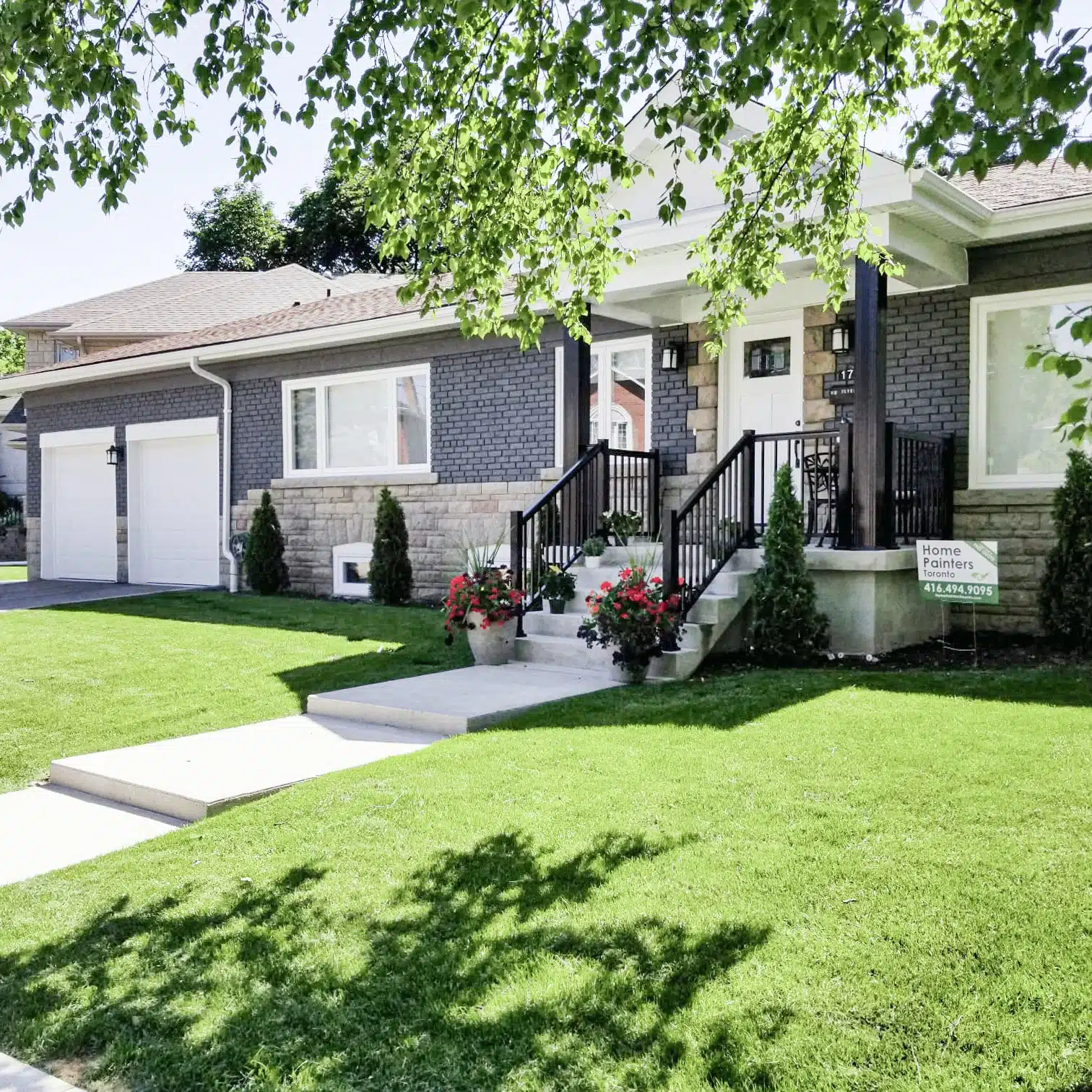
A quote is only as clear as the scope measured and written underneath it
How to Compare Quotes That Use Different Pricing Methods
The best way to compare quotes built on different pricing methods is to turn each one into a full project total tied to the same written scope. Once every quote covers the same surfaces, prep, product, and coats, the numbers become comparable. Work through these steps with each quote in hand:
- Ask each company for a total project price, including HST, even if the quote is per room or per square foot.
- List every surface in one column: walls, ceilings, trim, doors, closets, soffits, fascia, and siding. Mark which quote covers each one.
- Confirm the measured area and whether it is floor area or paintable surface area.
- Check the named product, sheen, and number of coats on each quote.
- Look for repairs listed as separate lines, and ask how unlisted repairs will be priced.
- Confirm insurance, WSIB coverage, and warranty terms in writing.
Consumer Protection Ontario advises getting at least three written estimates, and this checklist makes those estimates line up. A quote that will not list its surfaces is a warning sign, whichever method it uses. Our painting FAQ answers common questions about scheduling, prep, and payment. It also helps to ask each company who will actually be on site.
Watch for one more pattern. Some quotes lead with a low unit rate and leave the total blank. Others show a low total with a scope so thin that change orders become likely. Both make the first number look better than the final bill.
What a Recent North York Quote Comparison Showed Us
A recent exterior quote comparison in Willowdale showed how the same bungalow can be priced three ways and still miss the same repair. The homeowners had a per-square-foot quote, a one-line flat quote, and our scope-based estimate for aluminum siding, trim, soffits, and fascia. The per-square-foot quote used the home's 1,400 square feet of floor area. Our measured paintable surface came to roughly 2,300 square feet across all four elevations.
- During our walkthrough, we found soft fascia boards along the north eave where a gutter had overflowed for years. Neither competing quote mentioned it. We listed fascia replacement as its own line, so the homeowners could see the carpentry cost apart from the painting cost.
- Painting over that rot would have hidden it for one season, and the new coating would have failed early along the edge.
- Our exterior house painting crew finished the siding and trim in Benjamin Moore Aura Exterior in Low Lustre, two coats over spot-primed areas. We checked each coat with a wet-film gauge and read between 5 and 6 mils, inside the 4.6 to 6.4 mil wet film range on Benjamin Moore's data sheet. At its listed spread rate of 250 to 350 square feet per gallon, two coats on 2,300 square feet called for 13 to 19 gallons. The final price landed inside our $4,000 to $8,000 medium exterior range with no surprise change orders.
Homeowners across North York see this pattern often. Many post-war bungalows here still have original wood fascia behind aluminum eavestroughs. That hidden wood is exactly what a vague quote skips and a measured scope catches.
Home Painting Pricing FAQs
Neither method is cheaper by default, since both are built from the same labour and material costs. Per-room pricing is often more predictable for standard bedrooms and living rooms. Per-square-foot pricing can look lower when it uses floor area, then grow once walls, ceilings, and trim are counted. Compare the full project total, not the unit rate.
Professional painters measure the actual paintable surface, not the floor area of the home. For interiors, that means wall perimeter times ceiling height, plus ceilings, minus large openings. For exteriors, each elevation gets measured on its own, including gables, soffits, and trim. Ask the company which area its rate uses.
A much higher quote usually includes more prep, more coats, a better product, or repairs the lower quote left out. It may also reflect an insured, WSIB-covered crew with real payroll costs. Line up both quotes surface by surface before judging the price. The gap often shrinks once the scopes match.
A flat-rate quote is better when the home has mixed surfaces, repairs, or exterior work, as long as the written scope is detailed. Per-room quotes work well for simple interior repaints with standard rooms. The format matters less than whether every surface, product, and coat is listed.
A painter in Ontario generally cannot charge more than 10% above a written estimate that is part of your contract, according to Consumer Protection Ontario. The exception is new work or a new price that you agree to through a signed contract change. This is general information, not legal advice, so check the provincial guidance for your situation.
Painting a bedroom in Toronto typically costs between $400 and $800 CAD plus HST, while a living or dining room runs about $400 to $900. Bathrooms usually fall between $250 and $500. Ceilings, trim, repairs, and colour changes can push a room above these ranges. A walkthrough estimate confirms where your rooms land.
Choosing the Home Painting Pricing Method That Fits Your Project
The right home painting pricing method is the one that shows exactly what you are paying for. Per-room pricing suits simple interior repaints. Per-square-foot pricing suits large, uniform surfaces when the measurement is true wall area. Flat, scope-based pricing suits exteriors, older homes, and projects with repairs.
At Home Painters Toronto, we quote by full project scope and name the product, sheen, and coat count on every estimate. Our crews are WSIB-compliant and fully insured, and every job comes with warranty-backed work: a lifetime warranty on interior painting and a 3-year warranty on exterior painting. You can see finished homes in our painting project portfolio or read what past clients say in our client reviews.

Ready to compare quotes on equal terms? We offer fast, free quotes and warranty-backed work across Toronto and the GTA, with every surface, product, and coat written down before we start.
Get a Free Estimate