

Toronto homeowners comparing painting quotes often see three very different promises: lifetime, 3-year, and 15-year coverage. Here is every home painting warranty explained in plain terms, including what each one protects, what it leaves out, and why the length changes from one surface to the next. As a family-run residential painting company in Toronto, we have painted 20,000+ homes across Toronto and the GTA since 1991, and our 1,200+ positive reviews and HomeStars Best of Award 2026 came from standing behind the work long after the crew leaves. Most warranty disputes we hear about start with vague paperwork, not bad paint. Knowing the difference between workmanship coverage, a paint maker's product warranty, and your rights under Ontario law helps you compare quotes on substance.
A home painting warranty is a written promise from the contractor to fix defects in their workmanship, such as peeling, blistering, or poor adhesion, for a set period. Length depends on exposure: interior walls can carry lifetime coverage, while exteriors, brick stain, and sprayed cabinets get shorter, material-specific terms. Paint manufacturer warranties are separate and exclude labour.
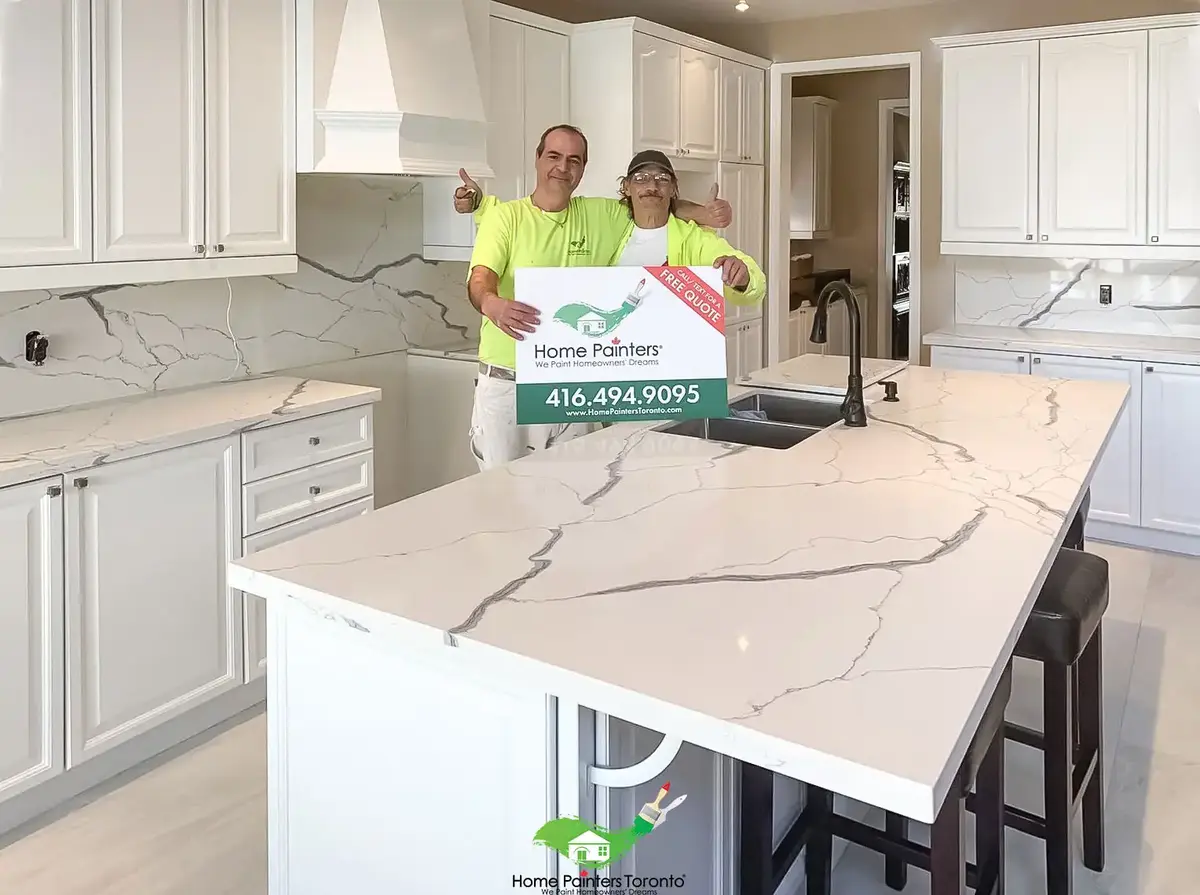
A written, surface-by-surface warranty is what protects you after the crew leaves
Home Painting Warranty Explained: Lifetime, Limited, and Material-Specific Types
Home painting warranties fall into three types: lifetime coverage for low-exposure interior work, limited-term coverage for weather-exposed exteriors, and material-specific coverage tied to one coating system. All three are workmanship warranties. They cover the contractor's labour and application, not the paint can itself. The paint maker offers its own product warranty, and the two rarely overlap the way homeowners expect.
The word "limited" matters more than the number of years. A limited warranty names the specific defects it covers, such as peeling or blistering, and lists what it excludes. A lifetime warranty can still be limited in scope. Read the covered defects list before you compare terms between two quotes.
Lifetime Interior Painting Warranty Coverage
A lifetime interior painting warranty usually means the contractor will fix workmanship defects on painted walls, ceilings, and trim while the original owner lives in the home. At HPT, interior painting carries a lifetime warranty, subject to our written terms and conditions. Interior surfaces earn long coverage because they live in a stable climate. No UV, no freeze-thaw cycling, and no wind-driven rain work against the paint film indoors.
Material-Specific Warranties for Brick Staining and Cabinet Spraying
Material-specific warranties are tied to one coating system on one substrate, so the term reflects how that system performs. HPT's published terms give exterior brick staining a 15-year warranty and kitchen cabinet spraying a 5-year warranty. Brick stain soaks into the masonry and does not form a surface film that can peel. Sprayed cabinet finishes face daily hand contact, cooking grease, and cleaning products, so their term sits between interior walls and exteriors.
Why Warranty Length Changes by Surface in Toronto's Climate
Warranty length changes by surface because each surface faces a different load of UV, moisture, and temperature swings. A bedroom wall in North York sits at a steady indoor temperature all year. A south-facing clapboard wall in Scarborough bakes in July sun and freezes solid in January. Contractors set each term based on how long they can confidently stand behind the work under those conditions.
| Service | HPT Warranty | Main Stress on the Finish | Typical Project Range (CAD + HST) |
|---|---|---|---|
| Interior painting | Lifetime | Scuffs, cleaning, indoor humidity | $400–$900 per living or dining room |
| Exterior painting | 3 years | UV, freeze-thaw cycles, wind-driven rain | $2,000–$30,000 depending on home size |
| Exterior brick staining | 15 years | Moisture moving through porous masonry | $4,000–$20,000+ depending on job size |
| Kitchen cabinet spraying | 5 years | Daily handling, grease, household cleaners | Quoted per kitchen after an on-site measure |
Warranty terms in this table come from HPT's published warranty schedule, and the ranges come from HPT's current pricing guide. Exterior paint takes the hardest beating in the GTA. Water that gets behind a paint film expands when it freezes, and each thaw lets a little more in. That cycle lifts paint at joints, end grain, and window sills first, which is why any quote for exterior house painting should explain how those weak points get sealed.
Brick stain behaves differently. It penetrates the masonry and stays vapour permeable, so it avoids the trapped-moisture failures that end most exterior paint jobs. Our guide on how long brick stain lasts covers the site conditions that shorten or extend that life.
What a Workmanship Warranty Covers
A workmanship warranty covers defects caused by how the paint was applied or how the surface was prepared. The classic examples are peeling, flaking, blistering, and loss of adhesion. These failures point back to the crew, not the product or the house. A solid contract lists every covered defect by name.
| Defect | What It Looks Like | Common Workmanship Cause | Usually Covered? |
|---|---|---|---|
| Peeling or flaking | Paint lifting in sheets or chips | Dust, poor sanding, or gloss not dulled before coating | Yes |
| Blistering | Raised bubbles in the film | Coating damp wood or painting in direct hot sun | Yes, if moisture is not from a building defect |
| Poor adhesion | Paint scratches off with a fingernail | Skipped primer on bare wood or glossy trim | Yes |
| Holidays or thin spots | Missed patches or see-through areas | Too few coats or low film build | Yes |
| Caulk failure at painted joints | Cracked or pulled-away sealant | Wrong sealant or joints not cleaned first | Often, within the stated term |
Covered defects still need a clear cause. If a blister forms because a roof leak soaked the wall behind it, the paint did its job and the house did not. Joints sealed during exterior caulking around windows and doors are the most common spot where workmanship and building movement overlap. Every HPT project also ends with our 100% Satisfaction Guaranteed walkthrough, so visible issues get fixed before the warranty period even starts.
What Home Painting Warranties Usually Exclude
Home painting warranties usually exclude normal wear, physical damage, and any failure caused by a problem in the building itself. These exclusions are not loopholes. They exist because no paint film can outlast a leaking gutter, a settling foundation, or a stray hockey stick. Knowing them upfront prevents most warranty disputes.
| Exclusion | Why It Is Excluded | Real Example |
|---|---|---|
| Normal fading and chalking | UV slowly breaks down pigment on every exterior | A dark red front door lightening after several summers |
| Impact and abrasion | Physical damage is not an application defect | Chair backs scuffing a hallway wall |
| Structural movement | Settling cracks break the film from behind | A drywall seam cracking above a door frame |
| Outside moisture sources | Water from roofs, gutters, or plumbing lifts any coating | A soaked fascia board below a clogged eavestrough |
| Declined substrate repairs | Paint cannot fix rotted or damaged material | Soft window sill wood the owner chose not to replace |
| Failing previous coatings | A new coat is only as strong as the old layers beneath it | Old oil paint under new latex letting go on a stair rail |
Structural cracks and outside moisture are the two exclusions we see most in older Toronto homes. Both need a repair before paint will hold. If a crew finds soft wood on fascia boards or open drywall seams, the right move is to fix the substrate first. HPT's in-house carpenters handle soffit and fascia repair and drywall repair, so new paint goes onto a sound surface.
What Can Void a Home Painting Warranty
A home painting warranty can be voided by any change to the painted surface made after the crew leaves without the contractor's knowledge. The most common triggers are touch-ups by another painter, incompatible products applied later, and ignoring a leak once it appears. Each one breaks the link between the original work and the failure. Once that link breaks, nobody can prove whose work failed.
| Action | Why It Can Void Coverage |
|---|---|
| Touch-ups by another company | The original crew can no longer confirm which layer failed |
| Applying an incompatible product | Oil over latex, or the wrong cleaner, can break adhesion between coats |
| Aggressive pressure washing | High-pressure water can drive moisture into wood and lift sound paint |
| Leaving a known leak unrepaired | Ongoing water damage falls outside workmanship coverage |
| Waiting months to report a defect | Small failures spread, and the original cause becomes hard to trace |
| Losing the signed contract | Most warranties require the original agreement to open a claim |
Protecting coverage takes very little effort. Keep the signed contract and final invoice in one folder. Call the original contractor before anyone else touches the surface. Report peeling or blistering as soon as you spot it, while the cause is still easy to read.
Why Job-Site Records Decide Most Warranty Claims
Job-site records decide most warranty claims because they prove the surface was dry, clean, and warm enough on the day the paint went on. Without records, a claim turns into an argument about memory. With them, the cause of a failure is usually clear in one visit. Few homeowners think to ask whether their painter keeps a job log at all.
Moisture Readings and Application Temperatures on the Job Log
A useful job log records wood moisture readings, air and surface temperatures, product names, and coat counts for each side of the house. Paint makers publish application limits in their technical data sheets. Benjamin Moore's product data for Aura Exterior Low Lustre, for example, lists an application temperature range of 1.7°C to 37.7°C. A log showing the crew worked inside that range removes one of the most common doubts in any exterior claim.
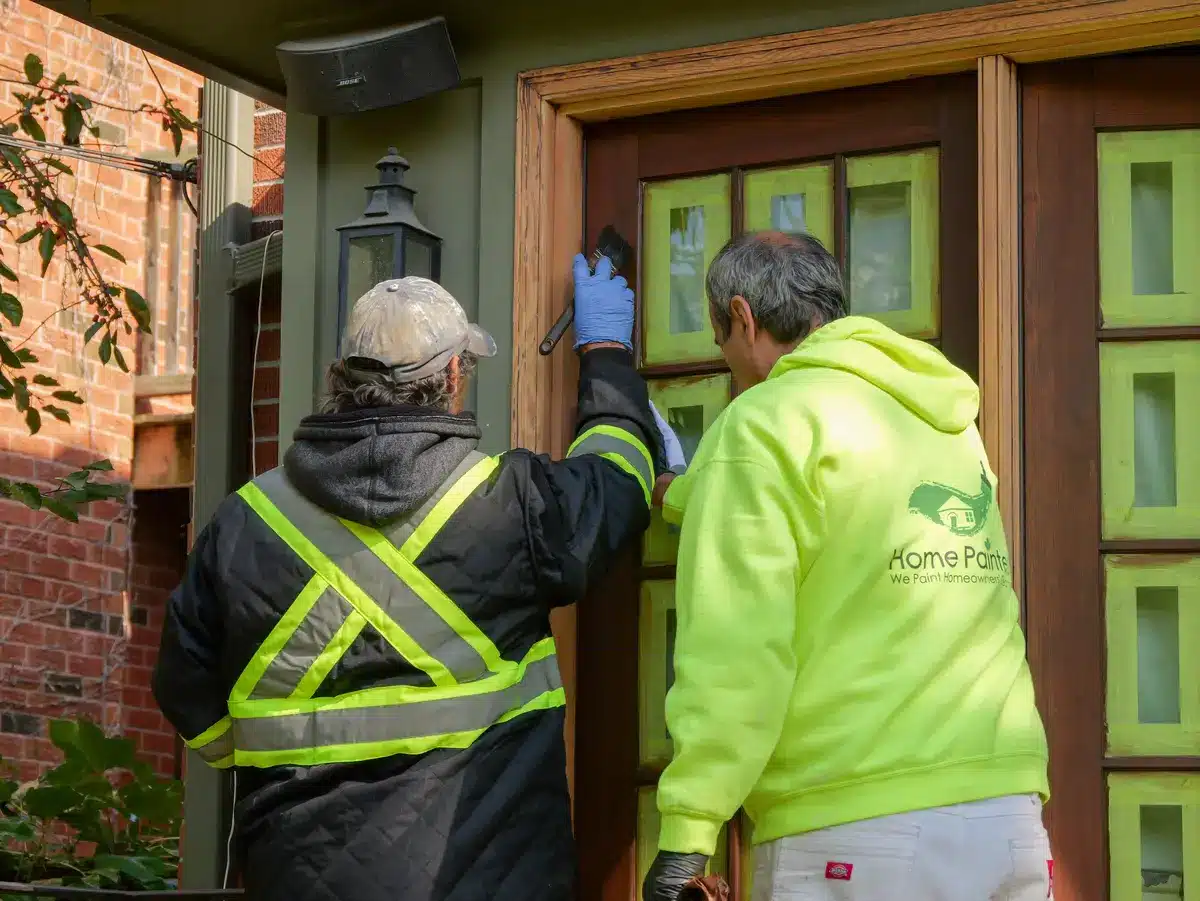
A documented job log is what settles a warranty claim in one visit
Here is how that played out on a real call. At a recent exterior repaint in Leslieville, our crew coated the wood fascia and trim on a semi-detached home with Benjamin Moore Aura Exterior in Low Lustre. The job log showed fascia moisture at 11% on a moisture meter, an air temperature of 14°C, and a measured wet film of 5 mils per coat. In the second year, the homeowner called about paint peeling on one rear fascia section.
Our meter read 23% moisture on that board, more than double the application-day reading. A clogged eavestrough had been spilling water behind the fascia all spring. Because the log proved the wood was dry and sound when we painted, the cause was clear in one visit and nobody argued. Our carpenter replaced the softened section, the homeowner had the eavestrough cleared, and we re-primed and repainted that run.
Workmanship Warranty vs. Manufacturer Paint Warranty
A workmanship warranty covers the contractor's labour, while a manufacturer paint warranty covers only the product and usually pays for replacement paint or a refund. That gap surprises a lot of homeowners. Labour is the largest part of most painting invoices. For example, Sherwin-Williams' lifetime limited warranty on Duration Exterior excludes labour costs for applying or removing the product, is not transferable, and does not apply to failures from improper surface preparation.
| Feature | Contractor Workmanship Warranty | Manufacturer Paint Warranty |
|---|---|---|
| Who backs it | The painting company | The paint maker |
| What it pays for | Labour and materials to correct the defect | Replacement product or a refund of the purchase price |
| Typical defects covered | Peeling, blistering, adhesion, coverage gaps | Peeling or blistering caused by the product |
| Surface prep failures | Covered, because prep is the crew's job | Excluded |
| How to claim | Call the contractor with your contract | Proof of purchase at the original store |
The practical takeaway is simple. A premium paint warranty on its own leaves you paying for the labour to fix a failure. Workmanship coverage is the piece that actually brings a crew back to your house. Ask every contractor which warranty they are quoting, and get the answer in writing.
Questions to Ask About a Painting Warranty Before You Sign
The most important question to ask is exactly which defects are covered, for how long, and on which surfaces, with the answer written into the contract. Ontario law backs this up, since any Ontario home renovation contract worth more than $50 must be in writing. Verbal warranty promises are hard to enforce. Use this checklist before you sign.
- Which surfaces carry which warranty term, listed service by service?
- Which defects are covered by name, and which are excluded?
- Does the warranty cover labour, materials, or both?
- Who do I call to open a claim, and how quickly will someone inspect?
- Does coverage stay with the home if I sell it?
- What maintenance, such as gentle washing or caulk checks, keeps coverage valid?
- Is the company WSIB compliant and fully insured if a crew returns for warranty work?
A contractor who answers all seven clearly is usually the one who honours the terms later. You can also browse our painting FAQ for answers to common questions about scheduling, prep, and coverage.
Home Painting Warranty FAQs
A lifetime interior painting warranty means the contractor will correct workmanship defects, such as peeling or poor adhesion, for as long as the original owner lives in the home. It does not cover scuffs, dents, or cracks from structural movement. Terms differ between companies, so ask for the written conditions before you sign.
Most painting warranties do not cover normal fading. UV breaks down pigment on every exterior surface over time, and dark or saturated colours show it first. Fading that is sudden, patchy, or far beyond what the paint maker's product data suggests is worth reporting, since it can point to a product issue.
A workmanship warranty usually ends if the company that issued it closes, because nobody remains to honour it. That makes company history part of the warranty's real value. A firm that has operated since 1991 and painted 20,000+ homes has a track record you can check, which a brand-new company cannot offer yet.
Some painting warranties transfer to a new owner and many do not, so check the written terms. Manufacturer paint warranties are often limited to the original purchaser. If you are painting before you sell, ask the contractor to state transferability in the contract so buyers can see it.
A satisfaction guarantee covers how the finished job looks on completion day, while a warranty covers defects that appear later. The guarantee is settled at the final walkthrough, when missed spots or uneven lines get corrected. The warranty then protects against failures like peeling that only show up months or years later.
Exterior painting warranties are shorter because outdoor paint faces UV, rain, and repeated freeze-thaw cycles that indoor paint never sees. Those forces wear down any film over time, even when the work is perfect. A 3-year exterior term covers the window when application defects typically show up.
What to Look for in a Home Painting Warranty Before You Hire
The best home painting warranty is specific, written, and backed by a company that will still be around to honour it. Look for coverage listed service by service, defects named in plain words, and labour included. At HPT, founder Brian Young brings four decades of painting industry experience, and our crews are WSIB compliant, fully insured, and trained to document every exterior job. Learn more about why homeowners choose HPT before you compare quotes.
This article is general education about painting warranties. Terms vary by contractor and are subject to specific written conditions, so it does not guarantee any company's coverage, including ours. HPT's current terms and conditions apply to every HPT warranty.
Ready to see warranty terms in writing before you commit? We offer fast, free quotes and warranty-backed work on every interior, exterior, brick staining, and cabinet project across Toronto and the GTA.

Ready to see warranty terms in writing before you commit? We offer fast, free quotes and warranty-backed work on every interior, exterior, brick staining, and cabinet project across Toronto and the GTA.
Contact Home Painters Toronto