

Most Toronto homeowners don't need a permit to repaint their house. Toronto's Property Standards bylaw treats routine exterior and interior painting as ordinary maintenance, not construction. The exception applies when a property has a heritage designation or sits inside a Heritage Conservation District, and that's where house painting permits Toronto homeowners search for come into play. Skipping the review process on a heritage property can mean a stop-work order, a fine, or forced restoration to the original colour. This guide breaks down which Toronto homes need approval before a paint crew arrives, and which ones can call Home Painters Toronto for a free estimate right away.
Most Toronto homes do not need a permit to repaint the interior or exterior. The exception is heritage-designated properties and homes inside a Heritage Conservation District, where exterior colour and material changes require Heritage Preservation Services approval before work begins. Routine maintenance painting falls under Property Standards, not the city's permit system.
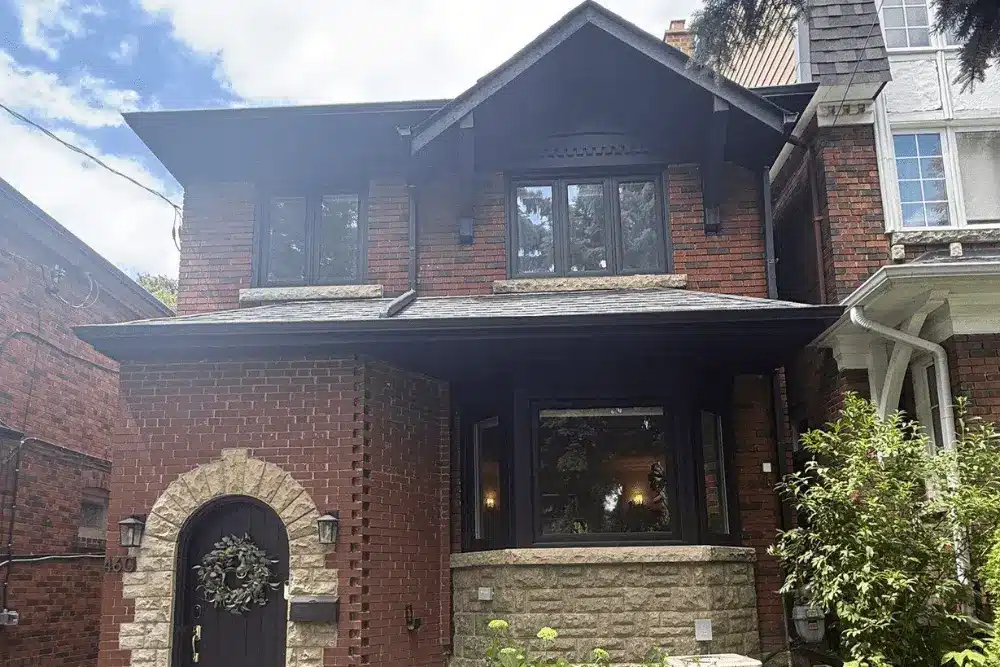
The real trigger is heritage status, not the act of painting itself
When You Need a Permit for House Painting in Toronto
Toronto only requires a permit for house painting when a property carries heritage designation or sits inside a Heritage Conservation District (HCD). Every other home in the city falls under Chapter 629 of the Toronto Municipal Code, the Property Standards bylaw, which requires exterior surfaces to be kept in good repair but does not regulate paint colour or require a permit for routine maintenance. That distinction matters, because homeowners often assume any exterior change needs city sign-off, when the real trigger is heritage status, not the act of painting itself.
Interior painting never requires a permit in Toronto, no matter the heritage status of the property, since interior finishes fall outside both heritage designating bylaws and the Property Standards bylaw. Exterior painting only becomes a permit issue on designated properties or inside a mapped district boundary.
Age alone does not create a heritage restriction. A home built in 1920 in a non-designated part of Toronto can be repainted in any colour, in any finish, without contacting the city. The designation itself creates the legal trigger, not the era of construction. Homeowners often confuse an older streetscape with a protected one, and that assumption sends unnecessary permit questions to city staff every year. HPT completes exterior residential painting projects on both older, non-designated homes and formally designated properties across the GTA, so the crew already knows what to look for on the initial walkthrough.
| Property Type | Permit Needed? | Why |
|---|---|---|
| Standard residential home (no heritage listing) | No | Covered by routine maintenance rules under Property Standards |
| Home on the Heritage Register (listed, not designated) | Usually no, confirm first | Listed status alone does not trigger a permit requirement |
| Individually designated heritage property (Part IV) | Yes | Exterior alterations, including colour changes, need Heritage Preservation Services approval |
| Property inside a Heritage Conservation District (Part V) | Yes, for exterior changes | District plan may regulate exterior colour and finish |
| Condo or multi-unit building (common elements) | Board approval, not a city permit | Condo corporation governs exterior appearance under its declaration |
Routine Repainting vs. Heritage-Triggered Permits in Toronto
Routine repainting on a non-designated home falls entirely under Property Standards enforcement, which addresses peeling, rot, or unsafe conditions instead of colour choice. Heritage-triggered permits apply only once a property is individually designated or located inside an HCD boundary. A home can sit on the Heritage Register as a listed property without triggering a permit requirement, since listing alone carries no legal restriction the way designation does. Homeowners planning exterior brick painting or exterior brick staining on an older Toronto home should confirm designation status first, since brick colour changes are one of the most commonly flagged items in heritage reviews.
Heritage Designation 101: Part IV vs. Part V and What They Mean for Paint
Part IV of the Ontario Heritage Act designates individual properties, while Part V designates entire Heritage Conservation Districts, and both can restrict exterior paint colour and finish, under Part IV and Part V of the Ontario Heritage Act. A Part IV designation applies to one specific address named in a city bylaw, usually because of architectural or historical significance. A Part V designation covers every property inside a mapped neighbourhood boundary, whether or not each home has standout heritage features on its own. Both designations give the City of Toronto authority to review exterior alterations, and paint colour counts as a reviewable alteration when it appears in the designating bylaw or the district plan.
| Feature | Part IV (Individual Designation) | Part V (Heritage Conservation District) |
|---|---|---|
| What's covered | One specific property named in a city bylaw | All properties within a mapped district boundary |
| Who administers it | City of Toronto Heritage Preservation Services | Heritage Preservation Services, guided by the district plan |
| Is paint colour regulated | Yes, if colour is named in the designating bylaw | Sometimes, if the district plan lists an approved palette |
| Approval needed for repainting | Yes, for exterior changes | Yes, for exterior changes visible from the street |
Homeowners sometimes assume Part IV and Part V rules work the same way, but the review process differs in practice. A Part IV file usually references specific architectural features named in the designating bylaw, such as an original brick colour or a decorative cornice. A Part V file references the district's broader heritage character statement, which can be less specific about individual paint choices but still requires a formal review before work starts. Either path routes through Heritage Preservation Services, and neither path is optional once designation applies.

Either path routes through Heritage Preservation Services, and neither path is optional once designation applies
How to Check If Your Home Is Heritage-Designated
Search your address on the City of Toronto's online Heritage Register first, since this database lists every individually designated property and every Heritage Conservation District boundary in the city. The search tool lets homeowners filter by address or ward, and most searches return a result within seconds.
- Search the property address on the City of Toronto Heritage Register.
- Review the property's zoning certificate for a heritage overlay notation.
- Call Heritage Preservation Services directly to confirm current designation status.
- Ask your painting contractor to flag heritage risk during the estimate walkthrough, since experienced crews often recognize designation-era architectural details on sight.
Reach out through our contact page if a search result looks unclear, since a project estimate can move forward alongside a heritage status check instead of waiting on it. You can also check our page to learn more about Heritage home painting.
A property can also show up as "listed" instead of "designated," and this distinction gets missed often. Listed status is an early flag that a building has heritage value, but it carries no legal permit requirement on its own. Only formal designation under Part IV, or inclusion in a Part V district, creates an enforceable painting restriction.
The Heritage Permit Application Process for Exterior Painting
Exterior painting on a designated Toronto property requires submitting a colour and material specification package to Heritage Preservation Services before any work starts.
- Submit an application with proposed colours, sheen levels, and product data sheets.
- Wait for staff review, which typically takes four to ten weeks depending on the season and application volume.
- Receive conditional approval, often requiring an on-site colour swatch sample before full application begins.
- Complete the work exactly as approved, since deviating from the approved specification can trigger a stop-work order and a forced repaint.
Homeowners should budget documentation time as part of the overall project timeline, not just painting days. A typical application package includes dated photos of all four elevations, the proposed colour formula, the sheen level, and a written scope of work. Missing documentation is the most common reason an application gets sent back for revision instead of approved outright. Contractors familiar with Heritage Preservation Services submissions can often assemble this package faster than a homeowner working alone, since the required format rarely changes from year to year. For a general sense of project scope before applying, see our cost of painting a house guide.
Typical Heritage Permit Approval Timeline
Heritage Preservation Services generally reviews straightforward repainting applications faster than applications involving material changes or additions. Homeowners planning a spring exterior project should apply in winter to avoid missing the ideal painting window, since Toronto's exterior painting season depends on consistent temperatures above 10 degrees Celsius for proper latex paint cure, per Benjamin Moore's exterior product guidance.
- At a recent heritage-district repaint in Cabbagetown, our crew matched the approved trim colour using Benjamin Moore Aura Exterior in Low Lustre, applied at 1.5 mils dry film thickness per coat, and confirmed substrate moisture below 15 percent with a pin-style moisture meter before priming.
That level of detail is what a Heritage Preservation Services file review expects to see documented. The full package, including the moisture reading and the manufacturer product data sheet, went into the file alongside the application, and the project received conditional approval without a single revision request.
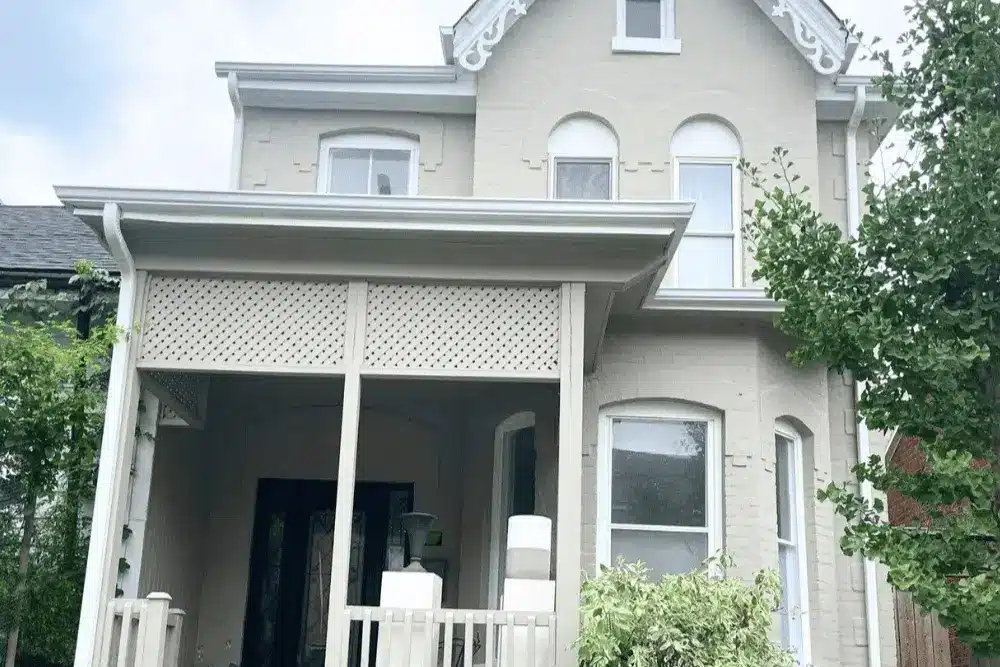
The project received conditional approval without a single revision request
Condos and Multi-Unit Buildings: Board Approval vs. City Permits
Condo corporations, not the City of Toronto, control exterior paint colour on common elements, so board approval matters more than a municipal permit for most condo owners. Condo declarations and rules typically list an approved exterior palette, and owners who want to repaint balconies, shared hallways, or exterior trim need board sign-off before a crew can start. A municipal heritage permit only enters the picture if the condo building itself is heritage-designated, which does happen with converted historic buildings in areas like King West and the Distillery District. HPT handles condominium and apartment painting projects across the GTA and can work directly with a property manager to confirm what a board requires before quoting.
Board-Approved Paint Colours for Condo Exteriors
Boards typically maintain a pre-approved colour and finish list to keep the building's exterior consistent, and owners who skip this step risk a violation notice from property management instead of a city fine. Board approval timelines usually move faster than a municipal heritage review, since most boards handle colour requests through a standing maintenance committee instead of a public planning process. Owners should still confirm approval in writing before work starts, because verbal sign-off from a single board member does not bind the full corporation.
What Happens If You Paint Without a Required Permit
Painting a heritage-restricted property without approval creates real legal and financial exposure, not just a paperwork problem.
- A stop-work order halts the project immediately, often mid-application, leaving a home partially painted.
- Fines under the Ontario Heritage Act can apply for unauthorized alterations to a designated property.
- Heritage Preservation Services can require full restoration to the original approved colour at the homeowner's expense.
- Unauthorized work can complicate a future property sale, since buyers' lawyers routinely check for open heritage violations during due diligence.
- Neighbours or heritage advocacy groups can report unauthorized changes directly to the city, since visible exterior work on a designated street draws attention quickly.
Working with a contractor who checks designation status before quoting, the way Home Painters Toronto does on every estimate, avoids this risk entirely. Learn more about why homeowners choose HPT for heritage-sensitive projects.
Toronto Neighbourhoods With Heritage Conservation Districts
Cabbagetown, Rosedale, The Beaches, and Wychwood Park all contain areas with formal Heritage Conservation District status, where exterior paint changes go through additional review before a crew can begin work.
| Neighbourhood | HCD Status | What It Means for Paint |
|---|---|---|
| Cabbagetown | Designated HCD | Exterior colour changes reviewed against the district plan |
| Rosedale | Partial HCD coverage | Applies to some streets, not the whole neighbourhood |
| The Beaches | Designated HCD (select streets) | Building-specific character guidelines apply |
| Wychwood Park | Fully designated HCD | One of Toronto's oldest protected residential districts |
Heritage Conservation District rules do not stop at paint. Window replacement, fencing, and even satellite dish placement can fall under the same review in some districts, which is why homeowners in these areas often bundle a paint project with related exterior work under one heritage application. A painting project on its own is usually the simplest item on a Heritage Preservation Services file, since colour and sheen data is easy to document compared to a full material change.
Forest Hill and Little Portugal both carry heritage-sensitive character even outside formal HCD boundaries, and HPT has painted heritage and heritage-adjacent homes in both areas for years. See our Forest Hill painting projects and our work in Little Portugal semi-detached homes, or check our full GTA service area list to confirm we work in your neighbourhood.
Toronto House Painting Permit FAQs
Most Toronto homes do not need a permit to paint the exterior. Only individually designated heritage properties and homes inside a Heritage Conservation District require Heritage Preservation Services approval before repainting. Confirming status before choosing a colour avoids a forced repaint later.
A Heritage Conservation District, or HCD, is a mapped neighbourhood area where the City of Toronto regulates exterior alterations, including paint colour in some districts, to preserve a collective historical character. Toronto currently has dozens of these districts, concentrated in older central neighbourhoods.
Yes, painting a designated property or a home inside an HCD without approval can result in fines under the Ontario Heritage Act, plus a possible order to restore the original colour. Fine amounts and restoration requirements vary based on the scope of the unauthorized work.
Heritage Preservation Services typically takes four to ten weeks to review a straightforward exterior repainting application, though timelines vary by season and workload. Applications involving unusual colours or material changes can take longer than a standard repaint request.
Yes, condo corporations control exterior and common-element paint colour through their declaration and rules, so board approval is required even when no city permit applies. Some buildings post their approved palette directly with the property manager for quick reference.
Yes, exterior brick colour changes are one of the most closely reviewed items in heritage applications, since altering original masonry colour can affect a designated property's protected character. Original mortar colour can also factor into the review, not just the brick paint itself.

Getting Your House Painting Project Right the First Time in Toronto
Getting a Toronto house painting project right starts with confirming heritage status before any colour gets chosen, and Home Painters Toronto builds that check into every estimate. Our crews are WSIB compliant and fully insured, and every project comes with warranty-backed work, including a lifetime warranty on interior painting and a 3-year warranty on exterior painting. We have worked in heritage-sensitive pockets of Forest Hill, Cabbagetown-style districts, and Little Portugal, so we recognize designation red flags most contractors miss.
Home Painters Toronto has served Toronto and the GTA since 1991, and founder Brian Young brings four decades of hands-on painting industry experience to every estimate, including heritage-sensitive projects that other contractors turn away. That experience is what lets our team spot a Part IV or Part V flag during a walkthrough, well before a homeowner has picked a single colour swatch.
See what past clients say in our client reviews, or check our FAQ page for more general project questions.
This article offers general information, not legal advice. Confirm current requirements directly with the City of Toronto's Heritage Preservation Services or Municipal Licensing and Standards before starting work.
Get fast, free quotes and warranty-backed work on your next project.
Get a Free Estimate