

Exterior Aluminum Siding Painting Toronto: Lifespan and What Drives It
Exterior aluminum siding painting in Toronto typically lasts between 7 and 10 years when done professionally, with quality paint and proper surface preparation. That is the real answer most homeowners are looking for. With ideal conditions and diligent maintenance, that lifespan can stretch closer to 15 years.
Toronto's climate is tough on exterior finishes. Harsh winters, lake-effect humidity, and repeated freeze-thaw cycles put constant pressure on any coating applied to your home. This is why two homes on the same street can have very different results after just a few years.
Understanding what drives the longevity of your aluminum siding painting helps you make smarter decisions. Whether you are planning a fresh repaint or trying to extend the life of an existing coat, here is what you need to know.
- Professional prep work is the single biggest factor in how long paint lasts
- Paint quality and product selection matter more than most homeowners expect
- Toronto's seasonal climate creates unique challenges that standard advice does not always address
- Signs of early failure are easy to catch if you know what to look for
- Hiring a pro with a warranty gives you long-term protection, not just a fresh coat of paint
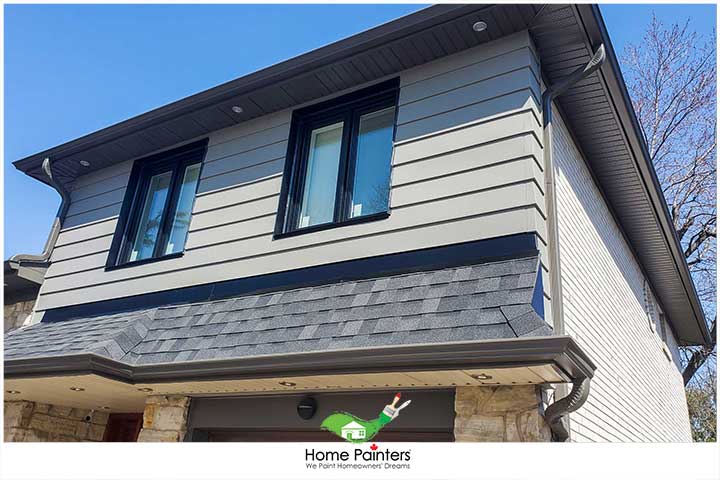
A professionally done aluminum siding paint job in Toronto typically lasts 7 to 10 years — prep quality, product selection, and climate management are the three deciding factors
What Affects the Lifespan of Paint on Aluminum Siding?
Paint longevity is not random. Several clear factors determine how many years your aluminum siding holds its colour, sheen, and protective coating.
Surface Preparation Quality
The most important step. Aluminum siding accumulates oxidation, chalky residue, dirt, and mildew. If that layer is not fully removed, new paint cannot bond properly to the metal. Peeling usually starts within a season or two when prep is skipped. Professionals power-wash, remove chalk, sand rough areas, and apply a metal-grade primer before the topcoat.
Paint Quality and Product Selection
The best choice is a high-quality 100% acrylic latex paint formulated for exterior metal use. It bonds well to aluminum, stays flexible through temperature swings, and resists UV fading. Brands like Benjamin Moore and Sherwin-Williams offer premium options for our aluminum windows and siding painting projects.
Number of Coats Applied
One coat is never enough. Two full coats with proper dry time between applications create the film thickness your siding needs. A single-coat application fades faster, chips more easily, and lets moisture in much sooner than a properly built-up two-coat system.
Toronto's Freeze-Thaw Climate
According to the Climate Atlas of Canada, Southern Ontario experiences dozens of freeze-thaw cycles annually. Water seeps into small cracks, freezes, expands, and pushes against the paint film. Summer UV, high humidity in July and August, and lake-effect moisture further accelerate breakdown, especially on south- and west-facing walls.
Application Conditions and Timing
The ideal window for exterior aluminum siding painting in Toronto falls between late May and early October. Temperatures should sit between 10°C and 25°C, with low humidity and no rain forecast for at least 24 to 48 hours after application. Any freeze-thaw cycle before paint fully cures will compromise the entire job. Professional painters in Toronto understand these seasonal constraints and schedule accordingly.
Always test for chalking before you prime. Rub your finger across the siding. If a white powdery residue transfers onto your hand, the surface has oxidized and must be thoroughly cleaned before priming. On older GTA homes, especially those built in the post-war bungalow and semi-detached stock common in North York, Etobicoke, and Scarborough, skipping this step is the leading cause of paint peeling within two or three years, no matter how good the paint is.
Signs Your Aluminum Siding Paint Is Failing
Catching these signs early makes a new paint job more straightforward and less costly. Waiting until bare metal is visible typically means more repairs and a more complex prep process before repainting.
- Chalking A powdery white residue on the surface means the paint film is breaking down from UV exposure and weathering.
- Fading Uneven or significant colour loss, especially on south-facing walls with high sun exposure.
- Peeling or Flaking Paint separating from the siding, often starting at edges, trim lines, or areas with old caulking.
- Bubbling or Blistering Moisture trapped beneath the paint is pushing the coating away from the aluminum.
- Bare Metal Showing The most advanced sign. The siding itself is now exposed and vulnerable to corrosion. Act immediately.
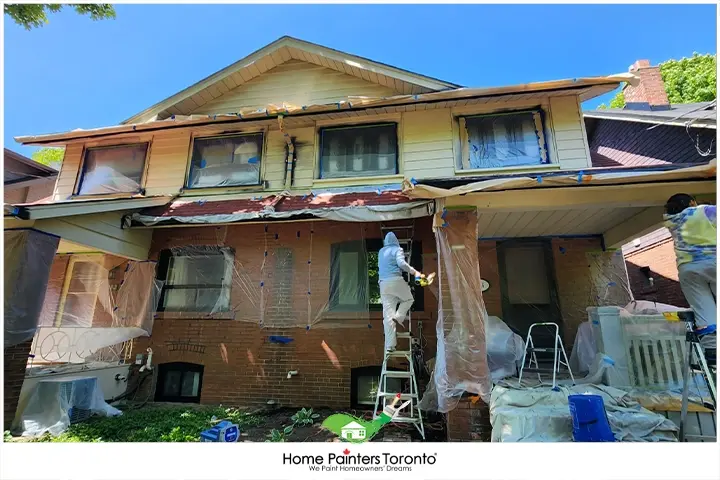
Chalking, fading, and peeling are the first signs your aluminum siding paint has reached the end of its protective life — catching them early prevents more costly repairs
DIY vs. Professional Aluminum Siding Painting in Toronto
Some homeowners consider painting their own aluminum siding. Here is an honest look at what that involves.
Painting the exterior of a home is a large physical project. It requires working at heights, which carries real safety risks without proper equipment and training. It also requires knowing how to clean oxidized aluminum correctly, which primer to use for metal adhesion, how to spray or roll for even coverage, and how to plan around Toronto's weather windows.
The materials themselves are manageable. The execution, however, is where most DIY attempts fall short. Uneven coats, missed prep steps, and poor timing are the most common reasons homeowners call a professional to redo a DIY paint job within a couple of years. Professional painters bring industrial spray equipment, commercial-grade prep tools, and experience to get the job done correctly the first time. The cost of getting it right once is always less than fixing a failed paint job.
| Factor | DIY | Professional |
|---|---|---|
| Prep quality | Often rushed; chalking and oxidation frequently missed | Full power wash, de-chalk, sand, and metal-grade primer |
| Application method | Brush or roller; visible streaks on flat panels | Industrial airless sprayer for smooth, even coverage |
| Product knowledge | Consumer-grade paint; risk of wrong product choice | Premium acrylic latex matched to substrate and exposure |
| Weather timing | Calendar-based; risk of painting in wrong conditions | Forecast-driven; temperature and humidity monitored daily |
| Warranty | None | 3-year exterior warranty on all projects |
| Expected lifespan | 2 to 5 years typical | 7 to 10 years; up to 15 with maintenance |
Pricing at a Glance
Starting rate for smaller aluminum siding projects
Most Toronto semi-detached and detached homes
Larger homes with full exterior scope
For an accurate number for your specific property, review general guidance on the cost of painting a house in Canada or request a free on-site estimate.
How to Extend the Life of Your Aluminum Siding Paint Job
You can meaningfully extend the lifespan of a professional paint job with consistent, simple maintenance. These habits help your siding reach the upper end of the 7- to 10-year range, and beyond. According to the Paint Quality Institute, proper surface preparation alone can extend exterior paint life by up to 50 percent on metal substrates.
- Wash the siding once a year. Use a mild detergent solution and a soft brush or low-pressure garden hose. This removes dirt, mildew, and early oxidation before it builds up and degrades the paint film.
- Inspect after every winter. Toronto's freeze-thaw season is the hardest on exterior coatings. Walk the perimeter each spring and look for new peeling, bubbling, or cracking.
- Touch up small areas promptly. Small chips and exposed spots are entry points for moisture. Keeping some matching paint for touch-ups extends the overall job considerably.
- Renew caulking as needed. Caulking around windows, doors, and trim lines is the first place moisture gets behind your siding. Quality exterior caulking in Toronto is part of a complete maintenance plan.
- Trim vegetation away from the siding. Branches and shrubs that contact your siding scratch the paint surface and hold moisture against it.
Touch-ups only work if you prep the spot first. When touching up painted aluminum siding, clean the area before applying anything. Even a small patch of chalky residue or surface grime under the touch-up paint prevents proper adhesion and makes the repair visible within a season. Clean the spot, let it dry fully, apply a small amount of metal-compatible primer to any bare aluminum, then apply the touch-up coat. This simple sequence is the difference between a repair that lasts and one that peels off by winter.
Repainting vs. Replacing Your Aluminum Siding: Which Makes More Sense?
Many GTA homeowners facing faded or peeling aluminum siding wonder whether repainting or full replacement is the better investment.
In most cases, painting is the smarter choice. If the aluminum panels themselves are in good structural condition with no severe denting, warping, or water intrusion behind the siding, repainting delivers a like-new appearance at a fraction of the replacement cost. Aluminum siding that is in reasonable shape can take on a fresh coat of paint and look brand new again in just a few days.
Replacing aluminum siding involves material costs, labour for removal and installation, and potential disruption to insulation or sheathing underneath. It is a significantly larger project in both time and cost. Repainting, by contrast, can typically be completed in one to five business days, depending on the size of the home.
For reference, the approach is similar to how we handle exterior residential house painting on different home types across the GTA: thorough prep first, then a quality finish that is built to last.
Why Toronto Homeowners Trust Home Painters Toronto for Aluminum Siding
Home Painters Toronto has been serving Toronto and GTA homeowners for over 38 years. Every aluminum siding project starts with the same preparation-first approach.
Before a drop of paint goes on, we assess the condition of the siding, repair damaged panels, clean and de-chalk the full surface, and apply the right primer for the metal substrate. Our in-house painters use professional spray equipment for even coverage and apply a full two-coat system with proper dry time between coats.
Every exterior painting project is backed by a 3-year warranty. We also offer a free colour consultation before the work begins, so you are confident in your choice. Our painters are in-house employees, not subcontractors. That means consistent quality and accountability on every project.
If your home has other surfaces that need attention, we also handle exterior brick painting, vinyl siding painting in Toronto, and deck and fence staining, all under one roof.
Frequently Asked Questions About Exterior Aluminum Siding Painting in Toronto
A professionally done aluminum siding paint job in Toronto typically lasts 7 to 10 years. With ideal conditions, premium paint, and consistent maintenance, some jobs hold up closer to 15 years. DIY paint jobs tend to fall below that range due to differences in prep quality and application equipment.
Most Toronto homeowners should plan to repaint aluminum siding every 7 to 10 years under normal conditions. Homes with high sun exposure on south- or west-facing walls, or homes near the lake where humidity is elevated, may need repainting sooner. Annual washing and prompt touch-ups push that interval toward the longer end.
The most common signs are chalking (a powdery white residue on the surface), fading or uneven colour, peeling or flaking paint, bubbling or blistering, and visible bare metal. If you notice any of these on your GTA home, it is worth having a professional assess the condition before the next winter season causes further damage.
Yes. A properly applied exterior paint system acts as a protective barrier that slows moisture penetration into the metal and the surfaces behind it. Acrylic latex paints are flexible enough to expand and contract with temperature swings, which reduces cracking. Skipping or delaying repainting, however, leaves bare or deteriorating metal fully exposed to Toronto's freeze-thaw conditions.
A high-quality 100% acrylic latex exterior paint formulated for metal adhesion is the industry standard. Brands like Benjamin Moore and Sherwin-Williams both offer products designed for this substrate. Applying a metal-compatible primer before the topcoat is also strongly recommended, especially on older siding or surfaces that have weathered down to bare aluminum.
Aluminum siding painting at Home Painters Toronto starts at a minimum of $1,495 + HST for smaller projects. Medium-sized jobs generally range from $3,000 to $6,000 + HST, and larger homes from $5,000 to $8,000 + HST. Every home is different, so the best approach is to get a free on-site assessment. Visit the Toronto aluminum siding painting page to request your free quote.

Exterior Aluminum Siding Painting in Toronto: A Smart Investment for Your Home
Exterior aluminum siding painting in Toronto, done right, protects your home and preserves its value for a decade or more. The lifespan of your paint job is not a matter of luck. It comes down to preparation, product quality, professional application, and consistent maintenance.
Toronto's climate is one of the most demanding in Canada for exterior coatings. Freeze-thaw cycles, summer UV, and lake-effect humidity all work against paint that was not applied correctly in the first place. But aluminum siding, compared to wood or other materials, gives you an excellent canvas to work with. It does not rot, it does not swell, and it holds colour well when the prep is done properly.
According to the painting experts at This Old House, keeping aluminum siding on a regular repainting schedule every 5 to 10 years maintains both the protective function and the appearance of the coating over the long term.
If your siding is showing signs of fading, chalking, or peeling, now is the right time to act before the next winter season puts more stress on a compromised finish.
Get a Free Quote for Your Aluminum Siding Project
Contact Home Painters Toronto today for a free quote and find out exactly what your aluminum siding needs to look its best for years to come.
Get Your Free Quote