

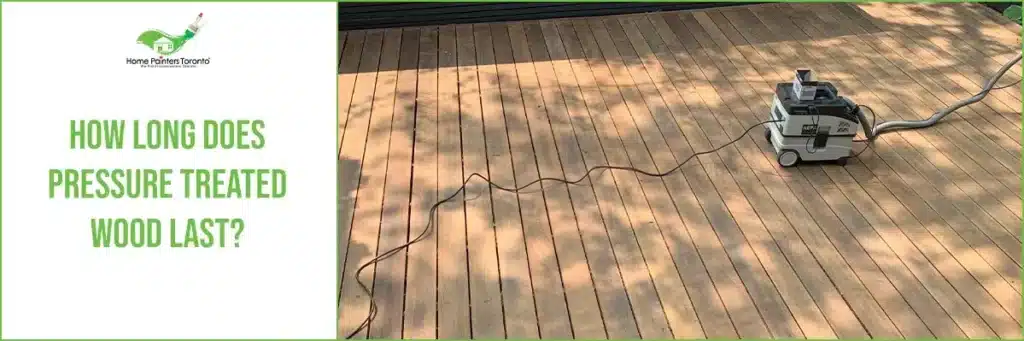
Pressure-treated wood is commonly used for outdoor structures such as decks, fences, pergolas, and railings. It is specifically treated to resist moisture damage, insect activity, and general outdoor exposure.
However, many homeowners wonder how long pressure-treated wood will realistically last — especially in climates like Toronto where seasonal weather changes can affect exterior materials.
Understanding what influences the lifespan of pressure-treated wood can help homeowners plan maintenance, repairs, or refinishing projects more effectively.
If your deck, fence, or exterior wood surfaces are showing signs of wear, learn more about professional exterior painting Toronto services to protect and extend the life of pressure-treated wood.
What Is Pressure Treated Wood Designed To Do
Pressure-treated lumber is infused with preservatives that help slow down decay caused by moisture and insects.
This treatment allows the wood to perform better outdoors compared to untreated lumber. However, pressure-treated wood is not completely maintenance-free.
Over time, environmental exposure can still cause deterioration if surfaces are not properly protected.
Average Lifespan of Pressure Treated Wood Outdoors
The lifespan of pressure-treated wood varies depending on installation conditions, climate exposure, and maintenance.
Outdoor structures such as decks and fences can often last many years when properly maintained.
In areas with frequent moisture, snow accumulation, or freeze-thaw cycles, maintenance becomes especially important to preserve the wood’s durability.
Regular inspections and protective coatings can significantly influence how long pressure-treated wood performs well.
Key Factors That Affect Pressure Treated Wood Lifespan
Moisture Exposure
Constant exposure to rain, snow, or standing water can accelerate deterioration.
Wood that remains damp for long periods is more vulnerable to fungal growth and structural weakening.
Proper drainage and protective coatings help reduce moisture penetration.
Sunlight and UV Damage
Ultraviolet exposure can cause pressure-treated wood to fade, crack, or dry out over time.
UV-resistant coatings or stains can help maintain both appearance and structural integrity.
Ground Contact and Drainage
Fence posts or deck supports installed in poorly drained soil may deteriorate faster.
Ensuring water flows away from wood structures helps reduce long-term damage.
Homes with damaged exterior trim or structural wood may require exterior wood repair and carpentry before repainting or refinishing.
Maintenance and Protective Coatings
One of the most important factors influencing wood lifespan is regular maintenance.
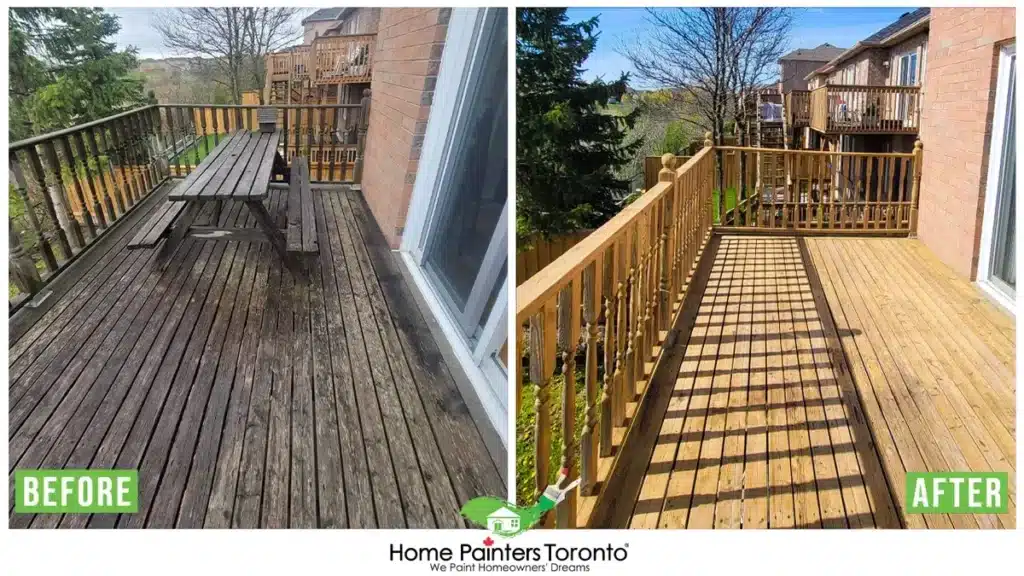
Applying stain or paint helps create a protective barrier against moisture and sun exposure.
Professional refinishing through exterior painting Toronto can help extend the performance of decks, fences, and other outdoor structures.
Signs Pressure Treated Wood May Be Deteriorating
Homeowners should watch for early warning signs of deterioration, including:
soft or spongy wood fibers
visible cracking or splitting
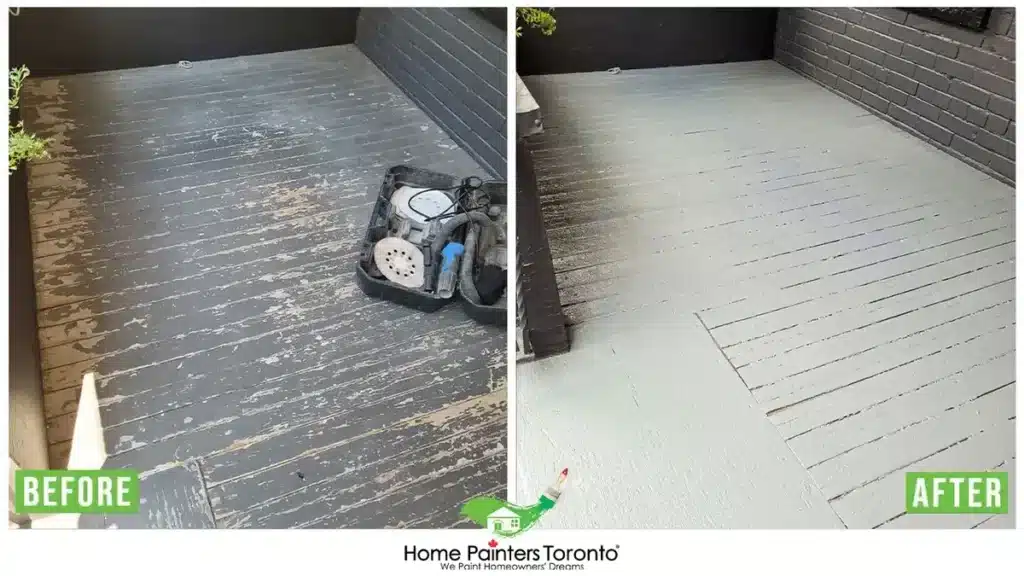
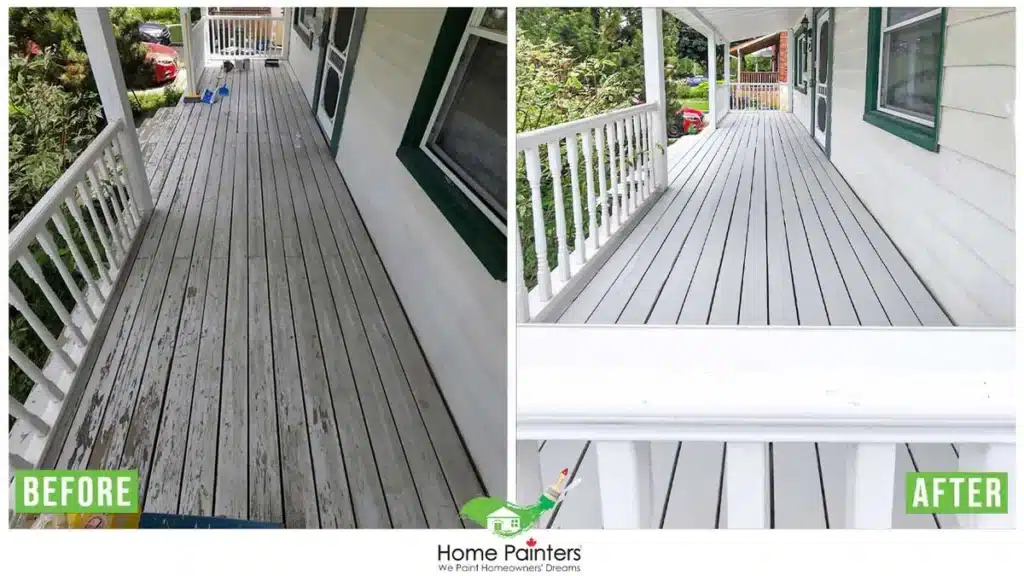
peeling coatings
discoloration or dark staining
loose boards or unstable railings
Addressing these issues early can help prevent more extensive structural repairs.
If exterior wood shows advanced wear or rot, explore exterior wood repair and carpentry before repainting to restore structural integrity.
How to Extend the Life of Pressure Treated Wood
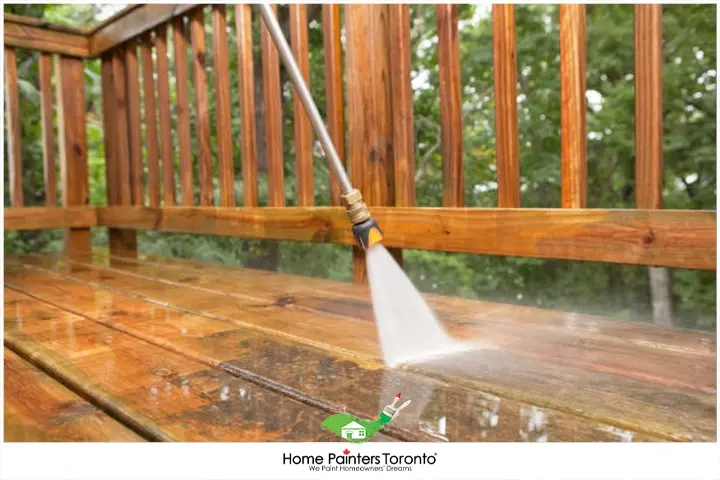
Regular Cleaning and Inspections
Removing dirt, debris, and organic buildup helps prevent moisture retention.
Seasonal inspections allow homeowners to identify minor issues before they worsen.
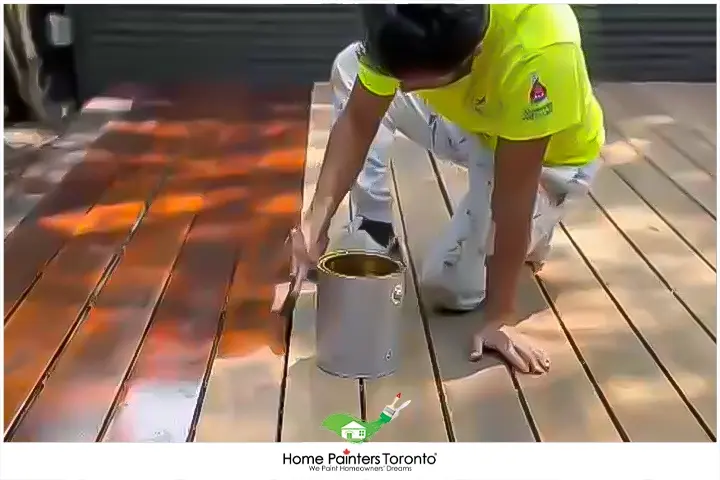
Applying Protective Stain or Paint
Protective coatings help slow moisture absorption and UV damage.
Professional exterior painting Toronto services can ensure surfaces are properly prepared and coated.
Repairing Damaged Boards Early
Replacing or repairing damaged boards helps maintain the structural performance of decks and fences.
Ignoring early damage can lead to more extensive deterioration.
Signs Pressure Treated Wood May Be Deteriorating
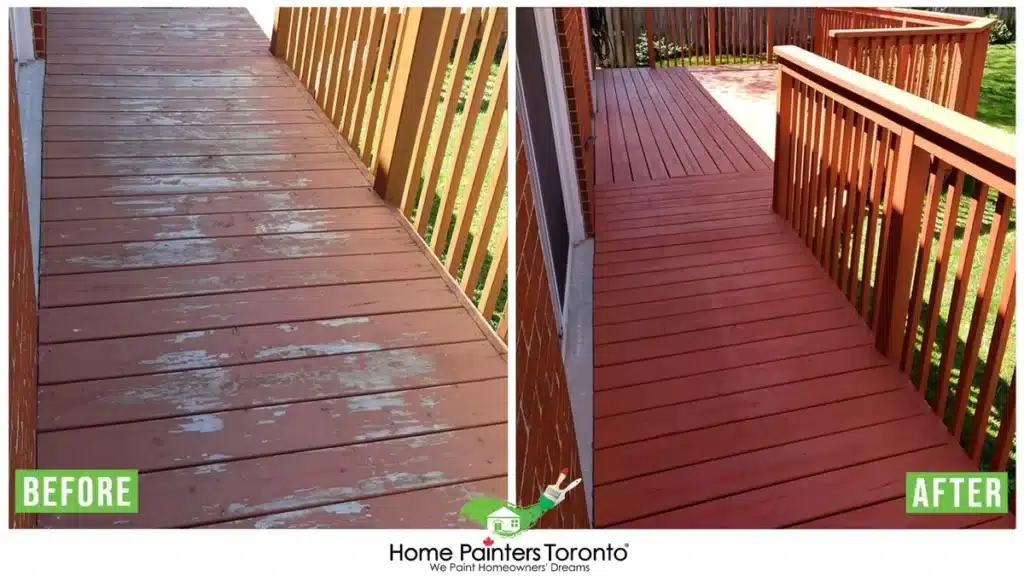
Homeowners should watch for early warning signs of deterioration, including:
soft or spongy wood fibers
visible cracking or splitting
peeling coatings
discoloration or dark staining
loose boards or unstable railings
Addressing these issues early can help prevent more extensive structural repairs.
If exterior wood shows advanced wear or rot, explore exterior wood repair and carpentry before repainting to restore structural integrity.
When Pressure Treated Wood Should Be Repaired or Replaced
Repair or replacement may be necessary when:
structural components become unstable
rot has spread extensively
posts or supports have weakened
surface refinishing no longer protects the wood
Professional assessments can help determine whether refinishing, repair, or replacement is the best solution.
Get a Exterior Painting Quote in Toronto
If your pressure-treated wood structures need maintenance or refinishing, learn more about exterior painting Toronto services and request a professional exterior assessment.
Request a professional exterior painting assessment to extend the life of pressure-treated wood.
Frequently Asked Questions About Pressure Treated Wood Lifespan
Does pressure treated wood last longer than regular wood?
Yes. Pressure-treated lumber is designed to resist moisture and insect damage better than untreated wood.
How can I make pressure treated wood last longer?
Regular cleaning, proper drainage, and protective coatings can significantly extend its lifespan.
Can pressure treated wood still rot?
Yes. If moisture exposure is prolonged and maintenance is neglected, rot can still occur.
When should decks or fences be refinished?
Refinishing is often recommended when coatings peel, wood fades, or surfaces begin absorbing moisture.
Is painting pressure treated wood a good idea?
Painting or staining can help protect the wood when surfaces are properly prepared.