

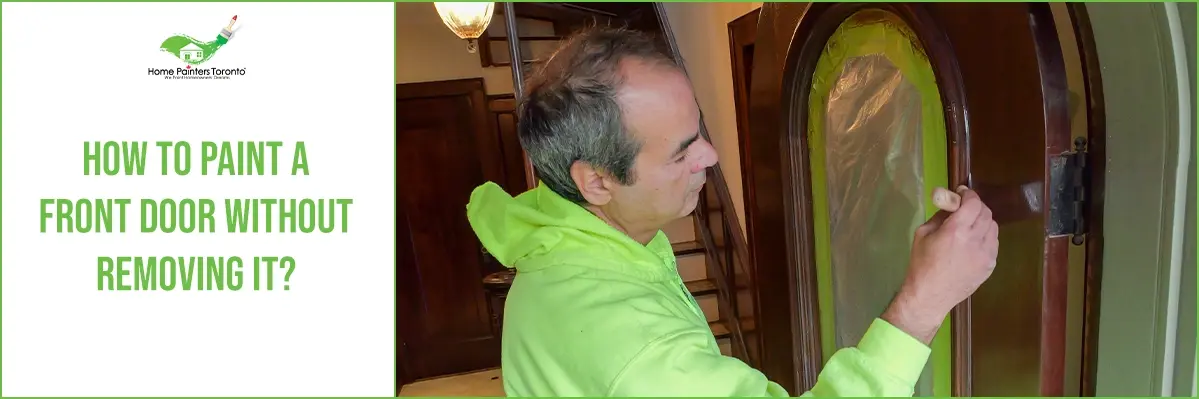
Many homeowners want to repaint their front door without taking it off the hinges. That makes sense. Removing the door can be inconvenient, especially when the entry is used regularly and the goal is simply to refresh the look of the home’s exterior.
The good news is that you can paint a front door without removing it. The key is careful preparation, the right timing, and a methodical approach while the door remains in place.
A freshly painted front door can improve curb appeal quickly, but because it is exposed to weather, touched every day, and seen up close, the finish needs to be handled more carefully than a standard interior repaint.
For Toronto homeowners, front door painting is often part of a broader exterior update that includes trim, siding, railings, or other entrance details.
If your front door is faded, peeling, or starting to make the entrance look tired, learn more about professional exterior painting Toronto services to see how proper prep improves durability and curb appeal.
Can You Paint a Front Door Without Taking It Off the Hinges?
Yes, in many cases you can paint a front door without removing it.
For a typical repaint, leaving the door in place is often the more practical option. It allows the door to stay functional, avoids the hassle of removing hardware completely, and works well when the structure of the door is still sound.
What matters most is not whether the door stays on the hinges, but whether the surface is prepared properly and painted under suitable conditions.
If those basics are ignored, the finish may end up streaky, tacky, or uneven, no matter how convenient the process seemed at the start.
Why Preparation Matters Before Painting a Front Door
Front doors take a lot of abuse from sun, rain, humidity, temperature swings, and daily use. That is why preparation matters as much as the paint itself.
Cleaning the surface properly
Front doors collect more residue than many homeowners expect.
Dust, hand oils, airborne dirt, and exterior buildup can interfere with adhesion if the surface is not cleaned first. A clean door gives primer and finish coats a more stable base.
Sanding and dulling the old finish
If the existing finish is glossy, worn unevenly, or beginning to fail, the surface usually needs to be sanded or scuff sanded before repainting.
This step helps dull the old coating and creates a better bond for the new paint. Skipping it often leads to peeling or weak adhesion later.
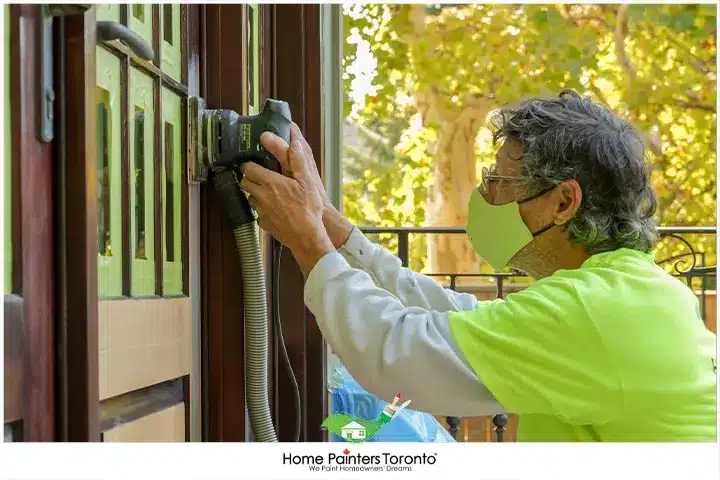
Protecting hardware and surrounding areas
Because the door is being painted in place, protecting the adjacent trim, glass, weatherstripping, handles, and threshold becomes especially important.
This is one reason detailed entrance repainting often fits naturally within broader Toronto painters services rather than being treated like a quick one-surface touch-up.
How to Paint a Front Door Without Removing It
How to Paint a Front Door Without Removing It
Choose the right time and conditions
Exterior door painting works best when weather conditions support proper drying and curing.
Extreme heat, direct sun on the door, or damp conditions can all affect how the finish levels and dries. Since the door still needs to function, timing matters even more than usual.
Prep the door while it is in place
Once the door is cleaned and sanded, the surrounding areas should be protected and the surface should be ready for primer or finish coats, depending on the existing condition.
If the front entry also includes worn trim or adjacent wood details, homeowners may need exterior wood repair and carpentry before the whole entry looks complete again.
Paint in a logical order
A front door usually looks best when the painting is done methodically rather than rushed.
Panels, rails, stiles, and edges should be handled in a consistent sequence so the finish stays more even. Because the door remains vertical, controlling drips and maintaining a uniform appearance takes extra care.
Let the finish dry properly
A door painted in place has to return to normal use, but it should not be stressed too early.
If the finish is disturbed before it has had time to dry and cure properly, sticking, imprinting, or premature wear can happen around edges and hardware.
Common Problems When Painting a Front Door in Place
The most common issues usually come from rushing the process.
These include:
- painting over a dirty or glossy surface
- working in poor weather conditions
- applying coats too heavily
- creating drips on vertical sections
- closing the door before the finish is ready
- leaving visible brush marks or uneven sheen
Because the front door is one of the most visible exterior features of the house, these flaws tend to stand out right away.
When a Front Door May Need More Than Paint
Not every front door problem is solved with a fresh coat.
If the door has peeling layers, surface damage, swelling, cracking, or surrounding trim deterioration, then preparation may become more involved. In some cases, the issue is not just the finish, but the condition of the material underneath.
This is especially true when the entry area includes damaged jambs, trim, or decorative wood features. In those situations, repainting is often part of a larger entrance refresh rather than a stand-alone paint task.
Choosing the Right Paint and Finish for a Front Door
A front door needs a more durable finish than an ordinary interior surface.
The right paint system depends on the door material, existing coating, exposure to sun and moisture, and how much wear the entry gets. The best finish is usually one that balances appearance, cleanability, and durability.
Homeowners often focus on colour first, but the more important questions are whether the coating will bond well and whether the finish will hold up on a high-touch exterior surface.
When Professional Front Door Painting Makes More Sense
Painting a front door without removing it can absolutely be done, but professional help is often worthwhile when:
- the existing finish is failing
- the door has detailed panels or trim
- the entry is highly visible and curb appeal matters
- the surrounding trim also needs repainting
- the homeowner wants a cleaner, more durable finish
Front door painting is often coordinated with related services such as front door painting and staining when available in your site structure, or with broader entrance and exterior repainting work.
Planning to refresh the whole entrance, not just the door? Explore professional house painting Toronto services to coordinate the front door, trim, and surrounding exterior details together.
Frequently Asked Questions About Painting a Front Door Without Removing It
Can you really paint a front door without removing it?
Yes. In many cases, a front door can be painted successfully while still on the hinges if the surface is prepared carefully and the finish is applied methodically.
Why does a front door need sanding before painting?
Sanding or scuff sanding helps dull the existing finish and improves adhesion for the new coating.
What is the biggest mistake when painting a front door in place?
Rushing the process is usually the biggest mistake. Poor prep, heavy coats, bad timing, and using the door too soon can all hurt the final result.
Does the weather matter when painting an exterior front door?
Yes. Temperature, humidity, and direct sun can all affect how the paint dries and performs.
Should a front door be part of a larger exterior repaint?
Often, yes. A freshly painted front door usually looks best when the surrounding trim, entry details, and nearby exterior surfaces are also in good condition.
The Best Paint for Kitchen Cabinets: What Homeowners Should Know
If you are trying to figure out how to paint a front door without removing it, the biggest factor is not convenience alone. It is whether the door is properly prepared and painted for long-term durability.
Learn more about professional exterior painting Toronto services and how careful prep and finish work can help your front entry look cleaner and last longer.
Call 416.494.9095 or email [email protected] for a FREE quote. And don’t forget to check us out on our social media channels below!