

Homeowners in Etobicoke, Scarborough, and across the rest of the GTA hit the same wall almost every spring: the budget covers one paint project this year, not two. Interior vs exterior home painting isn't a coin flip, and picking the wrong project first can cost more down the road than either job alone. Exterior surfaces protect the structure underneath a home, while interior surfaces protect comfort, air quality, and how the home shows to guests or buyers. A homeowner listing their house in Toronto this fall has a very different priority than one whose kitchen cabinets have been chipped and stained for two years. This guide breaks down how to weigh urgency, budget, and GTA seasonal timing so the right project gets booked first, using the same framework the estimators at Home Painters Toronto walk clients through every week.
Exterior painting usually takes priority when paint failure exposes bare wood or masonry to moisture, since that risk compounds with every GTA freeze-thaw cycle. Interior painting can typically wait unless a sale, move, or visible damage makes it time-sensitive. Most homeowners can phase both projects across two budget years without losing ground on either one.
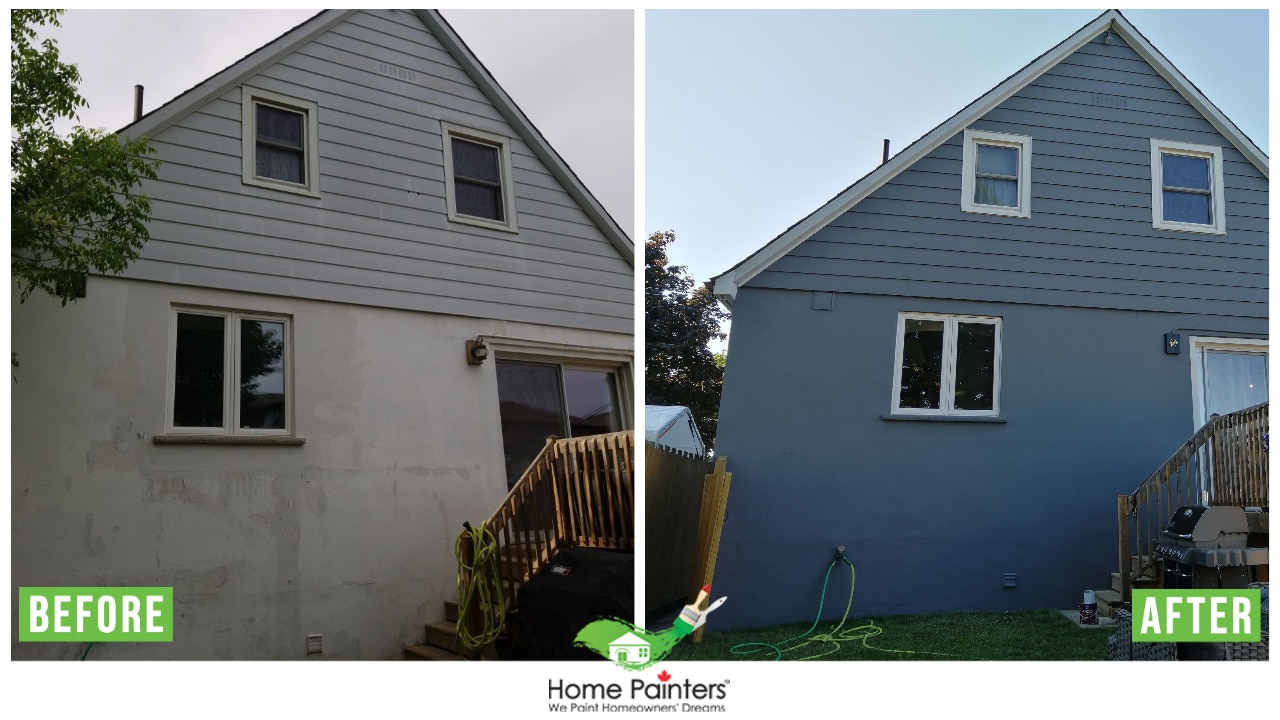
Priority depends on which surface is actively failing, not which one simply looks the most dated
Interior vs. Exterior Home Painting: What to Weigh First This Year
Interior vs exterior home painting priority depends on which surface is actively failing, not which one simply looks the most dated. A surface that has stopped protecting the structure underneath it needs attention faster than a surface that has only gone out of style. The table below breaks down common homeowner situations and which project they typically point toward.
| Situation | Prioritize Interior | Prioritize Exterior |
|---|---|---|
| Paint is cracking, peeling, or blistering down to bare wood or masonry | Yes | |
| Kitchen cabinets, trim, or bathroom paint is chipped and stained | Yes | |
| Home is listed for sale within the next two to four months | Yes, for staging | |
| Siding, trim, or brick shows chalking, fading, or moisture staining | Yes | |
| A new baby, move-in, or life event is driving a room refresh | Yes | |
| South- or west-facing exterior walls show blistering or sun damage | Yes | |
| Persistent odour or air quality concerns are tied to old interior paint | Yes | |
| Neither surface shows active failure and budget is the only constraint | Lower cost per room | Protects the structure first |
Most homeowners can read their own situation off this table in under a minute. When a row points to exterior work, it usually means the building envelope, not just the finish, is at stake. Home Painters Toronto's exterior painting and interior painting teams both start with the same walkthrough, checking for active failure before discussing colour or finish preferences.
When Exterior Painting Is the More Urgent Priority
Exterior painting becomes the urgent priority the moment the paint film stops working as a moisture barrier. A coating that has cracked, peeled, or chalked down to the substrate is no longer doing its job, regardless of how the wall looks from the street. The following signs typically move exterior residential painting to the top of the list.
- Paint is cracking or peeling down to bare wood or masonry, leaving the substrate exposed to rain and snowmelt.
- Caulking around windows, doors, or trim has separated or shrunk, creating gaps for wind-driven rain to enter.
- Brick or stucco shows chalking or efflorescence, a sign the surface is absorbing more moisture than it should before exterior brick staining or repainting.
- South- and west-facing walls show blistering, which usually means heat and trapped moisture are pushing the coating off the substrate.
- Wood trim, fascia, soffits, or exterior wood siding feel soft or spongy to the touch, which points to rot already underway underneath the paint.
- Exterior caulking, deck boards, or fence rails show grey, weathered wood where the finish has fully worn away.
Signs of Moisture Intrusion Behind Exterior Paint Failure
Moisture intrusion rarely announces itself with an obvious leak. It usually shows up first as darkened wood grain, a faint musty smell near an exterior wall, or paint that bubbles without any visible crack on the surface. Canada Mortgage and Housing Corporation's published guidance on repairing exterior wall materials recommends addressing failed cladding and coatings before the moisture behind them reaches structural framing, since wood decay risk rises sharply once trapped moisture has no way to evaporate.
- At a recent exterior repaint in Etobicoke, our crew found a section of wood trim reading close to 30 percent moisture content on a handheld meter, hidden under paint that looked only mildly worn from the ground. The homeowner had assumed the trim just needed a fresh coat.
- We stripped the trim back to bare wood, let it dry to a safer moisture range over several days, and refinished it in Benjamin Moore Aura Exterior in Low Lustre at a dry film thickness of roughly 2.5 mils, in line with Benjamin Moore's own technical data sheet for the product.
- Skipping that step and painting over the wet trim would have trapped the moisture and guaranteed another failure within a season or two.
When Interior Painting Is the More Urgent Priority
Interior painting becomes the priority when the surfaces affect daily living or an imminent sale, not just style preference. Because interior surfaces aren't exposed to weather, delaying an interior repaint rarely creates the same compounding risk that exterior neglect does. The situations below are the exceptions where interior work should move ahead of exterior work.
- Kitchen cabinets or trim are chipped down to bare wood or MDF, which then absorbs grease and stains that get harder to remove over time.
- A listing date is set, and rooms need neutral, move-in-ready colours before showings and photography begin, in line with preparing your home for sale.
- A nursery, playroom, or bedroom still has older, higher-VOC paint ahead of a new baby or family member moving in.
- Water stains, smoke residue, or heavy scuffing make a room look neglected regardless of how the exterior presents.
- Wallpaper or a textured ceiling finish is failing and needs removal before any other renovation work happens in that room.
Signs an Interior Repaint Can Safely Wait
An interior repaint can usually wait a season if the paint is only faded or slightly dated, with no cracking, peeling, or staining present. A wall that has simply gone out of style carries no structural risk, unlike exterior failure that lets moisture into the wall assembly behind it. Homeowners in this position can bank the interior residential painting project for next year's budget and put this year's funds toward the exterior work instead.
Why Building Envelope Failure Should Outweigh Cosmetic Preference
Building envelope failure should outweigh cosmetic preference because a failing exterior coating is a structural problem wearing a cosmetic disguise. Homeowners often assume the more visible project, usually the interior one, deserves the larger share of this year's budget. That assumption skips over what the exterior coating is actually doing on the house: it is the only layer standing between wood framing, sheathing, and the outside air.
Once that layer fails, moisture cycles into and out of the wall assembly with every rain event and every freeze-thaw swing typical of a GTA winter. Interior paint failure, by comparison, is almost always cosmetic. Peeling ceiling paint in a bathroom can point to a ventilation problem worth checking, but it rarely threatens the structure the way failed exterior paint does. A homeowner who prioritizes a fresh accent wall over a chalking, blistered exterior is solving the smaller problem first, and the bigger one keeps getting more expensive to fix the longer it waits.
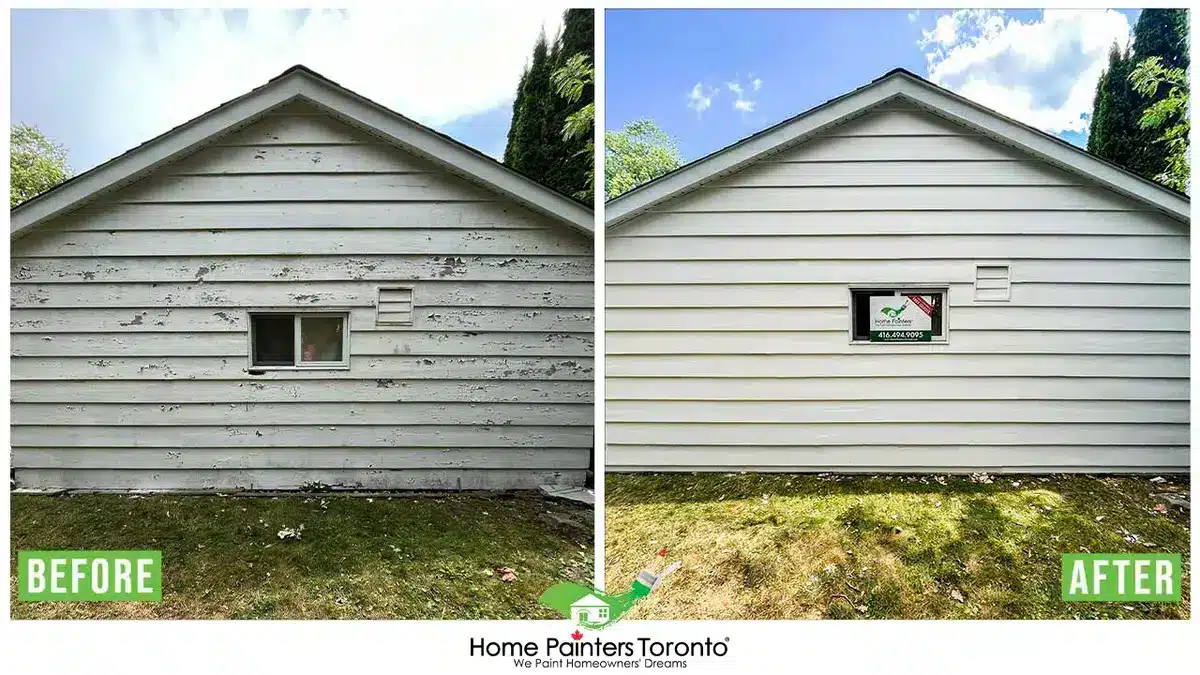
A failing exterior coating is a structural problem wearing a cosmetic disguise
Seasonal Timing Considerations for GTA Homeowners
Seasonal timing narrows the working window for exterior painting far more than it does for interior painting in the GTA. Exterior coatings depend on air and surface temperature, not just dry weather, to cure properly. Benjamin Moore's Aura Exterior Low Lustre, for example, can be applied down to 2 degrees Celsius, one of the wider cold-weather windows on the market, though most acrylic exterior coatings still perform best when daytime temperatures stay well above freezing during application and cure.
That temperature requirement gives GTA contractors a realistic exterior painting season running from roughly April through late October, weather depending. Morning dew point also matters on exterior projects, since paint applied before overnight dew has fully evaporated from a wall can trap moisture under the new film. Interior painting has no such constraint, since it happens in a controlled, heated space year-round regardless of the season outside. This is one reason a homeowner working against a fall deadline should book exterior work early in the season and treat interior painting as the more flexible half of the project.
Budget-Stretching Options If You Need Both Projects
Budget-stretching options exist for homeowners who need both an interior and an exterior project but can't fund both in the same year. Phasing the work strategically, instead of shrinking the scope of either project, usually protects quality better in the long run.
- Phase the exterior by elevation, starting with the most weather-exposed wall, typically south- or west-facing, and finishing the rest next season.
- Phase interior rooms by priority, starting with kitchens, bathrooms, and any room tied to a sale date or move-in timeline.
- Bundle exterior painting with related carpentry or deck and fence staining work, since scaffolding and site access costs are shared across both scopes.
- Ask about combined scheduling when booking both an interior and exterior project with the same contractor within one calendar year.
- Use an interior painting calculator or a written estimate to confirm the per-room range before committing funds to either project.
- Lean on warranty terms strategically. Interior work backed by a lifetime warranty carries less urgency to redo soon, while a shorter exterior warranty means the clock is already running on that surface's protection.
| Project Scope | Typical Cost Range (CAD + HST) |
|---|---|
| Exterior, small (single storey, minimal repairs) | $2,000 - $4,000 |
| Exterior, medium | $4,000 - $8,000 |
| Exterior, large | $8,000 - $10,000 |
| Exterior, XL, full repaint with repairs | $12,000 - $30,000 |
| Interior, per room (living or dining) | $400 - $900 |
| Interior, per room (bedroom) | $400 - $800 |
| Interior, per room (bathroom) | $250 - $500 |
| Interior, trims, doors, and baseboards | $700 - $1,200 |
These ranges reflect typical GTA project scopes and can shift based on the size of the home, surface condition, and the number of coats required. A full breakdown by project size is available on the cost of painting a house page, and homeowners weighing several rooms at once can get a faster starting estimate from the interior painting calculator.
A Simple Decision Framework for This Year's Budget
A simple decision framework settles most interior vs exterior home painting debates in four questions. Working through these in order usually points to a clear answer even before an estimator walks the property.
- Is either surface actively failing, showing peeling, cracking, moisture staining, or chalking?
- Is a sale, move, or life event creating a hard deadline for one project over the other?
- Which surface, left untreated for another year, creates the bigger risk: cosmetic wear or structural exposure?
- Does this year's budget cover one full project well, or would it stretch thinly across two partial ones?
Interior vs. Exterior Home Painting Priority: A Quick Self-Test
Answer yes or no to each of the four questions above for the home in question. Two or more answers pointing to the exterior mean that project should be booked first this year. Two or more answers pointing to the interior, especially a fixed sale deadline, mean the interior project should move up instead. A tie usually still favours the exterior, since its failure mode carries more risk if it gets ignored for another twelve months.
Interior vs. Exterior Priority FAQs
Exterior painting usually comes first when selling, unless the exterior is already in good condition, because it's the first thing buyers and appraisers see before they walk through the door. Interior painting still matters for staging, but a tired or damaged exterior can affect a buyer's impression before they even step inside. Preparing your home for sale often means budgeting for both, but exterior repairs typically get scheduled first if time allows.
Yes, peeling exterior paint is more urgent because it exposes the substrate underneath to moisture, while dated interior paint is a style issue with no structural risk attached. A wall that simply looks outdated will still protect the room behind it. A wall that is actively peeling on the outside of the house is no longer protecting anything.
Yes, interior and exterior painting can happen in the same season, since interior work isn't weather-dependent and can be scheduled around the exterior crew's timeline. Many GTA homeowners run both projects back to back between spring and fall, using the exterior's weather-dependent window as the anchor for scheduling.
Yes, exterior painting protects the building envelope directly, since it's the coating standing between wood framing and GTA weather, while interior painting protects surfaces that are already indoors and shielded from the elements. That difference is why exterior failure tends to compound faster than interior wear.
Split the two years by urgency, booking the project with active failure or a fixed deadline this year and setting aside the estimated range for the second project's start next spring or fall. A written estimate for both scopes up front makes it easier to plan the second year's budget accurately, and reaching out to contact us early can lock in scheduling before the busier months fill up.
It can be, since shared scheduling and combined project discounts sometimes reduce total labour costs, though each project still needs its own accurate estimate for materials and prep work. Homeowners considering kitchen cabinet painting alongside an exterior project, for example, should ask whether bundling the estimate visit saves time and cost on both.
Making the Right Call for Your Home This Year
Making the right call for your home this year comes down to urgency, not personal preference. Exterior surfaces protecting the structure deserve first attention when they show active failure, and interior surfaces waiting on a sale date or a life event deserve first attention when that deadline is fixed. Home Painters Toronto has walked GTA homeowners through this exact decision for years, backing every project with WSIB-compliant, fully insured crews and warranty-backed results, whichever surface comes first. Homeowners can browse client reviews from past interior and exterior projects across the GTA before deciding where to start.

Home Painters Toronto offers fast, free quotes and warranty-backed work on whichever project needs it most this year.
Get a Free Estimate