

Mould, Mildew, and Siding Damage: Why It's More Than a Surface Problem
Toronto homeowners often notice a musty smell near an exterior wall long before they see any visible damage. Mould behind siding repair becomes urgent once trapped moisture starts feeding fungal growth inside the wall cavity. This is not a simple cleaning job. The mould on the surface is often just the visible edge of a much larger moisture problem hiding behind the panels. Home Painters Toronto has served 17,000+ GTA homeowners and holds the HomeStars Best of Award 2026, so our crews recognize a compromised wall assembly the moment they open it up. This guide explains why mould behind siding needs a professional diagnosis, not a quick wipe down, and what proper remediation actually involves.
Mould behind siding signals trapped moisture inside the wall assembly, not just a dirty panel. Professional mould behind siding repair removes the affected material, corrects the moisture source such as failed flashing or a missing drainage gap, and rebuilds the wall with a proper weather barrier before new siding goes back on.
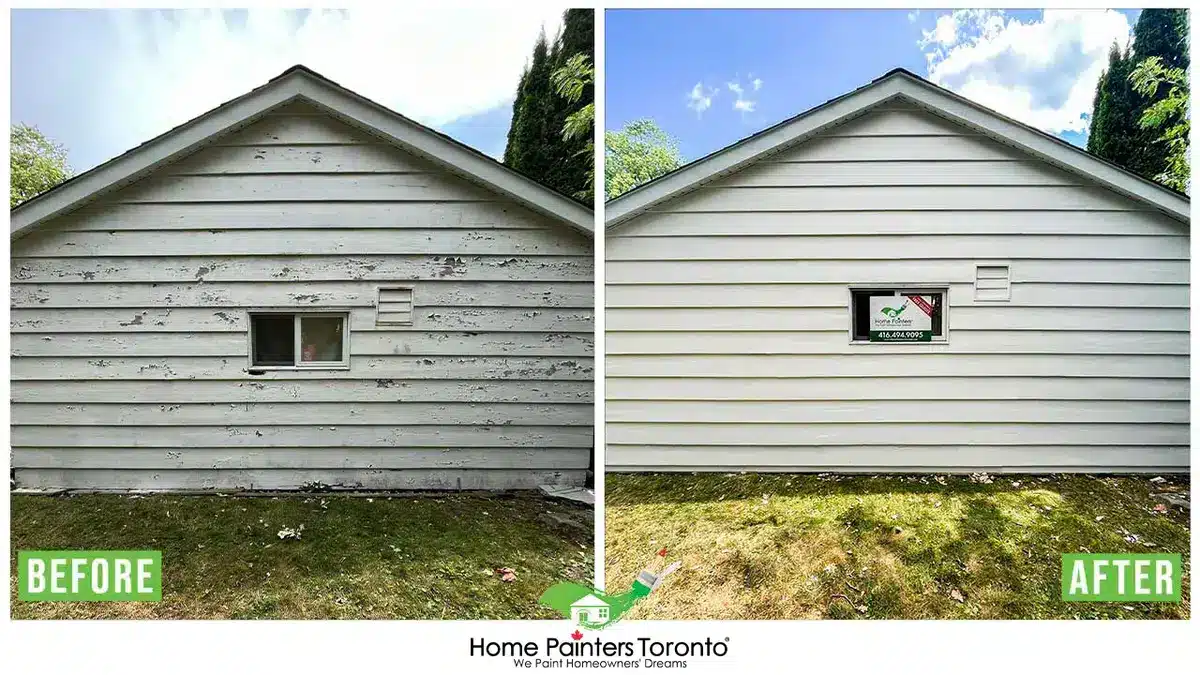
What Exactly Is Mould Behind Siding?
Mould behind siding is fungal growth that develops on sheathing, framing, or insulation once water becomes trapped inside the wall system. It needs three things to grow: a food source such as wood or paper-faced insulation, oxygen, and sustained moisture above roughly 20 percent content. Exterior siding is only the outer layer of a much larger wall assembly. Behind it sits a weather-resistant barrier, sheathing, framing, and sometimes a vapour barrier, and mould can colonize any of these layers.
Homeowners often assume a small dark patch near a seam is only surface dirt. In reality, that patch can mark years of slow water entry through a failed seal or missing flashing. According to EPA's brief guide on mould, moisture, and your home, mould produces allergens, irritants, and in some cases toxic substances once it establishes itself indoors. The same biology applies whether the mould grows on a bathroom ceiling or inside an exterior wall cavity behind vinyl siding.
Paper-faced insulation and oriented strand board sheathing are especially vulnerable because both provide an organic food source for spores. Solid dimensional lumber framing resists mould slightly longer, but it still supports growth once moisture content stays elevated for more than 48 hours. This is why our assessment always checks the sheathing and insulation layer, not just the siding surface itself.
How Mould Behind Siding Repair Differs From Surface Cleaning
Mould behind siding repair is a wall assembly correction, not a wash down. Surface cleaning only removes what a hose or brush can reach on the outer panel. A true repair means removing the affected siding, drying the cavity, treating the framing, and rebuilding the weather barrier before anything goes back on. Skipping any of these steps leaves the moisture source untouched, so the mould returns within a season.
The Science Behind Moisture and Mould Growth in Ontario Winters
Ontario's freeze-thaw cycle drives most of the moisture that ends up trapped behind Toronto siding. Warm indoor air constantly pushes water vapour toward the colder exterior wall during the heating season. When that vapour hits a cold sheathing layer, it condenses into liquid water, the same way a cold drink sweats on a humid day. CMHC's research on mould in housing confirms that moisture control, not surface cleaning, is the real key to stopping mould growth.
This condensation cycle repeats on cold nights from November through March. Small amounts of trapped water rarely cause harm on their own. But repeated freezing and thawing keeps wood framing damp for months at a time, and that sustained dampness is exactly what fungal spores need to establish a colony behind the siding.
Vinyl vs Wood Siding: Which Traps More Moisture?
Vinyl siding has weep holes that let bulk water drain out, but a punctured or missing weather barrier behind it still allows condensation to sit against the sheathing. Wood siding behaves differently because the material itself absorbs moisture directly, so a wood panel can carry water for weeks after a storm passes. Fibre cement and aluminum panels resist absorption better, yet poor flashing details around windows and corners can trap water behind any siding type, no matter the material.
| Siding Material | Moisture Risk | Common Failure Point |
|---|---|---|
| Vinyl siding | Low absorption, but traps condensation if the barrier fails | Blocked weep holes or a punctured barrier |
| Wood siding | High absorption directly into the material | Panel face and butt joints |
| Fibre cement | Low absorption, resists water well | Poor flashing at cuts and edges |
| Aluminum siding | Very low absorption | Fastener penetrations and corners |
Homes finished with exterior stucco siding see a different pattern again, since stucco relies on a continuous drainage plane behind the coating to stay dry.
Warning Signs Homeowners Miss Behind Their Siding
A musty smell near an exterior wall is usually the first sign, even before any visible staining appears outside. Soft or spongy siding when you press on it suggests the material underneath has already absorbed water for some time. Bubbling or peeling paint near seams and corners often points to trapped vapour pushing out from behind the panel.
- Discoloured streaks running down from a seam or window
- Warped or bowed panels that were once flat
- Higher heating bills from wet, compressed insulation
- Small dark speckling near soffit and fascia returns
- A cold, damp feeling on the interior wall, sometimes paired with cracked drywall nearby
Most homeowners only notice the exterior symptom, while the real damage sits inside the wall where nobody looks until a full inspection happens.
Older Toronto homes built before the 1980s often have less effective weather barriers than newer GTA construction, which raises the risk of hidden moisture in the original wall assembly. Newer homes are not immune either, since a single missed flashing detail during construction can trap water behind siding for years without any visible sign. Homes on shaded, north-facing walls in neighbourhoods with mature tree cover tend to dry out more slowly after rain, which extends the window for mould to establish.
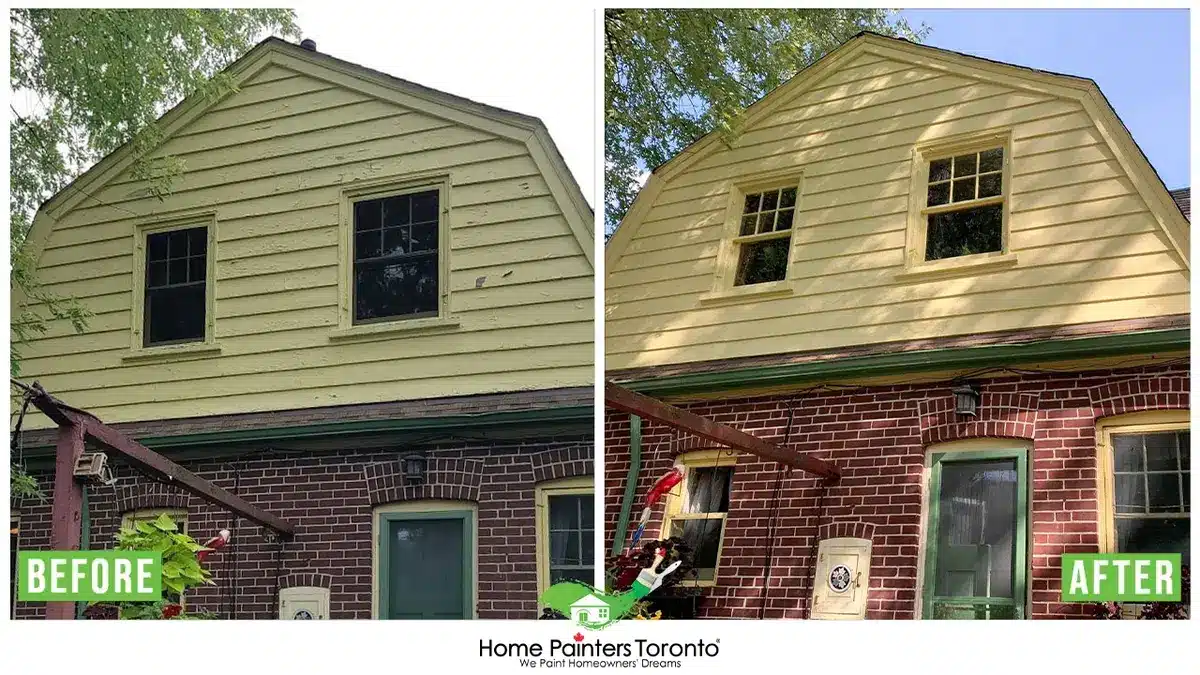
Most homeowners only notice the exterior symptom, while the real damage sits inside the wall where nobody looks
Step by Step Professional Mould Remediation and Siding Repair Process
Professional mould behind siding repair follows five stages: assessment, containment, removal, remediation, and rebuild. Our crew starts with a moisture inspection using a pin-style meter to map how far the water has spread through the wall. Containment comes next, sealing off the work area so spores do not migrate to unaffected sections of the home. Removal means stripping the compromised siding, sheathing, and insulation down to sound material.
Remediation includes a HEPA-filtered vacuum pass and an antimicrobial treatment on the exposed framing. Our team also corrects the actual moisture source at this stage, whether that means resealing a window, replacing failed flashing, or adding a drainage gap behind the cladding. Where the framing itself needs structural attention, this work overlaps with our wood frame repair service. The rebuild stage installs a new weather-resistant barrier, correct flashing details, and matching siding, finished to the original profile and colour.
A full assessment usually takes one to two hours on site, including moisture readings at multiple points along the affected wall. Our crew photographs each reading and documents the extent of the damage before quoting the repair, so the homeowner sees exactly what the wall looks like underneath the siding. This documentation also supports an insurance claim if the damage traces back to a covered event such as wind-driven rain.
Moisture Meter Readings and Mould Testing Protocols
Building science guidance generally treats wood framing above roughly 20 percent moisture content as a fungal growth risk, a threshold reflected in CMHC's mould and moisture resources for homeowners. Our crews record a baseline reading before removal, then a second reading once the cavity has dried, so the homeowner has documented proof the wall is safe before the rebuild begins. Visual mould testing then confirms whether the antimicrobial treatment cleared the growth completely.
Why Painting or Caulking Over Mould Fails
Painting or caulking over mould behind siding traps the same moisture that caused the problem in the first place. A fresh bead of caulking around windows and doors or a coat of paint seals the surface, but it does nothing to dry out the framing underneath. EPA guidance on mould and moisture is direct on this point: fix the water problem, or the mould comes back.
Sealing a damp wall can actually make conditions worse, since it locks moisture in without any vapour able to escape. Homeowners who paint over a mould stain often see it reappear within a single heating season, sometimes darker than before. A proper repair always removes the moisture source before any finish coat goes back on the wall.
Elastomeric coatings are especially risky on a damp wall because their thick film blocks vapour from escaping in either direction. That trapped vapour has nowhere to go except back into the framing, which keeps the moisture content elevated long after the coating looks finished. A wall needs to dry out completely before any coating, caulk, or paint goes back on.
What Mould Behind Siding Repair Costs in Toronto
Mould behind siding repair in Toronto typically runs between $2,000 and $10,000 CAD plus HST, depending on how far the moisture has spread and how much of the wall assembly needs rebuilding.
| Project Scope | Estimated Cost (CAD + HST) |
|---|---|
| Localized panel removal and spot mould treatment | $2,000 – $4,000 |
| Wall section remediation with new weather barrier and re-siding | $4,000 – $8,000 |
| Extensive wall assembly rebuild across multiple elevations | $8,000 – $10,000 |
Cost climbs with the amount of framing that needs replacement, the siding material being matched, and how many elevations of the home are affected. A single wall section with early-stage moisture costs far less to correct than a whole side of the house where rot has already set in. You can compare this against a broader exterior project on our cost of painting a house page, and getting a same-day estimate early keeps a small repair from growing into a much larger rebuild.
Home insurance sometimes covers part of the repair when the moisture source traces back to a sudden event such as storm damage or a burst pipe. Gradual seepage from age or poor maintenance is typically excluded, so a professional assessment early helps clarify which category applies. Home Painters Toronto provides a written, itemized quote so homeowners can see exactly what falls under insurance and what falls under general maintenance.
Our Recent Mould and Siding Repair Project in Etobicoke
- At a recent siding repair project in Etobicoke's Humber Valley Village, our crew pulled back a section of warped wood siding after the homeowner reported a musty smell near the family room wall.
- A pin-style moisture meter read 28 percent moisture content in the sheathing behind the panel, well above the safe range for framing lumber.
- We removed the affected material, let the cavity dry fully, then installed a new weather-resistant barrier before re-siding with a matching cedar profile.
- The final coat used Benjamin Moore Aura Exterior in Low Lustre finish, applied at roughly 3 mil dry film thickness across two coats.
The entire job followed our WSIB-compliant, fully insured process, and the finished wall carries our warranty-backed results.

A new weather-resistant barrier and matching cedar profile finished the rebuild after the cavity dried fully
Expected Longevity After Professional Mould Remediation and Siding Repair
A properly remediated wall with a new weather barrier and correctly flashed siding typically stays mould-free for well over a decade, provided the home's ventilation and drainage keep working as designed. Our exterior painting work on the rebuilt wall carries a 3-year warranty, and every repair follows a 100 percent satisfaction guarantee.
Longevity depends on more than the repair itself. Bathroom fans that vent into the attic instead of outside, clogged gutters, and gaps in exterior caulking can all reintroduce the same moisture conditions. Homeowners who keep up with basic exterior maintenance rarely see a repeat mould problem in the same wall section.
A short annual check keeps a repaired wall in good condition for years to come. Clearing gutters before winter, confirming bathroom and dryer vents exhaust outside instead of into the attic, and resealing any cracked caulking around windows all reduce the chance of new moisture finding a way behind the siding. These small checks cost far less than a second remediation project.
Frequently Asked Questions
Look for a musty smell near an exterior wall, soft or spongy siding when pressed, bubbling paint near seams, and unusually high heating bills. A professional moisture inspection with a pin-style meter confirms what is happening inside the wall, since visible siding condition alone cannot rule out hidden damage. Catching these signs early keeps a small, contained repair from turning into a full wall rebuild.
Mould exposure can trigger allergic reactions in sensitive individuals, including sneezing, a runny nose, red eyes, and skin irritation, according to EPA guidance on mould and health. People with asthma or a weakened immune system face a higher risk from prolonged exposure to a hidden mould colony.
Coverage depends on the cause. Sudden storm or impact damage that lets water in is often covered, while long-term neglect or gradual seepage typically is not. A written professional assessment helps document the cause and supports a stronger insurance claim either way. Home Painters Toronto's written estimates clearly break out labour, material, and disposal costs so an insurance adjuster can review the scope quickly.
A localized repair on one wall section usually takes two to four days from assessment to finished siding. A larger rebuild across multiple elevations can take one to two weeks, depending on how much framing and weather barrier needs replacement. Weather and material availability can shift the timeline slightly, especially when a custom colour match is needed for the replacement siding.
Surface cleaning only addresses what is visible on the outer panel and leaves the moisture source untouched behind the wall. Professional assessment is the only way to confirm whether mould has spread into the framing, insulation, or sheathing before it becomes a structural issue. Our crews carry moisture meters and mould testing tools on every assessment, which most households do not have on hand.

Get a Professional Mould and Siding Assessment
Mould behind siding is rarely just a cosmetic problem. It signals a moisture source that needs correcting before the damage spreads into the framing and insulation behind your walls. Home Painters Toronto brings 38+ years of experience, WSIB compliance, and warranty-backed results to every mould and siding repair project across the GTA, backed by our client reviews and full FAQ page. Read more about why homeowners choose us before you book.
Contact Home Painters Toronto for a fast, free quote and warranty-backed work on your next siding repair.
Get a Free Estimate