

Toronto property managers know a vacant unit costs money every day it sits empty between tenants. Multi-unit rental painting turnover is one of the biggest levers a property manager has over that vacancy clock, since paint is almost always the last trade through the door and the first thing a prospective tenant judges. Home Painters Toronto works with GTA landlords and property management companies who need a repeatable process for repainting units between tenants, not a fresh decision every time a lease ends. A rushed or badly sequenced turnover paint job creates callbacks, pushes back move-in dates, and drives up the per-door cost across an entire portfolio. This guide covers how to build a standard turn spec, sequence painting with other trades, batch work across a building, and budget for it, so your next turnover runs on a schedule instead of guesswork.
A repeatable multi-unit rental painting turnover process pairs a standardized scope tier, touch-up, wall refresh, or full repaint, with a fixed trade sequence that puts painting near the end, after repairs and flooring. Batching turnovers by floor or building cuts mobilization costs, and a written contractor agreement with WSIB and liability documentation keeps scheduling predictable across a portfolio.
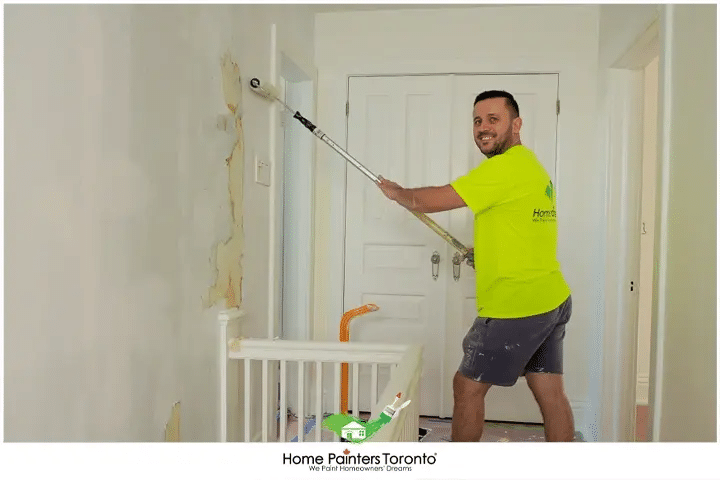
A rushed or badly sequenced turnover paint job creates callbacks, pushes back move-in dates, and drives up the per-door cost
Why a Repeatable Multi-Unit Rental Painting Turnover Process Matters
A repeatable multi-unit rental painting turnover process matters because every extra day a unit sits vacant for paint work is a day of lost rent, and inconsistent scheduling is the single biggest cause of turnover delays across GTA rental portfolios. When each unit gets painted on an ad hoc basis, with a different crew, colour, or scope decision every time, property managers lose the ability to forecast costs or hold a contractor to a timeline. A standardized process also protects consistency for future resale or refinancing appraisals, since a building with uniform, well-documented unit conditions reads as better managed. Toronto's tight rental market, where purpose-built vacancy has been climbing, gives property managers more reason than ever to shorten the gap between move-out and move-in. This applies just as much to a condo rental portfolio, where condominium and apartment painting has its own access rules, as it does to a purpose-built rental building, and larger mixed-use properties often blend into commercial painting services for shared retail or office space on the ground floor.
What Makes a Multi-Unit Rental Painting Turnover Different From a Single-Home Repaint
A multi-unit rental painting turnover runs on a compressed timeline that a single-family repaint never has to deal with. A homeowner can let a painting project stretch over two or three weeks. A vacant rental unit costs the landlord rent every single day it sits empty, so the painting window is usually 24 to 72 hours, not weeks. Multi-unit work also has to account for shared building access, freight elevator booking windows, and building management rules that a detached home repaint never touches. Colour and sheen also need to stay standardized across dozens or hundreds of units, both for cost control and so maintenance staff can keep a small, predictable stock of touch-up paint on hand.
Building a Standard Turn Spec: Colour, Sheen, and Scope Tiers
A standard turn spec for multi-unit rental painting turnover defines three scope tiers, touch-up, wall refresh, and full repaint, so every unit gets a consistent, budgeted response instead of a judgment call at the door. Locking in one approved colour (typically a neutral like a warm white or light greige) and one sheen for walls, and a separate sheen for trim, lets a crew move through a unit without waiting on a decision. Most GTA property managers standardize on an eggshell or low-lustre finish for walls, since it resists scuffing and wipes clean better than flat while still hiding minor drywall imperfections between coats. Trim and doors typically move to a semi-gloss for durability against daily contact. Locking these choices into a written spec, alongside the broader menu of interior painting services a contractor offers, keeps every unit turnover consistent no matter which crew shows up.
| Scope Tier | What It Covers | When to Use It |
|---|---|---|
| Touch-Up | Spot repair of scuffs, nail holes, and minor scratches on the existing colour, no full wall recoat | Short tenancy, unit already in good condition, fast relet needed |
| Wall Refresh | One to two coat repaint of high-wear walls only, such as hallways and main living areas | Moderate wear after a tenancy of a year or two, trim and ceilings still in good shape |
| Full Repaint | Complete two-coat repaint of walls, ceilings, trim, doors, and closets | Long-term tenancy turnover, smoke or pet odour damage, colour change, or pre-sale unit prep |
Older buildings built before the 1980s sometimes still carry textured ceilings, and a full repaint scope tier is the right time to fold in popcorn ceiling removal instead of painting over a surface that will need removal eventually anyway.
- At a recent 42-unit turnover project in a North York rental building, our crew standardized every unit on Benjamin Moore Ultra Spec 500 in Eggshell for walls and Semi-Gloss for trim.
- We logged wet film thickness during application and confirmed a dry film thickness of 1.5 to 2.0 mils per coat, consistent with Benjamin Moore's published technical data sheet for the product, before releasing each unit back to leasing staff.
How to Sequence Painting With Other Turnover Trades
Painting should be scheduled after flooring and repair trades finish their rough work but before final hardware and fixture installation, since that order avoids double-handling of paint drips, dust, and wall damage. Drywall repair and installation, appliance swaps, and plumbing repairs need to happen first so the painting crew works on a finished substrate instead of painting around active repairs. Flooring installation, when it involves sanding or heavy dust like hardwood refinishing, also has to come before painting, since airborne dust settles on wet or newly cured paint film and ruins the finish. Once painting is complete and cured, outlet covers, light fixtures, blinds, and door hardware go back on last, which keeps them free of paint spatter and protects the crew from working around installed fixtures.
- Complete drywall repair, patching, and any structural or plumbing work first.
- Finish dust-heavy flooring work, such as sanding or subfloor prep, before any paint goes on the walls.
- Schedule the painting crew for walls, ceilings, trim, and doors as a single continuous block.
- Allow the manufacturer's recommended cure time before reinstalling switch plates and fixtures.
- Bring in hardware, blinds, and final cleaning crews only after paint has fully cured.
Why Painting Comes Near the End of the Trade Sequence
Paint needs a clean, dust-free, fully cured substrate to bond properly, which is the technical reason it sits near the back of the trade sequence. Drywall compound typically needs 24 to 48 hours of cure time before priming, depending on humidity and patch thickness, and painting over compound that hasn't fully dried traps moisture behind the paint film and leads to bubbling. Sanding dust from flooring or drywall work is one of the most common causes of adhesion failure on a fresh coat, since even a light film of dust on the wall prevents the next coat from bonding evenly. Scheduling painting as a single, uninterrupted block, instead of in stages around other trades, also protects the finish and shortens the total turnover window.

Scheduling painting as a single, uninterrupted block protects the finish and shortens the total turnover window
Scheduling Around Occupied Units and Common Areas
Scheduling painting crews around occupied units means giving tenants proper written notice, coordinating off-hours work in shared hallways, and sequencing floor by floor so a crew never blocks a resident's only exit. Under Ontario's Residential Tenancies Act, a landlord must give tenants at least 24 hours' written notice before entering a rental unit to carry out a repair or do work, which applies directly to any turnover or maintenance painting happening inside an occupied suite. Common areas like hallways, lobbies, and stairwells don't require the same tenant notice, but building management still needs advance warning to post signage and reroute foot traffic.
- Confirm move-out dates with leasing staff before locking in a painting schedule, since turnovers that start before a unit is fully vacated create access conflicts.
- Notify tenants in adjacent units when strong paint odour or hallway staging is expected, even if their own unit isn't being painted.
- Book freight elevators and loading dock windows in advance for buildings where equipment has to move through shared corridors.
- Schedule common-area work, such as hallway touch-ups or lobby repaints, during low-traffic hours to reduce disruption.
- Keep a single crew lead as the point of contact for building staff, so questions don't get routed through multiple painters, and share a direct line to contact our team for schedule changes.
Batching Turnovers Across a Building or Portfolio
Batching turnovers means grouping two or more vacant units, by floor, wing, or entire building, into a single scheduled block so a crew mobilizes once instead of many times, and that batching is the single biggest lever for cutting the per-door cost of a turnover program. A crew that sets up equipment, drop sheets, and paint supplies once for six units on the same floor spends far less time per unit than a crew dispatched for one unit at a time across scattered move-out dates. Standardizing on one colour and finish across the portfolio also reduces material waste, since leftover paint from one unit can finish out the next instead of sitting unused. Property managers who batch turnovers typically see faster overall completion even though each individual unit isn't painted the moment it goes vacant, because the crew works continuously instead of packing up and returning.
- Group vacant units by floor or wing whenever lease end dates allow a few days of overlap.
- Negotiate a standing portfolio rate with a single contractor instead of quoting each unit separately.
- Stock a shared supply of the standardized colour on site for the duration of a multi-unit block.
- Reserve elevator and loading access for the full batch window, not unit by unit.
Floor-by-Floor Batching vs. Whole-Building Shutdowns
Floor-by-floor batching schedules a painting crew through one level at a time while the rest of the building stays fully occupied and operational. This approach works well for buildings with rolling vacancies, where units turn over at different times throughout the year, since it lets a crew clear a section without disrupting tenants elsewhere. A whole-building shutdown, where every unit is painted in one compressed window, only makes sense during a major renovation, a change in ownership, or a building-wide colour standardization project, since it requires most or all units to be vacant at once. Most GTA property managers rely on floor-by-floor or section-by-section batching for routine turnover work and reserve whole-building scheduling for larger capital projects.
What a Multi-Unit Painting Turnover Typically Costs
A single-bedroom rental unit turnover repaint in the GTA typically costs $1,300 to $2,000 for a full repaint, while a two-bedroom unit runs $1,800 to $2,800, depending on wall condition, ceiling height, and how much trim and door work is included. Touch-up and wall refresh tiers cost significantly less, since they cover a fraction of the surface area of a full repaint. Exterior and common-area work, such as hallway or lobby repainting, is priced separately from full-building exterior painting services and scales with square footage across the shared spaces.
| Unit Type | Touch-Up | Wall Refresh | Full Repaint |
|---|---|---|---|
| Studio / Bachelor | $250 - $450 | $500 - $900 | $900 - $1,500 |
| One-Bedroom | $300 - $600 | $700 - $1,200 | $1,300 - $2,000 |
| Two-Bedroom | $400 - $800 | $1,000 - $1,700 | $1,800 - $2,800 |
| Common Areas (per building, hallways and lobby) | N/A | $2,000 - $4,000 | $4,000 - $8,000 |
These ranges reflect standard turn conditions with no major drywall repair or odour remediation. Units with heavy smoke damage, water staining, or extensive patching typically land at the higher end of the full repaint range, since those units need an extra prime coat before the finish coats go on.
Working With a Painting Contractor as a Property Manager: What to Ask For
Property managers should ask any painting contractor for WSIB clearance, proof of general liability insurance, a standing price list by scope tier, and a single point of contact before signing a portfolio-wide agreement. A contractor who can't produce current WSIB coverage or liability documentation puts the building owner at risk if a worker is injured on site during a turnover. Home Painters Toronto is fully insured and WSIB compliant on every project, and all turnover and repaint work comes with warranty-backed results, which matters for a property manager who needs consistent quality across dozens of units over several years. Property managers evaluating a new contractor can check client reviews, browse recent painting projects for multi-unit work, and read why property managers choose Home Painters Toronto before committing to a portfolio-wide agreement.
- Request a current WSIB clearance certificate and a copy of the general liability insurance policy before work begins.
- Ask for a standing price list by scope tier, so quotes don't need to be renegotiated for every unit.
- Confirm the contractor can staff multiple crews for batched or whole-building work without extending the timeline.
- Get a single project coordinator assigned to the account, instead of a different contact for every building.
- Ask what warranty applies to interior turnover work and how a callback is handled if a tenant reports an issue.
Turning Multi-Unit Rental Painting Into a Repeatable Process
Turning multi-unit rental painting into a repeatable process comes down to three decisions made once and reused every turnover: a standard scope and colour spec, a fixed trade sequence with painting near the end, and a contractor relationship built for batching instead of one-off calls. Property managers who lock in those three pieces stop re-deciding the same questions unit by unit and start running turnovers on a predictable schedule and budget. The building's rental performance, including vacancy days and per-door turnover cost, tends to improve once the process is standardized instead of handled case by case.
Multi-Unit Rental Painting Turnover FAQs
The questions below cover what property managers most often ask before committing to a turnover schedule. For general questions beyond scheduling, see the full frequently asked questions page.
A standard one or two-bedroom unit turnover repaint typically takes one to three days, depending on scope tier and wall condition. A touch-up can often be completed in under a day, while a full repaint with ceilings, trim, and doors needs closer to two to three days to allow proper cure time between coats. Larger units or those needing drywall repair before painting can take longer. Batched multi-unit jobs move faster per unit than single, isolated turnovers because the crew is already on site.
Most GTA property managers repaint a unit at every tenant turnover, or at minimum every two to three years if the same tenant stays long-term. A unit with visible wear, scuffing, or an outdated colour should get at least a wall refresh at each turnover, even if a full repaint isn't needed. Units that go three or more years without any paint work usually need a full repaint by the time they turn over, since minor damage accumulates.
Standardizing on one approved colour and sheen across a building or portfolio is strongly recommended for cost and maintenance reasons. A single colour lets maintenance staff keep one small stock of touch-up paint instead of tracking dozens of shade variations. It also speeds up quoting and scheduling, since a contractor doesn't need to confirm colour choice unit by unit. Some property managers offer a very small approved palette, such as two neutral options, for flexibility without losing the cost benefit of standardization.
Painters generally don't need individual tenant notice to work in shared common areas like hallways or lobbies, since those spaces aren't part of any single tenant's private unit. Building management should still post notice of the work and coordinate timing to avoid blocking exits or elevator access. Entry into an occupied private unit is different and requires the landlord to give proper written notice under the Residential Tenancies Act. Property managers should keep these two situations separate when planning a schedule.
Exterior painting for a multi-unit building typically ranges from $8,000 to $30,000 or more, depending on the building's size, surface material, and number of storeys. Larger buildings with masonry, stucco, or extensive trim work land toward the higher end of that range. A written estimate from a contractor after a site walkthrough gives a more accurate number than a general range, since access requirements like scaffolding or lift equipment affect cost significantly. Common-area interior repainting is priced separately from exterior building work.
A contractor with enough crew capacity can absolutely work across multiple buildings on a coordinated schedule, which is one of the main advantages of a standing portfolio agreement. This setup lets a property manager batch turnovers across several properties instead of getting a new contractor up to speed at every building. It also keeps pricing, product standards, and warranty terms consistent no matter which building a unit sits in. Property managers overseeing several buildings should confirm crew capacity and response time before committing to a single contractor across the full portfolio.
Toronto's purpose-built rental turnover rate climbed to 8.7 percent in 2025, up from a record low the year before, which means more units are changing hands and more property managers need a painting process that can keep pace without adding vacant days.

Home Painters Toronto offers fast, free quotes and warranty-backed work for property managers scheduling turnovers across single buildings or full GTA portfolios. Contact Home Painters Toronto to set up a standing turnover rate for your next batch of units.
Get a Free Estimate