

Toronto's century and character homes, from Cabbagetown Victorians to North York post-war bungalows, often need older home soffit and fascia repair that standard vinyl replacement kits cannot deliver. These properties were built with custom wood profiles, non-standard fascia depths, and decorative details that modern aluminum coil stock was never designed to match. A generic contractor working from a stock catalogue will usually flatten or simplify these details, which changes the character of the whole roofline. Home Painters Toronto has repaired roofline components on pre-war and character homes across the GTA for years, so we know where standard materials fail and where custom matching is worth the extra step. This guide explains what makes older home soffit and fascia repair different, what it costs, and when heritage rules apply.
Older home soffit and fascia repair typically requires custom profile matching, wood species identification, and sometimes City of Toronto heritage approval before work begins. Expect costs from roughly $2,000 for a small patch to $20,000 or more for whole-home custom millwork replacement, with timelines extending when original materials must be sourced or fabricated.
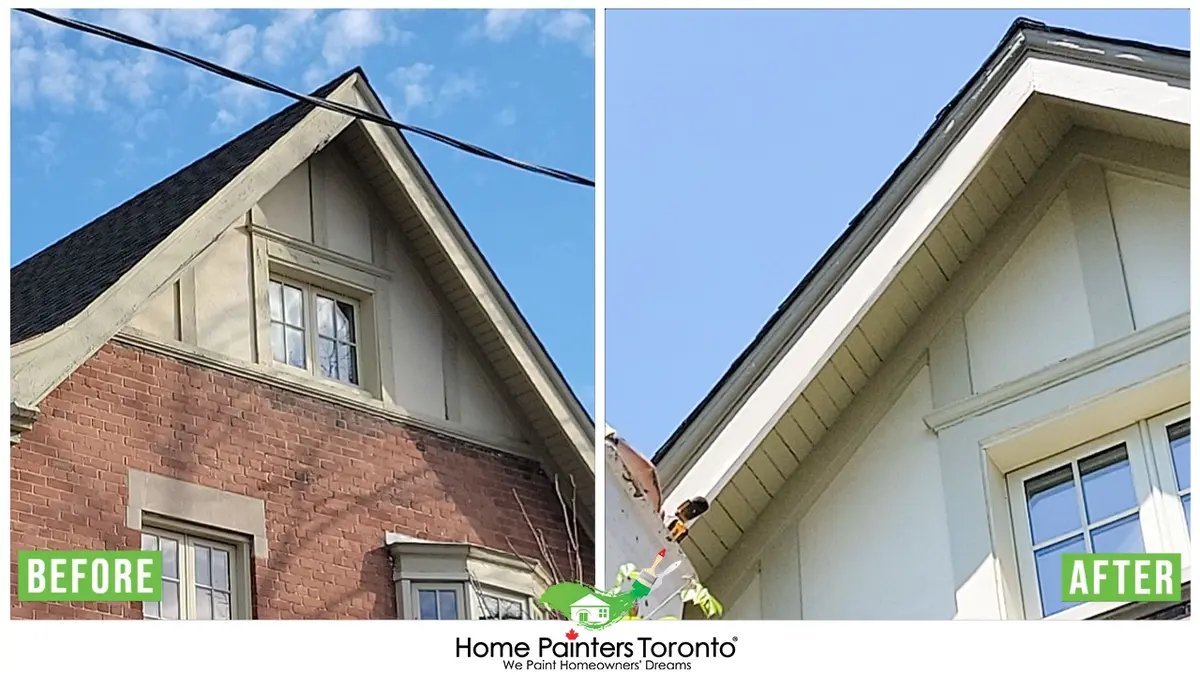
How Much Does Older Home Soffit and Fascia Repair Cost in Toronto?
Older home soffit and fascia repair in Toronto usually costs between $2,000 and $20,000 or more, depending on how much custom profile matching and wood sourcing the project needs. A small patch on one section of tongue-and-groove soffit sits at the low end. A full custom millwork restoration across several elevations of a heritage-grade home sits at the high end, especially when original profiles must be milled from scratch. Home Painters Toronto's general soffit and fascia repair page covers pricing for standard homes, and this guide focuses on the extra steps required for century and character properties.
| Project Scope | Estimated Cost (CAD + HST) |
|---|---|
| Minor repair or localized board replacement | $2,000 – $4,000 |
| Full elevation replacement with custom profile matching | $4,000 – $8,000 |
| Whole-home custom millwork restoration (multi-elevation, heritage-grade) | $8,000 – $20,000+ |
Wood species drives much of the cost difference. Clear cedar and old-growth fir cost more than standard construction-grade lumber, but they hold paint film longer on an exposed roofline. Access matters too. A two-and-a-half-storey Annex home with a steep roof pitch takes longer to scaffold than a North York bungalow, and that adds labour hours regardless of material. Home Painters Toronto provides free, itemized quotes after inspecting a home's soffit and fascia condition in person, since photos alone rarely show hidden rot behind painted wood. Same-day estimates are available for most GTA addresses, which helps homeowners budget before committing to a full custom millwork restoration.
Why Century and Character Homes Need a Different Repair Approach
Century and character homes need a different soffit and fascia repair approach because their original components were built with dimensions, wood species, and decorative profiles that modern stock materials do not match. Homes built before 1950 in neighbourhoods like Cabbagetown, the Annex, and Leaside often used tongue-and-groove wood soffit, deep overhangs, and exposed rafter tails on Craftsman and Tudor-influenced designs. Standard aluminum soffit panels come in a handful of flat or vented profiles, which cannot reproduce a corbel bracket or a beaded board pattern. Homes with half-timbered Tudor Revival details often need matching Tudor board repair alongside fascia work, since the two elements frequently share fastening points along the roofline.
Swapping in stock material during a repair often creates a visible mismatch on one section of roofline while the rest stays original. That mismatch becomes permanent unless the whole elevation gets replaced to match. In the Kingsway and Rosedale, we still see original wide fascia boards paired with narrow crown detail that many contractors price incorrectly, because they assume every fascia board is a standard dimension. Guessing at sizing on a quote usually leads to a change order once the crew opens the roofline and finds something different underneath decades of paint. Because siding and fascia deteriorate at similar rates on an older exterior, we often address exterior wood siding repair on the same visit. In older pockets of Riverdale and Leslieville, narrow lot lines mean fascia boards often run closer to a neighbouring property line than current setback guidelines would allow for new construction, so access and scaffolding placement need extra planning before work starts.
Common Roofline Problems in Toronto's Older Housing Stock
The most common roofline problems in Toronto's older housing stock are rotted tongue-and-groove wood soffit, cracked or checked fascia boards from decades of freeze-thaw cycling, and undersized or blocked ventilation that predates current building practices. Many pre-war homes were built with little or no soffit ventilation at all, since attic ventilation standards did not exist yet when they were framed.
| Problem | Typical Cause on Older Homes |
|---|---|
| Rotted tongue-and-groove soffit | Decades of paint failure exposing bare wood to moisture |
| Split or checked fascia | Repeated freeze-thaw cycling on old-growth lumber |
| Missing or blocked ventilation | Homes built before soffit vent standards existed |
| Mismatched repair sections | Previous repairs used stock material instead of matched profiles |
| Loose or missing corbel brackets | Decorative brackets removed during past repairs and never replaced |
Rot at the fascia often travels into adjoining trim, which is when window wood frame repair becomes part of the same job. Front porches on older homes show a similar decay pattern, and porch wood replacement frequently gets scheduled alongside soffit and fascia work. Retrofitting ventilation into an older soffit assembly also needs care, since cutting new vent holes into a solid tongue-and-groove board can weaken it if the board is already thin from decades of sanding and repainting. We test board thickness before cutting new vents and add supplemental venting elsewhere on the roofline when the original boards cannot support it.
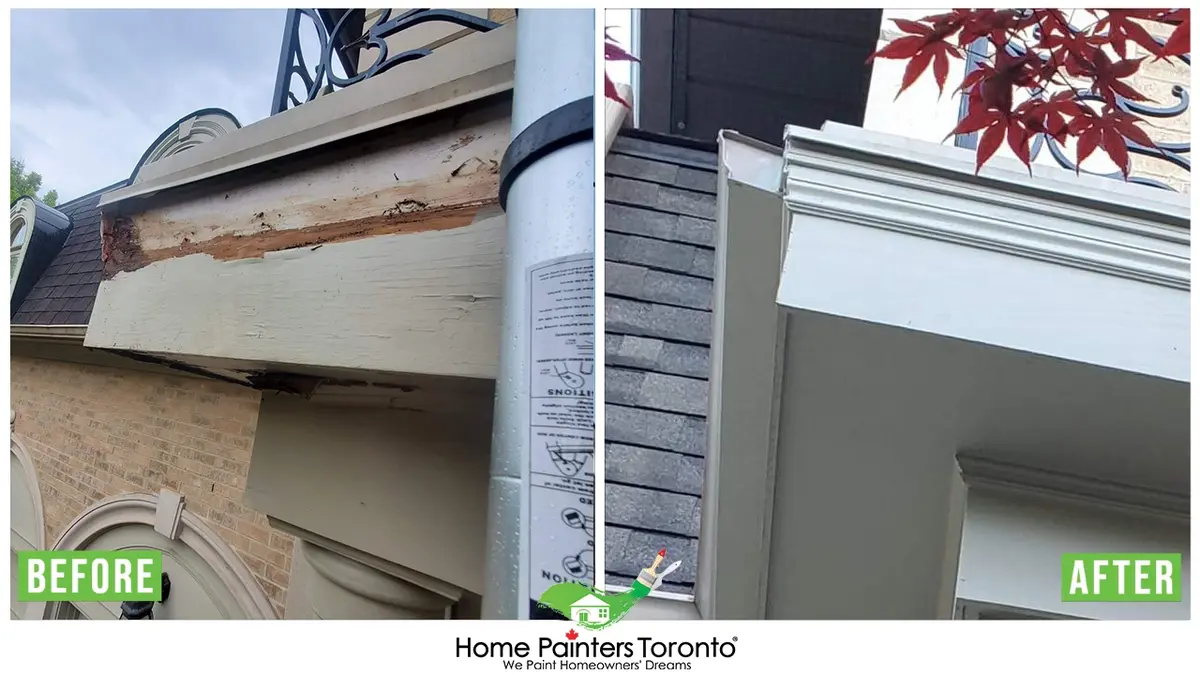
Matching Custom and Discontinued Fascia Profiles
Matching custom and discontinued fascia profiles means having a millwork shop reproduce the original moulding shape from a physical sample, since Toronto's building supply chains stopped stocking many pre-war soffit and fascia profiles decades ago. Big-box lumber yards carry a narrow range of standard fascia widths and soffit vent patterns, which rarely match a house built in the 1920s or 1930s. This process typically adds several days to the project timeline compared with installing stock aluminum, since the millwork shop needs lead time to set up custom knives before cutting begins.
How We Match Original Fascia Profiles on Older Toronto Homes
We start by removing a short, intact section of the original fascia or soffit board as a template. We measure that section for depth, thickness, and the exact curve or bead pattern, then send it to a millwork shop that can run custom knives to reproduce the profile. This keeps the roofline visually consistent even when only one section needs replacement.
Sourcing Custom Millwork When Original Material Is Discontinued
When the original wood species is no longer commonly milled, we substitute a comparable species with similar grain and paint-holding properties, such as clear cedar in place of old-growth fir. New material gets kiln-dried to a moisture range close to what the Canadian Wood Council recommends for exterior trim before installation, since wood installed too wet will shrink, cup, or crack the paint film once it dries in place.
Heritage Designation and Municipal Considerations in Toronto
Heritage designation matters for soffit and fascia repair because properties on Toronto's Heritage Register or inside a Heritage Conservation District may need a heritage permit before any exterior alteration, including roofline work. The City of Toronto's own heritage permit guide outlines which repairs are typically exempt and which require formal review, and repairs that use different materials than the original generally trigger that review. On designated properties, brick chimney repair often needs the same permit process as fascia replacement, since both are visible from the street. We sometimes coordinate roofline work with brick and mortar repair where a chimney or parapet falls under the same heritage review.
Properties simply listed on the Heritage Register, without full designation, generally have more flexibility. Formal designation under Part IV of the Ontario Heritage Act, or inclusion in a Heritage Conservation District under Part V, is what typically triggers mandatory permit review for exterior work like fascia replacement.
When a Property Requires City of Toronto Heritage Approval
A heritage permit is usually required when a repair changes the exterior appearance of a listed or designated property, or when replacement material differs from what was originally installed. Straightforward repairs using matching materials are often exempt, but we confirm designation status and district guidelines before quoting exterior work on a flagged address, so homeowners are not left waiting mid-project for approval.

The Risk of Generic Materials, and How Long a Proper Repair Lasts
Installing generic aluminum coil stock or vinyl soffit on a pre-war roofline traps moisture behind the material because the original wood substrate was designed to breathe, which accelerates hidden rot instead of preventing it. Older wood-framed rooflines rely on airflow and vapour movement through the soffit assembly. Sealing that assembly behind a non-breathable panel keeps built-up condensation against the wood year-round instead of letting it escape.
Sustained wood moisture content above roughly 20 percent creates conditions that allow decay fungi to establish, a threshold discussed in CMHC's own research on moisture and decaying wood in Canadian housing. On an older roofline, that moisture often shows up first behind a mismatched aluminum cap and not on the visible painted surface, so problems can go unnoticed for years. This is also why we avoid painting directly over failing paint on old wood soffit without addressing the substrate first. A fresh coat of exterior paint over trapped moisture will blister and peel within a single season, which just hides the underlying problem instead of solving it.
Repaired original wood soffit and fascia typically lasts another 20 to 30 years once rot is fully removed and the substrate is repainted with a quality exterior coating, provided the moisture source, whether it is blocked gutters or poor ventilation, is corrected at the same time. Wood itself does not have a fixed expiry date. What usually fails first is the paint film protecting it, and exterior acrylic systems on properly primed wood generally need recoating every 7 to 10 years, based on typical repaint-cycle guidance from manufacturers such as Benjamin Moore and Sherwin-Williams. Skipping that recoat cycle is what lets moisture back into the wood and restarts the decay process that led to the original repair.
- Recoat exterior fascia and soffit every 7 to 10 years, even if the paint still looks acceptable from the ground.
- Clear gutters at least twice a year so overflow does not sit against the fascia board.
- Check attic ventilation annually, since blocked soffit vents shorten the life of a fresh repair.
A Recent Roofline Restoration in North York
- At a recent North York roofline restoration on a 1948 side-split in the Willowdale area, our crew removed sections of original tongue-and-groove cedar soffit that measured 22 percent moisture content at the fascia joints when tested with a pin-type meter, well above the range where decay fungi remain inactive.
- We matched the original profile with custom-milled clear cedar, primed all six sides before installation, and finished the fascia in Benjamin Moore Aura Exterior in Low Lustre, applied at the manufacturer's specified 4 mil wet film thickness.
- The homeowner wanted to keep the original decorative corbel brackets, so our crew stripped, repaired, and reinstalled them instead of replacing them with a stock alternative.
The finished roofline matches the home's 1948 profile within a few millimetres of the original dimensions, and the same visit included exterior brick staining on the home's original brick foundation wall. Fascia repair on an older home is often paired with full exterior painting services once scaffolding is already in place, and photos from projects like this one appear in our recent painting and repair projects portfolio. The completed work carries Home Painters Toronto's standard 3-year exterior warranty, the same coverage used on any exterior painting or repair project across the GTA.
Why Toronto Homeowners Trust a Specialist for Older Home Repairs
Toronto homeowners trust a specialist for older home soffit and fascia repair because the work requires a WSIB-compliant, fully insured crew that understands custom profile matching, not just a team that can hang standard aluminum panel. Home Painters Toronto has been a family-run painting and repair company serving Toronto and the GTA since 1991, working on properties that range from post-war bungalows to homes built well before that.
Exterior painting and repair work is backed by a 3-year warranty, so a repair on a century home comes with warranty-backed results and not just a one-time patch. Every project uses the same $5M liability coverage and background-checked crew standard applied on newer homes, since an older roofline deserves the same protection during the work itself. You can read more about why homeowners choose Home Painters Toronto and see client reviews from past projects across the GTA.
Frequently Asked Questions About Older Home Soffit and Fascia Repair
These are the frequently asked questions we hear most often from owners of century and character homes across Toronto.
Yes, original wood soffit and fascia can often be repaired instead of replaced when the damage is localized, and the wood substrate underneath is still structurally sound. A contractor can splice in a matched section instead of tearing out an entire run, which keeps more of the original material in place.
Yes, a heritage-designated home in Toronto typically needs a heritage permit when a fascia repair changes the exterior appearance or uses different materials than the original. Repairs using matching materials on a listed property are often exempt, but designated properties inside a Heritage Conservation District usually require review first.
A discontinued fascia profile gets matched by sending an intact sample section to a millwork shop that can custom-run knives to reproduce the exact depth, thickness, and decorative pattern. This takes longer than ordering stock material, but it keeps the roofline visually consistent.
Cedar generally outperforms pine for exterior fascia on a century home because it resists rot and holds paint film longer through freeze-thaw conditions. Pine costs less upfront but typically needs repainting sooner and is more prone to checking over time.
Most older home soffit and fascia repairs take one to three days for a single section and one to two weeks for a full custom millwork restoration across multiple elevations. Custom profile matching adds lead time, since the millwork shop needs to fabricate matching material before installation can begin.
Properly repaired original wood soffit and fascia can last another 20 to 30 years when the underlying moisture problem is fixed, and the surface is repainted on a normal cycle. Skipping regular repainting is the most common reason a repaired section fails again sooner than expected.

Get Expert Help for Your Older Home's Roofline
Older homes reward the extra step of matching original materials instead of covering them up with stock parts. A written estimate that accounts for custom profile matching and any heritage review up front avoids surprise costs partway through the job. Home Painters Toronto offers fast, free quotes and warranty-backed work on soffit and fascia repair for century and character homes across Toronto and the GTA.
Contact Home Painters Toronto to book an assessment and get a written estimate for your roofline.
Get a Free Estimate