

Toronto and GTA homeowners usually hear the problem before they see it: scratching at dawn, a soft thump after dark, or a hole that appeared in the soffit overnight. Pest damage soffit repair covers exactly this situation, where squirrels, raccoons, or nesting birds have breached the roofline and moved into the cavity above your exterior walls. A gap the size of a golf ball is enough for a grey squirrel to widen into a full entry hole within a single afternoon. Left alone, that hole lets in water, cold air, and more wildlife behind it. This guide walks through the warning signs, the legal way removal has to happen in Ontario, and how a proper repair keeps the same spot from being reopened.
Pest damage soffit repair addresses chewed openings, torn panels, and water intrusion caused by squirrels, raccoons, and birds nesting in your roofline. In Toronto and the GTA, the fix always starts with humane wildlife exclusion under Ontario law, then structural repair with galvanized mesh and matching aluminum, vinyl, or wood panels to stop re-entry for good.

Signs of Pests in Your Soffit and What They Mean
Chewed holes, sagging panels, scratching sounds at dawn and dusk, and dark staining near the roofline are the clearest signs of pest activity in a soffit. Squirrels usually gnaw a rounded, fist-sized entry hole with visible tooth marks around the rim. Raccoons tend to pry an entire panel corner loose instead of chewing, since their weight and claws can bend soffit aluminum out of shape. Birds, mostly starlings and sparrows in the GTA, wedge twigs and grass into vent slots and seams during spring nest-building.
| Sign | Likely Cause | Urgency |
|---|---|---|
| Small round or oval hole with chewed edges | Squirrel entry point | Address within days |
| Bent, dented, or missing panel section | Raccoon forcing entry | Address immediately |
| Straw, twigs, or feathers in vent slots | Bird nesting | Wait until nesting season ends, then repair |
| Scratching or thumping at dawn or dusk | Active den behind the soffit | Book an inspection now |
| Dark staining or drip marks below the soffit | Water tracking behind a damaged panel | Address before the next rainfall |
Noise timing narrows down the species fast. Squirrels are most active around sunrise and again in late afternoon. Raccoons move mostly after dark and tend to be heavier-footed. A soffit that stays quiet through the day but active at night usually points to raccoons, not squirrels, and matching the right species to the right removal method matters for both timing and cost.
For repairs beyond pest damage, our soffit and fascia repair services page covers the full range of roofline issues we handle across Toronto and the GTA.
Why Toronto and GTA Soffits Attract Wildlife
Toronto and GTA soffits attract wildlife because they offer a dry, insulated, predator-free cavity directly beside mature tree canopy, and older aluminum or wood soffit systems are easier to breach than newer sealed assemblies. Neighbourhoods with dense tree cover, including many older pockets of Scarborough and Etobicoke, see higher squirrel activity because branches within a few feet of the roofline give animals an easy bridge onto the house.
A Canadian Wildlife Federation guide on nuisance squirrel behaviour notes that grey squirrels naturally nest in tree cavities and readily substitute a warm attic or soffit cavity once one becomes available.
Fall and late winter are peak denning months, as animals search for shelter before the coldest stretch of the year. Spring adds a second wave as mothers look for a safe, warm space to raise young. Homes with older, unpainted, or already-cracked soffit material give wildlife a head start, since a gap the width of a toonie is often all a squirrel needs to force an opening wider.
Corner lots and homes backing onto ravines or parkland, common across North York and Scarborough, tend to see denning activity earlier in the fall, since animals have more tree cover to stage from before the first cold snap. Soffit in good painted or factory-finished condition resists a first chewing attempt far better than bare, weathered aluminum, which is one reason a repaint and a repair often get scheduled at the same time.
The Hidden Damage Pests Cause Beyond the Entry Hole
Pest damage soffit repair usually costs more than a homeowner expects because animals destroy insulation, wiring, and structural wood long before the entry hole itself gets noticed. Squirrels and raccoons shred fibreglass or cellulose insulation to build a nest, compressing the material and lowering its effective R-value in that section of the attic. Chewed electrical wiring inside a soffit cavity or attic is a genuine fire risk, since rodent teeth never stop growing and gnawing on live wire is a normal behaviour, not a rare accident.
Structural rafter tails and fascia boards behind the soffit can also soften from repeated moisture exposure once the panel seal is broken, which is the same failure pathway covered on our window wood repair and wood siding replacement pages. Droppings and urine build up quickly in an active den, leaving a biohazard that needs proper cleanup, not just a patch, before any new material goes on.
Shared soffit runs on condominiums and townhouses complicate this further, since one unit's damaged panel can give wildlife a path into a neighbouring unit's cavity along the same continuous run. Our condominium and apartment painting team gets called into exactly these shared-wall situations often enough that it is worth flagging to any condo board dealing with a single reported entry point.
Why Sealing a Soffit Hole Before Exclusion Makes the Problem Worse
Sealing an active soffit entry point before the animal has actually left traps a live squirrel or raccoon inside the roofline, and that almost always causes more damage than the original hole. A trapped adult will chew a new opening to escape, often in a weaker section of panel or trim, so the homeowner ends up with two damaged areas instead of one. A trapped mother separated from dependent young will claw and chew with far more force trying to get back to them, which can tear open a much larger section of soffit or fascia in a single night.
The safer sequence is confirmation first, exclusion second, repair third. A contractor checks whether the den is active, installs a one-way exclusion door that lets animals leave but not re-enter, waits several days to confirm the space is empty, and only then removes and replaces the damaged material.
Ontario's Wildlife Laws and Why Timing the Repair Matters
Ontario law requires that any wildlife captured on your property be released within one kilometre of the capture site and generally restricts removal during the spring and summer maternity season, which changes when a soffit repair can safely go ahead. Ontario's guidance on harassing, capturing, or killing a wild animal that is damaging private property sets out this one-kilometre release rule along with a requirement to deal with captured wildlife humanely and to avoid destroying an active den unnecessarily. Migratory birds and their active nests are separately protected under federal law while eggs or young are present, which is why a bird-related repair often has to wait a few weeks instead of starting immediately.
How Pest Damage Soffit Repair Differs From Routine Soffit Repair
Pest damage soffit repair always starts with an occupancy check, while routine repair for weather damage or age does not. A crew has to confirm the cavity is empty, whether through a multi-night paper test or a one-way door, before any panel comes off. Skipping that step risks sealing an animal inside or exposing the crew to an active den, both of which routine soffit and fascia repair work never has to account for.
Timing an Exclusion Around Ontario's Maternity Season
Squirrel and raccoon maternity season in the GTA typically runs from March through August, and exclusion work is best avoided during that window whenever young are likely present. Fall and winter, once young squirrels are mobile and following their mother, are usually the safest and most predictable time to schedule an exclusion and the follow-up repair. Bird-related repairs generally wait until the nesting season has fully ended in late summer.
Materials and Methods That Actually Pest-Proof a Soffit Repair
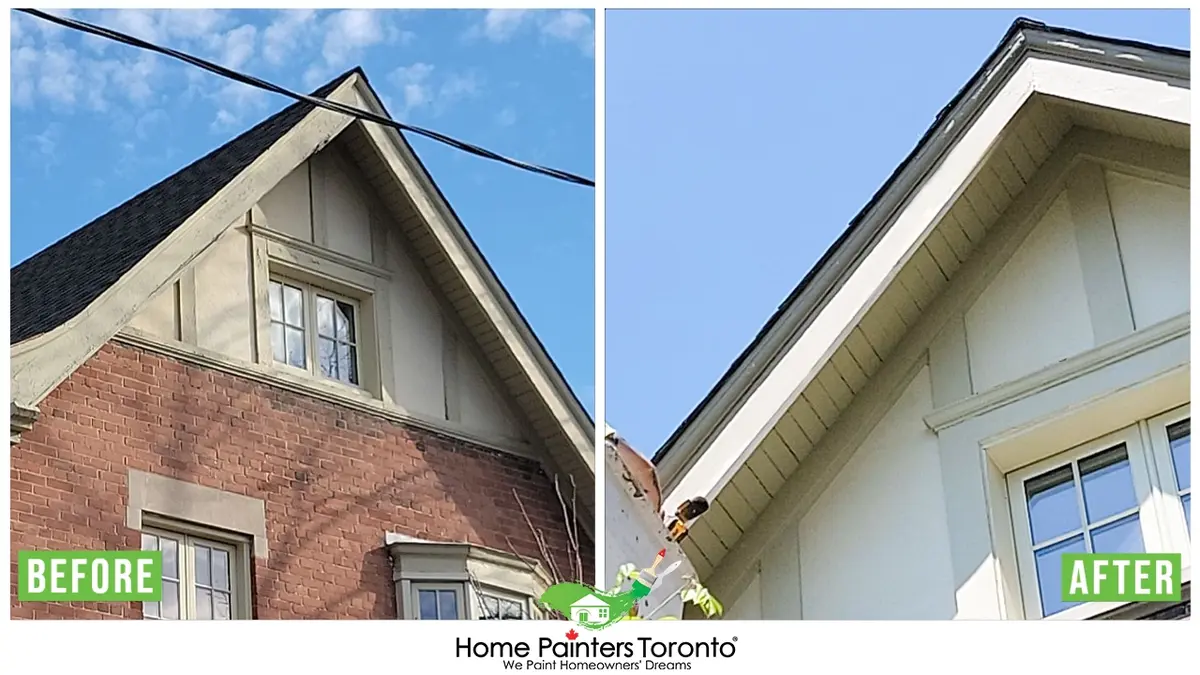
A pest-proof soffit repair replaces damaged panels with galvanized steel mesh backing, matches the existing aluminum, vinyl, or wood profile, and seals every seam so animals cannot re-enter through the same gap or a new one nearby. Matching the profile matters as much as the seal, since a visibly different panel section is both a cosmetic problem and, if it does not sit flush, a future entry point. Our exterior carpentry and handyman team handles the structural side of this work alongside the finish coat, so a repaired section blends into the surrounding roofline instead of standing out.
- At a recent soffit repair in North York, our crew found a two-inch chewed gap at a gable-end panel where a grey squirrel had denned through part of the winter.
- After a three-night paper test confirmed the den was empty, we installed galvanized mesh backing, replaced the damaged aluminum panel, and finished the patched section with Benjamin Moore Aura Exterior in Low Lustre applied at 4 to 5 mils, matching the coverage rate on Benjamin Moore's technical data sheet for the surrounding soffit.
The crew is fully insured and WSIB compliant, and the repair carries HPT's warranty-backed exterior coverage. The homeowner has reported no repeat activity since. See more of our recent GTA repair projects for examples of matched panel and colour work like this.
Screening and Material Choices That Stop Repeat Entry
Narrow-gauge galvanized mesh behind any repaired opening is the single most effective barrier against repeat squirrel and raccoon entry, since standard vent screening alone is easy for either animal to tear or pry loose. Vinyl soffit resists moisture well but can crack in a hard freeze, giving wildlife a weak seam to exploit, while aluminum holds its shape better under repeated denting attempts. Wood soffit needs primer and a full coat on every cut edge, not just the visible face, or exposed grain becomes an easy chew target again within a season.
What Pest-Proof Soffit Repair Costs in Toronto and the GTA
Pest-proof soffit repair in the GTA typically runs from $2,000 to $8,000 CAD plus HST for a partial section, with cost driven by the extent of chewed material, whether wiring or insulation is exposed, and whether matching an older or discontinued panel profile is required.
| Repair Scope | Estimated Cost (CAD + HST) |
|---|---|
| Small single-panel patch with mesh backing | $2,000 - $4,000 |
| Multi-panel section with insulation or wiring exposure | $4,000 - $8,000 |
| Full roofline replacement after extensive infestation | $8,000 - $10,000+ |
Insulation replacement, biohazard cleanup, and matching a discontinued aluminum colour all add to the estimate, so the final number depends on what the crew finds once the damaged panel comes off. A written quote after an in-person inspection is always more accurate than a phone estimate for this type of repair, since so much of the cost sits behind the panel, not on the surface.
Preventing Pests From Coming Back
Pests come back to a repaired soffit when attractants like overhanging branches, an accessible chimney cap, or unsealed vents are still in place, so lasting prevention pairs an exclusion-grade repair with a few property changes.
- Keep tree branches trimmed back from the roofline so animals cannot bridge directly onto the house
- Install or repair a proper chimney cap, and check surrounding brick and mortar repair needs, since crumbling joints give wildlife another route toward the roofline
- Cover soffit and roof vents with narrow-gauge mesh instead of the wide screening builders often use by default
- Secure garbage and compost bins, since easy food sources keep wildlife circling the property
- Schedule an annual roofline check each fall before denning season peaks
Homes already due for an exterior refresh are a good opportunity to combine prevention work with a full exterior residential house painting service, since the crew is already inspecting every seam and joint at close range while on site.
Frequently Asked Questions About Pest Damage Soffit Repair
The questions below cover what homeowners across Toronto and the GTA ask most often. For anything not covered here, our full frequently asked questions page goes into more detail on scheduling, warranty terms, and estimates.
Timing and sound are the best clues before an inspection confirms it. Squirrels are active at dawn and late afternoon and tend to make quicker scratching sounds, while raccoons move mostly at night and sound heavier and slower. A hole with fine chew marks around the rim points to squirrels, while a bent or pried-open panel corner points to raccoons.
No, sealing an active hole without confirming the cavity is empty risks trapping a live animal inside, which almost always causes more damage than the original entry point. A trapped adult will chew a new opening, and a trapped mother separated from young can tear open a much larger section of soffit trying to reach them. Professional exclusion always confirms the space is empty before any material goes back on.
Pest-proofing the original entry point stops re-entry there, but it will not stop wildlife from testing other weak spots on the same roofline. That is why a full inspection checks every vent, seam, and panel joint, not just the confirmed hole, and why trimming back nearby branches matters as much as the repair itself.
Coverage depends on the policy and the specific damage, and this varies enough between insurers that it is worth confirming directly with yours. Some policies cover the resulting structural damage from wildlife entry while excluding the removal itself, so a written repair estimate that separates exclusion from structural work is useful documentation either way.
Fall and late winter see the highest volume of squirrels and raccoons searching for a warm den, while spring brings a second wave tied to raising young. Bird activity concentrates in spring nesting season instead. A soffit that has gone untouched for a year or more is more likely to have a weak seam an animal can exploit during any of these windows.

Get Your Soffit Pest-Proofed and Repaired
Pest damage soffit repair is not a job to leave half done. A hole that looks small from the ground is usually bigger and more expensive once a crew gets a proper look at what is happening behind the panel. HPT's crews are WSIB compliant, fully insured, and every repair is warranty-backed under our written terms, backed by our 1,200+ verified client reviews and the reasons homeowners choose HPT for exterior work across the areas we serve across the GTA. If you have heard scratching in the soffit or already found a hole, get in touch for fast free quotes and warranty-backed work.
Contact Home Painters Toronto today for your free, no-obligation assessment.
Get a Free Estimate