

How to Remove Storm Windows Safely and Properly
Removing storm windows safely is a task many Toronto homeowners face every spring and fall, particularly on older properties with original wood windows where storm panels have been part of the seasonal routine for decades. Home Painters Toronto, the HomeStars Best of Award 2026 winner with over 1,200 positive reviews and 37 years serving the GTA, regularly removes storm windows as part of exterior painting and carpentry projects across North York, Etobicoke, Leaside, and Riverdale. Storm windows are common on many older Toronto homes, especially properties with original wood windows. They improve insulation and reduce weather exposure during colder months, but there are times when removal becomes necessary for maintenance, cleaning, repairs, or exterior painting projects. Forcing or mishandling them can damage the window frame, surrounding trim, or glass, so this guide explains exactly how removal should be approached.
What Are Storm Windows?
Storm windows are secondary exterior window panels installed over primary windows. They are commonly used to improve insulation, reduce drafts, and protect older wood windows from weather exposure. Many older Toronto homes still have storm windows installed seasonally or permanently. According to Natural Resources Canada's guidance on upgrading windows and exterior doors, adding glazing or storm windows is one of the recognized options for upgrading the energy efficiency of existing windows, particularly when full replacement is not the right choice for a heritage character home.
Why Homeowners Remove Storm Windows
Homeowners remove storm windows for several reasons, including seasonal cleaning, exterior painting projects, window repairs, moisture or condensation issues, and replacing damaged storm panels. In some cases, removing the storm window reveals hidden maintenance issues around the original window frame that were not visible while the panel was installed.
When Should Storm Windows Be Removed?
Storm windows are often removed during spring maintenance, exterior repainting projects, window restoration work, and carpentry repairs. Removing them provides better access to surrounding trim, sills, and window frames for inspection and maintenance, which is exactly the access a painting or carpentry crew needs before any new product can be applied correctly.
Storm Windows on Older Toronto Homes: A Heritage Preservation Tool
Original wood windows on Toronto homes built before the 1960s are frequently constructed from old growth lumber that is more durable than most modern replacement window materials. According to the Ontario Heritage Trust's information sheet on heritage windows, when storm windows are added to a historic window assembly, they can perform just as well as, if not better than, a newly manufactured double glazed unit, provided the original window is properly maintained. This makes storm windows a practical and heritage appropriate alternative to full window replacement on older Toronto properties.
Removal and reinstallation of storm windows is therefore not just a seasonal chore on these homes. It is part of the maintenance cycle that keeps original wood windows performing well for decades, since proper care of both the primary window and the storm panel extends the life of the entire assembly far beyond what either component would achieve alone.
How to Remove Storm Windows Safely
Inspect the Window First
Before removing the storm window, inspecting how it is secured is the essential first step. Older storm windows may use screws, clips, brackets, or sliding tracks. Understanding the installation method helps prevent damage during removal, since each fastening system requires a slightly different approach to release cleanly.
Remove Fasteners Carefully
Screws or clips are removed carefully while the storm window is supported throughout the process. Older hardware may be corroded or fragile, especially on homes exposed to years of weather conditions. Forcing stuck fasteners is avoided at all costs, as this can crack glass or damage surrounding trim.
Lift and Remove the Storm Window
Once the fasteners are removed, the storm window is carefully lifted out of position. Large storm windows may require two people to avoid dropping or twisting the frame. Removed windows are always placed on a stable surface to prevent damage during the rest of the project.
Clean and Inspect the Surrounding Area
After removal, the exposed areas around the primary window are inspected closely. Peeling paint, soft or rotted wood, failed caulking, and moisture damage are all checked for, since these areas are often hidden while storm windows are installed and can develop without any visible sign from outside the home.
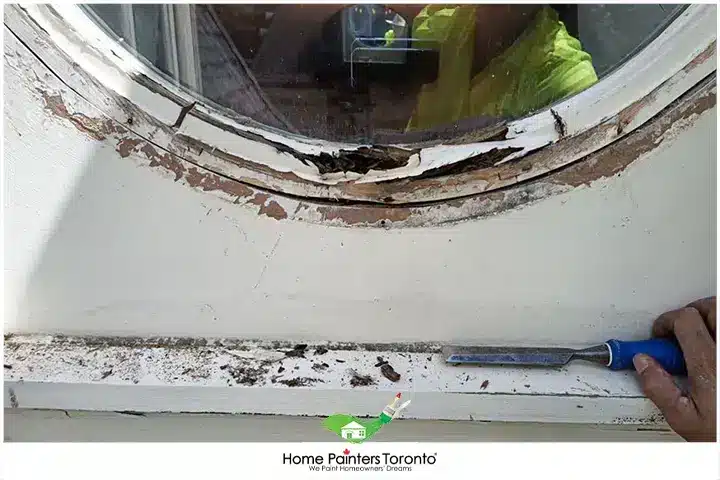
The window sill, frame corners, and glazing putty are the three spots most likely to show hidden moisture damage once a storm window comes off — checking all three before reinstalling or repainting prevents a small problem from becoming a major repair.
What to Inspect Behind a Removed Storm Window: A Complete Checklist
Removing a storm window is the single best opportunity each year to catch developing problems before they require expensive repair. This checklist covers everything a thorough inspection should include.
| Inspection Point | What to Look For | Why It Matters |
|---|---|---|
| Window sill | Soft spots, cracking, peeling paint, standing water marks | Sills collect water runoff and are often the first place wood rot develops |
| Frame corners and joints | Gaps, separation, cracked caulking | Joint failure allows water behind the trim and into the wall assembly |
| Glazing putty (if original wood sash) | Cracking, missing sections, separation from glass | Failed putty allows water to reach the wood sash beneath the glass |
| Paint film on sash and trim | Peeling, bubbling, or bare wood showing through | Indicates moisture has already penetrated the protective coating |
| Surrounding siding or brick | Staining, efflorescence, or gaps where the storm window frame meets the wall | Water tracking from a failed storm window seal often shows here first |
| Storm window frame itself | Corrosion (if aluminum), warping (if wood), broken glazing clips | Determines whether the storm panel itself needs repair before reinstallation |
Common Problems Found Behind Storm Windows
Storm windows can sometimes trap moisture if ventilation is poor. Common issues include peeling paint, wood rot, mildew buildup, and deteriorated caulking. Older homes are especially vulnerable to hidden moisture damage around window assemblies, precisely because the storm window conceals the primary window from view and from weather for most of the year.
Why Storm Window Removal Matters Before Exterior Painting
Storm windows are often removed before exterior painting because they block access to window trim, frames, sills, and surrounding siding. Removing them allows painters to properly prepare and coat these surfaces. Skipping this step may lead to incomplete preparation and a shorter paint lifespan, since any section hidden behind a storm panel during painting will fail well before the rest of the exterior. If your exterior windows and trim need maintenance or repainting, our team provides professional exterior painting Toronto services for older homes and detailed exterior surfaces.
Common Mistakes Homeowners Make When Removing Storm Windows
Many homeowners accidentally damage windows during removal. Common mistakes include forcing stuck windows, removing fasteners unevenly, failing to support the window during removal, and ignoring signs of hidden moisture damage. Careful handling is important, especially on older homes with aging materials where decades of weather exposure have made hardware and wood more fragile than they appear.
Storm Window Removal Mistakes and Their Consequences
| Mistake | Consequence | Correct Approach |
|---|---|---|
| Forcing a stuck storm window | Cracked glass, bent frame, or damaged surrounding trim | Identify the fastener type first; apply gentle, even pressure; if stuck, investigate the cause before forcing |
| Removing fasteners unevenly | Window twists or drops unexpectedly, risking injury and damage | Remove fasteners in a logical sequence while maintaining support throughout |
| Working alone on a large storm window | Dropped or twisted frame; potential injury | Use two people for larger storm windows, particularly upper storey installations |
| Ignoring visible moisture signs | Hidden rot continues to spread unaddressed for another season | Document and address any moisture damage found before reinstalling or painting |
| Reinstalling without addressing underlying damage | Problem recurs and worsens; paint applied over damage fails quickly | Repair any wood rot or caulking failure before reinstalling the storm window or painting |
When to Hire a Professional Exterior Contractor
Professional help may be the better option if the storm windows are difficult to access, the frames are damaged or stuck, wood rot is visible, or the project includes exterior repairs and repainting. Professionals can safely remove storm windows while addressing any underlying maintenance issues found during the process. Our exterior wood repair and carpentry service handles storm window removal alongside any wood repair or restoration the inspection reveals.
Home Painters Toronto is WSIB compliant, fully insured to $5 million general liability, and all exterior work is backed by a written warranty. These credentials matter on any project involving ladder work, older hardware, and the structural assessment that storm window removal often requires.
Cost of Professional Storm Window Removal and Related Repairs in Toronto in 2026
Costs vary depending on the number of windows, accessibility, and whether wood repair or repainting is part of the scope. All prices below are in CAD and exclude HST.
| Scope | Estimated Cost (CAD) | Notes |
|---|---|---|
| Storm window removal only (per window, ground floor) | $25 – $50 | Inspection and careful removal; reinstallation typically quoted together |
| Storm window removal (upper storey, ladder access required) | $40 – $80 per window | Additional labour and safety equipment for elevated access |
| Storm window removal plus full home exterior painting | Quoted by scope | Most cost effective; combines mobilisation into one project |
| Wood window trim repair (if rot discovered) | $150 – $500 per window | Scope depends on extent of damage found behind the storm panel |
| Storm window reinstallation | Quoted with removal | Typically included in the same visit unless seasonal storage is requested |
For a full breakdown of exterior painting and carpentry costs, see our exterior painting cost guide. Same day free estimates are available seven days a week across the GTA.
Real Project: Storm Window Removal and Window Trim Restoration in Leaside
Leaside 1948 Detached: Corroded Fasteners, Three Sills with Hidden Rot, and Reglazed Sashes Before Repaint
A homeowner in Leaside contacted Home Painters Toronto to remove the storm windows on their 1948 detached home before a full exterior repaint. The storm windows had been installed decades earlier using a mix of screws and clips, with some hardware showing visible corrosion from years of weather exposure.
Our team's inspection during removal found that three of the eight primary windows had soft wood at the lower sill, an area completely concealed by the storm panels and invisible from a standard exterior assessment. The glazing putty on two of the original wood sashes had also cracked and separated, exposing the wood beneath to direct moisture contact for at least one full season.
The affected sills were repaired with epoxy wood filler where the damage was limited to the surface, and one sill required a partial wood splice where the rot had progressed further. The cracked glazing putty was removed and reglazed before priming. All window trim was primed with Benjamin Moore Fresh Start oil based primer and finished with two coats of Benjamin Moore Aura Exterior in Semi Gloss. The storm windows were cleaned, inspected for frame integrity, and reinstalled once the new paint had fully cured.
Home Painters Toronto is WSIB compliant, fully insured to $5 million general liability, and all exterior work is backed by a written warranty. For completed projects, visit our Toronto painting projects page. Same day free estimates are available seven days a week across the GTA.
Conclusion: Protecting Your Windows and Exterior Properly
Removing storm windows is often an important part of exterior home maintenance. Done properly, it allows homeowners to inspect hidden problem areas, prepare surfaces for repainting, and improve long term exterior maintenance. Careful removal and inspection can help prevent small problems from becoming major repairs later.
Frequently Asked Questions
Storm windows are commonly removed for cleaning, repairs, exterior painting, or seasonal maintenance. Removal also provides access to inspect the primary window frame, sill, and surrounding trim for damage that develops unseen while the storm panel is in place.
Yes, forcing stuck windows or mishandling hardware can damage trim, frames, or glass. Older fasteners that have corroded over years of weather exposure are particularly prone to breaking if force is applied rather than carefully working the fastener loose.
In many cases, yes. Removing them allows painters to properly prepare and coat surrounding surfaces, including window trim, sills, and frames that would otherwise remain hidden and unpainted. Our exterior painting Toronto service includes storm window removal as part of a complete exterior preparation scope on older homes.
Moisture damage, peeling paint, failed caulking, and wood rot are common issues. These problems develop gradually and are often invisible from outside the home until the storm window is removed for cleaning, repairs, or painting.
Improper ventilation or aging seals can sometimes allow moisture buildup behind storm windows. Condensation that forms between the storm panel and the primary window needs a path to vent to the exterior; without it, that trapped moisture contributes directly to the wood rot and paint failure found during inspection.
Professional storm window removal typically costs $25 to $50 per window at ground level, with upper storey windows requiring ladder access costing $40 to $80 per window due to the additional labour and safety equipment involved. Combining removal with a full exterior repainting project is the most cost effective approach, since mobilisation and access setup are shared across the full scope.
More Helpful Blogs Related to Removing Storm Windows
Need Help With Storm Windows or Exterior Trim in Toronto?
Home Painters Toronto is the HomeStars Best of Award 2026 winner with written warranty terms on all exterior work. Call 416-494-9095 or email [email protected] for a FREE same-day estimate.