

Semi-detached home painting in Toronto comes with problems a detached house never has, from the party-wall seam to a neighbour's colour choices. Half the building belongs to a neighbour, and ladders often stand on a shared driveway in Leslieville, the Annex or East York. Duplexes and multi-family homes add tenant schedules, shared entrances and colour consistency across several doors. Home Painters Toronto has painted 20,000+ homes across Toronto and the GTA since 1991, and our HomeStars Best of Award 2026 and 1,200+ positive reviews reflect that attached-home experience. This guide covers what changes on a semi, duplex or row house, what home painting in Toronto costs for these homes, and how to plan the job with your neighbour.
Semi-detached home painting differs from detached work in four ways: a shared party-wall seam that needs careful edge detailing, a colour that has to work beside your neighbour's side, tighter ladder and scaffold access across shared driveways, and neighbour notice before work starts. Multi-family homes add tenant notice rules and colour consistency across every unit.
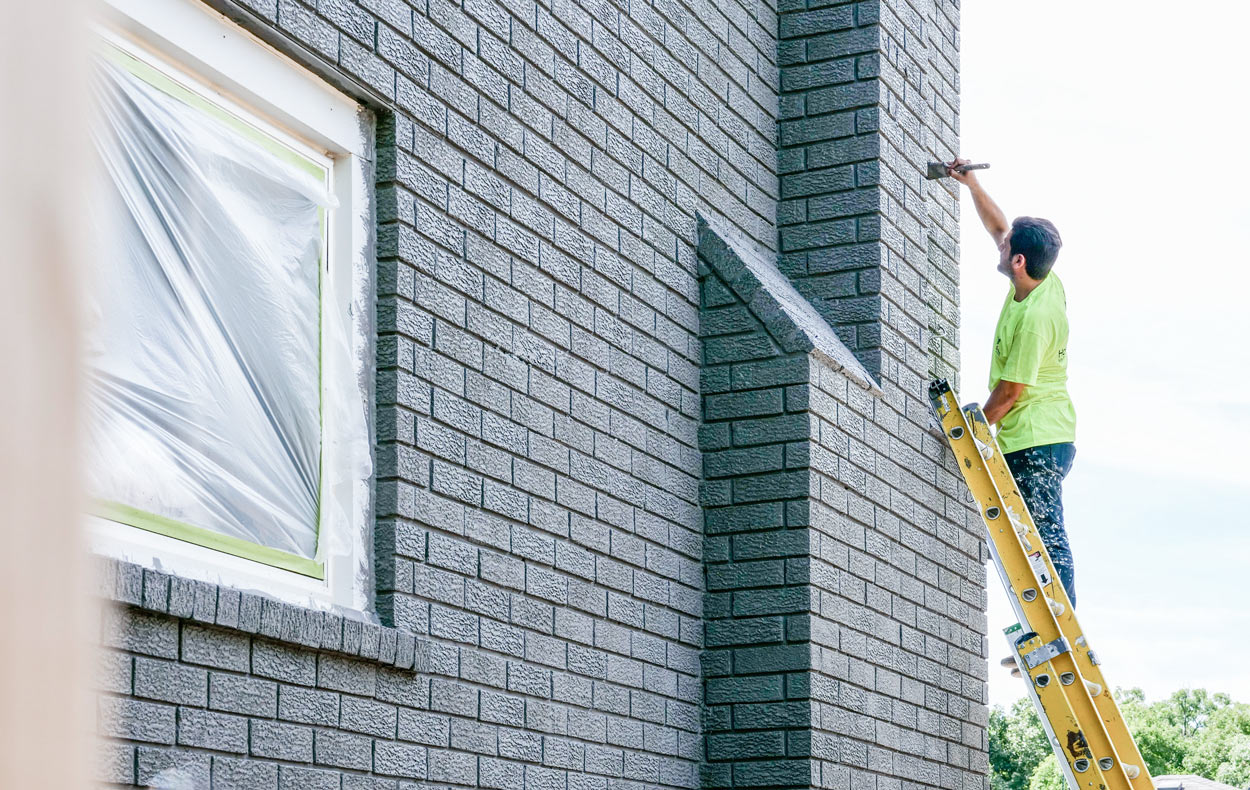
What Makes Semi-Detached Home Painting Different
Semi-detached home painting is different because one wall, one roofline and often one driveway are shared with a neighbour, so every exterior decision has an edge you do not fully control. Attached housing is the norm here, not the exception. According to Statistics Canada, single-detached houses made up only 39.0% of occupied private dwellings in the Toronto CMA in the 2021 Census. That leaves most GTA households living in a building they share with someone else.
The paint itself behaves the same on an attached home. What changes is the planning around it. Your crew has to decide where your coating ends, how it meets your neighbour's finish, and where ladders can legally stand. A good exterior house painting plan answers all three before the first drop cloth goes down.
| Consideration | Detached Home | Semi-Detached or Multi-Family |
|---|---|---|
| Wall ownership | Every wall is yours | Party wall and roofline shared with a neighbour |
| Colour decision | Made by one owner | Has to sit beside a second owner's colour |
| Paint edge | Ends at a natural corner | Needs a clean stop line on the shared facade |
| Ladder and scaffold access | Side yards usually free | Often crosses a shared driveway or narrow side yard |
| Scheduling | Set by one household | May need neighbour or tenant coordination |
| Moisture risk | Spread across four corners | Concentrated at the vertical party-wall seam |
| Occupants | One family | Possibly tenants in separate units |
Semi-Detached Home Painting on Shared Brick Facades
Many older Toronto semis have a single brick front that runs across both units. When one owner coats their half, the stop line has to fall on a mortar joint centred on the party wall. Stopping in the middle of a brick leaves a ragged edge that reads as a mistake from the sidewalk. We mark the line with a laser level before any coating goes on.
The coating choice matters just as much. Exterior brick staining soaks into the masonry and lets it breathe, so it suits a facade where your neighbour's half stays bare. Film-forming exterior brick painting sits on the surface and needs a breathable, masonry-rated system. HPT backs brick staining with a 15-year warranty, which reflects how well a penetrating stain holds up beside untouched brick.
How Freeze-Thaw Cycles Attack the Party-Wall Seam
Freeze-thaw cycles attack the party-wall seam first because that vertical joint collects water from two roofs, two sets of eavestroughs and two different coating systems. Water that slips behind a paint edge freezes overnight and expands. That expansion lifts the film a little further every winter. By spring, the peeling usually starts right where your paint meets your neighbour's.
Most competitor guides skip this point. The seam is not just a colour boundary. It is a moisture boundary, and it fails on its own schedule. A neighbour's leaking downspout or clogged soffit and fascia can soak your side of the wall even when your own eavestroughs are clean.
We check three things at the seam before quoting. First, we look for open or crumbling mortar that needs brick and mortar repair before any coating. Second, we trace where both roofs drain. Third, we test how the neighbour's existing finish is bonded near the line, since a failing coating next door can pull moisture into yours.
The Caulk Line Between Two Paint Systems
Where the party wall meets wood trim, a porch beam or a shared downspout, the joint between two finishes needs a flexible seal. We use a paintable elastomeric sealant at that line because it stretches as the two halves of the building move at different rates. Hard, brittle caulk cracks within a season and lets water straight in. Proper exterior caulking at this one seam protects both homes.
Expected longevity on an attached home depends on the surface and how well that seam is sealed. HPT's published warranty terms give a clear baseline for each service.
| Surface or Service | HPT Warranty | What Shortens Real-World Life on a Semi |
|---|---|---|
| Exterior painting | 3-year warranty | Open seam at party wall, neighbour's drainage onto your side |
| Brick staining | 15-year warranty | Spalled or unrepaired mortar joints before staining |
| Interior painting | Lifetime warranty | Moisture from a shared wall with a leaking unit next door |
| Cabinet spraying | 5-year warranty | Heavy daily wear in multi-family kitchens |
Matching or Contrasting With Your Neighbour's Side
Matching your neighbour's colour gives a semi-unified facade, while a deliberate contrast marks each unit as its own home, and both work if the split lands on a clean architectural line. The problem is the half-finished look. A slightly different white next to your neighbour's white looks like a mismatch. A clearly different colour looks like a choice.
Both halves of a semi face the same sun, so nobody can blame the light. Your colour will be judged side by side, every day, from across the street. That makes sampling on the actual wall more important here than on any detached house. We paint large test patches near the seam and review them in morning and evening light.
| Approach | Works Best When | Main Risk |
|---|---|---|
| Exact match | Neighbour shares paint codes, and the finish is recent | Faded neighbour paint makes a new match look brighter |
| Close tone | Neighbour's colour is unknown or aged | Reads as an accidental mismatch |
| Clear contrast | Porch posts or trim create a natural break | Poor stop line makes the contrast look sloppy |
| Coordinated pair | Both owners repaint in the same season | Needs agreement on timing and budget |
Aluminum siding is common on the upper storeys of Toronto semis built from the 1950s to the 1970s. If your neighbour has left theirs in the original factory colour, aluminum siding painting on your side should either match that tone closely or contrast on purpose. A near miss stands out on siding more than on brick.
Heritage rules can also shape the choice. If your semi sits in a Heritage Conservation District, check the City of Toronto's heritage permit guide and Heritage Register Map before changing the facade. Routine repainting is usually treated differently from coating brick that has never been painted, which changes the street-facing character of the building.
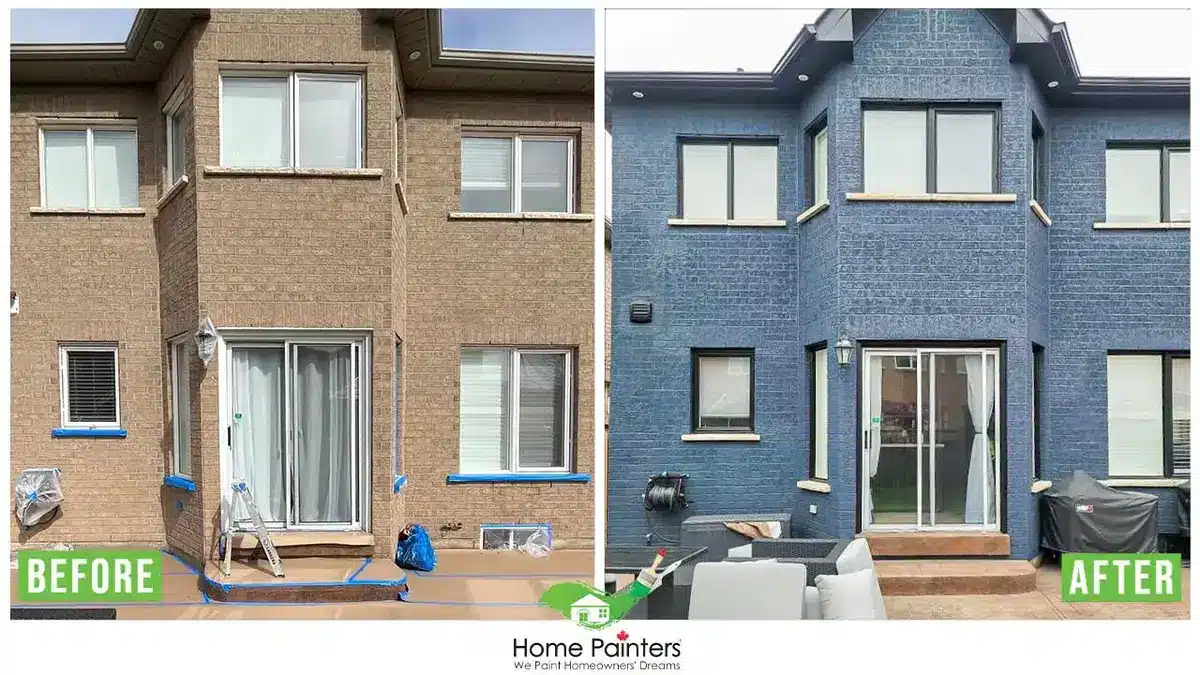
Access and Neighbour Notice on Attached Properties
Access on an attached property often depends on your neighbour, because shared driveways, narrow side yards and the party wall itself can put ladders on or over the property line. Painters have no automatic right to stand on land next door. Permission has to come from the owner of that land. A short conversation a week or two ahead prevents a stalled job on day one.
| Access Situation | How We Handle It | Neighbour Involvement |
|---|---|---|
| Shared driveway | Ladders staged only during agreed hours, driveway kept clear overnight | Courtesy notice and schedule shared |
| Narrow side yard on your side | Stand-off brackets and shorter ladders keep feet on your lot | Usually none |
| Ladder must cross the lot line | Work paused until written permission is given | Permission required |
| Shared front porch | Stop line set on the centre beam or post, drop cloths on both halves | Agreement on porch use during work |
| Overspray risk near neighbour's car or windows | Brush and roll only near the seam, covers on nearby surfaces | Heads-up to move vehicles |
We give every attached-home client a simple neighbour checklist. It keeps the talk friendly and short.
- Tell your neighbour the start date, the expected number of work days and the daily work hours.
- Ask whether ladders can stand on the shared driveway or their side yard if the crew needs it.
- Share the colour you picked and where the stop line will sit on the shared facade.
- Ask about pets, parked cars or plants close to the party wall.
- Give them the crew lead's name so questions go straight to the right person.
We'll coordinate ladder placement and drop cloths respectfully on any shared wall, porch or driveway, and we'll pause work on that area until access is confirmed.
Painting Duplexes and Multi-Unit Properties
Painting a duplex or multi-unit property means managing colour consistency across every unit, entrance and common area while working around the people who live there. One owner controls the whole building, so the colour question is simpler than on a semi. The scheduling question is harder. Several households need access, quiet hours and clear notice.
Colour drift is the hidden risk on bigger jobs. Paint mixed in separate batches can vary slightly, and the difference shows on long hallways and matching front doors. We box all gallons of each colour together before starting, so every unit gets the same blend. Stairwells and shared corridors follow the same process as our condominium and apartment painting work.
Exterior work on a multi-unit home also needs a plan for entrances. Each unit needs a usable door every day. We paint entrance doors early in the day so they dry before tenants come home, and we stagger porch and stair coatings so nobody is locked out.
Tenant Notice Rules for Occupied Units
Ontario's Residential Tenancies Act, 2006 requires a landlord to give at least 24 hours' written notice before entering a rental unit, and entry must happen between 8 a.m. and 8 p.m. That rule applies when painters work inside an occupied unit. Owners should send the notice themselves, since the tenancy relationship is theirs. We give owners a clear schedule by unit so the notices are accurate.
What Semi-Detached Home Painting Costs in Toronto
Exterior painting on a typical Toronto semi-detached home falls between $2,000 and $8,000 CAD + HST under HPT's published pricing, depending on storeys, surfaces and repairs. A one-storey semi with trim only sits at the low end. A two-and-a-half-storey semi with a full porch, siding and repairs moves toward the top of that range. Interior rooms are priced separately.
| Project Type | HPT Price Range (CAD + HST) |
|---|---|
| Small exterior repaint (trim, porch, one side) | $2,000–$4,000 |
| Medium exterior repaint (full front, siding, porch) | $4,000–$8,000 |
| Brick staining, small to medium facade | $4,000–$6,000 |
| Interior bedroom | $400–$800 |
| Interior living or dining room | $400–$900 |
| Interior trims, doors and baseboards | $700–$1,200 |
Five factors push a semi or multi-family quote up or down. The shared wall itself rarely adds cost. The work around it does.
| Factor | Impact on Cost | Details |
|---|---|---|
| Seam repairs | Medium to high | Mortar repointing or rotted trim at the party wall adds prep time |
| Storey count | High | Taller semis need more ladder moves and staging |
| Access limits | Medium | Narrow side yards and shared driveways slow setup |
| Number of units | Medium | More doors, entrances and occupied spaces to schedule |
| Surface mix | Medium | Brick, aluminum siding and wood each need different products |
For a broader view of whole-house pricing, see our guide to the cost of painting a house. Every HPT quote is itemized, so you can see exactly what the seam and access work adds.
Our Recent Semi-Detached Repaint in Leslieville
Our recent semi-detached repaint in Leslieville shows how a shared wall changes the prep, the product and the stop line. The home was a 1910s brick semi near Queen Street East with a shared front porch and painted wood trim. The owner wanted a darker trim colour, and the neighbour planned to keep their side as it was. That made the stop line the most important detail of the job.
At the start, we found soft wood at the base of the shared porch post on our client's side. Our carpenters replaced the section as part of our porch wood repair service before any coating. After two dry days, a pin meter read 11% moisture in the trim. That sits under the 15% ceiling in Sherwin-Williams' wood preparation guidance.
We applied two coats of Benjamin Moore Aura Exterior in Low Lustre. The surface temperature was 12°C at 10 a.m., well above the 4.4°C (40°F) minimum on Benjamin Moore's technical data sheet for that product. Our wet film gauge read 4 mils per coat, inside the spread-rate range on the same data sheet. You can see more work from this area on our Leslieville painting services page.
- Walked the facade with both owners and marked the stop line on the centre of the porch beam.
- Replaced the rotted post base and primed all new wood the same day.
- Scraped, sanded and spot-primed every bare area on the client's trim.
- Sealed the party-wall joint with a paintable elastomeric sealant.
- Cut in the stop line by brush, with no tape on the neighbour's finish.
- Applied two full coats and checked film build with a wet film gauge.
- Did a final walk-through with the client and a courtesy check with the neighbour.
That job is typical of how we work. Home Painters Toronto is a family-run company founded by Brian Young, who has worked in the painting industry since 1987. Our crews are WSIB compliant and fully insured with $5 million in general liability coverage, and every crew member passes a criminal background check. Clients get warranty-backed work, including a 3-year warranty on exterior painting, and you can read what attached homeowners say in our client reviews.
Semi-Detached Home Painting FAQs
No, you do not have to match your neighbour's colour unless a heritage district plan or a shared agreement says otherwise. Most owners pick either an exact match or a clear contrast. The in-between tone is the one to avoid, because it looks like an error. A clean stop line on the party wall makes either choice look intentional.
Painters can only place a ladder on your neighbour's land with that owner's permission. On most semis, stand-off brackets and careful staging keep ladders on your lot. When crossing the line is unavoidable, we pause that section until you have written approval. A friendly note a week ahead usually settles it.
Painting a semi is usually cheaper than a detached house of the same height, because there is one less exterior wall to coat. Under HPT's published pricing, most semi exteriors fall between $2,000 and $8,000 CAD + HST. Repairs at the party-wall seam and tight access can narrow that gap. An itemized quote shows where the money goes.
Your side can be painted on its own even if your neighbour keeps their half as it is. The key is a sharp stop line on a mortar joint, porch beam or trim board at the centre of the building. Your crew should also seal the joint between the two finishes. That keeps water from getting in where the old and new coatings meet.
Most Toronto homeowners do not need a permit to repaint an already painted exterior. Homes inside a Heritage Conservation District can face extra review for changes that alter the street-facing character, such as coating brick that was never painted. Check the City of Toronto's Heritage Register Map before you start. When in doubt, ask Heritage Planning first.
Many semi exteriors fit within HPT's one-to-two-day service window when the weather cooperates. Taller homes, full brick staining or seam repairs add time. Rain or cold can pause exterior coating, so we build a buffer into every schedule. You get a clear day-by-day plan before work begins.
Planning Your Semi-Detached or Multi-Family Painting Project
Planning a semi-detached or multi-family painting project starts with the shared wall, not the colour chart. Decide where your finish ends, check how water moves across the party-wall seam, and talk with your neighbour or tenants before the start date. Those three steps prevent most of the problems we see on attached homes across Toronto and the GTA.
Note that access and shared-wall arrangements between neighbours are a private matter, and this guide is general information, not legal advice.

Home Painters Toronto has handled these details on semis, duplexes and row houses since 1991. We offer fast, free quotes and warranty-backed work, with same-day estimates available seven days a week. Tell us about your layout, your neighbour's side and your timeline, and we'll plan the stop line with you.
Contact Us Now!