

Most Toronto homeowners don't notice the signs your home needs exterior painting until the damage is already visible from the street. By then, the paint has often been failing quietly for a year or two, letting moisture in, accelerating wood deterioration, and setting up a much costlier repair job than would have been needed earlier.
Toronto's climate is particularly hard on exterior finishes. Freeze-thaw cycles through winter, humid summers, and UV exposure through spring and fall combine to break down paint faster than in more moderate climates. What might last 10 years in Vancouver or Calgary often needs attention sooner here.
This guide covers the 7 clearest signs that your home's exterior paint needs professional attention, what each sign actually means structurally, and why getting it done at the right time saves significant money compared to waiting.
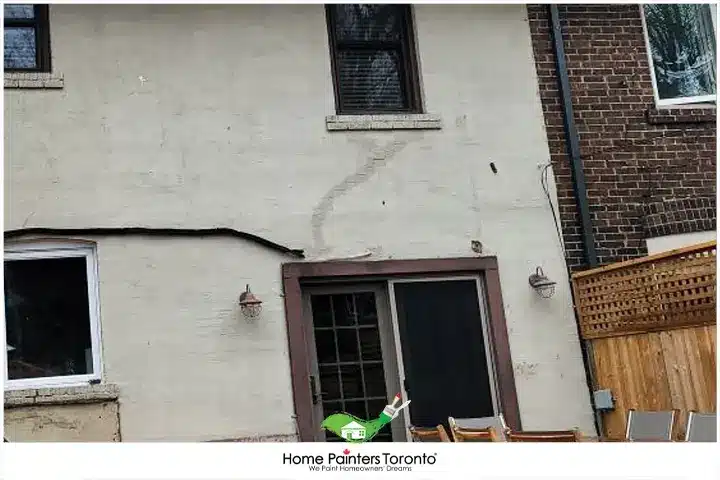
7 Signs Your Home Needs Exterior Painting: Quick Reference
| # | Sign | What It Means | Urgency |
|---|---|---|---|
| 1 | Peeling or flaking paint | Paint bond failed; moisture exposure likely | Act Soon |
| 2 | Fading or chalking surface | UV and freeze-thaw cycles depleted the finish | Plan Ahead |
| 3 | Cracking or bubbling paint | Trapped moisture or failed paint system | Act Soon |
| 4 | Mildew staining or dark streaks | Biological growth; drainage or moisture issue | Act Soon |
| 5 | Soft wood, rot, or visible damage | Structural risk; carpentry repair needed first | Urgent |
| 6 | Failing caulk around openings | Air and water infiltration at frames and joints | Act Soon |
| 7 | Seven or more years since last repaint | Protective barrier is degrading regardless of its appearance | Schedule Now |
Each sign is covered in detail below, along with what causes it and what the right response looks like.
The 7 Signs: What They Mean and What to Do
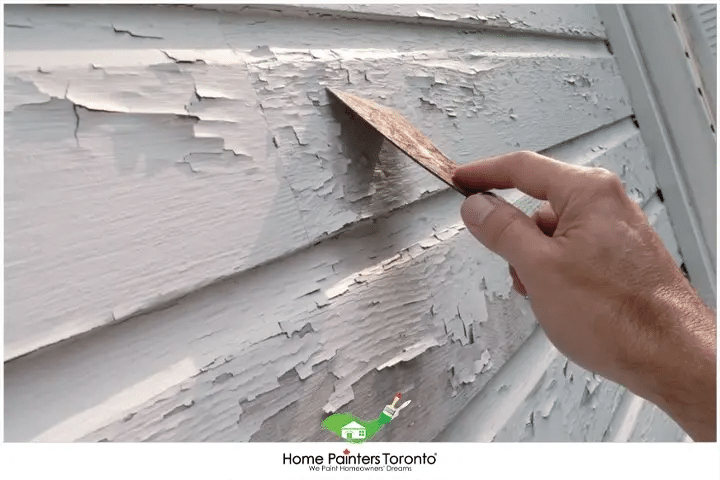
Peeling or Flaking Paint
Peeling paint is the most obvious sign, but it is also one of the most misunderstood. Homeowners often treat it as a cosmetic problem. It isn't. Once the paint film peels away, the underlying wood or substrate is exposed directly to moisture, UV, and temperature changes.
In Toronto's climate, that exposure accelerates damage quickly. Bare wood swells in rain, contracts in cold, and invites rot within a season or two if left unprotected.
Peeling usually signals one of two things: either the surface wasn't properly prepared before the last paint job, meaning primer was skipped, or the surface wasn't clean and dry, or the paint system has simply reached the end of its service life, and the bond has broken down.
The fix is not rolling new paint over the old peeling sections. The failing layers need to be fully scraped, the surface sanded to a sound edge, primed, and then repainted. Skipping those steps guarantees the new coat peels in the same places within a year. This prep work is exactly what separates a professional exterior painting job from a rushed one.
Fading, Chalking, or a Dull, Flat Appearance
Chalking is what happens when UV breaks down the binders in the paint. Run your hand along the wall, and you'll find a powdery residue on your palm. The visible result is a washed-out, flat appearance where colours that once looked rich now look tired.
South-facing and west-facing walls take the most sun and show this first. It's easy to dismiss as just looking old, but chalking means the paint's protective properties are actively degrading, not just its appearance.
The good news about chalking is timing. A home caught at this stage is the ideal candidate for a repaint. The surface is still intact, prep work is relatively straightforward, and you avoid the more expensive remediation that comes from waiting another two or three seasons.
Many homeowners in the GTA reach out to us at this stage, which is actually the right call. Early action on fading paint is almost always less expensive than waiting for peeling or rot to follow.
Cracking, Bubbling, or Blistering
Bubbling and blistering point to moisture trapped beneath the paint film. This commonly happens when water finds its way in through a failing caulk joint around a window or door, gets behind the paint, and then tries to escape as vapour. The pressure lifts the paint off the surface.
Cracking, sometimes in a large-scale alligator-skin pattern across wide sections of the wall, indicates the paint has lost its flexibility. Quality exterior paints are formulated to expand and contract slightly with the surface as temperatures change. When the paint system gets old or is applied incorrectly, it becomes brittle and cracks as the siding moves.
Both of these signs often trace back to failing caulking around windows and doors. Inspecting and recaulking those areas at the same time as repainting is almost always more cost-effective than addressing them separately.
Mildew, Staining, or Dark Vertical Streaking
Dark vertical streaks running down the siding, green patches near the foundation, or black spots concentrated on north-facing and shaded walls are signs of biological growth, algae, mildew, or mould. They grow wherever moisture accumulates and where the paint's mildewcide additives have been depleted by age.
Pressure washing removes the visible growth temporarily. But if the paint isn't refreshed, the growth returns, typically within one growing season. Some growth patterns also indicate a drainage problem, chronic condensation, or a grading issue near the foundation, problems that are worth identifying before painting so the repaint lasts.
The City of Toronto's Building Requirements for residential properties note that moisture management is a critical component of maintaining structural integrity. A fresh exterior paint system using products with quality mildewcide formulations is one of the more accessible ways homeowners can manage this.
Soft Spots, Visible Rot, or Deteriorating Wood
This is the sign that goes beyond painting into structural territory. If you press on a section of wood trim, fascia, window casing, or siding and it gives under pressure, or if you can see grain separation, discoloration, and softness, rot has started.
Paint does not fix rot. This is one of the most common and costly mistakes in exterior home maintenance: applying fresh paint over wood that has already begun to deteriorate. The paint looks fine for a season and then fails completely as the rot progresses beneath it.
The correct sequence is always: assess, repair or replace the affected wood, then paint. Skipping the repair step means repainting more often, spending more in total, and potentially dealing with structural damage that is significantly more expensive to address later.
Home Painters Toronto provides exterior wood repair and carpentry alongside painting, which means you don't need to coordinate separate contractors for the repair and paint phases. One assessment, one crew, one project timeline.
Caulking Failure Around Windows, Doors, and Joints
Caulk seals every joint where two different materials meet: window frames against siding, door frames against trim, and corners where siding panels connect. When it fails, cracking, shrinking, or separating, those joints become water and air infiltration points.
In Toronto winters, ice formation widens those gaps further, making a small caulking failure at the start of winter into a significant one by spring. You'll often see this show up as interior dampness near windows, paint failure concentrated around frames, or staining on interior walls adjacent to the exterior.
Recaulking can be done as a standalone maintenance task between paint jobs. But the most economical time to address it is when you're already repainting the exterior, since the scaffolding, prep, and labour are already in place.
Homes with aluminum siding or brick exteriors need particular attention here, since these materials expand and contract differently than wood, putting higher stress on caulk joints over time.
It Has Been 7 or More Years Since the Last Repaint
This sign is easy to miss because the paint might still look acceptable on the surface. But age matters independently of appearance. The protective properties of exterior paint, moisture resistance, UV reflection, flexibility, degrade over time regardless of how the paint looks from the street.
A surface that looks fine from 10 metres away may already be chalking, losing adhesion, or showing micro-cracking that becomes visible at close range. By the time the deterioration is obvious from the curb, it has typically been underway for a year or two already.
If you bought your home without painting history, or if you genuinely can't remember when the exterior was last done, it's worth having a professional assessment. It takes about 30 minutes and tells you clearly whether you're good for another few years or whether you're already past the window.
How Often Do Toronto Homes Typically Need Repainting?
The answer depends primarily on siding material and paint quality. Toronto's climate compresses these timelines compared to most Canadian cities due to the combination of freeze-thaw cycles, high summer humidity, and urban air quality.
| Siding / Surface Type | Typical Lifespan | Notes for Toronto Homes |
|---|---|---|
| Wood siding | 5 to 7 years | High moisture absorption; vulnerable to freeze-thaw cycles |
| Stucco Siding | 5 to 10 years | Depends on surface condition and crack presence |
| Aluminum siding | 10 to 15 years | More durable surface, but fades and oxidizes |
| Vinyl siding | 10 to 15 years | Requires paint specifically formulated for vinyl |
| Painted brick | 8 to 10 years | Paint traps moisture; preparation is critical |
| Brick staining | 15+ years | Penetrates the surface rather than sitting on top |
According to the Canada Mortgage and Housing Corporation, maintaining exterior coatings on a regular schedule is one of the most effective ways to extend the lifespan of a wood-frame home's building envelope. Their homeowner maintenance guide recommends proactive inspection and coating maintenance as a core part of residential upkeep in Canada's variable climate.
One consistent finding across professional exterior painting work in Toronto: homes that are repainted at 7 to 8 years almost always involve less prep work and lower overall cost than homes repainted at 12 to 14 years. The longer the delay, the more scraping, priming, and repair work is required before paint can be applied.
Should You Hire a Professional or Paint It Yourself?
This is a fair question and deserves a direct answer. Exterior painting is physically demanding, time-intensive, and technically unforgiving in ways that interior painting is not.
Here is what the comparison actually looks like when you account for the full picture:
| Doing It Yourself | Home Painters Toronto |
|---|---|
| Lower upfront appearance only | Transparent written estimate before work begins |
| Equipment rental, paint, caulk, primer, all extra | All materials and prep included in the quote |
| No warranty on the work | 3-year exterior workmanship warranty |
| Prep is often skipped or underestimated | Full scraping, sanding, priming as standard |
| Ladder accidents are a real risk without training | Trained crews with proper height-access equipment |
| Result quality depends on skill and time invested | Consistent, professional finish on every project |
| Typically takes several weekends | Most homes completed in 1 to 3 days |
The hidden costs of a DIY exterior paint job are significant and easy to underestimate: pressure washer rental, tall ladders or scaffolding for anything above the first floor, primer, caulk, quality exterior paint (not what's sold in typical hardware stores), sprayer rental or brushes and rollers, cleanup, and the time itself, often multiple weekends stretched over a month or more.
The safety consideration is also real. Painting a two-storey Toronto home from a ladder without professional training and proper fall-prevention setup is one of the more common sources of serious home improvement injuries. Professional crews work from proper staging and scaffolding with appropriate safety equipment.
If your project also includes deck or fence staining alongside the main exterior repaint, bundling both with one professional crew typically reduces total cost and scheduling complexity significantly.
What a Professional Exterior Paint Job Actually Involves
Understanding what goes into a properly done exterior repaint helps explain both the cost and the durability of professional results. The painting itself is the last phase of a multi-step process.
A quality exterior repaint includes:
- ✓Full pressure washing to remove chalk, dirt, mildew, and loose material
- ✓Scraping and sanding of all failing or peeling paint sections
- ✓Spot and full priming of bare surfaces, repaired areas, and new wood
- ✓Recaulking of all window and door frames, joints, and penetrations
- ✓Masking of windows, fixtures, and hardscaping
- ✓Two finish coats of professional-grade exterior paint
- ✓Daily site cleanup and a final walkthrough with the homeowner
Most residential exteriors in Toronto are completed in one to three days by an experienced crew working efficiently. Weather conditions matter; exterior painting requires dry conditions and temperatures above 10°C, and a reputable contractor will schedule around forecast windows rather than rushing the work.
Home Painters Toronto backs all exterior painting with a 3-year warranty on workmanship. If any adhesion issues, peeling, or quality problems arise within that period, they are addressed at no cost.
Frequently Asked Questions
The most reliable signs are peeling or flaking paint, visible chalking (a powdery residue when you touch the wall), cracking or bubbling sections, mildew or dark staining, and soft or visibly damaged wood. Age is also a reliable indicator: if it has been seven or more years since the last repaint, a professional inspection is worthwhile regardless of appearance.
A pressure wash addresses surface-level dirt, chalk, and mildew. After washing, examine the paint closely: if it is intact, flexible, and showing no cracking or peeling, you may have time before a full repaint is needed. If you see peeling, bubbling, fading beyond a moderate level, or soft wood after cleaning, the surface issues go deeper than washing can fix.
This depends on the siding material and paint quality. Wood siding typically needs repainting every 5 to 7 years in Toronto's climate. Aluminum and vinyl surfaces can go 10 to 15 years with the right product. The quality of surface preparation on the previous job also significantly affects how long the current coat lasts.
For most Toronto homeowners, yes. The combination of prep work quality, material knowledge, safety at height, and the workmanship warranty makes professional exterior painting a better long-term investment than DIY for a project of this scale. You can review exterior painting costs and what to expect to get a clearer sense of pricing before reaching out for an estimate.
Painted brick follows a similar cycle to siding: typically 8 to 10 years before repainting is needed. Unpainted brick is different. Exterior brick staining is an alternative to brick painting that penetrates the brick surface rather than coating it, lasting 15 or more years without peeling. If your brick is currently unpainted and you want to change its colour, staining is worth considering before committing to a paint system.
In most cases, yes, provided the existing paint is adhering properly, the surface is sound, and the substrate is clean and dry. Sections that are peeling, bubbling, or showing caulk failure need to be addressed before the new coat goes on. Painting over active failure areas guarantees the same problems reappear in the same locations within one or two seasons.
Seeing These Signs? Here's What to Do Next
The signs your home needs exterior painting are worth acting on as soon as you notice them, not next season, and not after the damage gets more visible. In Toronto's climate, paint that is beginning to fail deteriorates faster than in most places in Canada, and the repair costs that follow delayed repainting are almost always higher than the repaint itself would have been.
Whether you are seeing clear signs of paint failure or you simply can't remember when the exterior was last done, a professional assessment is a low-commitment starting point. It gives you an honest picture of where things stand and what, if anything, needs to happen before the next significant problem shows up.
Home Painters Toronto has been working with homeowners across Toronto and the GTA since 1987. Our exterior painting services are backed by a 3-year workmanship warranty, full prep as standard, and same-day free estimates.