

Homeowners in Etobicoke and across the GTA often need soffit and fascia colour matching after a storm-damaged board, a squirrel entry point, or a partial repair leaves one section looking newer than the rest. Getting the shade right takes more than holding a paint chip up to the wall. Aluminum, vinyl, and wood each hold colour differently, and a factory-baked finish rarely matches paint mixed on site. Home Painters Toronto has repaired and colour-matched rooflines across Toronto, Etobicoke, Mississauga, and the wider GTA since 1987, working with painted wood, aluminum coil stock, and vinyl panels. This guide explains how professional soffit and fascia colour matching actually works, what happens when an exact match isn't available, and which colours perform best on Toronto homes.
Soffit and fascia colour matching in Toronto uses hand-mixed acrylic paint matched with a spectrophotometer for site-painted wood and aluminum, or a manufacturer's finish code for factory-coated panels. An exact match is usually achievable on painted surfaces, but factory finishes and unevenly sun-faded originals sometimes need a full section repaint for a seamless result.
How Soffit and Fascia Colour Matching Works
Soffit and fascia colour matching works by identifying the exact paint formula or factory finish code on the existing material, then reproducing it with computer tinting or an equivalent coating system. On painted wood or aluminum, a technician pulls a physical sample from an inconspicuous spot and reads it on a handheld spectrophotometer, which measures the precise light reflectance values of the colour. That reading converts into a paint formula, usually built from a major brand base such as Benjamin Moore or Sherwin-Williams, and mixed on site or at a local supplier. On factory-finished aluminum soffit and fascia repairs, the crew instead looks for a coil coating code stamped on the back of the panel, or checks the original supplier's colour run before ordering a matching replacement piece. Every roofline project our crew handles, whether it is a single fascia board or a project that folds into broader exterior painting services, is completed by a WSIB-compliant, fully insured team, which matters because colour matching on a roofline almost always involves ladder or lift work at height. Getting this step right the first time avoids a two-tone roofline that stands out from the street instead of blending in.
Colour matching accuracy depends on light, too. A sample read under overcast morning light and one read at high noon can register slightly different values, so the technician normally takes readings at more than one time of day on larger jobs. This is also why we ask homeowners to avoid choosing a final colour from a photo on a phone screen. Screen colour calibration varies enough between devices that a fascia colour approved on a phone can look noticeably different once it is actually applied to the house.
Painted vs. Factory-Finished Colour Options
Painted soffit and fascia can be custom-tinted to almost any shade, while factory-finished aluminum and vinyl are limited to the manufacturer's standard colour run. That difference changes both what a homeowner can choose today and how easy a future colour match will be. The table below breaks down how each material behaves for colour-matching purposes.
| Material | Colour Source | Match Flexibility | Can Be Repainted Later? |
|---|---|---|---|
| Site-painted wood or aluminum | Custom-tinted 100% acrylic paint | Nearly unlimited, matched to any physical sample | Yes, with proper prep and a compatible primer |
| Factory-finished aluminum coil | Baked-on Kynar 500 / PVDF coating | Limited to the mill's current colour run | Only with a bonding primer rated for factory finishes |
| Vinyl soffit panels | Integral colour moulded through the material | Limited to the manufacturer's palette, usually lighter shades | Not recommended; dark paint absorbs heat and can warp vinyl |
Vinyl holds colour differently than wood or aluminum because the pigment runs through the entire panel instead of sitting on a surface coat. This is part of why most vinyl siding painting jobs we quote involve trim and fascia, not the vinyl soffit panels themselves. Homeowners who want a darker fascia paired with lighter existing vinyl soffit usually keep the vinyl as is and colour-match new aluminum siding painting or wood fascia boards to it instead of trying to darken the vinyl itself, since dark paint on vinyl can trap heat and cause warping.
Why Factory-Finished Aluminum Rarely Matches Field-Painted Trim
Factory-finished aluminum rarely matches field-painted trim because the two use completely different coating chemistries that weather at different rates. A mill-applied coil coating is baked onto flat aluminum stock at high temperatures before it is formed into fascia or soffit profiles, which produces a harder, more UV-stable finish than anything that can be brushed or sprayed on site. Field-applied acrylic paint cures at room temperature and depends on the substrate, humidity, and air movement to fully harden. Over several years of Toronto sun and freeze-thaw cycling, the two finishes chalk, fade, and lose gloss at different speeds, even when the starting colour was identical. This is one of the technical realities most homeowners run into during an exterior residential painting project that includes a partial roofline repair: a single replaced fascia board painted to match a ten-year-old factory finish often looks slightly off within a season or two, not because the initial match was wrong, but because the two coatings are aging on different curves.
Kynar 500 / PVDF Coatings vs. Field-Applied Acrylic
Kynar 500 and PVDF are the fluoropolymer coating families most aluminum soffit and fascia coil stock ships with from the factory. They are formulated for long-term colour retention and chalk resistance on exposed metal, and manufacturers generally do not recommend painting directly over them without a dedicated bonding primer. Field-applied 100% acrylic latex, the system Home Painters Toronto uses on painted trim, is a different chemistry built for adhesion, flexibility, and recoatability on wood, previously painted aluminum, and masonry, not raw metal coil stock. Because acrylic paint can be recoated many times over its life and Kynar-coated aluminum generally cannot without special primer, most colour-matching jobs on older factory-finished panels call for either a full section replacement or a specialty bonding primer system before any new colour goes on. Skipping that step is the single biggest reason a repaint on old factory-coated soffit peels within a year of the job.
Matching Soffit and Fascia to Existing Siding, Brick, or Stone
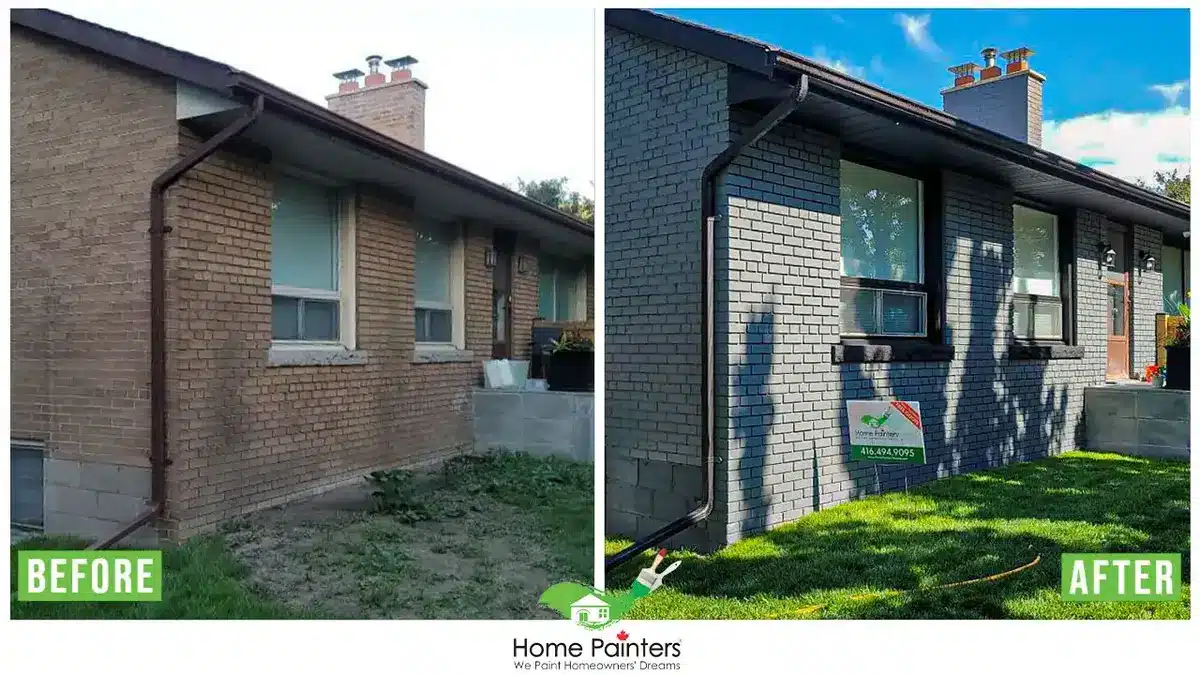
Matching soffit and fascia to existing siding, brick, or stone starts with sampling the dominant undertone of the masonry, not just its overall colour, because brick and stone shift tone dramatically between shade and direct sun. Toronto's older housing stock runs heavy on red and buff brick, both of which read warmer in real light than they photograph on a phone. A soffit or fascia colour that looks correct on a colour chip indoors can clash once it is installed against sun-bleached red brick or grey fieldstone. Our estimators pull physical drawdown cards on site and hold them against the brick, stone veneer, or siding repair work in progress, checking the colour in both shade and full sun before finalizing anything.
- At a recent fascia repair in the Kingsway area of Etobicoke, we replaced storm-damaged fascia board and matched it to the home's existing red brick and cream soffit using Benjamin Moore Aura Waterborne Exterior in Low Lustre.
- The crew primed the bare wood and applied two coats at a 2.1 to 2.9 mil dry film thickness per coat, working in mid-morning air temperatures of about 8°C, comfortably above the coating's recommended minimum application threshold.
The finished fascia matched the existing soffit within one shade step when checked with a handheld spectrophotometer.
Soffit and Fascia Colour Matching for Brick and Stone Veneer
Soffit and fascia colour matching against brick and stone veneer works best when the trim colour either echoes the masonry's undertone or contrasts it deliberately with a true neutral. Warm red and orange-toned brick generally pairs well with warm whites, taupe, or deep bronze fascia, while cool grey stone or brick pairs better with charcoal, black-brown, or cool white trim. A stark, blue-toned white fascia against warm brick is one of the most common mismatches homeowners ask us to fix on jobs that also involve brick and mortar repair or an upcoming exterior brick staining project. The same undertone-matching approach carries over to homes with stucco siding, where the trim colour needs to hold its own against a much flatter, more uniform background than brick or stone.
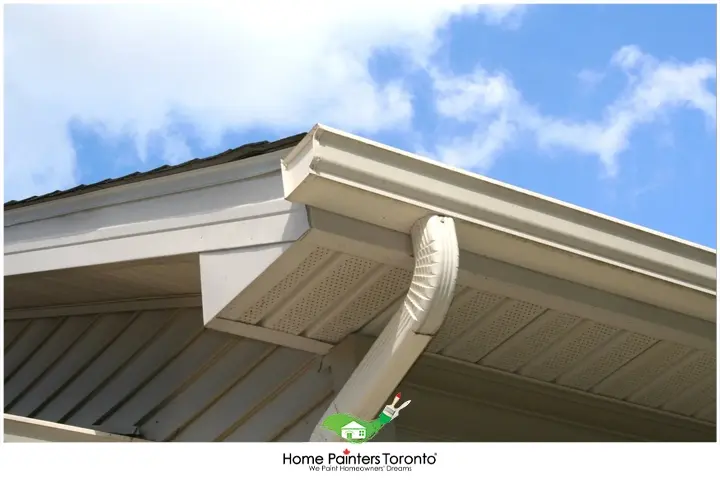
The finished fascia matched the existing soffit within one shade step
What Happens When an Exact Colour Match Isn't Available
When an exact colour match isn't available, because a factory finish has been discontinued or the original colour has faded unevenly over the years, the practical fix is a custom-mixed formula built from a physical sample instead of a catalogue colour code. Aluminum and vinyl manufacturers periodically retire colours, and a fifteen-year-old soffit panel may no longer have a direct factory match at all. Sun-faded sections present a different problem, since the original colour code still exists but no longer matches what is actually on the house today. In both cases, matching a physical sample beats matching a number on an old order form.
| Situation | Typical Fix | Trade-off |
|---|---|---|
| Discontinued factory colour | Custom hand-mixed paint matched to a physical sample | Requires painting the section, not swapping in a factory panel |
| Unevenly sun-faded original | Full-section repaint instead of a single-board spot match | Slightly higher cost than patching one board alone |
| Minor colour drift on a small area | Blended spot repair with feathered edges | Works well on painted surfaces only, not factory finishes |
Catching fading or drift early keeps most jobs in the simpler, cheaper category. CMHC's seasonal home maintenance checklist recommends homeowners check exterior finishes and wood trim for deterioration each season, and that same seasonal glance is usually enough to spot a fascia board that is starting to drift from the rest of the roofline before it becomes a full repaint.
Custom Colour Formulation for Discontinued Finishes
Custom colour formulation for a discontinued finish starts with a physical chip or a small cut piece taken from an inconspicuous area of the existing soffit or fascia. A paint supplier reads that sample on a spectrophotometer and builds a tint formula from a base closest to the target sheen and material. This process works reliably on painted wood and previously painted aluminum. It is less reliable on raw vinyl or original factory coil coatings, which is why those two materials more often need a full section swap instead of a formulated colour match on its own.
Popular Fascia and Soffit Colours in the GTA
The most requested fascia and soffit colours across the GTA right now lean toward warm whites, deep charcoal and black-brown tones, and shades pulled directly from the home's brick or stone. These colours hold up well against Toronto's grey winters and bright summer light, and they photograph consistently in both conditions.
- Warm white trim that reads clean against red and buff brick without looking stark or clinical
- Deep charcoal or near-black fascia paired with a lighter soffit panel for contrast along the roofline
- Bronze and dark brown tones that echo cedar shakes or existing wood siding
- Soft greige fascia that bridges cool grey stone and warmer brick on the same elevation
- Cream or ivory soffit matched to existing trim on century and character homes
FAQ About Soffit and Fascia Colour Matching
Yes, old aluminum soffit can usually be repainted instead of replaced, as long as the factory finish is first cleaned of chalking residue and treated with a bonding primer made for factory-coated metal. Skipping the bonding primer is the most common reason a repaint on old aluminum peels within a year.
Custom hand-mixed colours typically add a modest premium over stock white or standard trim colours, mainly because of the extra time spent sampling, formulating, and drawdown testing before the crew opens a can on site. For most Toronto homes, soffit and fascia repair paired with colour-matched repainting still falls within the general exterior repair range of $2,000 to $8,000 CAD plus HST, depending on scope and access.
A properly primed and painted fascia board holds its colour for years before it needs a refresh, since a 100% acrylic exterior finish is formulated specifically to resist the fading and chalking that comes with direct UV exposure. South- and west-facing fascia, which gets the most sun on most Toronto lots, shows colour drift sooner than north-facing sections on the same house.
Yes, a discontinued siding colour can usually be matched using a physical sample from the siding itself instead of relying on an old catalogue code, since manufacturers stop stocking a colour long before every house wearing it has faded to a different shade. This custom-match approach works well for painted materials but has real limits on original vinyl or factory-coated aluminum.
Factory-finished soffit colour is baked onto the aluminum coil at the mill before it is formed into panels, while site-painted soffit colour is a liquid coating applied and cured after installation. The factory finish is generally more UV-stable over the long run, but it cannot be colour-matched on demand the way site-applied paint can.
Matching soffit and fascia colour to brick with no paint code means sampling the brick's actual colour in person instead of guessing from a photo, since brick colour shifts under different lighting and camera settings. Our estimators use physical drawdown cards on site, checked against the brick in both shade and direct sun, before finalizing the formula.

Get a Seamless Colour Match for Your Roofline
A seamless soffit and fascia colour match comes down to correctly diagnosing the existing finish, using real colour-matching tools instead of a guess, and prepping the surface properly before any new coat goes on. Whether the job involves a single storm-damaged fascia board in Etobicoke or a full roofline repaint tied to new siding or brick work, getting the colour right the first time protects both the look and the value of the repair.
Home Painters Toronto's crews are WSIB compliant and fully insured, and every soffit and fascia colour-matching project we complete is warranty-backed on both material and labour. Browse our recent exterior painting projects and homeowner reviews to see matched rooflines across the GTA.
Get fast, free quotes and warranty-backed work on your next soffit and fascia colour-matching project. Contact Home Painters Toronto to book a free on-site assessment.
Get a Free Estimate