

A windstorm rolling off Lake Ontario can strip fascia boards and crack soffit panels in Etobicoke, Scarborough, and across the rest of the GTA within minutes. When that happens, most Toronto homeowners ask their insurer the same question right away: does my policy pay for this? A soffit fascia insurance claim is often approved when the damage traces back to a sudden, identifiable event such as wind, hail, or a fallen branch, but insurers routinely deny claims tied to age, rot, or deferred maintenance. Home Painters Toronto has inspected and repaired storm-damaged rooflines for GTA homeowners for 38+ years, and we see the same coverage questions after almost every major storm. This guide breaks down what home insurance typically covers for soffit and fascia storm damage in Toronto, what it does not, and how to build a claim file that holds up.
Most home insurance policies in Toronto cover soffit and fascia damage caused by sudden events like windstorms, hail, or falling debris, but they exclude damage from age-related rot, gradual wear, or neglected maintenance. Insurers typically require dated photos, a written contractor estimate, and proof that the damage happened suddenly before approving a soffit fascia insurance claim.

Does Home Insurance Cover Soffit and Fascia Damage?
Home insurance in Toronto covers soffit and fascia damage when a sudden, external event like high wind, hail, or a falling tree limb caused it, but it does not cover damage that built up slowly from age, rot, or missed maintenance. Most standard homeowner policies in Ontario are written as named-perils or all-perils coverage. Named-perils policies list exactly which events are covered, and windstorm, hail, and falling objects are almost always on that list. All-perils policies cover everything except what is specifically excluded, and gradual deterioration, wear, and rot show up on nearly every exclusions page.
Home Painters Toronto, rated among the top contractors on HomeStars with 1,200+ positive reviews across Google, HomeStars, and Houzz, sees this distinction come up constantly when GTA homeowners call after a storm. Insurers weigh two things above all else: cause and timing. If the soffit panel or fascia board failed because a specific storm hit your neighbourhood on a specific date, that points to a covered peril. If a contractor's inspection report shows the wood was already soft, discoloured, or rotting before the storm, insurers treat that as pre-existing deterioration, and it stays uncovered regardless of what the storm did on top of it. This is why the inspection and paperwork matter as much as the physical repair. Home Painters Toronto's soffit and fascia repair services in Toronto team documents both the storm damage and the pre-existing condition of the roofline separately, which gives homeowners a cleaner record to hand to an adjuster.
How Wind and Hail Damage Soffit and Fascia in Toronto Storms
Wind and hail damage soffit and fascia through two different mechanisms, and each leaves different evidence for an adjuster. Wind gusts create uplift under vented soffit panels, popping the locking channel loose and cracking or tearing the panel from the underside. Environment and Climate Change Canada classifies a severe thunderstorm warning at wind gusts of 90 km/h or higher, and Ontario experiences roughly 40 to 70 severe wind events like this every year, most concentrated in the spring and summer storm season. Hail, by contrast, dents and pockmarks aluminum fascia capping and can crack painted wood fascia boards on impact, leaving a pattern of small circular marks a trained eye can date to a specific storm. Adjusters look for this kind of impact pattern because it is difficult to fake and easy to tie to a documented weather event.
What's Usually Covered
Most Toronto home insurance policies cover soffit and fascia damage from windstorms, hail, falling tree limbs, and ice buildup that forms suddenly during a storm. The table below shows the perils most commonly approved, though exact wording always depends on your specific policy.
| Cause of Damage | Typically Covered? | Notes |
|---|---|---|
| Windstorm (gusts, uplift) | Yes | Must be tied to a specific, dateable storm event |
| Hail impact | Yes | Photograph dents and cracks immediately after the storm |
| Fallen tree branch or limb | Yes | Liability for a neighbour's tree is separate from your coverage |
| Sudden ice dam rupture | Often | Depends on your policy's water backup and ice damming wording |
| Wind-driven debris impact | Yes | Fence panels or patio furniture count as windstorm-related |
Coverage still runs through your deductible, so a small section of damaged fascia may cost less to repair out of pocket than to claim. For larger sections, or anywhere the soffit and fascia damage extends into wood siding replacement and repairs, filing a claim is usually the better route, since a single storm event can affect several roofline components at once.
What's Usually Not Covered
Home insurance in Toronto generally excludes soffit and fascia damage caused by age, rot, pest entry, or lack of maintenance, even if a storm was the event that finally made the damage visible. Adjusters are trained to spot the difference between a fresh failure and a long-developing one, and the table below outlines the most common denial reasons.
| Cause of Damage | Typically Covered? | Why It's Excluded |
|---|---|---|
| Wood rot from years of moisture exposure | No | Classed as gradual deterioration, not a sudden peril |
| Peeling paint with no structural failure | No | Cosmetic wear, not storm-caused damage |
| Squirrel or pest entry holes | No | Treated as a maintenance issue, not a weather event |
| Damage from a chronically overflowing gutter | No | Considered preventable neglect |
| Pre-existing sagging aggravated by wind | Partial | Insurer may prorate based on documented prior condition |
Insurers often send an independent inspector to check whether nearby components, including brick and mortar repair areas or the wood framing behind the fascia, show signs of long-term moisture damage. A WSIB-compliant, fully insured contractor can supply a written condition report that separates fresh storm damage from wear that predates the event, which is often the single document that decides whether a claim gets approved.
How to Document Soffit and Fascia Damage for a Claim
Documenting a soffit fascia insurance claim starts the moment it is safe to inspect the roofline, not after repairs begin. Insurers weigh documentation heavily because photos and reports taken close to the event are far harder to dispute than a description offered weeks later. Follow these steps in order.
- Photograph the damage from multiple angles before touching anything, including a wide shot of the whole roofline and close-ups of each affected panel or board.
- Note the date and approximate time of the storm, and pull the local severe weather alert if one was issued for your postal code.
- Avoid starting repairs until the adjuster has seen the damage or explicitly approved photo-only documentation, unless the damage is actively letting water into the attic.
- Request a written inspection report from a licensed contractor that separates storm-caused damage from any pre-existing wear the adjuster might flag.
- Keep every receipt tied to temporary protection, such as tarping an exposed section, since most policies reimburse reasonable mitigation costs.
- Submit the claim as soon as possible after the storm, since most policies expect prompt reporting for weather-related losses.
What Adjusters Look for During a Soffit and Fascia Inspection
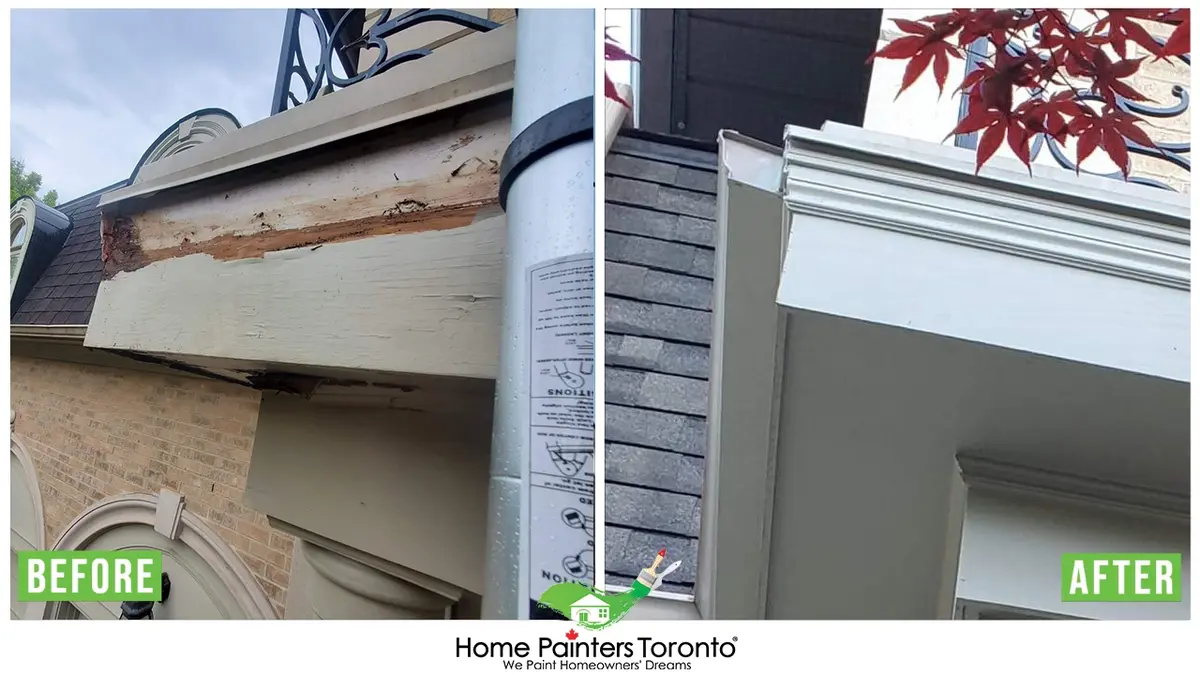
Adjusters look for a clean break between what the storm caused and what was already failing before it hit. They check the fastening pattern on aluminum soffit panels for fresh bent or torn edges, since a clean, uniform tear line usually points to wind uplift, not age. They probe fascia boards near the damaged section to test for soft, spongy wood that would indicate rot predating the storm. They also cross-reference the claim date against recorded severe weather alerts for the property's postal code, so a claim filed without a matching storm event faces more scrutiny.
Getting a Repair Estimate Your Insurer Will Accept
An insurer-ready repair estimate itemizes the damaged sections separately from any unrelated upgrades, with material, labour, and linear footage broken out line by line. A typical single-storey exterior residential house painting or roofline repair project in the GTA falls in the same $2,000 to $8,000 CAD plus HST range as a comparable small to medium exterior repair, depending on linear footage, material, and access, while a full roofline replacement on a larger or multi-storey home can run higher. Insurers commonly ask for two comparable quotes from licensed contractors before releasing payment, so keep the estimate format consistent between them.
| Estimate Component | What It Should Include |
|---|---|
| Damage description | Cause, location, and extent of the soffit or fascia damage, tied to the storm date |
| Material breakdown | Aluminum, vinyl, or wood specified by linear foot, matched to the damaged sections |
| Labour and access | Ladder, scaffold, or lift costs listed separately from material costs |
| Comparable quotes | A second quote from another licensed contractor, since many insurers request one |
| Photos and inspection notes | Attached as supporting documentation, not just a price line |
What If Your Claim Gets Denied?
A denied soffit fascia insurance claim can usually be appealed by requesting the adjuster's written reasoning and providing additional documentation that addresses it point by point. Start by asking your insurer for the specific policy clause cited in the denial, since 'gradual deterioration' and 'wear and tear' are the two most common reasons for a soffit and fascia refusal. A second, independent inspection report can directly counter that reasoning if the damage pattern genuinely matches a storm and not age-related wear. Homeowners who remain unresolved after escalating internally can contact the Insurance Bureau of Canada's Consumer Information Centre for guidance on next steps. Reviewing why homeowners choose Home Painters Toronto shows the kind of documented, dated inspection reports that tend to hold up best on appeal.
Why Adjusters Push Back on Soffit and Fascia Claims Specifically
Adjusters scrutinize soffit and fascia claims more than most exterior claims because the components are thin, painted, and constantly exposed, which makes storm damage and years of ordinary wear look almost identical from a distance. A cracked panel photographed from the ground can look like fresh storm damage or slow age-related failure depending entirely on close inspection, and insurers know homeowners rarely climb a ladder to check the difference themselves. That gap between what a photo shows and what a hands-on inspection reveals is exactly where claims get delayed or denied.
Sudden Peril vs. Gradual Deterioration: The Line Insurers Draw
Insurance policies in Ontario draw a hard line between a sudden peril and gradual deterioration, and that line decides almost every soffit and fascia claim. A sudden peril is a specific, dateable event, such as a windstorm on a Tuesday afternoon that peeled back a section of aluminum soffit. Gradual deterioration is damage that built up over months or years, such as fascia wood that softened slowly from years of clogged gutters. Insurers are not being difficult when they draw this line. Their policies are priced around covering sudden, unpredictable losses, not the routine maintenance every home needs over time.
- At a recent storm-damage repair in Etobicoke's Humber Bay area, our crew found a 12-foot section of aluminum fascia peeled back after a spring windstorm, exposing bare wood fascia board underneath with a moisture reading of 22 percent, well above the 19 percent threshold coatings manufacturers like Benjamin Moore recommend against painting over.
- We let the section dry for four days, replaced the compromised wood, and finished the repainted fascia with Benjamin Moore Aura Exterior in Low Lustre applied at 5 mils wet film thickness per coat, matching the coverage rate on the product's technical data sheet.
The insurer's adjuster approved the claim within a week because the damage pattern, a clean, uniform tear along the panel's locking edge, matched the recorded windstorm date and showed no sign of prior rot. Photos from this and other recent roofline and exterior projects show the kind of clean tear pattern adjusters look for when approving a claim quickly.
FAQ About Soffit and Fascia Insurance Claims
Yes, in most cases. Home insurance in Toronto typically covers soffit and fascia damage from a fallen tree branch or limb, whether it came from your own tree or a neighbour's, as long as the damage was sudden. Your insurer may still pursue your neighbour's insurer for the cost if their tree was known to be hazardous, but that liability question does not usually delay your own claim.
Payout depends on the extent of the damage and your policy's deductible, but most GTA claims for a single-storey repair fall in the same $2,000 to $8,000 CAD plus HST range as a comparable out-of-pocket repair, minus your deductible. Larger or multi-storey claims involving full roofline replacement can run higher.
It can, particularly if you have filed more than one weather-related claim in a short period, though a single storm-related claim tied to a widely reported event is less likely to raise your premium than a claim tied to a maintenance issue. Ask your broker directly, since the impact varies by insurer and claims history.
Yes. A licensed contractor can provide a written inspection report, photos, and an itemized repair estimate that most insurers require before approving a soffit fascia insurance claim. Home Painters Toronto provides this documentation as part of every storm-damage assessment across the GTA.
Most policies expect you to report a claim as soon as reasonably possible after discovering the damage, and waiting weeks or months can weaken your case even if the damage was genuinely storm-caused. Check your specific policy wording for the exact reporting window, since it varies by insurer.
An insurance claim covers sudden damage from an external event like a storm, while a warranty covers defects in material or workmanship from the original installation or repair. If soffit and fascia repaired under warranty-backed work later fail from a storm, that storm damage goes through insurance, not the warranty.
Home Painters Toronto provides repair estimates and inspection documentation to support your claim but is not a licensed insurance broker or adjuster. Confirm coverage specifics directly with your insurance provider or broker before making repair decisions based on this guide.

Get a Documented Estimate for Your Insurance Claim
Storm damage to a soffit or fascia rarely waits for a convenient time, and neither should the paperwork that gets your claim approved. Home Painters Toronto has handled roofline repairs across Toronto and the areas we serve across the GTA for 38+ years, backed by WSIB compliance, full insurance coverage, and warranty-backed results on every job. Check our frequently asked questions for more on how our estimates and documentation work.
Contact Home Painters Toronto for fast free quotes and warranty-backed work, including the documented inspection report most insurers want to see before approving a soffit fascia insurance claim.
Get a Free Estimate