

Toronto homeowners who skip seasonal roofline care often end up paying for a full soffit and fascia replacement instead of a simple touch-up. A soffit and fascia maintenance checklist gives you a clear, repeatable plan for catching small problems, like a hairline paint crack or a loose panel, before winter humidity and freeze-thaw cycles turn them into structural rot. Home Painters Toronto has inspected rooflines across the GTA for close to four decades, from century homes in Leslieville to newer builds in Vaughan, and the pattern holds true everywhere: two seasonal checks a year prevent most emergency calls. This guide breaks down what to check each spring and fall, which tools a proper inspection needs, and when a maintenance item has crossed the line into a repair job.
A soffit and fascia maintenance checklist covers two seasonal checks each year, in spring and fall, focused on paint condition, panel security, gutter attachment, and pest entry signs. Toronto's freeze-thaw climate makes the fall check the higher priority, since sealing small gaps before winter prevents most moisture-driven rot.
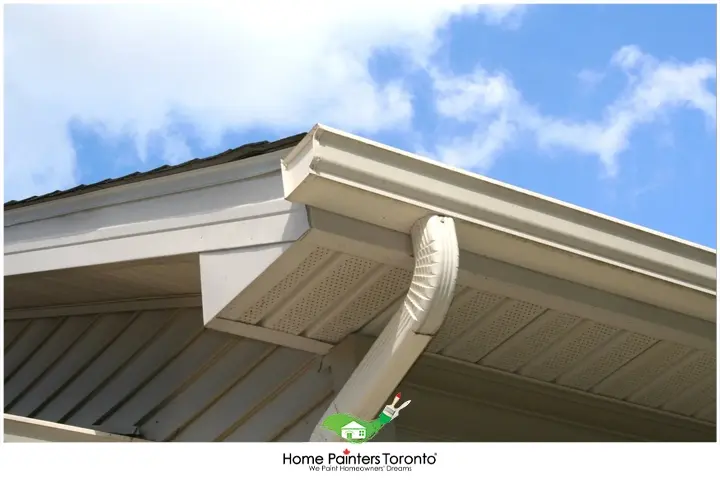
Soffit and Fascia Maintenance Checklist for Toronto Homes
A complete soffit and fascia maintenance checklist for a Toronto home covers eight recurring checkpoints, twice a year: paint film condition, panel fasteners, caulking seams, gutter attachment, pest entry points, ventilation clearance, wood moisture content, and photo documentation for comparison. Each checkpoint takes only a few minutes from ground level with binoculars, and a short ladder covers most single-storey sections. Larger or multi-storey homes usually need a professional crew for the fascia sections above the first floor, since safe access matters as much as the inspection itself. The table below summarizes the full checklist at a glance, and the next two sections break the spring and fall tasks down in more detail.
| Checkpoint | What to Look For | Best Season |
|---|---|---|
| Paint film | Chalking, cracking, or peeling at seams | Spring and fall |
| Panel fasteners | Loose screws, popped clips, wind lift | Spring |
| Caulking seams | Dried, shrunk, or missing bead | Fall |
| Gutter attachment | Bent brackets, pulled fascia board | Spring and fall |
| Pest entry points | Chewed holes, droppings, nesting debris | Fall |
| Ventilation clearance | Blocked soffit vents, insulation intrusion | Spring |
| Wood moisture content | Readings above 20 percent (CMHC threshold) | Fall |
| Photo documentation | Side-by-side comparison shots | Spring and fall |
If any checkpoint shows more than surface wear, our soffit and fascia repair services team can assess it during the same visit and quote the fix on the spot.
Spring Maintenance Tasks
Spring maintenance on a Toronto soffit and fascia system focuses on assessing winter damage before summer humidity and pollen mask the early warning signs. Ice buildup and repeated freeze-thaw movement over the winter months are the two most common causes of loosened panels and cracked paint film discovered each spring. A spring check also sets the baseline you will compare against in fall, which is why photo documentation matters as much as the physical inspection.
Spring Soffit and Fascia Inspection Checklist
- Look for ice-dam staining or lifted paint along the lower edge of the fascia board.
- Check aluminum or vinyl panels for sections popped loose by wind or ice buildup.
- Clear winter debris from behind soffit vents so summer airflow is not restricted.
- Probe any discoloured wood fascia for soft spots using the screwdriver test described below.
- Confirm gutter brackets are still fastened tightly against the fascia board.
- Photograph any problem areas for comparison at the fall check. For sections showing bare wood, our exterior wood siding repair crew can match the profile and prime it before the next paint cycle.
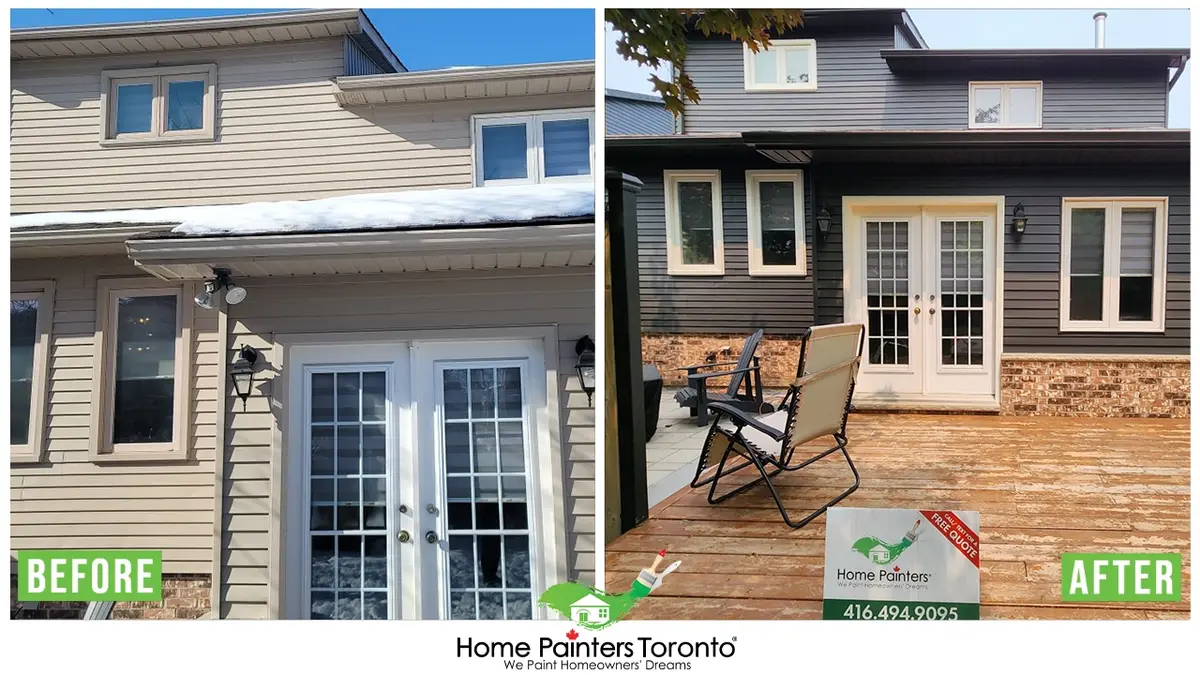
A spring check also sets the baseline you will compare against in fall
Fall Maintenance Tasks
Fall maintenance on Toronto soffit and fascia matters more than any other seasonal check because it is the last real chance to seal gaps before sustained sub-zero temperatures arrive. Water that gets behind a loose panel or a dried caulking bead in October freezes repeatedly through the winter, and that expansion cycle is what turns a small gap into a cracked board by spring. Booking the fall check early also means any repair work gets scheduled before contractor calendars fill up for the season.
Fall Roofline Maintenance Before Winter Freeze
- Clean gutters and downspouts so overflow water does not run behind the fascia board.
- Re-caulk any dried or cracked seams, including the exterior caulking around windows and doors where trim meets the fascia line.
- Check that attic insulation has not shifted to block soffit intake vents.
- Look for pest nesting material building up before cold weather drives animals indoors.
- Confirm downspout extensions still carry water away from the foundation and roofline.
- Book any repair work found during the check early, since contractor schedules fill quickly once winter weather arrives.
What to Inspect During Each Seasonal Check
Every seasonal soffit and fascia check should examine four things at each access point: coating integrity, fastener tightness, moisture content, and pest activity. Skipping any one of these lets a small issue develop unnoticed for months, and moisture problems in particular tend to hide behind an otherwise normal-looking paint surface.
- Coating integrity: look for chalking residue that rubs off on a finger, colour fade, and hairline cracks at panel seams.
- Fastener tightness: push gently on each panel section; movement of more than a few millimetres signals a loose or corroded fastener.
- Moisture content: wood fascia testing above 20 percent moisture is at active risk of fungal decay, a threshold outlined in CMHC's building envelope moisture guidance.
- Pest activity: droppings, gnaw marks, or a faint musty smell near a soffit vent usually means an entry point already exists. Nearby brick and mortar repair work is worth checking at the same time, since pests often move between a cracked mortar joint and an adjacent soffit gap.
A useful seasonal check kit is simple: a flat-blade screwdriver for probing, a moisture meter for wood readings, binoculars for second-storey sections, and a phone camera for dated photo records. None of this requires specialized equipment, though a proper harness and ladder setup still matter for any fascia section above the first floor.
The Screwdriver Probe Test for Soft Spots
A screwdriver probe test checks wood fascia for hidden rot by pressing the tip firmly into the board at roughly a 45-degree angle. Sound wood resists the pressure and the screwdriver leaves only a small mark on the surface. Wood that has begun to decay lets the tip sink in with little resistance, often more than 6 millimetres, which signals that the affected section needs replacement instead of a simple recoat. Run this test at every fastener location and at any spot showing discolouration, since rot often spreads several centimetres past the visible stain on the surface. Water that pools near a foundation because of poor grading can push moisture up into lower fascia sections too, so a quick check of foundation parging repair needs along the base of the wall is worth adding to the same walk-around.
Why Toronto's Freeze-Thaw Cycle Doubles Your Maintenance Priority
Toronto experiences roughly 50 to 65 freeze-thaw cycles a year, according to Climate Atlas of Canada's regional freeze-thaw mapping, nearly double the frequency found in many milder Canadian cities. Each cycle pushes moisture trapped behind a loose caulking bead or a lifted paint edge through a freeze, expand, thaw, and contract sequence, and that repeated movement pries fasteners loose far faster than steady cold temperatures alone would.
Most generic home maintenance checklists, written for a national or American audience, recommend a single annual roofline check. That single-check approach misses the narrow fall window that matters most for a Toronto climate, since any gap left unsealed in October gets exploited dozens of times before spring arrives. A two-check schedule, with fall treated as the priority visit, closes that gap and matches the maintenance rhythm to the actual weather pattern instead of a generic calendar built for a different climate zone. Homes on exposed corner lots or near open sightlines to Lake Ontario tend to see faster cycling because wind-driven moisture reaches the roofline more often, so those properties benefit from moving the fall check earlier in the season. Older neighbourhoods with mature tree canopy, common across much of Leslieville and the Beaches, also trap more organic debris in the soffit vents heading into fall, which compounds the moisture problem if the check gets skipped.

Any gap left unsealed in October gets exploited dozens of times before spring arrives
When a Maintenance Issue Becomes a Repair
A soffit or fascia issue crosses from maintenance into repair once the wood shows soft spot depth beyond a light screwdriver probe, a panel gap exceeds 6 millimetres, or paint failure exposes bare substrate across more than one section of board. At that point, a coating refresh will not hold, since paint cannot bond properly to decayed wood or bridge a structural gap. Home Painters Toronto crews are WSIB compliant and fully insured, and every repair carries warranty-backed terms, so a maintenance visit that turns into a repair does not create new risk or paperwork headaches for the homeowner.
| Sign | Maintenance Task | Repair Needed |
|---|---|---|
| Chalking paint residue | Clean and monitor | No |
| Soft spot under 3 mm probe depth | Spot-prime and repaint | No |
| Soft spot over 6 mm probe depth | N/A | Yes, board replacement |
| Single loose fastener | Re-secure | No |
| Panel gap over 6 mm | N/A | Yes, panel replacement |
| Bare wood on multiple sections | N/A | Yes, prep and recoat |
Full roofline sections typically fall into the same general exterior repair pricing bracket as other exterior carpentry work, ranging from about $2,000 for a single-board patch to $10,000 or more for a full-storey replacement, depending on material, height, and access. The same soft-spot threshold applies to adjoining wood elements, since moisture rarely stays confined to one component.
Check porch wood, wood railings, and a wood fence section next to a damaged roofline during the same visit, since all three often show the same decay pattern once one component has failed.
How Often Should You Repaint or Recoat Soffit and Fascia?
Painted aluminum or wood soffit and fascia in the Toronto climate typically needs recoating every 7 to 10 years, based on Benjamin Moore's exterior coating durability data for low-lustre and satin finishes exposed to UV and freeze-thaw cycling. Darker colours and south-facing exposures sit at the shorter end of that range because of higher UV load, while shaded north-facing sections can stretch past 10 years before the film breaks down. Coating brand and mil thickness at application also affect the interval, which is why HPT crews record dry film thickness on the original job sheet for warranty reference.
| Material | Typical Recoat Interval | Notes |
|---|---|---|
| Painted wood fascia | 7 to 10 years | Interval shortens with south or west exposure |
| Aluminum soffit and fascia | 10 to 15 years | Factory finish outlasts field-applied coatings |
| Vinyl soffit | Rarely repainted | Colour is embedded in the material |
Signs Your Coating Has Reached End of Life
- Chalking residue transfers to bare skin or clothing on contact.
- Colour has visibly faded compared to a protected section, such as behind a downspout.
- Hairline cracking appears along panel seams and fastener heads.
- Adhesion loss shows as small flakes lifting at the edges of the board.
- At a recent roofline maintenance visit in Leslieville, we recoated a 1920s home's wood fascia with Benjamin Moore Aura Exterior in Low Lustre after testing showed the existing coating had dropped below the 3 mil dry film thickness minimum listed on the product's technical data sheet.
- The homeowner's wood moisture reading came in at 14 percent, comfortably under the 20 percent threshold that signals active decay, so a full coating refresh handled the job without any board replacement.
That kind of early catch is the entire point of a seasonal checklist: it turns a project that could otherwise mean several thousand dollars in full board replacement into a coating refresh priced in a much lower range. Homeowners weighing a broader exterior repaint at the same time can compare general project ranges on our cost of painting a house in Toronto page before booking.
FAQ About Soffit and Fascia Maintenance
Check your soffit and fascia twice a year, once in spring to assess winter damage and once in fall to seal gaps before freezing temperatures return. Toronto's freeze-thaw pattern means anything missed in fall gets exploited repeatedly through the winter months, so the fall visit carries the higher priority of the two. Homes with mature trees nearby may benefit from a quick mid-summer glance as well, since falling debris can block vents between the scheduled checks.
You can spot several warning signs from the ground with binoculars, including sagging panel lines, streaking below the fascia, and colour patches that look different from the surrounding paint. Confirming actual rot depth still needs a hands-on screwdriver probe test, which is best left to a professional crew working safely at height.
Home insurance typically covers sudden storm or wind damage discovered during a maintenance check, but it usually excludes gradual deterioration from age or deferred upkeep. Ask your insurer directly and keep dated photos from each seasonal check, since that documentation supports a claim if storm damage does occur later. A written estimate from a licensed contractor also strengthens a claim file if the insurer requests one.
A maintenance check is a quick visual and probe-based review of known problem points, usually completed from the ground or a short ladder in under an hour. A full inspection goes further, checking attic ventilation, moisture readings at multiple points, and structural connections, which usually calls for a professional crew with proper access equipment.
Hiring a professional for at least the fall check is worth it for any home taller than a single-storey or with mature trees near the roofline. A trained crew can safely probe wood fascia, spot early pest entry points, and document conditions with the kind of detail that supports a future warranty claim or insurance file if storm damage shows up later. See our full frequently asked questions page for more on scheduling and service areas.

Get Your Toronto Roofline Maintenance Plan Started
A soffit and fascia maintenance checklist is only useful if someone actually follows it twice a year, and that is where most Toronto homeowners fall behind. Home Painters Toronto builds seasonal roofline checks into ongoing service relationships across the GTA, backed by nearly four decades of exterior painting and carpentry experience. Every visit comes with fast, free quotes and warranty-backed work, whether the fix is a simple recoat or a full panel replacement.
Contact Home Painters Toronto to schedule your next seasonal check before the next freeze-thaw cycle finds the gap first.
Get a Free Estimate