

Soft Spots in Siding: What They Mean and Why You Shouldn't Wait
Soft spots in siding are one of the clearest warning signs a Toronto home is dealing with hidden moisture damage, not just cosmetic wear. When a section of wood, stucco, or composite siding gives under light pressure, water has usually already reached the wall sheathing behind it. This is common on older homes across Etobicoke, Scarborough, and North York, where decades of freeze-thaw cycling stress original wood and composite siding. A soft spot rarely stays small on its own. What starts as one damp board can spread into sheathing, insulation, and framing within a season or two if it goes unaddressed. Home Painters Toronto has spent 38+ years diagnosing and repairing this kind of damage through our siding repair services across the GTA, backed by 1,200+ verified reviews and a HomeStars Best of Award 2026, and this guide explains what soft spots mean, what causes them, and why fast repair matters.
Soft spots in siding almost always mean trapped moisture has softened the wood or sheathing underneath, not just the surface. Left alone, that moisture keeps climbing toward the range where decay fungi take hold, so a small soft spot today can mean rotted sheathing, mould, or a failed wall section within a year or two.
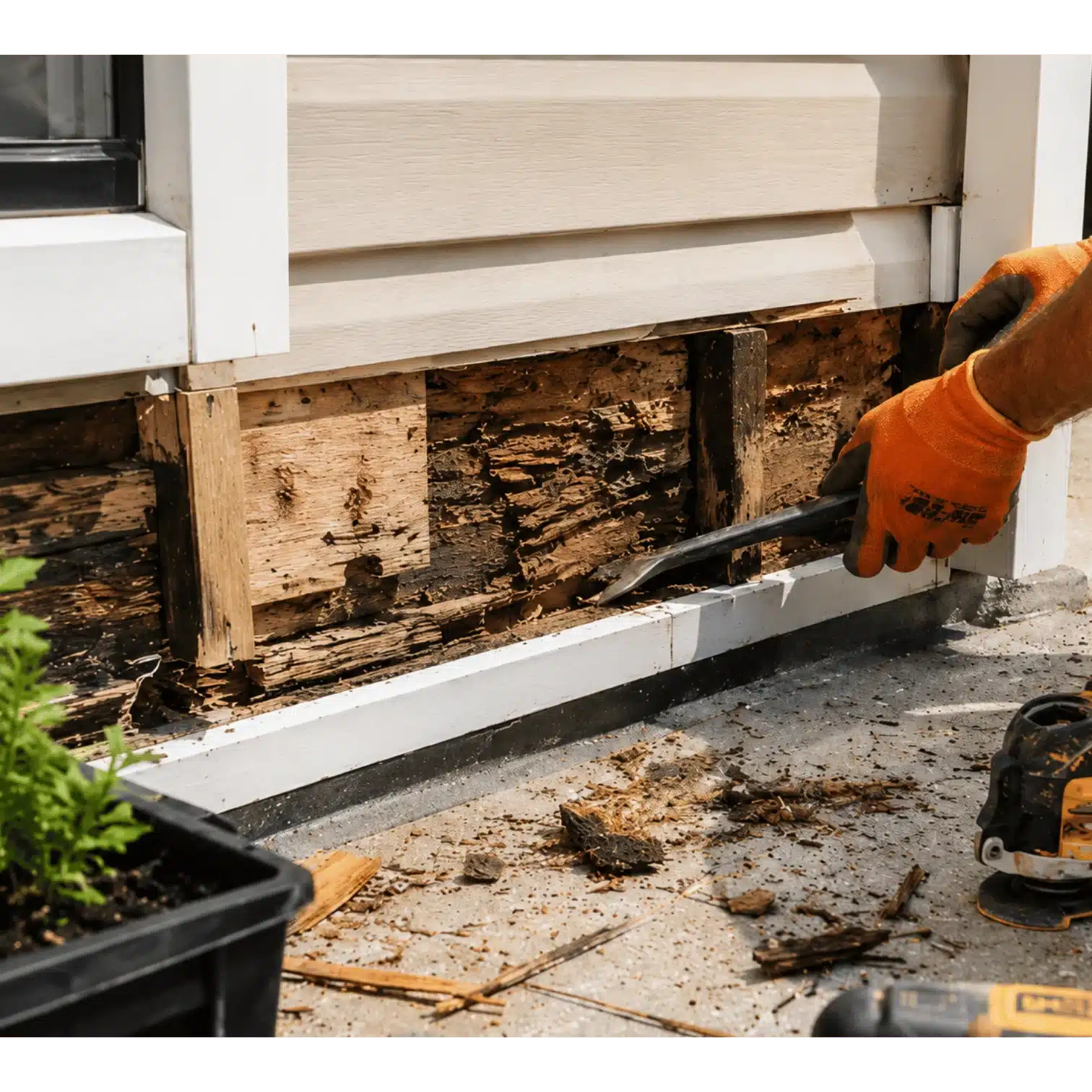
Painted wood and composite siding can look completely normal from the street while the material underneath has already softened
What a Soft Spot in Siding Actually Means
A soft spot in siding is a section of the exterior wall covering that flexes, gives, or feels spongy when pressed, because the wood fibres or sheathing behind it have absorbed enough moisture to start breaking down. Painted wood and composite siding can look completely normal from the street while the material underneath has already softened. Moisture content is the number that actually matters, not appearance.
The Canadian Wood Council lists 19 percent moisture content as the benchmark for dry wood, with decay risk rising as moisture climbs toward the fibre-saturation point near 28 percent. A soft spot is the physical result of wood sitting well above that dry benchmark for weeks or months at a time, usually because a small leak or gap has gone unnoticed through several rain events.
Not every soft area is structural. A patch of failed caulking or a hairline paint crack can feel slightly different under a hand without meaning the wood itself has weakened. The distinction matters because a cosmetic issue needs a small repair, while a structural soft spot means the sheathing, and sometimes the framing behind it, needs to be opened up and inspected. Our exterior wood siding crews carry moisture meters to every inspection for this reason, since guessing by feel alone is not reliable enough to plan a repair.
Signs of Soft or Spongy Siding to Watch For
Soft or spongy siding usually shows itself through a handful of visible clues before the material fully gives way. Watch for the following on any exterior wall, especially near grade, corners, and downspouts:
- Visible bulging or waviness across a section of wall
- Paint or caulking that has cracked, lifted, or pulled away at a seam
- A dull, spongy give when the wall is pressed near a downspout, window, or corner
- Dark staining or discoloration near siding joints or board edges
- Deterioration on attached wood elements, since porch wood and railings often show the first soft spots before the main wall does
- A musty smell near an exterior wall on the interior side of the home
- Small holes or a crumbling wood texture, often a sign of insect activity
Any one of these signs on its own is worth a closer look. Two or more together usually mean moisture has been active behind the wall for some time, and the visible damage is only what you can see from outside.
How Homeowners Can Spot a Soft Area Before Calling a Contractor
Pressing gently on the wall with a flat hand is the simplest way to notice a soft area, since sound siding feels firm and rigid under light pressure. A section that flexes, dimples, or feels spring underneath is worth flagging, even if the paint looks fine from a few steps back. Checking corners, the bases of walls near grade, and areas below downspouts covers the spots where water most often collects on a typical GTA home. Confirming how deep the damage goes and whether the sheathing behind it is affected needs a probe test and a moisture meter reading, which is where a licensed contractor takes over from a visual check.
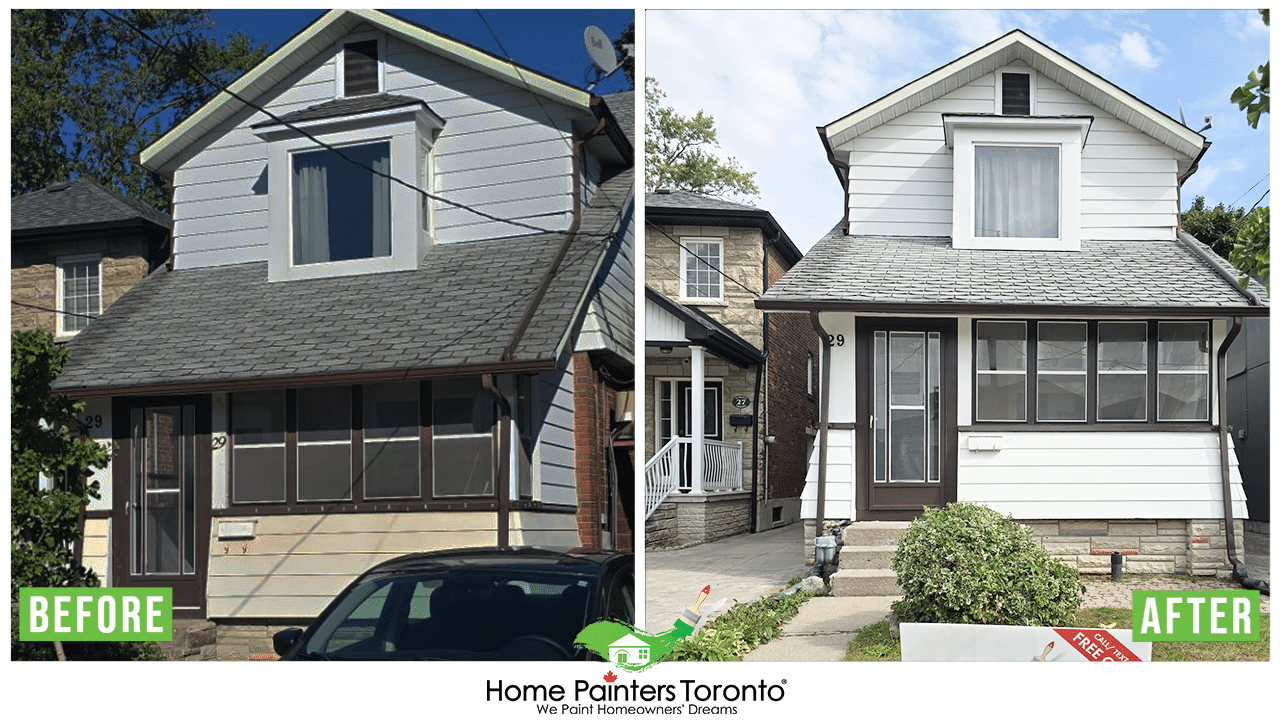
Two or more warning signs together usually mean moisture has been active behind the wall for some time
What Causes Soft Spots to Develop on GTA Homes
Soft spots in GTA siding almost always trace back to a gap in the water-shedding system: failed caulking, missing flashing, clogged gutters, or a crack that lets water behind the siding instead of off it. Once water gets past the outer surface, it has nowhere to evaporate quickly, since siding is built to shed water on the surface, not absorb and hold it.
- Failed or missing caulking at trim, corners, and window and door joints
- Gutters and downspouts that direct water onto the wall instead of away from it, or damaged soffit and fascia that lets water track down behind the top of the wall
- Missing or damaged flashing above windows, doors, and horizontal trim, including deteriorated window wood frames
- Grading that slopes toward the foundation, causing splashback onto lower siding, often alongside cracked foundation parging
- Sun-facing walls, especially south and west exposures, where repeated expansion and contraction open small cracks faster than shaded walls
Freeze-Thaw Cycling and Trapped Moisture Behind Siding
Toronto's freeze-thaw pattern, well documented by Environment and Climate Change Canada, cycles siding through repeated freezing and thawing across the winter months. Water that has worked its way into a small crack expands when it freezes, widening the opening a little more with every cycle. By the time spring arrives, a hairline gap from November can be large enough to let steady moisture through on every rainfall, which is why so many soft spots are first noticed in April and May and not during winter itself. The same freeze-thaw pattern is why wood deck repairs tend to spike in spring too, since decks and siding share the same exposure to standing winter moisture.
Soft Spots by Siding Material: Wood, Stucco, Vinyl, and Aluminum
Soft spots look and behave differently depending on the siding material, so the repair approach changes by material too. On homes that combine wood trim with masonry, a soft spot at a corner sometimes points to a separate issue with brick and mortar repair and not the siding itself, so a full exterior check is worth doing at the same time. Homes with exterior stucco siding or older wood boards benefit most from a full assessment, since both materials hide moisture damage well before it becomes visible. The table below breaks down what a soft spot typically means and how it gets fixed for each of the four materials most common on GTA homes.
| Material | How Soft Spots Show Up | Repair Approach |
|---|---|---|
| Wood siding and trim | Spongy give near butt joints, bottom edges, and window sills | Cut back to sound wood, replace boards, prime and repaint |
| Stucco | Hollow-sounding patches, hairline cracking, crumbling texture | Remove the damaged patch, re-parge, seal against moisture |
| Vinyl | A soft flex behind the panel usually points to rotted sheathing, since vinyl itself does not absorb moisture | Remove the panel, inspect and replace sheathing, reinstall or replace the panel |
| Aluminum | Dents with give underneath, rust bleed at seams and fasteners | Inspect the backing material, repair or replace the panel section, reseal seams |
For stucco specifically, our stucco repair and parging process re-seals the wall against further moisture intrusion and not just the surface crack. For vinyl and aluminum walls, vinyl siding painting and aluminum siding painting are often done alongside a repair to refresh a colour-matched, weather-resistant finish across the full wall.
Why Waiting Makes Soft-Spot Damage Worse
Waiting to repair a soft spot lets moisture keep climbing past the level where wood starts to decay, since wood becomes vulnerable to decay fungi as it approaches the fibre-saturation point noted earlier. A board that sits above that threshold for an extended period does not just stay damp. It becomes an active food source for decay fungi, and the damage keeps spreading as long as the moisture source stays in place.
The cost math works against delay, too. What starts as a $2,000 to $4,000 spot repair on one or two boards often becomes an $8,000 to $10,000 repair across multiple wall sections once sheathing and framing are compromised. A soft spot ignored for one winter can double or triple the eventual repair scope, and a repair that could have stayed contained to the exterior wall sometimes ends up affecting interior drywall and framing as well.
How Rot Spreads From Siding Into Wall Sheathing
Rot rarely stays confined to the siding board itself, since the same moisture that softened the surface is usually already saturating the sheathing and building paper directly behind it. CMHC's guidance on moisture in housing identifies water entering through cracks and gaps as a primary driver of hidden mould and material breakdown, with a musty odour often the first sign something is wrong before any visible damage appears. Once sheathing is wet behind a painted or finished wall, the damage stays hidden until a contractor opens the wall or takes a probe reading, which is why an early inspection matters more than the size of the visible soft spot.

Once sheathing is wet behind a painted or finished wall, the damage stays hidden until a contractor opens the wall or takes a probe reading
How We Diagnose and Repair Soft Spots in Siding
Diagnosing a soft spot starts with a moisture meter scan across the affected wall, followed by a probe test at the softest point to confirm how far the damage extends into the sheathing. This is part of the same process our exterior carpentry and handyman teams use across every wood repair, not just siding. Once the scope is confirmed, repair follows a consistent sequence:
- Scan the wall with a moisture meter and mark the full affected area
- Remove the damaged siding and expose the sheathing underneath
- Cut back to sound, dry material and replace any compromised sheathing
- Install matched siding or boards and reseal all seams and joints
- Prime bare wood and apply exterior paint at the manufacturer's specified mil thickness
- At a recent siding repair in Etobicoke, our crew found a section of cedar board siding that flexed under hand pressure near a downspout.
- A moisture meter reading showed 26 percent moisture content at the sheathing, well above the 19 percent benchmark the Canadian Wood Council lists for dry wood.
- We cut back to sound framing, replaced the damaged sheathing and two courses of board siding, and finished the repair with Benjamin Moore Aura Exterior in Low Lustre, applied at the manufacturer's specified 5 mil dry film thickness.
The wall was fully dry, repaired, and repainted within four days, and the new boards were feathered into the existing colour so the patch is not visible from the street.
Every soft-spot repair through Home Painters Toronto is WSIB compliant and fully insured, and the finished work carries warranty-backed results consistent with the rest of our exterior painting and carpentry services across the GTA.
Cost to Repair Soft Spots in Siding in Toronto
Soft-spot siding repair in Toronto typically costs between $2,000 and $10,000 CAD plus HST, depending on how many wall sections are affected and whether sheathing needs to be replaced alongside the visible siding.
| Repair Scope | Estimated Cost Range | What's Included |
|---|---|---|
| Spot repair (1-2 boards or a small patch) | $2,000 – $4,000 + HST | Cut-out, sheathing check, board or patch replacement, prime and paint |
| Section repair (multiple boards, one wall area) | $4,000 – $8,000 + HST | Larger sheathing replacement, matched siding, full section repaint |
| Multiple wall areas or full elevation | $8,000 – $10,000 + HST | Structural sheathing repair, siding replacement across several sections, full elevation repaint |
What Affects the Cost of a Soft-Spot Repair
- How much sheathing, not just siding, needs to be replaced
- The siding material and how easily it can be colour-matched to the existing wall
- Whether framing behind the sheathing is also affected
- Access and height, including scaffolding for second-storey repairs
- How many separate wall areas are involved in the same project
Soft Spots in Siding FAQ
A soft spot is usually repairable if the damage is limited to one or two boards, panels, or a single patch, and the framing behind it is still solid. Full replacement becomes the better option when moisture has spread across multiple wall sections or into structural framing, since patch repairs on a widely saturated wall rarely hold. A contractor confirms the extent with a moisture meter reading before recommending either option.
Home insurance usually covers siding damage from a sudden event, like wind or hail, but it typically excludes damage from gradual wear, age, or long-term moisture intrusion. Most soft spots develop slowly, which means many policies treat them as a maintenance issue and not an insurable loss. Check the specific exclusions in your policy or ask your insurer directly before assuming coverage applies to your situation.
No, each material needs a different repair approach even though the underlying cause, trapped moisture, is often the same. Stucco repairs involve removing the damaged patch and re-parging the area, while aluminum repairs usually mean inspecting the backing material and replacing or resealing the affected panel section. Wood repairs focus on cutting back to sound material and replacing the damaged boards before repainting.
A single spot repair on one wall section typically takes one to two days, including diagnosis, sheathing inspection, board replacement, and repainting. Larger repairs involving multiple wall areas or structural sheathing can take three to five days, depending on drying time between coats. Weather and required cure times for primer and paint can extend the schedule during cooler months.
A soft spot should not return if the moisture source, such as failed caulking, a clogged gutter, or missing flashing, is corrected along with the siding itself. Repairing the visible board without addressing what let water in behind it is the most common reason soft spots reappear in the same spot within a year or two. A thorough repair always includes fixing the entry point, not just replacing the damaged material.

Get a Free Soft-Spot Siding Inspection in Toronto
A soft spot rarely gets better on its own, and every week it sits unaddressed gives moisture more time to spread into sheathing and framing. Home Painters Toronto offers fast free quotes and warranty-backed work on every siding repair across Toronto and the GTA, backed by 38+ years in business and 17,000+ satisfied clients served.
Contact Home Painters Toronto for a free, no-obligation inspection and estimate on your siding.
Get a Free Estimate