

Can You Repair Damaged Siding in the Winter in Scarborough?
Scarborough winters bring freezing wind, ice pellets, and temperature swings that crack, warp, or knock loose your home's exterior panels. Many homeowners assume vinyl siding repair has to wait until spring, but that is not always true. A cracked panel left exposed through January and February lets moisture behind your wall sheathing, which can lead to bigger problems by the time warm weather returns. Home Painters Toronto, a family owned contractor with 1,200+ positive reviews on HomeStars, Google, and Houzz, has completed cold weather exterior repairs across Scarborough, Agincourt, and Malvern for over three decades. This guide explains when winter vinyl siding repair makes sense, what the cold does to PVC panels, and how a professional crew handles the job safely.
Yes, professional crews can repair damaged siding in Scarborough winters, but the work is shaped by temperature. Most vinyl panels turn brittle below 4 degrees Celsius, so contractors schedule repairs during milder afternoon windows, use warmed panels, and hold off on full panel replacement until temperatures climb back above freezing for lasting results.
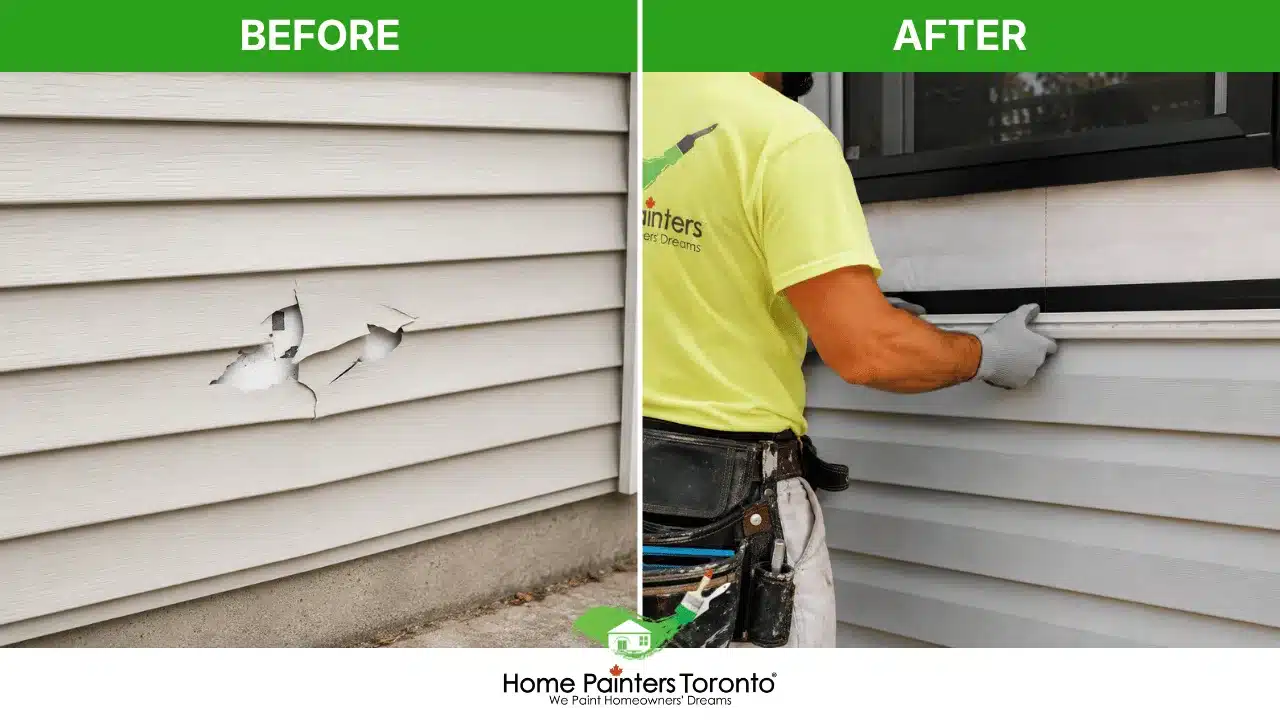
A cracked panel left exposed through winter lets moisture behind the wall sheathing long before spring arrives
Yes, Vinyl Siding Repair Is Possible in Scarborough Winters
Yes, vinyl siding repair is possible in Scarborough winters when a contractor understands how PVC panels react to cold. Vinyl siding is a rigid plastic material, and it turns stiff and brittle once outdoor temperatures fall below freezing. CertainTeed, one of the largest vinyl siding manufacturers in North America, recommends a wider expansion gap at J channel and corner posts once temperatures drop below 4 degrees Celsius, because the panel contracts more in the cold and needs extra room to move. Homeowners can request a free quote as soon as a storm hits, so a crew can plan the repair window around the mildest part of the day. A skilled crew warms replacement panels indoors before cutting them, chooses milder afternoon hours whenever possible, and uses fasteners left slightly loose, so the panel can shift without cracking. Emergency repairs, such as replacing one storm damaged panel or resecuring a loose corner post, can almost always happen right away, even during a cold snap. Full scale replacement projects covering an entire wall or elevation are usually better suited to spring or fall, when panels handle nailing and cutting with far less risk of a hairline crack turning into a full split. Scarborough homeowners dealing with a single cracked panel rarely need to wait months for a fix.
Why Cold Temperatures Make Vinyl Siding Repair Trickier
Cold temperatures make vinyl siding repair trickier because PVC contracts, stiffens, and loses flexibility as the mercury drops. A single vinyl panel can shift close to half an inch across a twelve foot length between the depths of winter and the peak of summer, so contractors always leave room for that seasonal movement. When a panel gets nailed too tightly during a cold snap, it has no space to expand once spring arrives, and the nailing strip tends to buckle or split under that pressure. Scarborough sees temperatures well below negative ten degrees Celsius most winters, according to Environment and Climate Change Canada climate normals, and those sudden cold snaps raise the risk of hairline cracks that widen with every freezing and thawing cycle. Snow and ice sitting against an already cracked or loose panel melt during sunny afternoons and refreeze overnight, and that repeated cycle pushes moisture behind the wall assembly bit by bit. This freezing and thawing pattern, not the cold snap alone, is the real driver behind most winter siding failures across the GTA. A homeowner might notice a small crack in December and assume it can wait, but by February that same crack has usually widened enough to let visible daylight or drafts through the wall. Understanding this pattern helps explain why a fast professional response protects the wall assembly far better than watching the damage grow through the coldest months.
Vinyl Siding Repair Cost Factors in Cold Weather
Vinyl siding repair cost factors in cold weather include the size of the damaged area, panel availability, and how closely the existing colour needs to be matched. Matching an older, sun faded panel can take extra sourcing time in winter, since some suppliers slow down inventory during the season. Crew travel time and repair scheduling also shift slightly in winter, since crews plan around the mildest hours of the day instead of working a full eight hour block outdoors. Emergency single panel repairs in Scarborough usually fall toward the smaller end of exterior repair pricing, while storm damage spread across several elevations or corner sections climbs toward the higher end. For a broader look at exterior project pricing, see our guide to the cost of exterior painting a house. Homeowners can request a free quote to get an exact number for their specific type of damage, since panel profile, siding brand, and wall height all play a role in the final estimate.
| Repair Scope | Estimated Cost Range (CAD + HST) |
|---|---|
| Single panel replacement | $2,000 – $4,000 |
| Multi panel or corner section repair | $4,000 – $8,000 |
| Full elevation replacement | $8,000 – $10,000 |
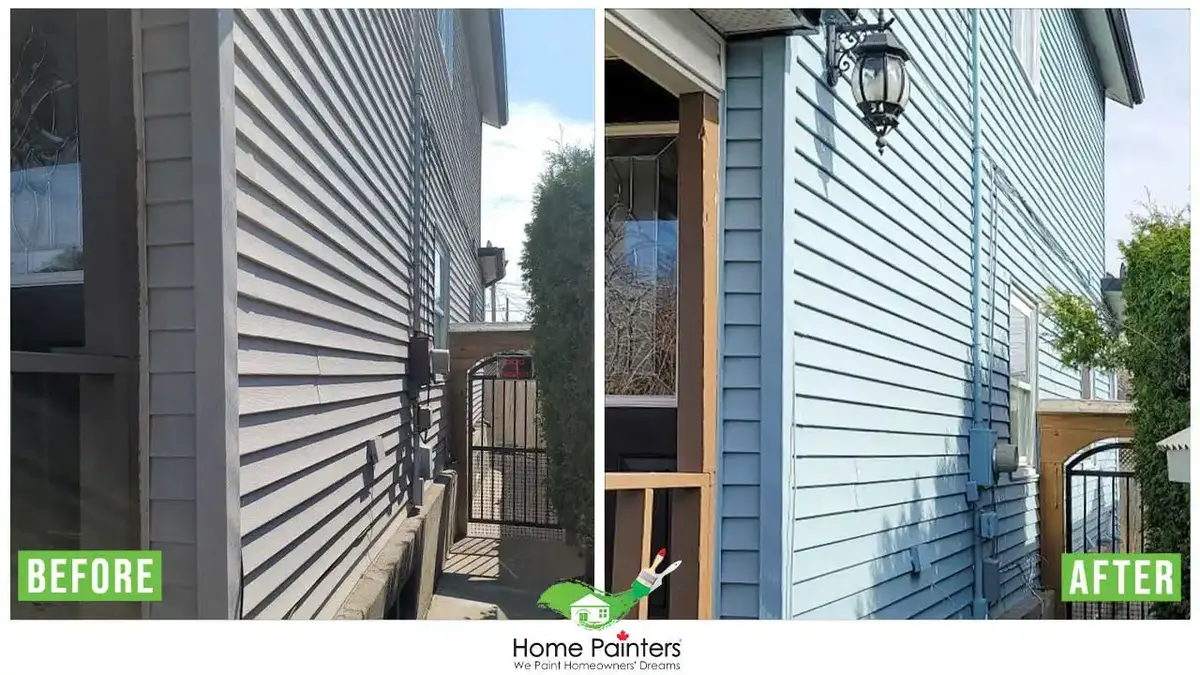
Hairline cracks widen quickly once freezing and thawing cycles set in through the winter months
Signs Your Scarborough Home Needs Emergency Winter Siding Repair
Cracked panels, gaps at the corner posts, and loose sections flapping in the wind are the clearest signs your Scarborough home needs emergency winter siding repair. A quick walk around the exterior after a windstorm or ice event often reveals damage before it becomes a bigger issue inside the wall. Homeowners should look closely at north facing and west facing walls first, since these sides usually take the worst of Scarborough's winter wind gusts. Watch for these warning signs on your next walk around the property:
- Visible daylight or a thin gap between two siding panels
- A rattling or slapping sound during windy nights
- A missing or bent J channel around a window or door
- Ice buildup clinging to the bottom edge of a panel
- Water stains or a musty smell on interior drywall near an exterior wall
A section of trim or aluminum siding that has pulled away from the wall also deserves a closer look. Any one of these signs on its own might seem minor, but combined with a Scarborough winter, they usually point to a wall assembly that is losing its ability to keep moisture and cold air out. A same day inspection lets a contractor decide whether the repair needs to happen immediately or can reasonably wait for milder weather.
The Real Risks of Delaying Vinyl Siding Repair Until Spring
Delaying vinyl siding repair until spring risks moisture intrusion, reduced insulation performance, and pest entry long before the weather ever warms up. A cracked or missing panel leaves the wall sheathing exposed to melting snow and blowing rain for months at a time. That moisture soaks into insulation batts behind the wall, and wet insulation loses much of its ability to slow heat loss, which usually shows up as a higher heating bill by February. Squirrels, mice, and other small pests also look for warm gaps to enter a home during the coldest months, and a loose siding panel is an easy entry point. What starts as a simple panel swap in December can turn into a full sheathing repair, a wood frame repair, or even drywall replacement by the time spring arrives, since the damage spreads quietly behind the wall while the outside still looks mostly fine. Homeowners sometimes assume a small crack is only a cosmetic issue, but the real cost shows up later in a much bigger invoice. Wood siding and exterior wood siding sections near a damaged vinyl panel face a similar risk, since moisture does not stop at the boundary between two materials. Addressing damage while it is still small protects the wall assembly and keeps the eventual repair bill closer to a simple panel swap than a full renovation.
How Ice Damming Affects Damaged Siding Panels
Ice damming happens when heat escaping through the roof melts snow, and that meltwater refreezes into a ridge of ice along the eaves. Once that ice ridge forms, water backs up under the roofline and often runs down behind the soffit and fascia before it reaches the top of a siding panel. A damaged or loose panel near the eaves gives that backed up water an easy path behind the wall, sometimes soaking several centimetres of insulation before anyone notices a stain indoors. Homes with clogged gutters or minimal attic insulation see this problem more often, since warm attic air escapes upward and speeds up the melt refreeze cycle at the roof edge. A contractor checking a damaged siding panel near the roofline should also inspect nearby soffit and fascia for related damage, since ice damming and siding damage often show up together after the same storm.
How Professional Contractors Repair Vinyl Siding in Cold Weather
Professional contractors repair vinyl siding in cold weather by warming panels ahead of time, working during the mildest hours, and leaving extra room for expansion once temperatures climb back up. The process follows a consistent order on every cold weather job across Scarborough.
- Inspect the damaged section and confirm the exact panel profile, exposure width, and colour of the existing siding.
- Store replacement panels in a heated van or garage for at least one hour before cutting, since a warm panel resists cracking far better than a cold one.
- Cut panels with a fine tooth blade at a slow, steady pace to avoid chipping the edge.
- Leave a wider gap at each J channel and corner post, following CertainTeed's cold weather spacing guidance, so the new panel has room to move through the coming seasons.
- Nail the panel loosely into the nailing strip, allowing it to shift side to side without binding.
Seal exposed edges and seams with a flexible exterior caulking around windows and doors that stays workable at low temperatures. Skipping any one of these steps raises the odds that the repair fails again before the next winter even arrives. A crew familiar with Scarborough's wind patterns and older home construction can usually complete a single panel repair in an hour or two, even on a cold January afternoon.
Tools and Techniques for Cold Weather Vinyl Panel Replacement
A zip tool, used to unlock interlocking vinyl panels without bending them, becomes even more important in cold weather, since a rushed pry with a screwdriver often cracks a brittle panel. Crews also carry a heat gun on lower settings to gently warm a panel's edge right before cutting, which reduces the chance of a jagged, weak edge along the cut line. Insulated gloves that still allow enough grip for precise cutting help crews work safely through longer Scarborough cold snaps. A fine tooth blade, ideally one built for plastics instead of wood, produces a cleaner cut with fewer stress points that could crack later. None of these tools replaces basic judgment. Once wind chill drops below negative twenty degrees Celsius, most reputable contractors pause outdoor panel work entirely and reschedule for the next milder window, since crew safety and installation quality both suffer in extreme cold.
Emergency Repair vs Scheduled Spring Repair: Which Makes Sense for Your Home
Emergency repair makes sense when moisture, pests, or heat loss threaten your home right now, while scheduled spring repair suits minor cosmetic damage that can safely wait a few months. A single hairline crack on a rarely seen back wall might reasonably wait for warmer weather, especially if it sits well above grade and away from any window or door opening. A gap near a window, a loose panel at ground level, or any damage on a wall facing prevailing winter winds deserves immediate attention, since these spots let moisture and cold air inside the fastest. Homeowners juggling several minor repairs sometimes prefer to schedule one spring visit covering multiple small issues at once, which can reduce total site visits and simplify colour matching once full stock returns to suppliers. The right choice usually comes down to location, exposure, and how much moisture risk the household is comfortable carrying through the rest of winter.
| Factor | Emergency Winter Repair | Scheduled Spring Repair |
|---|---|---|
| Moisture risk | Addressed right away | Continues until repair date |
| Typical cost | Similar base pricing | Similar base pricing |
| Colour matching | May take longer to source | Full seasonal stock available |
| Best suited for | Storm damage, gaps, pest entry points | Minor cosmetic cracks, low exposure areas |
[E-E-A-T Case Study] Our Winter Vinyl Siding Repair in Scarborough's Bridlewood Neighbourhood
- At a recent winter repair project in Scarborough's Bridlewood neighbourhood, our crew replaced three cracked panels on the north wall of a two storey home after a January wind storm tore a corner post loose.
- We matched the original siding using CertainTeed Monogram vinyl siding, a 44 mil thick panel in a Colonial White clapboard profile, and stored the replacement panels inside our heated van for over an hour before cutting them.
- Outdoor temperature that afternoon sat at negative six degrees Celsius, so we scheduled the repair for early afternoon, once the sun had warmed the wall surface slightly and made the existing panels less brittle to handle.
- Our crew left a three eighths inch expansion gap at each J channel, following CertainTeed's published cold weather spacing recommendation, and sealed every seam with a low temperature rated exterior caulking.
- The homeowner had noticed the loose corner post two weeks earlier but held off calling, and by the time we arrived, a small amount of moisture had already reached the insulation behind that corner.
A spring only repair schedule would likely have let that moisture problem grow through February and March. You can see more recent exterior repair projects like this one from across the GTA, each handled with the same attention to Scarborough's specific winter conditions.
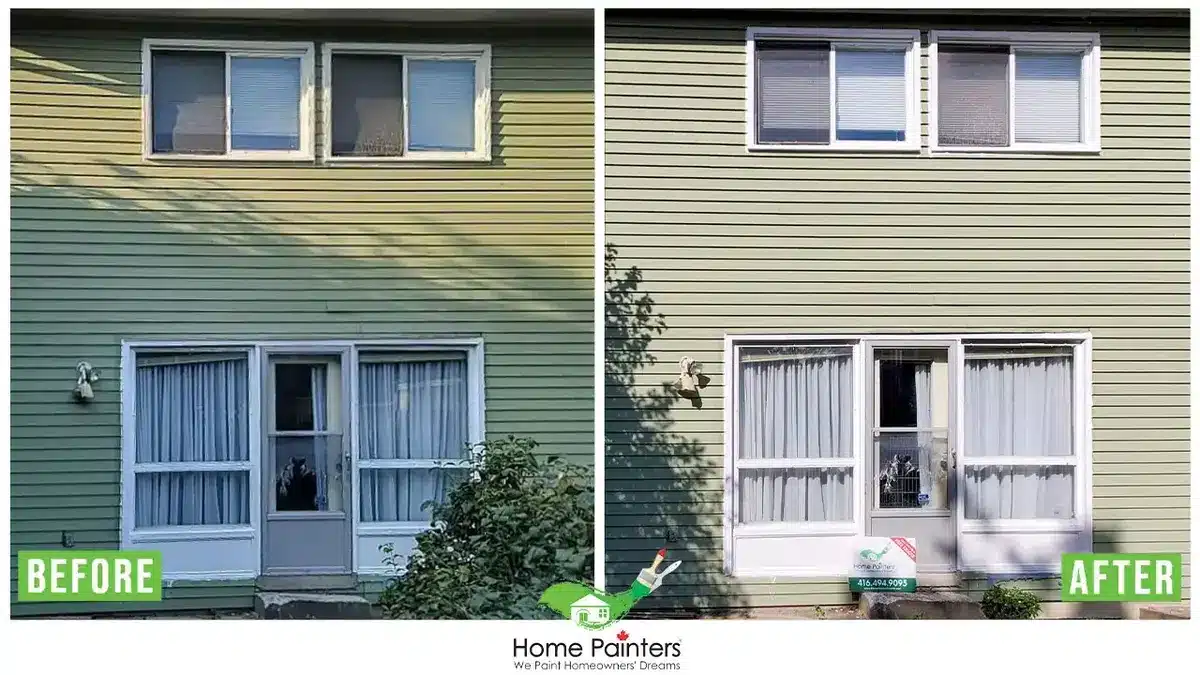
A proper cold weather expansion gap and low temperature rated caulking keep this repair secure through the rest of winter
Why Scarborough Homeowners Trust Home Painters Toronto for Winter Siding Repair
Scarborough homeowners trust Home Painters Toronto for winter siding repair because our crews are WSIB compliant, fully insured, and every job carries warranty backed results. We have operated as a family owned contractor for more than 38 years, and our team has completed repair and painting projects for over 17,000 satisfied clients across the GTA. Every crew member passes a criminal background check before stepping onto a client's property, and our office stays open seven days a week for same day estimates, which matters most during an unexpected winter storm. Our HomeStars Best of Award 2026 recognition and more than 1,200 positive reviews on HomeStars, Google, and Houzz reflect the same standard our crews apply to a single cracked vinyl panel as we do to a full exterior house painting project. Every repair we complete carries a 3 year exterior warranty, backed by our broader 100% satisfaction guarantee across all services. Homeowners interested in a wider view of our work can browse client reviews or explore our full range of vinyl siding painting services alongside exterior stucco siding and other exterior specialties we handle across Scarborough and the rest of the GTA.
Below are answers to some of the most common questions Scarborough homeowners ask about winter siding repair. For more topics, see our full frequently asked questions page.
Yes, contractors can repair cracked or loose vinyl panels in freezing temperatures, though the material becomes more brittle, so crews warm panels first and work during milder parts of the day to reduce the risk of further cracking.
Most manufacturers advise caution once temperatures fall below 4 degrees Celsius, and repairs generally pause below negative fifteen degrees Celsius because the panels can snap during handling or cutting.
Emergency single panel repairs typically start around $2,000 and can reach $8,000 or more for multi panel or corner section damage, depending on the extent of the storm damage and colour matching required.
A skilled contractor sources the closest available match from the original manufacturer's current lineup, though slight fading on older siding can create a subtle difference until the whole wall weathers evenly again.
Waiting until spring risks moisture entering the wall cavity, reduced insulation performance, and pest entry through the gap, so most contractors recommend an emergency repair for anything larger than a small hairline crack.
Many home insurance policies cover sudden storm damage such as wind or ice related siding damage, though coverage details vary by provider, so homeowners should confirm their policy terms before filing a claim.

Get Your Siding Fixed Before the Next Cold Snap
Winter does not have to mean months of exposed sheathing behind a cracked panel. With careful handling and cold weather technique, vinyl siding repair is achievable throughout a Scarborough winter, and waiting for a small crack to become a bigger problem is rarely worth the risk. Contact Home Painters Toronto for fast, free quotes and warranty backed work you can count on, no matter what the thermometer reads outside your Scarborough home.
Get a Free Winter Siding Repair Quote
Fast, free same day estimates and warranty backed cold weather repairs from a WSIB compliant, family owned GTA contractor serving Scarborough for over three decades.
Get Your Free Estimate