

What Causes Soffit Rot and Water Damage on Toronto Homes? (2026 Repair Guide)
Toronto homeowners often notice a soft spot in their soffit long after the damage has already spread inside the wall cavity. Soffit rot starts small, usually as a stain or a patch of peeling paint, but it signals a moisture problem that can reach the fascia, the roof deck, and even the attic frame. Anyone searching for soffit repair in Toronto usually wants one thing: stop the damage before it grows into a full structural fix. This guide explains what causes soffit rot in Toronto homes, how professionals diagnose it, and what a proper repair looks like. Home Painters Toronto, winner of the HomeStars Best of Award 2026 with over 1,200 positive reviews across the GTA, put together this practical breakdown for local homeowners.
Soffit rot on Toronto homes comes from trapped moisture caused by blocked attic ventilation, ice damming, clogged eavestroughs, and failed paint or caulking seals. Wood moisture content above 28 percent lets decay fungi grow, so once water finds a path behind the soffit panel, rot and staining usually follow within one to two seasons.
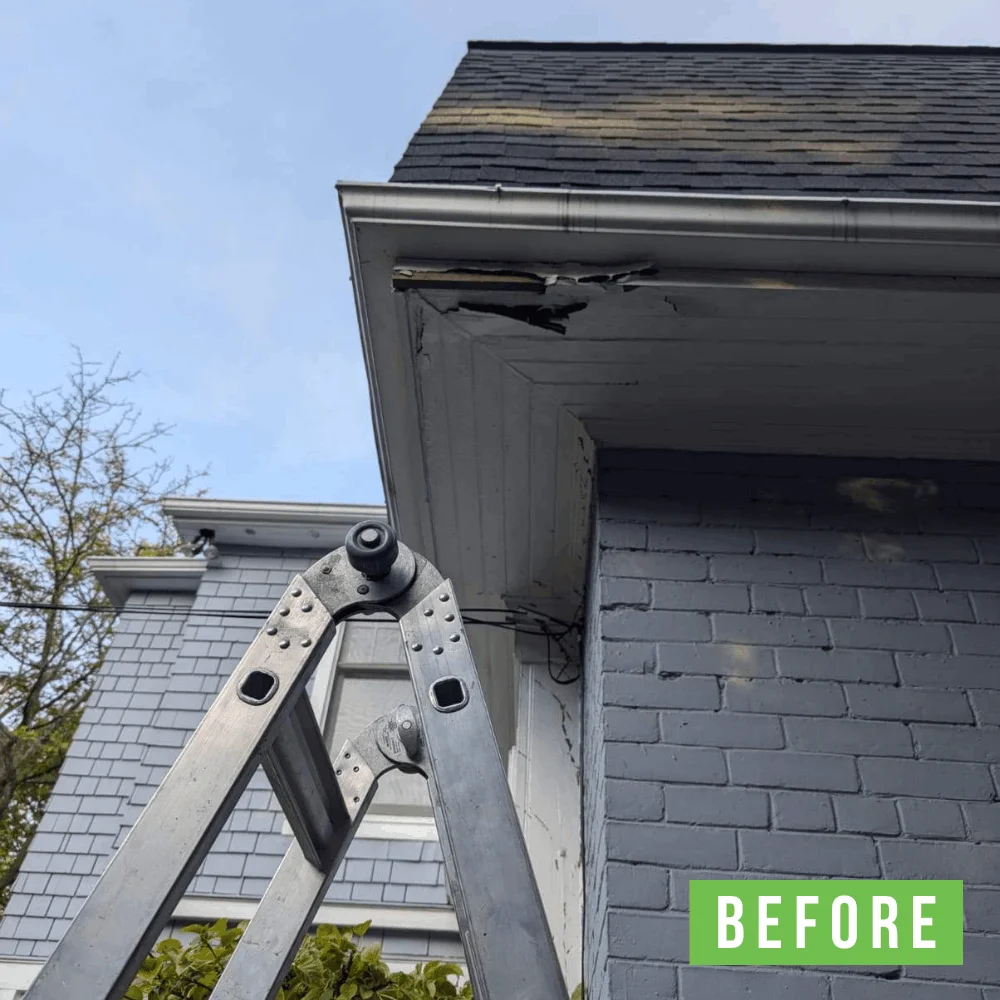
Soffit rot starts small but signals a moisture problem that can reach the fascia, the roof deck, and the attic frame -- a moisture meter reading tells a crew whether a board needs full replacement or simple resealing before any panel comes off
What Exactly Is Soffit Rot?
Soffit rot is the decay of wood or the swelling of composite board that forms the underside of a roof overhang. The soffit closes the gap between the exterior wall and the roofline, and it hides the attic intake vents behind a flat or vented panel. Builders across the GTA used real wood soffit on most homes built before the 1980s, while newer builds often use aluminum or vinyl panels over a wood fascia board. Rot itself is a biological process. Fungi break down the cellulose in wood once moisture content climbs past a certain point, and the wood fibre loses strength, colour, and shape.
Solid wood tongue and groove boards were standard on older Toronto homes, and many still carry their original material today. Perforated aluminum panels became popular later because they resist surface rot, yet the fascia board and the wood frame behind them can still decay out of sight. Vinyl and composite panels sit somewhere in between. They shrug off surface moisture well, but a poor seal at the wall still lets water track behind the panel and into the frame. Knowing which soffit type sits on a home changes the repair plan, since a crew working on aluminum needs different fasteners and matching profiles than a crew replacing solid wood boards.
Common Soffit Repair Toronto Causes Explained
Four conditions drive most soffit repair calls across Toronto and the GTA. Poor attic ventilation lets warm, moist air condense against the cold underside of the roof deck. Ice damming forces meltwater back under the shingles and down into the soffit cavity. Clogged eavestroughs overflow directly onto the soffit and fascia during heavy rain. Failed caulking or cracked paint film lets wind driven rain soak into bare wood at the seams.
Homeowners looking into exterior wood siding or caulking windows and doors often find the same moisture sources behind those repairs, too.
A fifth, less common cause involves pests. Squirrels and wasps chew or force entry through weak spots in aging soffit material, and each opening becomes a new path for rain and snowmelt. Once an opening exists, the cycle speeds up, since wind can now push moisture directly into the cavity instead of relying on capillary action through the wood grain alone.
The Science Behind Soffit Damage in Ontario Winters
Ontario winters damage soffits through repeated cycles of freezing and thawing that push water deeper into wood fibre with every cycle. Temperatures in the Toronto area swing above and below freezing dozens of times each winter, and each swing pushes trapped water into tiny cracks in the wood or paint film. Water expands in volume when it freezes, and that expansion widens hairline cracks a little more every time. By February, a soffit board that looked fine in November can already hold enough moisture to support fungal growth.
Research from the U.S. Forest Products Laboratory found that decay fungi need wood moisture content near 28 to 30 percent to establish and spread, a threshold that soffit boards cross easily once water gets behind the paint or caulking seal.
Condensation adds a second attack on top of the freeze and thaw cycle. Warm, moist air rises from living spaces into the attic through gaps around pot lights, bathroom fans, and attic hatches. When that air meets the cold underside of the roof deck in January, it condenses into liquid water, and gravity pulls that water toward the lowest point of the attic, which is usually the eave and the soffit area. Ice damming makes the problem worse still. Heat escaping from the attic melts snow on the upper roof; the meltwater runs down and refreezes at the cold eave overhang, and the resulting ice dam backs water up under the shingles and directly into the soffit cavity.
How Moisture Percentage Triggers Wood Decay
Dry lumber used in construction typically has a moisture content between eight and fourteen percent. Once that number rises above 20 percent for extended periods, mould and surface staining begin to appear. Past 28 percent, wood destroying fungi have enough available water to break down the cell structure. A moisture meter reading during an inspection tells our crew whether a board needs full replacement or simple resealing.

A repair completed early, with the actual moisture source corrected, protects the fascia, the roof deck, and the attic frame from far larger repairs later -- skipping the ventilation fix means soffit failure often returns within two to three years
Step by Step Professional Soffit Repair Process
A proper soffit repair in Toronto follows four stages: inspection, removal of the damaged material, correction of the moisture source, and reinstallation with a sealed, painted finish.
- Inspection The crew checks moisture content with a pin type meter, inspects attic intake vents, and traces the water path from roof to soffit.
- Removal Damaged wood or aluminum panel comes off, along with any wet insulation baffles nearby.
- Correction The crew fixes the actual moisture source, whether that means clearing eavestrough debris, resealing a roof valley, or adding intake vent area.
- Reinstallation New wood or a matching panel goes in, primed on all sides, then finished with an exterior grade acrylic coating and sealed at every joint.
Our carpentry crew also handles related wood frame repair and soffit and fascia work in the same visit when the damage extends past the soffit panel itself.
Product choice matters at every stage of this process. Our crew uses a low VOC exterior primer on bare wood before any topcoat goes on, since raw wood left unprimed even overnight can absorb moisture from morning dew. Seams and joints get a paintable, elastomeric caulking rated for exterior movement, not a standard interior grade product that cracks within a season. These small material decisions are often the difference between a repair that lasts fifteen years and one that fails again within eighteen months.
Signs of Soffit Rot Most Homeowners Miss
Most homeowners miss soffit rot because the early signs sit inside the attic or hide behind fresh looking paint, not on the visible underside of the panel. A soffit can look freshly painted from the driveway while the wood underneath already tests above 25 percent moisture. Musty smells in the attic, dark streaking on the roof deck near the eave, and small wasp or squirrel entry points are often stronger warning signs than visible paint failure. Homeowners tend to wait for a sagging or visibly rotted board, but by that stage, the fascia and the roof deck edge are usually affected too. A borescope camera inspection inside the attic catches most of this damage months before it shows outside.
Ants and carpenter bees also target soft, damp wood before full rot ever becomes visible from ground level. Their small entry holes look minor at first glance, yet they mark exactly where moisture content has already crossed the threshold for insect activity. A thorough inspection checks the attic side of the soffit, the vent baffles, and the fascia board joint, not just the painted underside most homeowners see from the driveway.
Visible Signs vs Hidden Signs of Rot
Visible signs include peeling paint, soft or spongy panel sections, and staining near the seams. Hidden signs live inside the attic itself. These include damp insulation near the eave, a musty smell after rain, and daylight gaps around vent baffles. Hidden signs usually appear one full season before visible signs show up outside.
How Much Does Soffit Repair Cost in Toronto?
Soffit repair in Toronto typically costs between $2,000 and $8,000 CAD plus HST for a standard detached home, depending on the length of soffit affected, the material, and how much hidden rot the crew finds once the panel comes off.
| Project Scope | Estimated Cost Range (CAD + HST) |
|---|---|
| Small section repair (one or two bays) | $2,000 – $4,000 |
| Medium repair (multiple sections, one elevation) | $4,000 – $8,000 |
| Full perimeter replacement with fascia | $8,000 – $10,000 |
| Extensive repair with structural wood frame work | $12,000 – $30,000 |
Four factors move the price up or down on most projects.
| Factor | Impact on Cost | Details |
|---|---|---|
| Material | Higher for wood than aluminum | Wood needs priming and painting, aluminum needs matching panel stock |
| Rot extent | Rises with hidden decay | Full fascia and roof deck edge repair adds labour |
| Access | Higher for steep or tall sections | Ladder and scaffold work adds time |
| Ventilation correction | Adds a moderate amount | Adding baffles or intake vents solves the root cause |
Homeowners comparing quotes can also review our cost of painting a house guide or get a free quote directly for an exact number based on their own home.
The biggest swing in final invoice cost usually comes from what a crew finds once the old panel is off, not from the visible damage estimated during the initial walkthrough. A quote based only on exterior appearance can undercount the true scope by a wide margin when hidden fascia or roof deck rot turns up mid project. This is why an honest contractor builds a contingency conversation into the first estimate instead of surprising a homeowner with a change order later.
Expected Longevity of Repaired Soffit in Toronto
A properly repaired soffit in Toronto lasts between 15 and 25 years when the crew fixes the moisture source and finishes the wood with an exterior grade acrylic coating at the proper thickness. Soffit failure often returns within two to three years when a contractor replaces the wood but skips the ventilation fix.
Industry guidance from the Asphalt Roofing Manufacturers Association recommends a balanced attic ventilation ratio, split evenly between soffit intake and ridge exhaust, to keep attic moisture from condensing against the roof deck and the soffit panel. Home Painters Toronto applies a two coat acrylic system at a controlled dry film thickness on every exterior wood repair, which meets or exceeds most manufacturer specifications for exterior grade coatings.
An annual check of the eavestroughs and a visual scan of the soffit from ground level in spring and fall catch most problems long before they need a full repair. Homeowners who schedule this simple habit tend to spend far less over the life of a roof than those who wait for a visible sag or stain to prompt a call.
A Recent Soffit Repair Project in a GTA Neighbourhood
18-Inch Softened Fascia Section, Two Intake Vents Added, Benjamin Moore Aura Exterior Low Lustre at 4 Mils DFT, Spectrophotometer Colour Match
At a recent soffit repair project in the Leaside neighbourhood of Toronto, our crew found soffit boards holding 34 percent moisture content behind a coat of cracked latex paint. The homeowner had noticed only a small brown stain near the eavestrough corner, with no sagging or visible rot from the ground. Once we opened the panel, the fascia board underneath had already softened along an 18 inch section. Our crew removed the damaged wood, added two rectangular intake vents to correct a ventilation shortfall, and refinished the repaired section with Benjamin Moore Aura Exterior in Low Lustre finish, applied at a controlled 4 mil dry film thickness per coat. The homeowner also asked us to match the existing trim colour, so our team colour matched the finish using a handheld spectrophotometer reading taken from the original siding.
Photos of this project and others sit in our painting and repair project portfolio for homeowners who want to see real results before booking a crew.
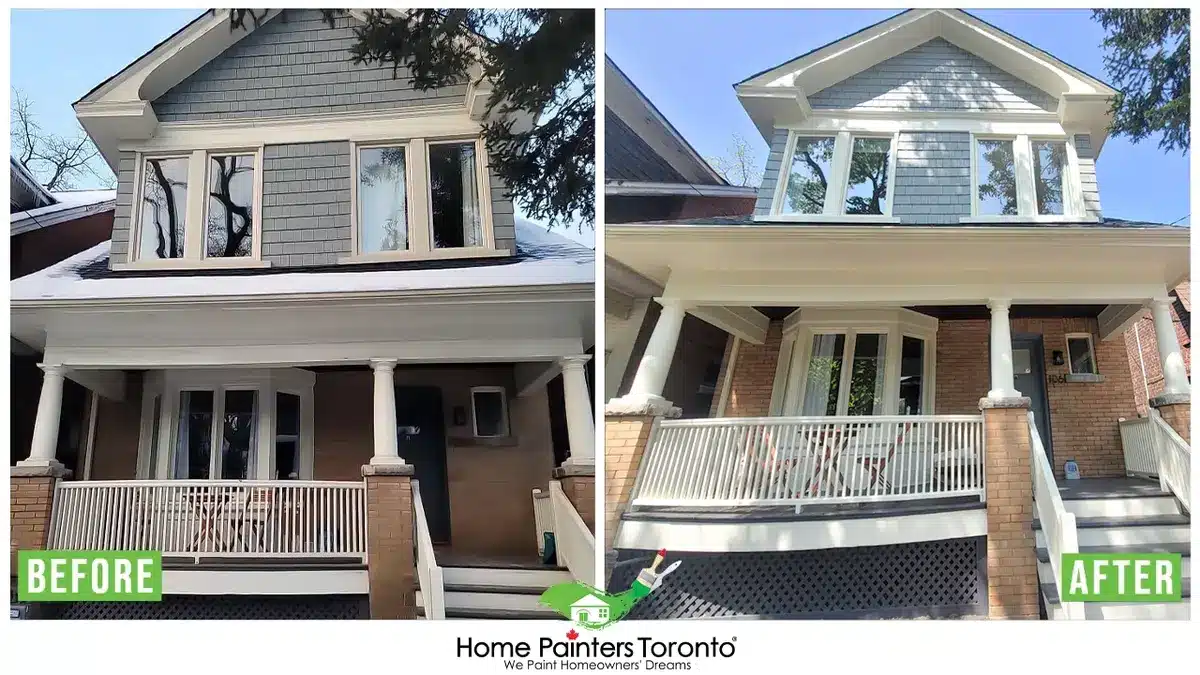
Leaside, Toronto: 34% moisture behind cracked latex paint on arrival (homeowner noticed only a small stain), 18-inch softened fascia section removed, two rectangular intake vents added to correct ventilation shortfall, Benjamin Moore Aura Exterior Low Lustre at 4 mil DFT, spectrophotometer colour match from original siding
Why Toronto Homeowners Trust Professional Soffit Repair
Toronto homeowners trust professional soffit repair because the work touches structural wood, roof edge flashing, and attic ventilation, areas where a mistake can cause more damage than the original problem. Home Painters Toronto is WSIB compliant, fully insured with $5M general liability coverage, and every crew member passes a criminal background check before stepping onto a client's property. The company has served the GTA for more than 38 years as a family owned business, with over 17,000 satisfied clients and more than 1,200 positive reviews on HomeStars, Google, and Houzz.
Every soffit, fascia, and exterior wood repair comes with warranty backed results, and the crew is available seven days a week with same day estimates.
Homeowners can read verified client reviews or visit our page on why homeowners choose HPT before making a decision. Related exterior services, including wood deck repair and brick and mortar repair, follow the same inspection first approach described in this guide.
The company holds recognition beyond HomeStars too, including Three Best Rated 2025 and Best of Houzz 2025, and it remains the top rated painting contractor on HomeStars. For a soffit repair, that track record translates into a crew that recognizes the difference between cosmetic staining and structural decay on sight, which keeps quotes accurate and keeps repeat callbacks rare.
Frequently Asked Questions
The first sign is often a musty smell in the attic or a small stain near a seam, not visible sagging. Homeowners who catch the smell or stain early usually avoid a full panel replacement.
Yes, moisture behind a rotted soffit panel often travels up into the roof deck edge and the fascia board. Left alone, this can affect the shingles and the roof edge flashing as well.
Coverage depends on the cause and the specific policy. Sudden water damage from a storm may be covered, while gradual rot from poor ventilation or long term neglect usually is not. Homeowners should check with their insurance provider directly for their specific policy terms.
A small section repair usually takes one day. A full perimeter replacement with fascia work can take three to five days, depending on access and the extent of hidden rot found once the panel comes off.
Aluminum panels do not rot, but the wood fascia and frame behind them can still decay if moisture gets trapped. A full inspection checks both the visible panel and the wood structure underneath it.
Homeowners can visit our frequently asked questions page for more details on pricing, scheduling, and warranty terms across all our exterior services.

Conclusion
Soffit rot rarely stays a small problem once moisture finds a path behind the panel. A repair completed early, with the actual moisture source corrected, protects the fascia, the roof deck, and the attic frame from far larger repairs later. Home Painters Toronto backs every soffit and exterior wood repair with warranty backed results and full WSIB compliant coverage.
Contact Home Painters Toronto today for fast, free quotes and warranty backed work on your soffit, fascia, and exterior wood repair.
Get Fast, Free Quotes for Soffit Repair in Toronto
Contact Home Painters Toronto today for fast, free quotes and warranty backed work on your soffit, fascia, and exterior wood repair. Same day estimates available seven days a week across the GTA.
Contact Us for a Free Quote