

When Should Toronto Homeowners Replace Their Siding Instead of Repairing It?
Toronto homeowners often ask a hard question after a rough winter: is it time to replace siding, or can another patch job get one more season out of the old panels? Cold snaps, spring downpours, and sudden freeze and thaw swings put constant strain on exterior walls across the GTA. A single cracked panel usually only needs a spot repair. Widespread cracking, warping, or soft spots point to a deeper problem building behind the surface. Moisture that gets past damaged siding can rot sheathing, feed mould, and raise energy bills long before the exterior looks obviously bad. This guide breaks down the real signs that separate a simple repair from a full siding replacement, so a homeowner can protect the house and the budget at the same time.
Replace siding once damage covers more than 20 percent of a wall, once sheathing behind the panels tests above 19 percent moisture content, or once the material has passed its expected service life. Isolated cracks or a few loose panels usually only need a targeted repair instead of a full tear off.

Widespread cracking, warping, or soft spots often signal a deeper problem behind the surface
Repair Or Replace? What Actually Works Best In Toronto's Climate
A full replacement solves moisture and structural problems for good, while a repair only fixes what is visible on the surface. Toronto's freezing winters and humid summers expand and contract siding material every single day. That constant movement opens small gaps around nails, seams, and trim, which repair patches cannot fully seal. A repair makes sense when damage is isolated to one or two panels with no sign of moisture behind them. Replacement becomes the smarter choice once damage spreads across a wall, since patched sections rarely match colour or expand at the same rate as aged material. Contractors also weigh substrate condition during an inspection. Sheathing, house wrap, and the moisture barrier underneath all need to hold up before new panels go on. If the substrate has already softened, a repair only masks a problem that keeps growing behind the wall.
Homeowners exploring options can compare styles and finishes on our exterior house painting page before deciding between a repair and a full exterior refresh.
Permit requirements can also influence the repair versus replacement decision. Toronto's building code typically does not require a permit for replacing damaged panels on an existing wall in the same material and in the same location. Full replacement that changes the exterior cladding type, adds insulation thickness, or alters window openings usually requires a permit application through the city. A contractor familiar with local bylaws can confirm whether a project needs sign off before work starts, which prevents delays once material has already been ordered.
| Situation | Best Option | Why |
|---|---|---|
| One cracked or dented panel | Repair | Localized damage with no rot behind it |
| Warping across several panels | Replace | Signals heat and moisture cycling has weakened the material |
| Rot found in sheathing | Replace | Structural damage spreads once trapped moisture sets in |
| Fading on one wall only | Repair or recoat | Cosmetic issue with no impact on the structure |
| Siding older than its rated lifespan | Replace | Material is past its serviceable life expectancy |
Why Small Siding Repairs Often Fail Within A Year
Most patch repairs fail because they treat the symptom, not the moisture source behind the wall. A new panel snapped into an old, brittle track rarely locks the same way factory installed siding does. Contractors who skip removing the surrounding courses often trap existing moisture inside the wall cavity. That trapped moisture keeps feeding rot and mould long after the visible crack is gone. Within a year, the same wall often shows new stains, new soft spots, or new cracking near the patch. A repair without a moisture inspection is a short term fix dressed up as a long term one. Older homes across Toronto's east end sometimes carry three or four layers of siding installed over previous decades, and a repair crew that snaps a new panel onto that stack without checking the layers underneath is simply adding one more short term patch to an already compromised wall.
Poor caulking around windows and trim is another common culprit. Gaps left around openings let wind driven rain track behind the siding during every storm. Our crews check caulking around windows and doors as a standard part of every siding inspection, since a failed seal here can undo an otherwise solid repair within months.
When To Replace Siding After Storm Or Moisture Damage
Full replacement becomes necessary once storm damage or trapped moisture compromises more than a small section of a wall. Hail and high wind events common across the GTA can crack, dent, or completely detach panels in a single storm. Once water tracks behind several panels, it soaks into sheathing and framing before any surface sign appears. Homeowners often notice a musty smell or a soft, spongy feel on interior drywall near an exterior wall first. At that point, a contractor needs to open the wall, check the sheathing, and confirm how far the damage has spread.
According to the Canadian Wood Council's moisture guidelines, wood is generally considered dry once it reaches 19 percent moisture content or lower, with decay risk increasing well beyond that point. A moisture reading above that threshold on sheathing behind siding is a strong signal that repair alone will not solve the problem.
Some repairs can be extended with a breathable, low VOC elastomeric coating on stable aluminum or stucco surfaces, since that type of coating flexes with temperature swings instead of cracking like standard paint. This option only works when the substrate underneath is sound, dry, and free of active rot. Once a moisture reading confirms a problem behind the wall, no surface coating can substitute for removing and replacing the damaged material.
Damaged soffit and fascia boards often show up alongside siding failures, since water travels along the roofline before it drops down a wall. A full inspection of soffit and fascia should happen alongside any siding assessment after a major storm.
Average Siding Lifespan By Material Type
Vinyl Siding
Vinyl siding typically lasts between 20 and 40 years, based on figures the Vinyl Siding Institute has published on residential siding lifespan.
Aluminum Siding
Aluminum siding can last 30 to 40 years but dents easily and fades with age, and homeowners considering that material can review our aluminum siding painting services page for refinishing options.
Wood Siding
Wood siding needs regular painting and sealing and often needs replacement within 20 to 30 years without that upkeep, so our exterior wood siding guide covers maintenance intervals in more detail.
Fibre Cement
Fibre cement products tend to outlast vinyl but come with a higher upfront cost.
A homeowner nearing the upper end of a material's expected lifespan should plan for replacement instead of repeated repairs.
Comparing The True Cost Of Siding Repair And Replacement
Repairs cost far less upfront, but repeated repairs can end up costing more than a single replacement over time. A small patch job on one or two panels is a modest expense compared to removing and replacing an entire wall. Full exterior projects scale with the size of the home, the number of storeys, and the condition of the surface underneath. The table below reflects typical residential exterior project ranges across the Toronto area. Our cost of painting a house guide breaks down similar exterior pricing factors in more depth, including how storey count and surface prep affect the final number.
| Project Size | Estimated Cost Range (CAD + HST) |
|---|---|
| Small exterior repair or section | $2,000 – $4,000 |
| Medium exterior project | $4,000 – $8,000 |
| Large exterior project | $8,000 – $10,000 |
| Extra large or full replacement project | $12,000 – $30,000 |
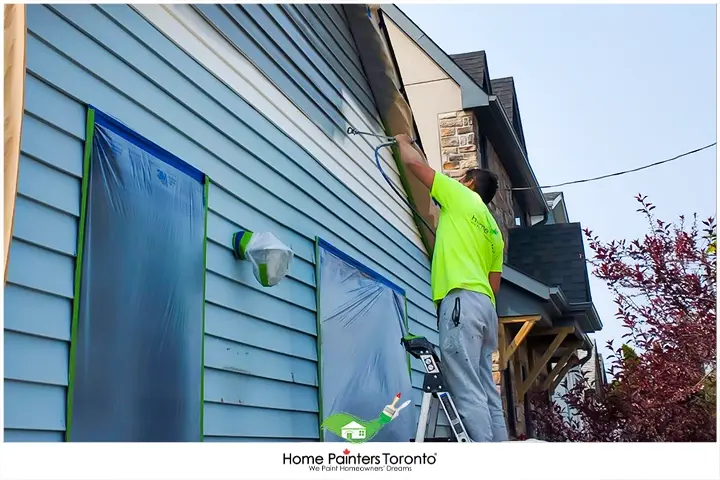
A Recent Siding Project In Etobicoke
- On a recent job in the Alderwood area of Etobicoke, our crew found soft, spongy wood siding along the north wall of a 1970s bungalow.
- A moisture meter reading on the sheathing came back at 24 percent, well above the 19 percent threshold the Canadian Wood Council flags as the safe upper limit for framing lumber. The homeowner had patched two panels the previous year, but the rot had already spread behind the repair.
- Our crew removed the damaged siding, found the wood framing underneath had softened, and brought in a separate wood frame repair step before any new material went up.
- After the frame was repaired and a new moisture barrier installed, the trim around the section was finished with Benjamin Moore Aura Exterior in Low Lustre finish to match the rest of the home.
The homeowner avoided a much larger repair bill the following winter by catching the problem before it reached the wall framing. Photos and details from similar jobs are posted on our painting projects portfolio page.
Signs Your Siding Has Reached The End Of Its Service Life
- Persistent warping, bubbling, or panels that no longer sit flat against the wall usually mean the material has reached the end of its useful life.
- Cracking that appears in multiple spots across a wall, instead of in one isolated area, points to age related brittleness instead of a single impact.
- Rising energy bills without another clear cause can point to failing insulation behind ageing siding.
- Paint that no longer holds on vinyl siding or aluminum siding often means the surface has become too porous to seal properly.
- Stucco walls show different warning signs, including hairline cracking and sections that sound hollow when tapped, and our exterior stucco siding page covers those signs in more detail.
Older housing stock in neighbourhoods like Leaside, the Beaches, and parts of North York tends to show wood siding fatigue first, since many of those homes still carry original wood trim under later renovations. Newer builds across Vaughan, Markham, and Richmond Hill more often show vinyl and aluminum siding issues tied to installation quality instead of material age. A contractor familiar with both eras can usually tell within minutes of an inspection which category a home falls into.
Warning Signs Of Rot Behind Vinyl Or Wood Siding
- A musty smell near an exterior wall is often the first sign of hidden rot.
- Soft or spongy drywall on an interior wall that shares an exterior surface is a second warning sign.
- Peeling paint or bubbling on interior trim near an exterior wall can also point to trapped moisture, a process explained further in how wood decay develops once moisture content climbs past the fibre saturation point.
- Visible mould or dark staining at the base of a wall, where water tends to collect, is a clear signal that a professional inspection is overdue.
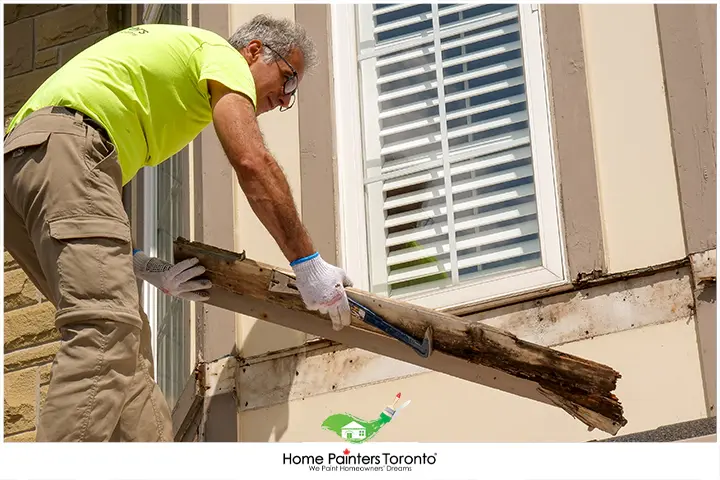
Catching hidden rot early prevents a much larger repair bill down the road
Getting A Fast, Reliable Siding Quote In Toronto
Same day estimates let a homeowner compare repair and replacement options without waiting weeks for an answer. Home Painters Toronto offers same day estimates seven days a week across the GTA. A fast quote matters most after storm damage, when exposed sheathing needs to be covered before the next rainfall. Every estimate includes a written breakdown of repair versus replacement costs, so a homeowner can make an informed decision without pressure. Homeowners can request a free quote and see written feedback from past clients on our client reviews page before booking an inspection.
Timing also affects how quickly a project can move from quote to completion. Caulking and most exterior sealants need surface and air temperatures above roughly 5 degrees Celsius to cure properly, which narrows the practical installation window in Toronto to spring through late fall. Homeowners who spot damage during a winter storm can still book an inspection and quote right away, but full panel replacement is often scheduled for the following thaw unless temporary weatherproofing is needed sooner. Booking early in spring secures a slot before the busiest summer season fills up the schedule.
Why Toronto Homeowners Trust Professional Siding Contractors
Frequently Asked Questions
Widespread cracking, warping across several panels, or a moisture reading above 19 percent on the sheathing behind the siding are the clearest signs that repair alone will not fix the problem. A contractor can confirm the extent of the damage with a moisture meter and a visual inspection of the wall cavity. Isolated damage on one or two panels usually only needs a targeted repair, so an inspection first saves money either way.
Yes. A single damaged panel with no rot or moisture behind it can usually be swapped out on its own. The concern is matching the colour and profile of aged material, since sun exposure fades siding unevenly over time. A contractor can pull a sample panel to source the closest available match before starting the repair.
Most vinyl siding lasts between 20 and 40 years, though harsh freeze and thaw cycles and severe hailstorms can shorten that lifespan. Regular inspections after major storms help catch damage before it spreads. Premium grade material with thicker panels tends to hold up longer under GTA weather than economy grade options.
Not always, but sustained moisture above roughly 19 to 20 percent creates the conditions decay fungi need to grow, based on Canadian Wood Council guidelines. Catching a moisture problem early often prevents rot from setting in at all. A moisture meter reading taken during a routine inspection can flag the issue long before any visible damage appears.
Every quote outlines the scope of work, the estimated cost range, and the specific warranty that applies to the project. Same day estimates are available seven days a week across the GTA. The quote also lists the exact products and finishes proposed for the job, so a homeowner knows what to expect before work begins.
Repeated repairs on ageing siding often add up to more than a single replacement once labour and material costs are counted together. A contractor can walk through both scenarios during a same day estimate, comparing the short term repair cost against the long term value of a full replacement.

Final Thoughts
Deciding when to replace siding instead of repairing it comes down to how far the damage has spread and how much moisture has already reached the wall. A single cracked panel is rarely a reason to replace an entire wall, but widespread warping, rot, or a material nearing the end of its rated lifespan usually is. A moisture reading, a visual inspection, and an honest conversation about the material's remaining lifespan will settle the question far better than guesswork. Home Painters Toronto has served the GTA for more than 38 years, backing every project with fast, free quotes and warranty backed work. Homeowners can also browse our frequently asked questions page for more details on how estimates and warranties work before booking a visit. Contact Home Painters Toronto today to book your project.
Get a Free Siding Estimate for Your Toronto Home
Contact us today for a same day estimate and a written breakdown of your repair versus replacement options, backed by warranty results across the GTA.
Get Your Free Estimate